
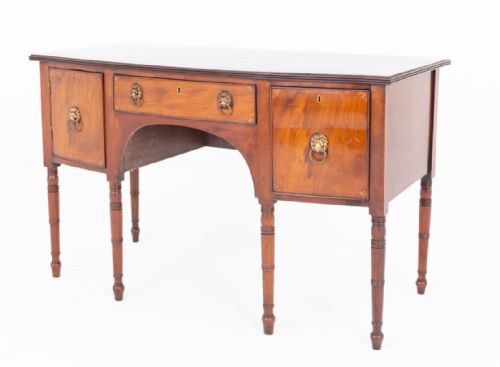

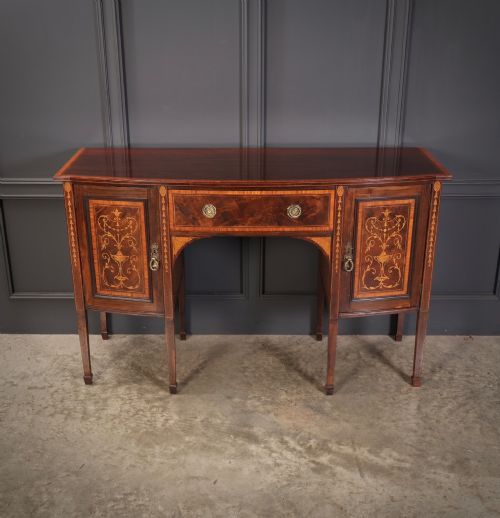
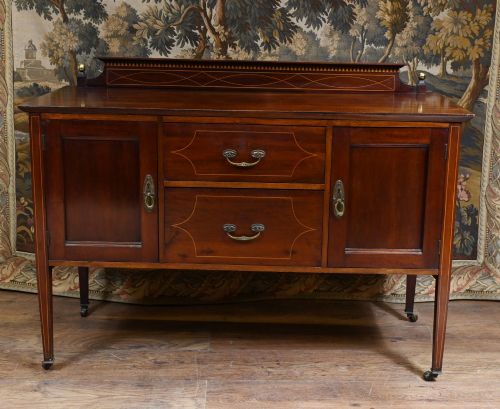
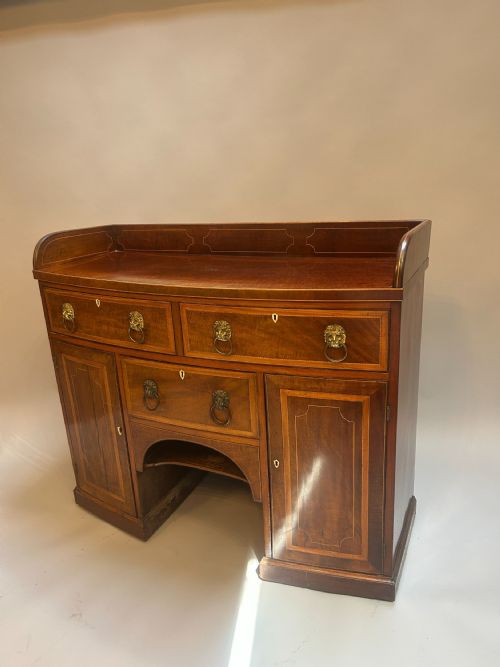
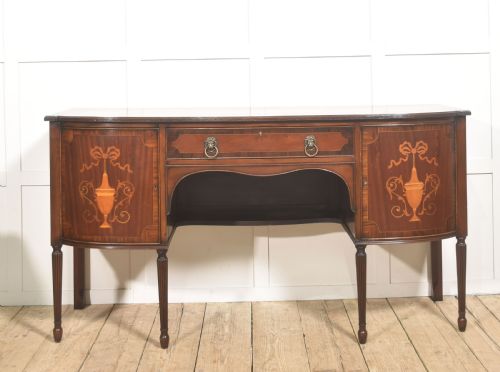
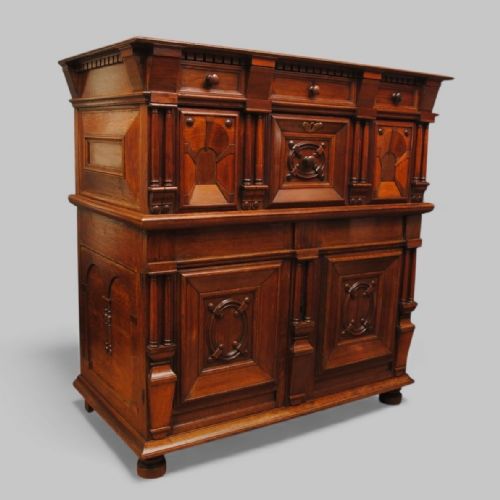
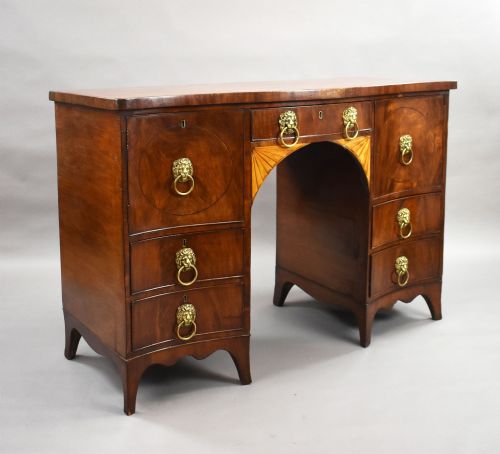
Inlaid Wooden Buffet
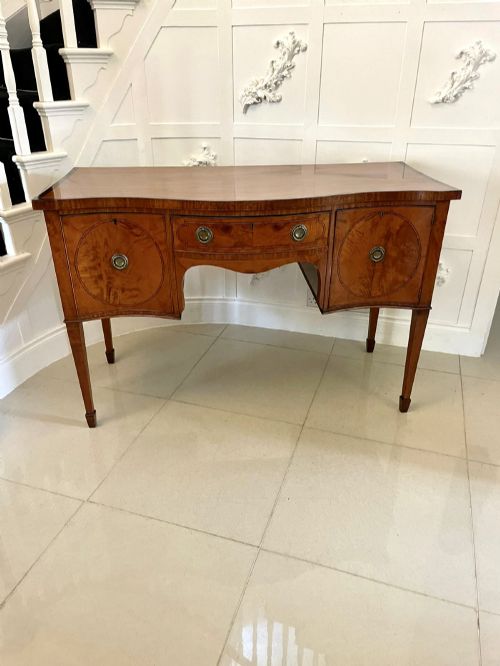
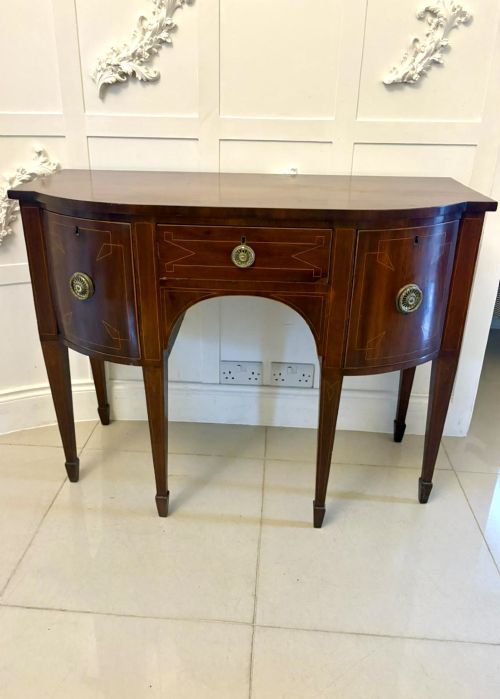
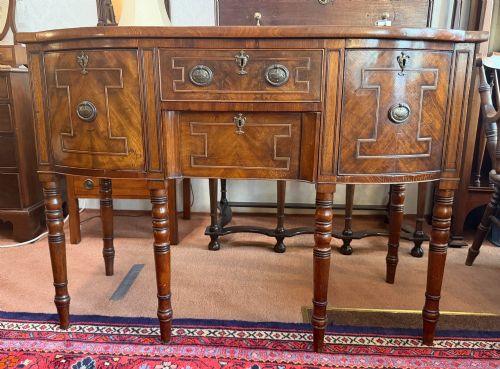
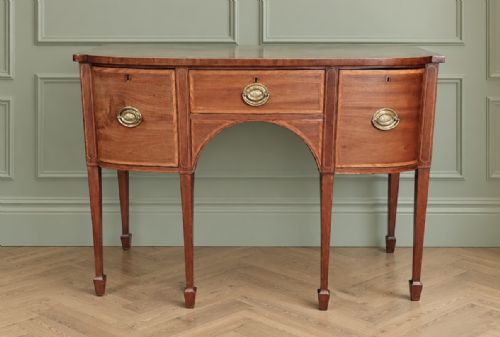
When you search for an inlaid wooden buffet, you are looking at substantial serving pieces and sideboards defined by figured timbers and contrasting stringing.
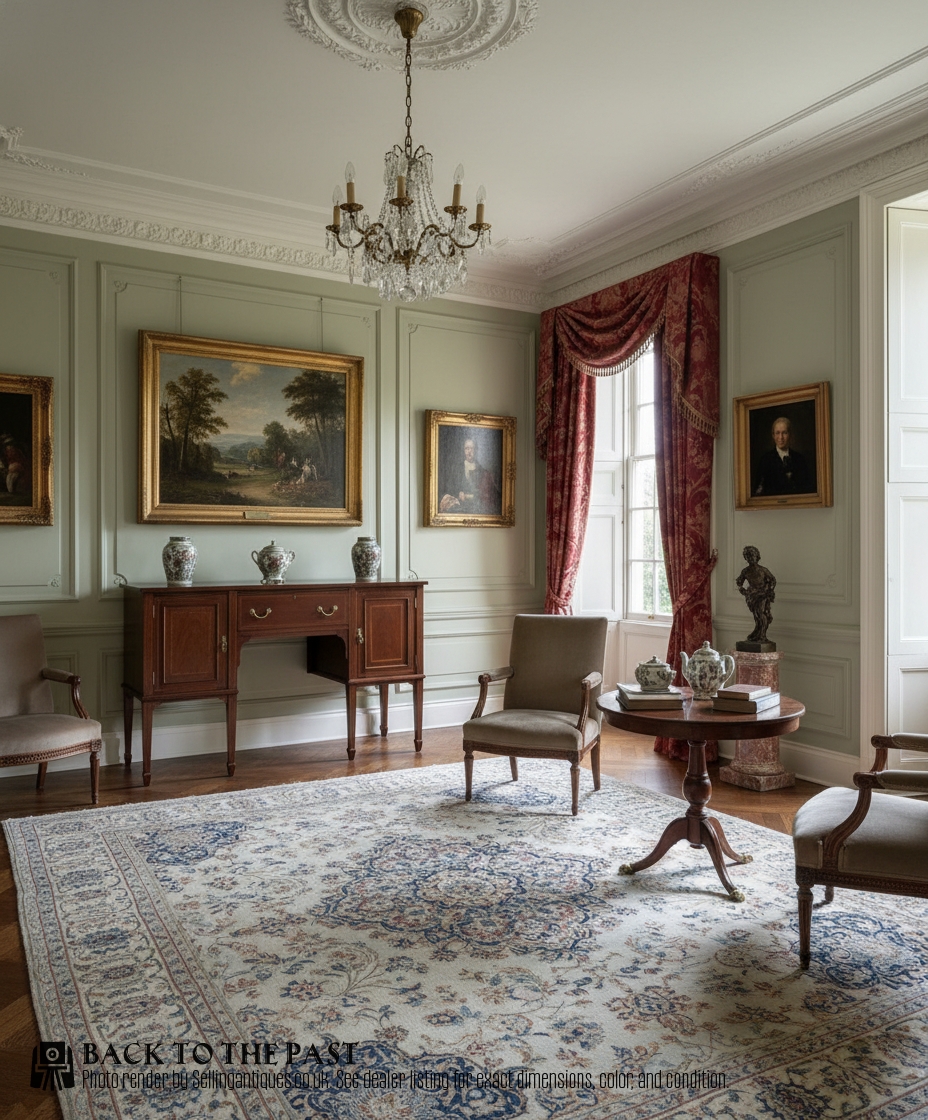
Inlaid Wooden Buffet
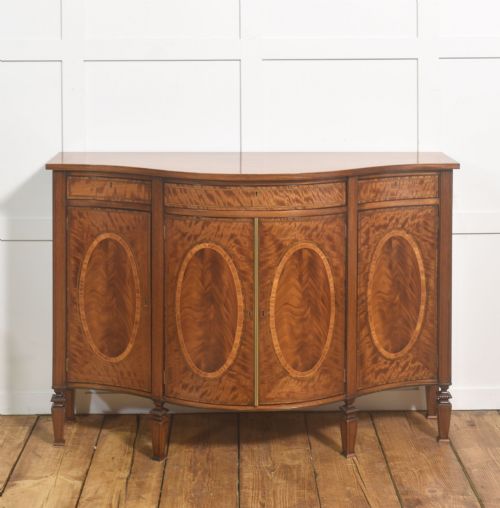
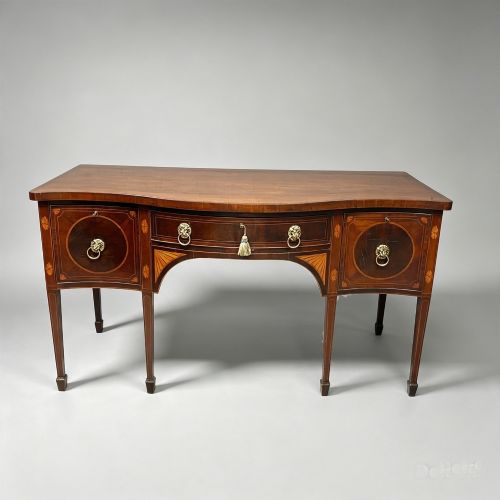
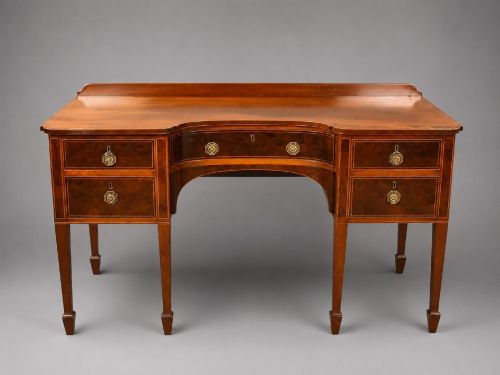
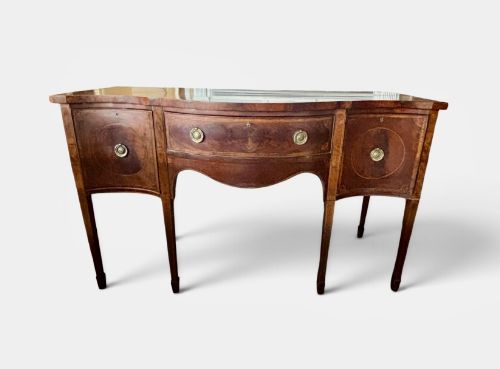
An inlaid wooden buffet spans formal dining room storage forms, appearing most frequently as mahogany sideboards with satinwood or boxwood details. These pieces originate across the Georgian, Regency, and Victorian periods, alongside Edwardian revivals.
The primary forms on this page include bow-front and serpentine sideboards, serving tables, and credenzas. A buyer finds both compact servers and large breakfront examples designed for dining rooms.
How they were made
Cabinet makers built these pieces using solid and veneered timbers including mahogany, walnut, oak, and satinwood. Carcasses relied on dense native hardwoods as a foundation for decorative face veneers.
Surface ornamentation incorporates contrasting wood inlays such as boxwood and satinwood, occasionally complemented by brass or mother of pearl details. Crossbanding and stringing defined the geometric borders of drawer fronts and tabletops.
Mother of pearl makes a surprise appearance alongside traditional boxwood and satinwood stringing on Victorian pieces.
What varies in quality
The standard of timber selection dictates visual merit, with figured flame mahogany and crisp satinwood inlay marking higher tiers of execution. Subtle grain movement and balanced symmetry across curved fronts distinguish better workshops.
The precision of the contrasting inlay work and the retention of original brass hardware establish the integrity of a piece. Finer examples maintain crisp edges along serpentine and bow-front contours without timber shrinkage.
The Inlaid Wooden Buffet Glossary
- Bow-front
- A cabinet front curved outward in a convex sweep. This shape gained popularity during the Georgian and Regency periods to soften linear dining room furniture.
- Serpentine
- A front profile curving inward centrally and outward at the ends. It requires precise woodworking and custom veneer matching.
- Crossbanding
- A strip of veneer laid perpendicular to the grain of the surrounding surface. This technique creates a contrasting border around drawer fronts and tops.
- Satinwood
- A durable timber known for a golden sheen and smooth texture. It serves as a light-coloured inlay material against dark mahogany.
- Credenza
- A low storage cabinet used for dining rooms and side service. These pieces frequently feature walnut timbers and elaborate inlays.
Inlaid Wooden Buffet: Frequently Asked Questions
What is an inlaid wooden buffet used for?
These pieces served historically in dining rooms for storing tableware, linens, and serving dishes during meals.
Today, they function as sideboards in living spaces or dining rooms, providing surface display area and concealed storage.
How do I date a Georgian buffet?
Georgian pieces display hand-cut joinery, native timber framing, and period specific brass hardware without modern fixings.
Construction methods inside drawers and the presence of mahogany or oak secondary woods help confirm the eighteenth or early nineteenth century origin.
What is the difference between a sideboard and a buffet?
Sideboards traditionally feature deep surface tops and multiple drawers or cupboards arranged for serving food and storing silver.
Buffets often describe shorter or more compact serving tables, though the terms overlap frequently in antique furniture descriptions.
How do I care for satinwood inlay?
Protect inlaid surfaces from direct sunlight and extreme humidity fluctuations to prevent veneer lifting and timber drying.
Apply microcrystalline wax periodically and avoid harsh chemical cleaners to preserve the natural golden sheen of the wood.