

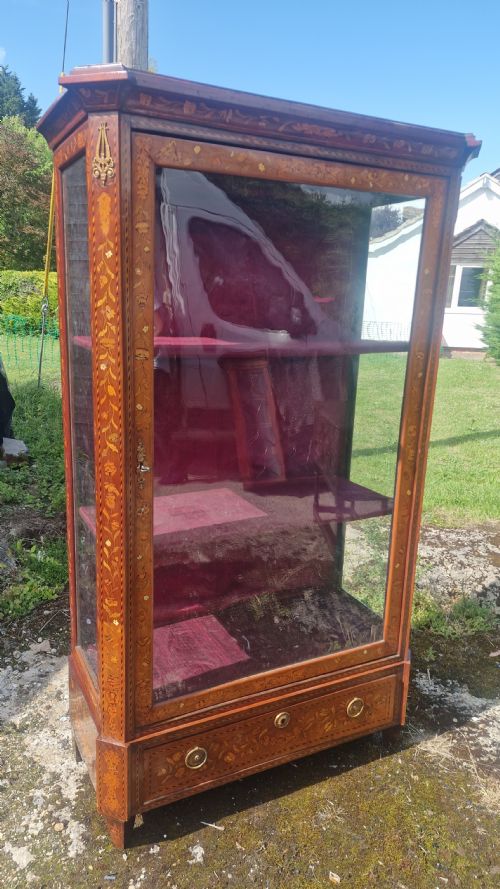
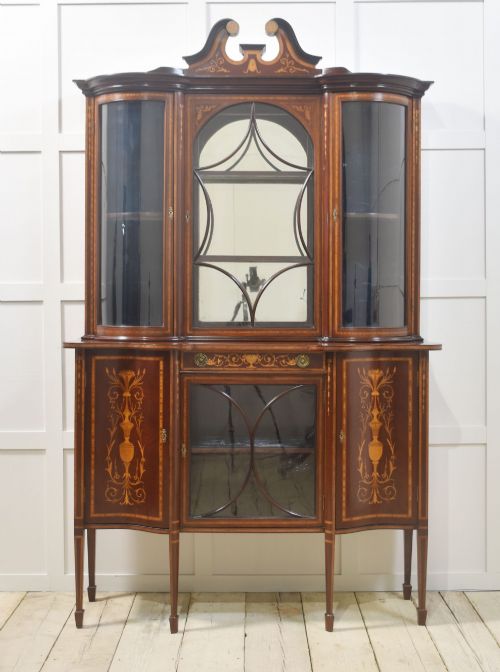
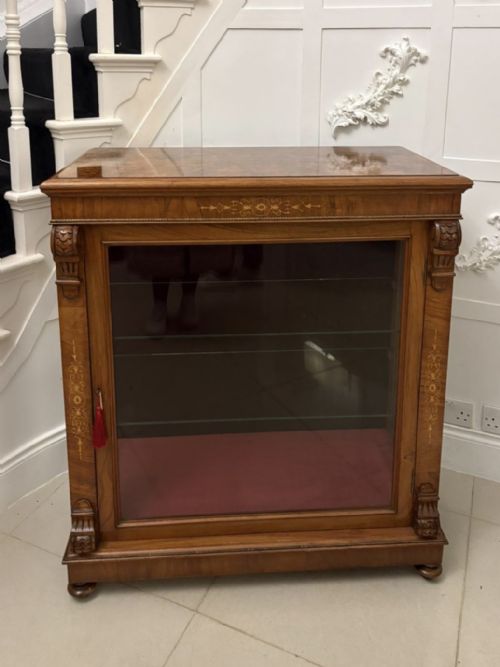
Inlaid Wood Vitrine
An inlaid wood vitrine frames precious objects behind glass, bringing together fine timbers, delicate marquetry and glazed display space.
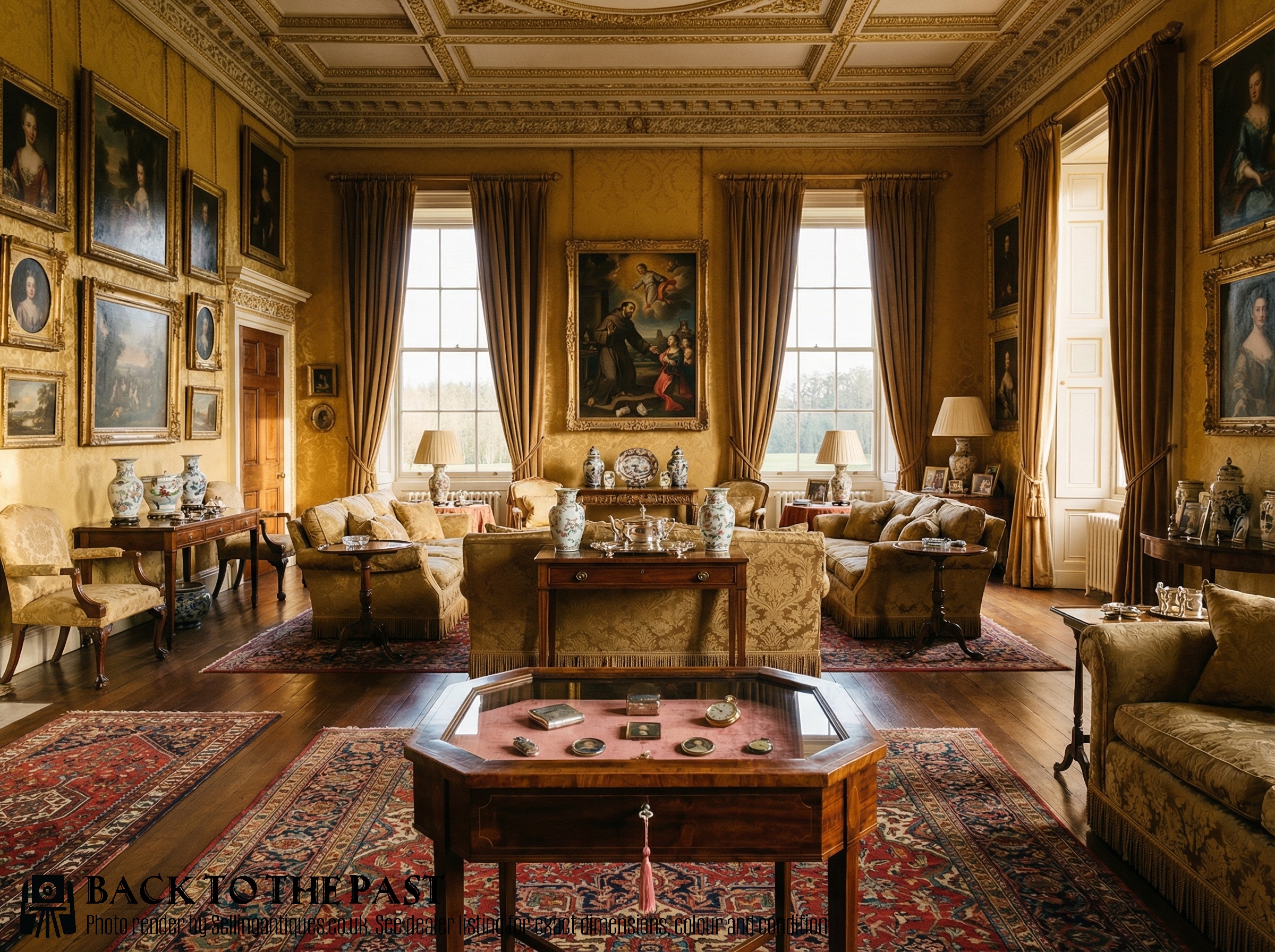
Inlaid Wood Vitrine
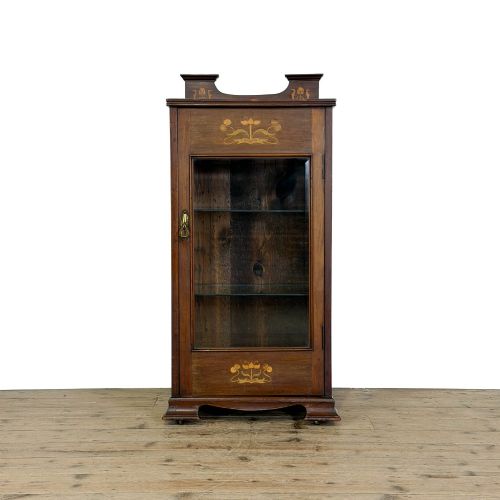
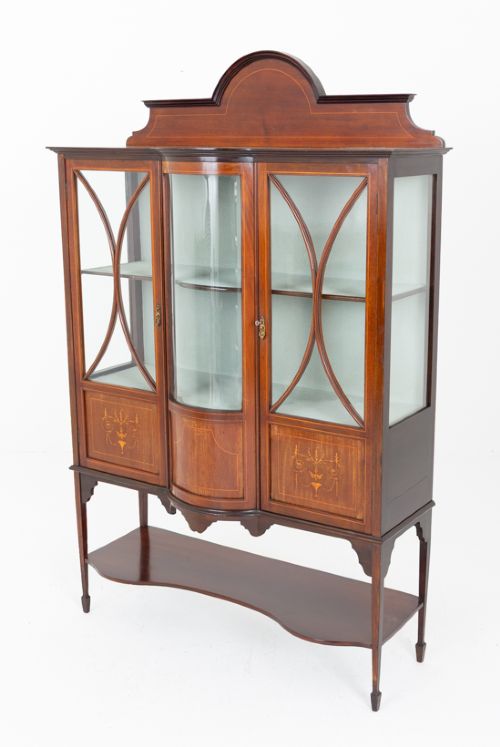
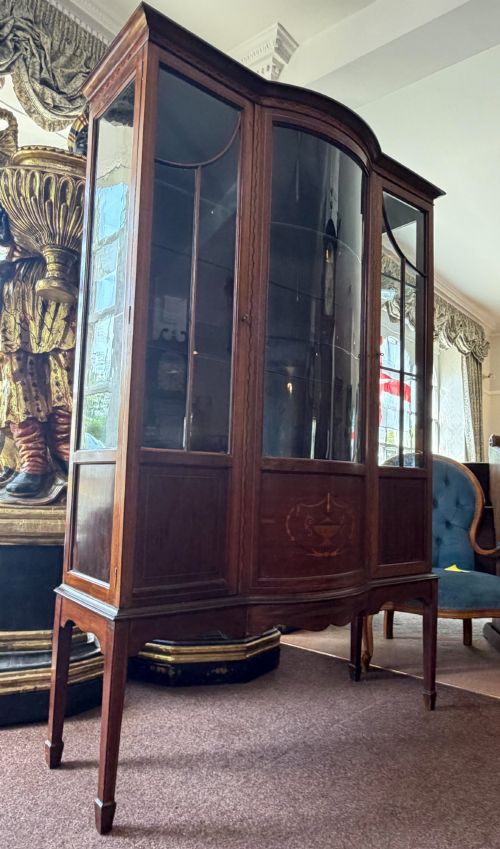
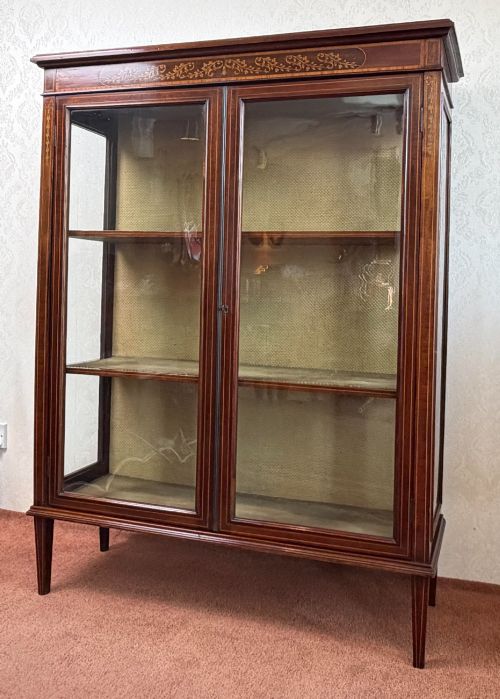
An inlaid wood vitrine provides a glazed enclosure for displaying ceramics, books and small treasures while protecting them from dust. These cabinets appear across several distinct historical eras, most frequently taking the form of Edwardian satinwood and mahogany display pieces or 19th-century Victorian and late Victorian cabinets.
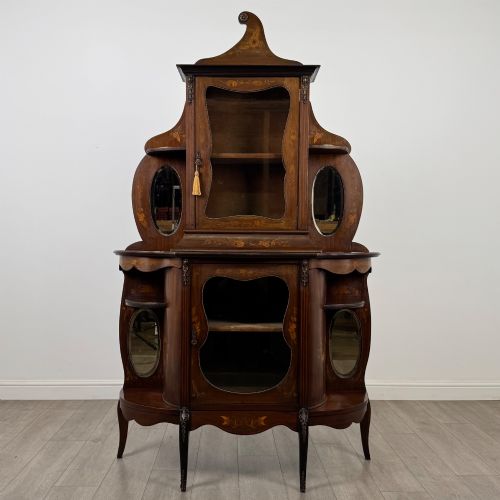
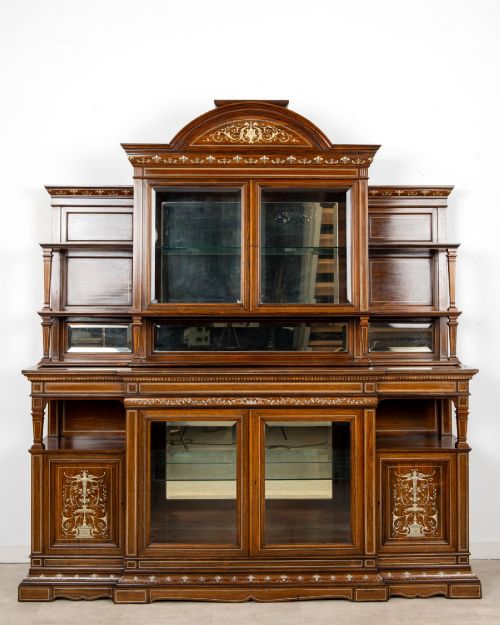
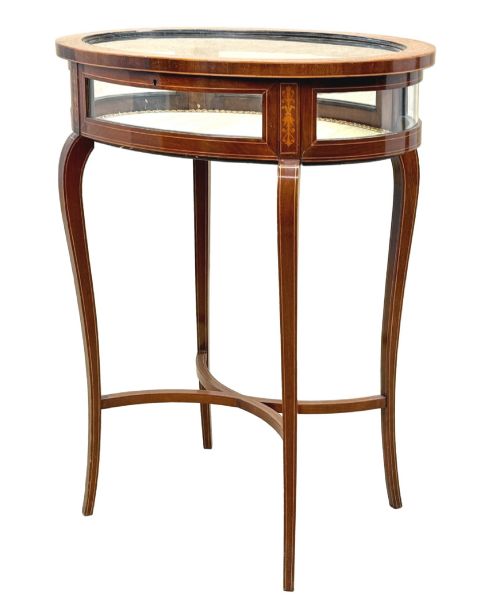
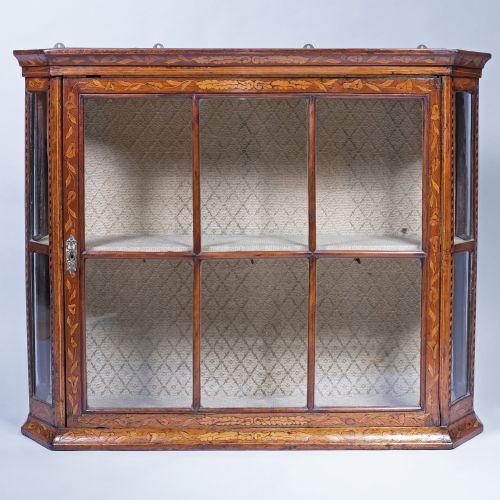
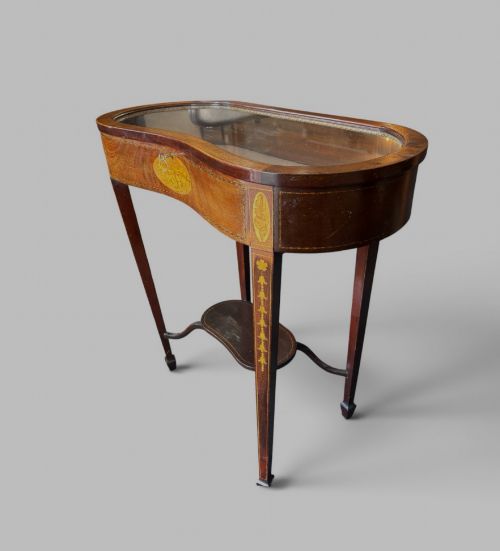
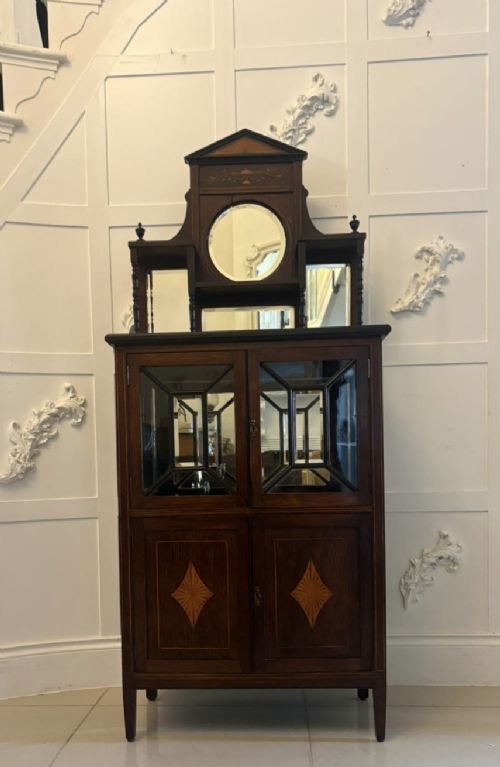
The selection ranges from upright display cabinets and corner cupboards to low oval or kidney-shaped bijouterie tables with glass tops. Many examples combine display shelving with lower cupboards or mirrored backs, whilst others adopt specific regional characteristics such as Dutch marquetry or French styling.
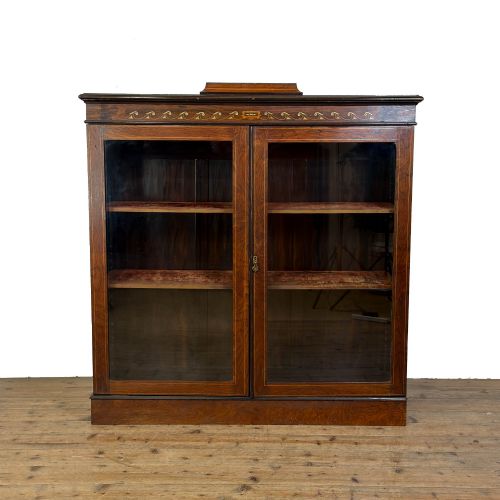
Makers and designers of these cabinets drew heavily on earlier historical design languages, producing pieces in Sheraton Revival, Georgian style, Regency and Art Nouveau aesthetics. The primary forms include wall cabinets, side cabinets, and combination bookcase display units designed to anchor a formal room.
How they were made
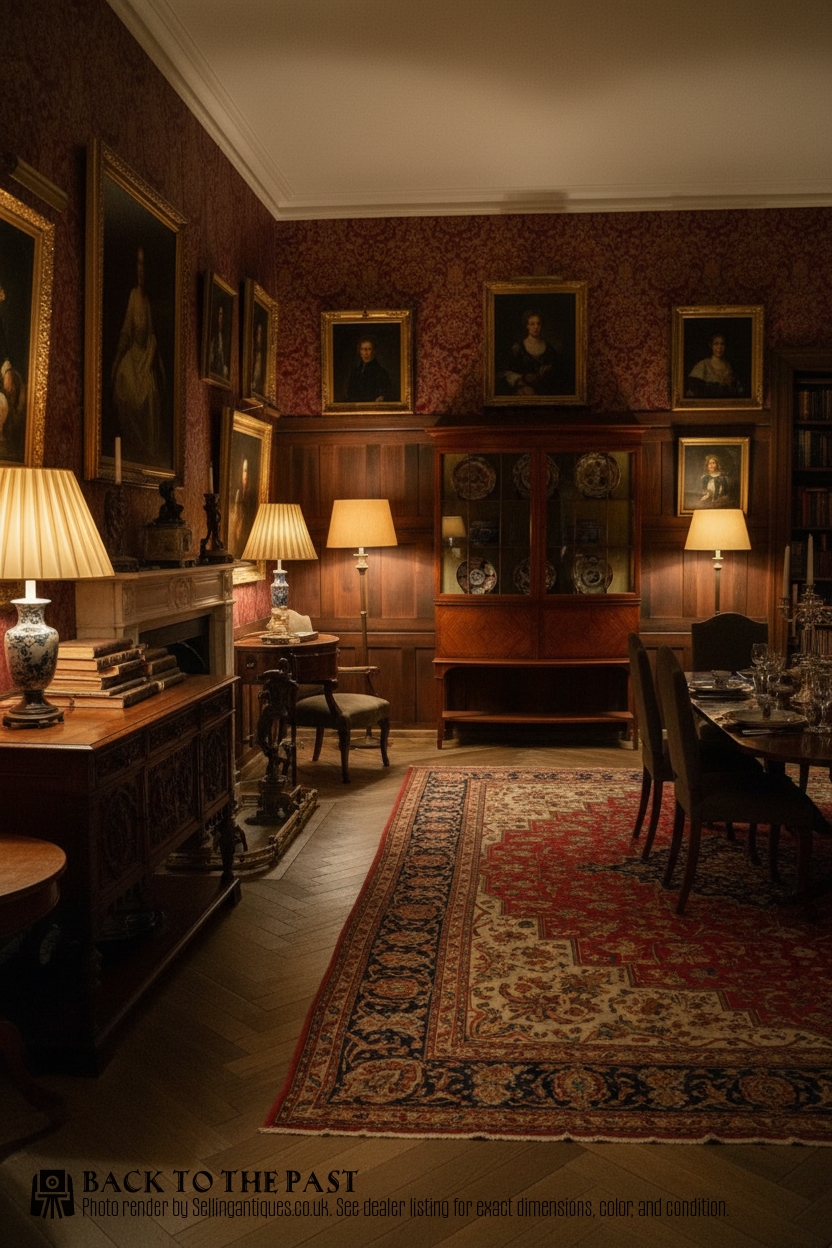
Cabinet makers constructed the foundational carcass of each vitrine using dense timbers such as mahogany, walnut, rosewood, kingswood or satinwood. These structural woods often received contrasting bands of inlay and marquetry work, utilising lighter satinwood or fruitwoods to create decorative motifs.
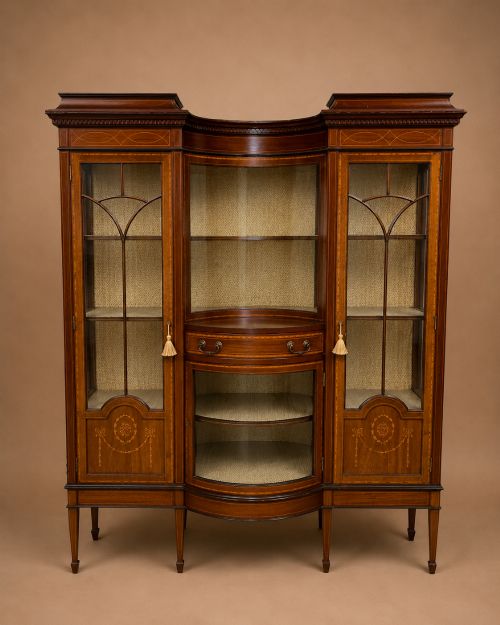
Glazing forms a central element of construction, with individual glass panes held securely in timber frame doors or curved bow fronts. Additional interior elements frequently incorporate mirrored backs to reflect light through the displayed objects, accompanied by brass hardware and occasional gilt bronze mounts.
The listings show inlaid wood vitrines spanning the 18th, 19th and early 20th centuries, dominated by Edwardian and Victorian mahogany, satinwood and walnut examples.
What varies in quality
The sophistication of the timber selection and the precision of the marquetry inlay determine the visual calibre of a piece. Delicate, hand-cut floral or classical inlay patterns executed in contrasting woods separate standard production from superior examples.
Structural refinement shows in the shaping of the timber, such as smooth serpentine or bow front doors and well-fitted glass panels. The presence of documented workshop attribution or specific maker signatures elevates the standing of an individual vitrine.
Edwards & Roberts·Collinson & Lock·Waring & Gillow
The Inlaid Wood Vitrine Glossary
- Vitrine
- A glass-fronted cabinet or table designed for displaying fine objects and curiosities. These pieces originated primarily for the exhibition of precious porcelain and small collectibles.
- Marquetry
- Decorative veneer work applied in intricate patterns using various coloured woods, metals or shells. Craftsmen assemble these pictorial designs before gluing them to the furniture carcass.
- Bijouterie table
- A shallow glazed display table built specifically to exhibit jewellery and small decorative items. They often stand on slender legs with hinged glass tops.
- Sheraton Revival
- A late 19th and early 20th-century design movement replicating the lighter, neoclassical furniture styles of the 18th-century designer Thomas Sheraton. Cabinets from this movement feature satinwood inlay and refined proportions.
- Bow front
- A convex curved cabinet front that projects outward in a smooth arc. This curved carpentry requires precise joinery and specialised glass bending.
Inlaid Wood Vitrine: Frequently Asked Questions
What is an inlaid wood vitrine used for?
These cabinets serve to exhibit and protect delicate collections of porcelain, glassware and small curiosities within a domestic interior. The glass panels and mirrored backs allow light to circulate around the displayed items.
Beyond simple shelving, specific variants like bijouterie tables provide horizontal surface display for flat items and jewellery. They function as both storage furniture and focal display points in drawing rooms.
How do I distinguish Edwardian from Victorian cabinets?
Victorian cabinets tend to use heavier timbers, darker walnut or rosewood veneers, and often incorporate richer marquetry or gilt bronze mounts. They frequently date from the mid to late 19th century.
Edwardian pieces, particularly those in the Sheraton Revival style, generally exhibit a lighter touch with bright satinwood inlay, mahogany frames, and airier proportions dating around 1900.
Where should I place a corner cabinet?
A corner cabinet fits neatly into the intersecting walls of a room, utilising empty architectural angles without obstructing floor space. They work well in dining rooms or studies to display china.
Because these cabinets feature glazed doors and interior shelving, placing them near a natural light source helps illuminate the objects housed inside.
What is the difference between a vitrine and a china cabinet?
A vitrine specifically emphasises extensive glass panels on the sides and doors to maximise visibility from multiple angles. The term often implies a piece intended for delicate ornamental items.
A china cabinet traditionally serves a more utilitarian purpose for storing dinner services, sometimes featuring wooden lower doors alongside upper glass sections.
How should I care for antique inlaid wood?
Protect antique wood and inlay by keeping cabinets away from direct sunlight and sudden temperature changes, which can cause timber to warp or veneer to lift. Maintain a stable indoor climate.
Clean surfaces gently with a dry or lightly damp soft cloth, avoiding harsh chemical polishes that might damage the delicate marquetry or French polish finish.