




Inlaid Bijouterie Cabinet
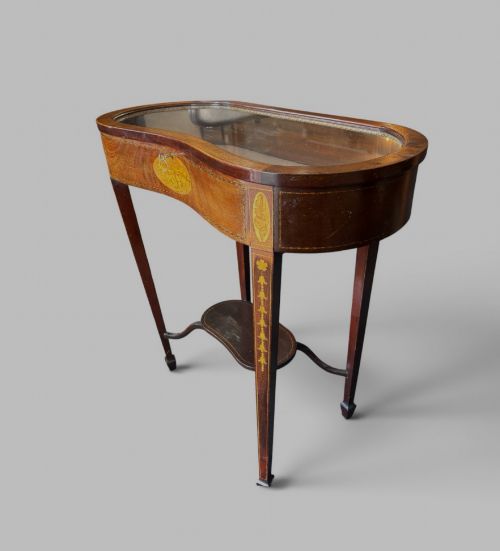
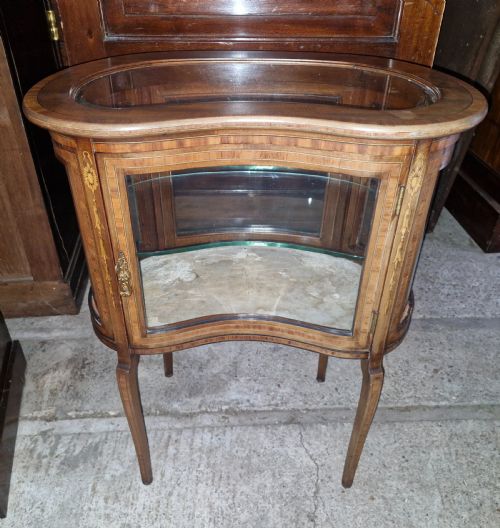
An inlaid bijouterie cabinet holds small treasures under glass, combining timber frames with delicate contrasting decoration.
Inlaid Bijouterie Cabinet
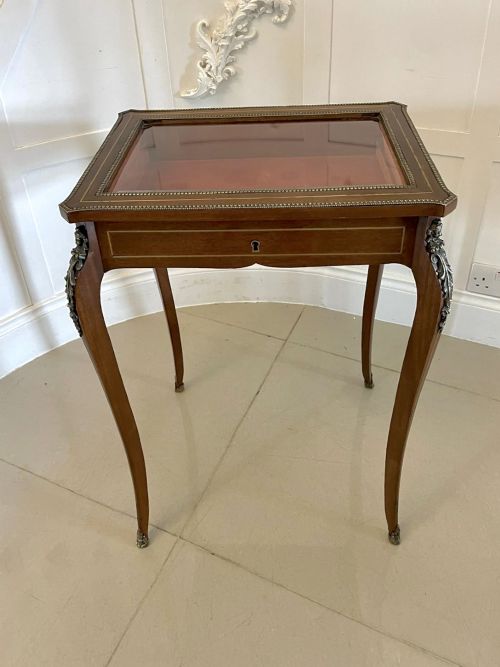
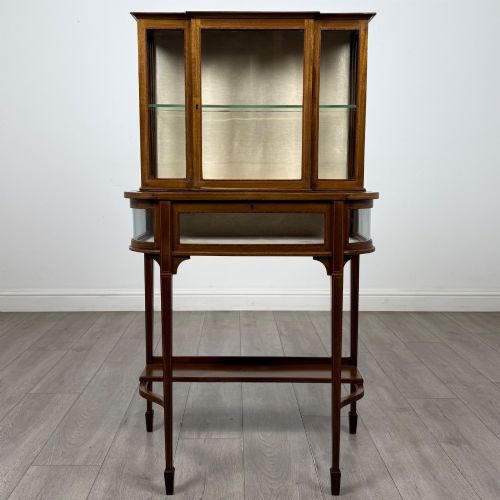
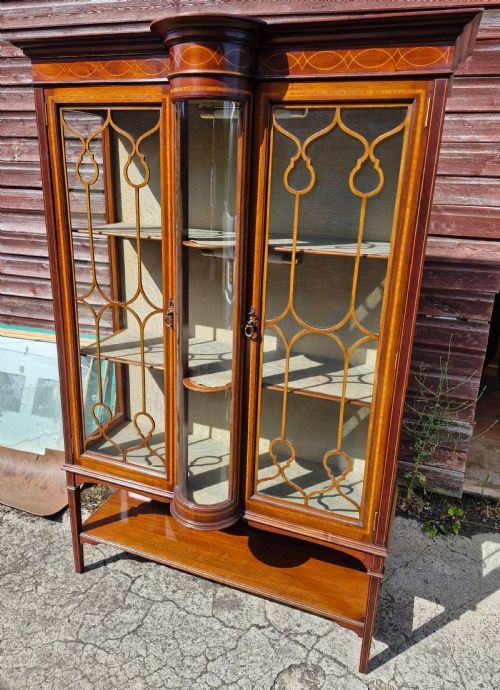
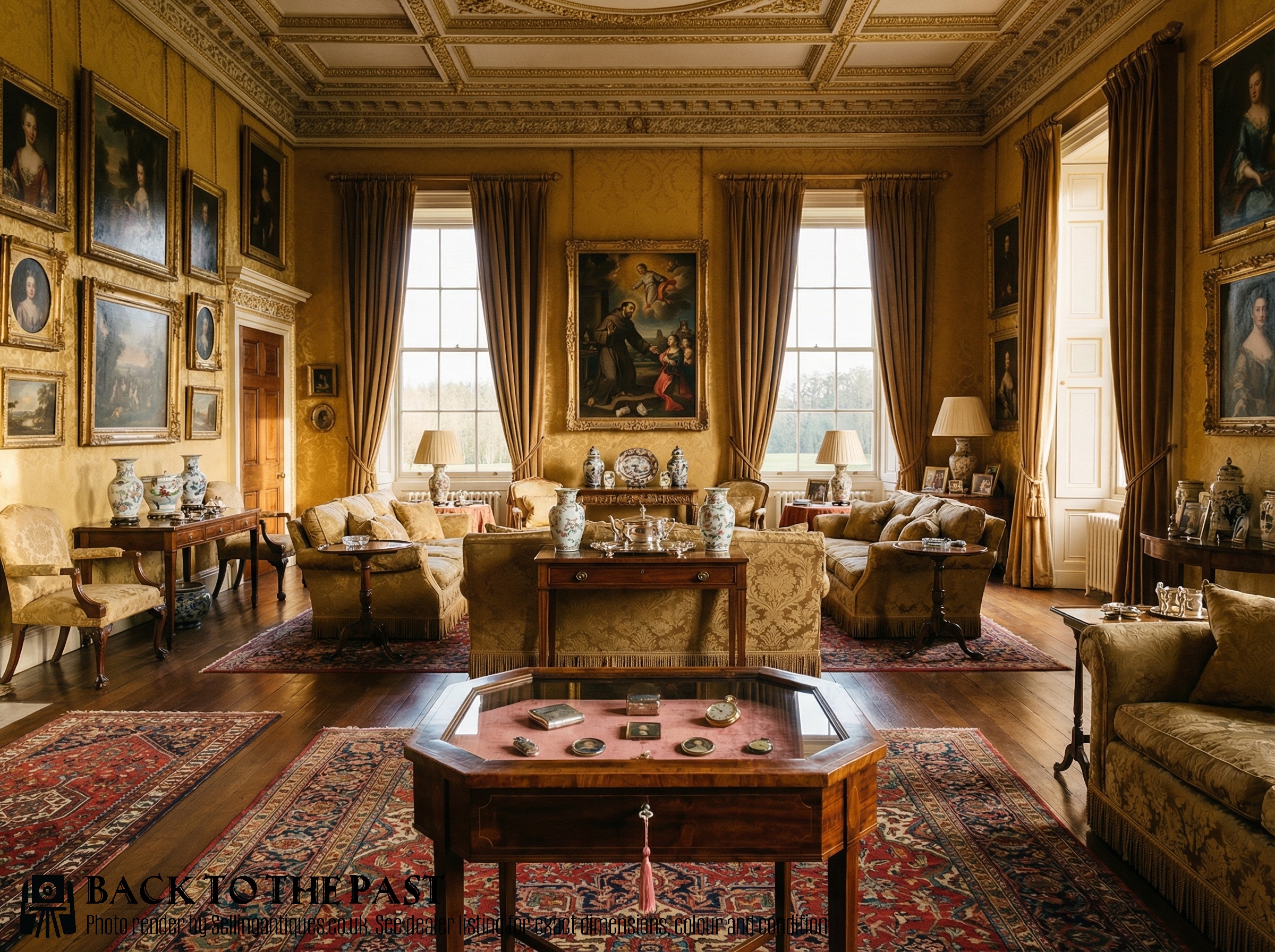
An inlaid bijouterie cabinet serves as a glazed showcase for small treasures, medals and curiosities. These pieces combine display surfaces with compartmented storage beneath transparent tops or panels. The form bridges the gap between a display table and a cabinet, lifting precious objects to eye level.
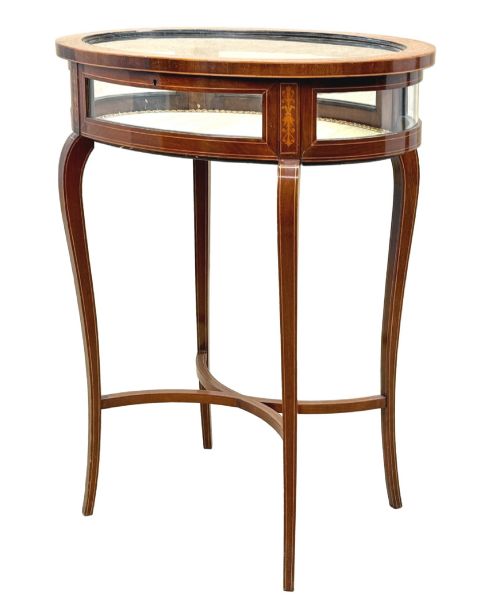
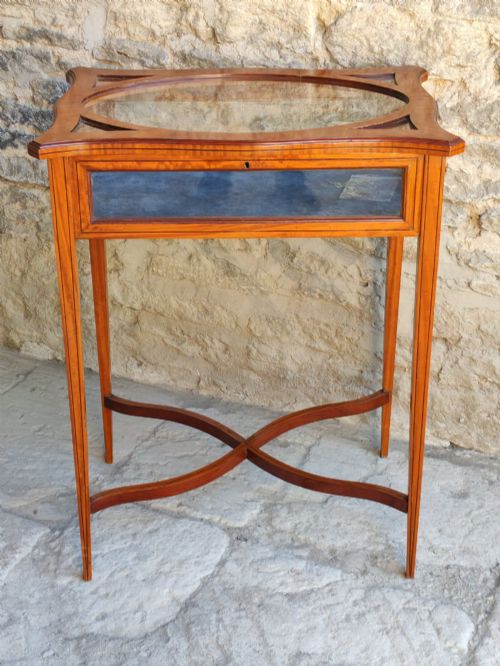
Edwardian examples in mahogany dominate the selection, frequently featuring satinwood inlay and slender legs. Pieces span from the late nineteenth century through to the early twentieth century, incorporating revival styles alongside Georgian influences. Shapes range from simple rectangles to kidney, oval and octagonal forms.
How they were made
Construction relies primarily on mahogany and satinwood timbers, shaped into display tables and cabinets with glazed panels. Cabinetmakers utilised brass mounts, glass panes and fitted interiors lined with velvet or fabric to protect delicate items. Inlay work introduced contrasting light and dark woods into the structural surfaces.
Makers applied marquetry and banding techniques to enrich the exterior timber panels. The glass components sit within hinged or fitted frames designed to seal securely against dust while offering an unobstructed view of the interior.
Several pieces feature curved kidney shapes designed to fit snugly against the waist of a standing collector.
What varies in quality
The precision of the timber inlay and the crispness of the marquetry distinguish finer examples from simpler workshop output. Cabinet work involving complex curved glass or shaped kidney forms demands higher skill than standard rectangular boxes. Selection of timber grain and the delicacy of brass mounts shift pieces across tiers of craftsmanship.
Interior fittings, including fabric choices and the smooth action of hinged lids or doors, indicate the original grade of manufacture. Sturdiness in the leg frames and subtlety in the banding separate standard production from superior pieces.
The Inlaid Bijouterie Cabinet Glossary
- Bijouterie cabinet
- A glazed display piece designed specifically for small ornaments, jewellery and miniature treasures. These items typically feature a glass lid or sides to permit all-round viewing.
- Inlay
- A technique where pieces of contrasting timber or shell are inserted into recessed cavities on a wooden surface. This method creates flat decorative patterns across tabletops and cabinet fronts.
- Marquetry
- Elaborate decorative veneer work assembled to form pictorial or geometric designs. Craftsmen cut multiple thin wood layers simultaneously to achieve tight joints.
- Vitrine
- A glass-fronted cabinet used for displaying porcelain, curiosities and fine objects. The term often overlaps with display tables in nineteenth-century contexts.
- Satinwood
- A lustrous yellow-brown timber utilised extensively for stringing, banding and contrasting details in cabinetwork. Its reflective grain catches light effectively.
Inlaid Bijouterie Cabinet: Frequently Asked Questions
What goes inside a bijouterie cabinet?
Owners traditionally place small collectables, medals, pocket watches and delicate trinkets beneath the glass top.
The lined interior cushions these objects while keeping them visible from above.
How do you date an inlaid cabinet?
Dating relies on timber choices, leg styles, and the specific character of the inlay work. Edwardian pieces often show lighter satinwood highlights, while nineteenth-century items lean towards heavier mahogany.
Hardware details and revival influences also help narrow the decade of manufacture.
Are these tables or cabinets?
The archive includes both tabletop display cases on legs and taller cabinet formats. Many pieces blur the boundary by functioning as low display tables with glazed compartments.
Terminology often reflects the specific height and leg configuration of each piece.
How do you maintain the fabric lining?
Velvet and fabric interiors benefit from gentle surface dusting with soft brushes. Avoiding direct sunlight preserves the original colour of both the textiles and the surrounding wood.
Checking the glass seals prevents dust accumulation around the stored items.