


Inlaid Wood Sewing Box
An inlaid wood sewing box brings together precise cabinet work and small scale storage, offering a tangible link to nineteenth century needlework habits.
Inlaid Wood Sewing Box
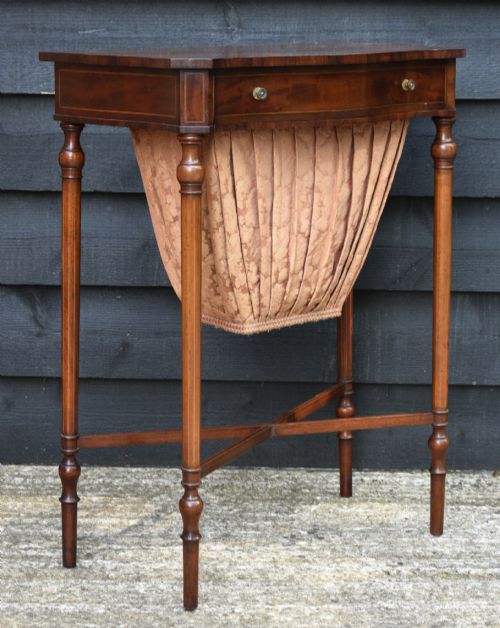
When you search for an inlaid wood sewing box, you encounter everything from small lidded caskets designed for a dressing table to larger freestanding work tables on pillar supports. The pieces on this page span the Regency, Victorian, and Edwardian periods, crossing stylistic watersheds from austere brass stringing to elaborate marquetry.
Table forms frequently appear alongside portable boxes, giving buyers a choice between surface display and dedicated floor-standing furniture. Rosewood and burr walnut dominate the evidence, frequently paired with contrasting veneers such as satinwood and boxwood.
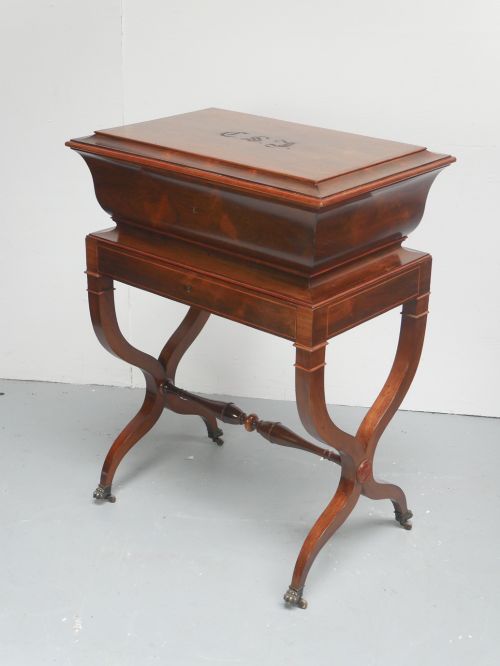
Interior fittings remain central to these objects, often retaining original velvet or silk linings alongside fitted compartments for thread, needles, and bobbins. The variety ranges from compact trinket boxes to substantial sarcophagus-shaped receptacles.
How they were made
Cabinet makers utilised dense hardwoods such as rosewood, walnut, and mahogany as foundations for intricate surface decoration. Techniques combined contrasting timber veneers with localized banding, utilising boxwood and satinwood to frame central panels.
Inlay work frequently incorporated alternative materials, embedding mother-of-pearl, brass, and occasionally ivory directly into the grain. Specialised regional methods, such as the micro-mosaic timber pictures characteristic of Tunbridge Ware, appeared on both boxes and baskets.
Internal components required precise joinery to house compartmentalised trays, lids, and pin cushions. Silk and velvet linings were glued or tacked into place, completing the transition from exterior cabinetry to functional interior storage.
Some nineteenth century ladies hid their secrets twice by choosing boxes fitted with hidden drawers activated by secret wooden pins.
What varies in quality
The standard of execution in the timber inlay marks the primary distinction between ordinary production and superior workshop output. Crisp lines in brass stringing or meticulously registered geometric marquetry indicate skilled hand labour rather than mechanical uniformity.
Material selection dictates much of the physical presence, with figured burr walnut and rich rosewood foundations holding greater visual depth than plainer domestic timbers. The survival of complete internal fittings and original silk or velvet lining adds significantly to the integrity of any individual piece.
Structural joinery in the carcase and the stability of the box lid or table top determine long-term durability. Quality reveals itself in the seamless alignment of mitred corners and the retention of working locks and hinges.
Waring and Gillow·Thomas Briggs·Pearce London·Lesage
The Inlaid Wood Sewing Box Glossary
- Marquetry
- The art of forming decorative patterns by fitting together small pieces of wood veneer. This technique allowed cabinet makers to create pictorial or floral designs across box lids and table tops.
- Tunbridge Ware
- A distinct form of woodworking originating in Kent, featuring tiny mosaic tiles made from natural woods arranged to form pictorial designs. These mosaics were sliced and applied to the surfaces of small boxes and baskets.
- Sarcophagus
- A coffin-like shape with a domed lid and sloping sides, popular for larger nineteenth century boxes. This form provided generous internal capacity while maintaining a formal architectural silhouette.
- Stringing
- A narrow strip of contrasting timber or brass inlaid into a groove on a furniture surface. It served to outline panels and accentuate the edges of lids and drawers.
- Work Table
- A freestanding piece of furniture incorporating storage for sewing gear, frequently featuring an attached fabric bag or wool box beneath. These tables combined surface utility with specialised compartments for needlework.
Inlaid Wood Sewing Box: Frequently Asked Questions
What were these boxes used for?
These boxes provided secure storage for sewing implements, threads, pins, and personal trinkets during the nineteenth and early twentieth centuries. Ladies kept them on side tables or dressing surfaces to organise ongoing needlework projects.
Beyond utilitarian storage, they served as decorative objects that demonstrated the owner's refinement and taste. Many contained specialised trays and compartments designed specifically to hold delicate sewing tools.
How do I tell a Regency box from a Victorian one?
Regency pieces often feature clean architectural lines with geometric brass inlay and rosewood surfaces. They lean towards classical restraint and neat proportions.
Victorian examples tend towards heavier proportions, frequently employing burr walnut, elaborate marquetry, or mother-of-pearl decoration. Sarcophagus shapes and more exuberant surface ornamentation emerge strongly in the later nineteenth century.
Are the interior fittings usually original?
Many pieces retain their original fitted trays, compartments, and fabric linings, though silk and velvet often show signs of age. Original partitions and pin cushions add considerable character.
Some examples have had their internal trays removed or relined over the decades. Examining the glue residue and fabric wear helps determine if the interior dates to the same period as the carcase.
How do I care for inlaid wood?
Keep inlaid pieces out of direct sunlight and away from rapid temperature shifts to prevent the wood veneers from drying out and lifting. Stable indoor humidity protects both the timber and the tiny mosaic or metal inlays.
Apply a light microcrystalline wax occasionally to nourish the hardwood surface without building up heavy residues. Avoid liquid cleaners that might seep into joints or damage delicate fabric interiors.