
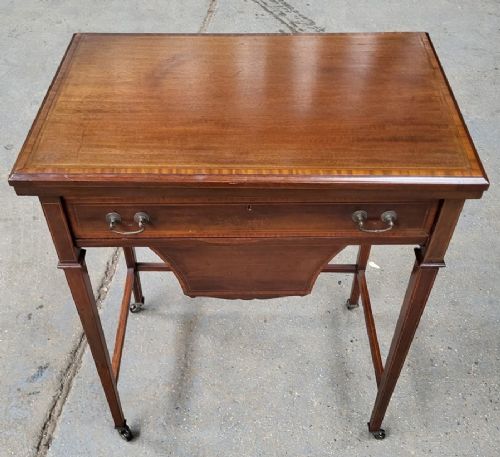


Brown Wood Work Box
A brown wood work box brings functional elegance to a room, offering compartments for sewing, writing or keeping small treasures.
Brown Wood Work Box
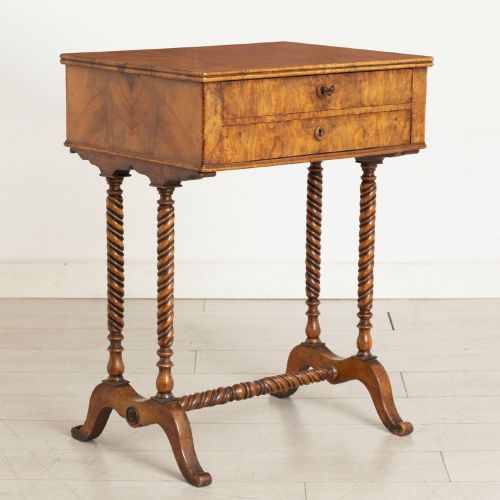
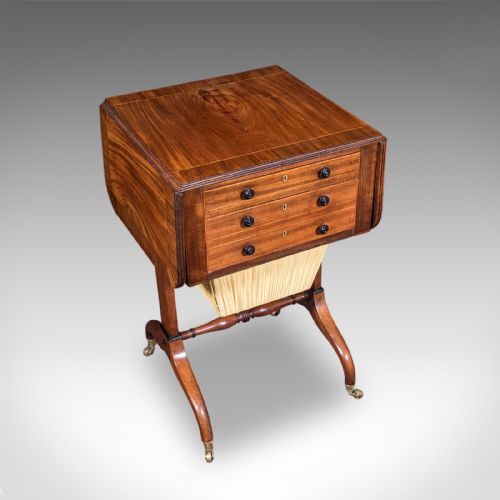
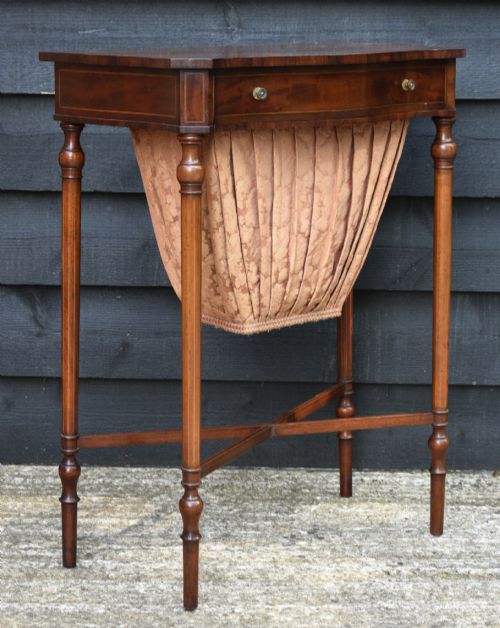
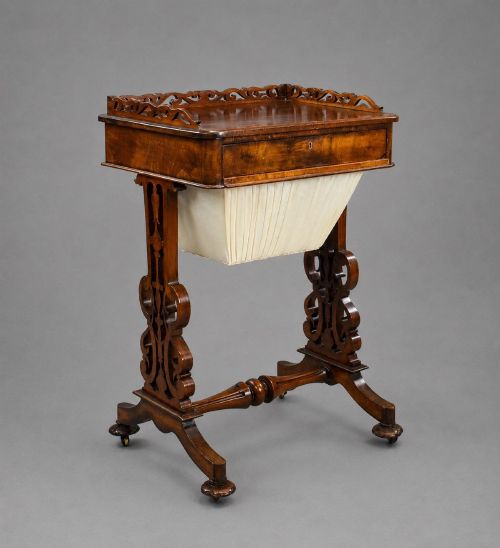
When you search for a brown wood work box, you encounter pieces designed for sewing, needlework and correspondence across several centuries. The selection on this page ranges from portable table top caskets to freestanding tables with drop leaves and fitted interiors.
The periods represented stretch from the 17th century through the Georgian, Regency, Victorian and Edwardian eras. Tables and boxes appear in forms such as sarcophagus shapes, trumpet tables and serpentine sewing desks.
Materials and construction
Cabinet makers utilised dense hardwoods including mahogany, walnut, burr walnut, rosewood and satinwood, often enhanced with brass hardware and intricate marquetry or parquetry inlay. Surfaces frequently display careful cross banding and decorative veneers that highlight the natural grain of the timber.
Internal compartments often feature lined fabric interiors designed to organise sewing implements, threads and writing materials. Construction techniques span traditional dovetailing for boxes and precise joinery for freestanding occasional and side tables.
The inventory includes specialised regional craft such as Tunbridge Ware mosaics, Sorrento olive wood and Anglo-Indian boxes.
Assessing quality and craftsmanship
Superior examples distinguish themselves through the choice of figured veneers, such as burr walnut or amboyna, and the precision of inlaid details like Tunbridge ware or Sorrento mosaics. The execution of fitted internal trays and the retention of original keys indicate higher workshop standards.
Proportions and stability define the better freestanding tables, where turning on pedestals and the integration of drop leaves function smoothly. The crispness of carved elements and the condition of the timber finish separate standard production pieces from fine cabinet work.
Waring & Gillow
The Brown Wood Work Box Glossary
- Burr walnut
- A prized timber harvested from the burl growths of walnut trees, yielding swirling, highly decorative grain patterns. Cabinet makers selected these sections for prominent exterior panels on finer boxes and tables.
- Marquetry
- The art of applying decorative pieces of wood veneer to a structure to form intricate pictorial designs or geometric patterns. This technique appeared frequently on Victorian and Edwardian table tops.
- Sarcophagus
- A monumental box shape featuring a domed or sloping lid resting on a plinth base, often utilised for Regency and Victorian tea caddies or jewellery boxes. The form mimics ancient stone tombs on a domestic scale.
- Trumpet table
- A freestanding sewing table featuring a flared octagonal or hexagonal body resembling a musical instrument, supported on a pillar and tripod base. The interior typically conceals a deep compartment or bag for needlework.
Brown Wood Work Box: Frequently Asked Questions
What is a brown wood work box used for?
These pieces were originally designed to store sewing implements, threads, needles and personal correspondence. Today they function equally well as decorative accents or tidy storage solutions for small household items.
Smaller boxes sit neatly on desks or chests, while freestanding work tables serve beside seating areas as functional occasional tables.
How do I identify a Victorian work table?
Victorian examples often feature rich burr walnut or mahogany timbers, frequently incorporating turned pedestals and fitted internal compartments for sewing. Stylistic cues include heavy scrolling, brass mounts and elaborate cross banding.
Many pieces from this era combine multiple uses, serving as games tables or writing desks alongside their primary sewing function.
Are these boxes and tables made from solid wood?
Construction typically combines solid structural framing with decorative wood veneers applied to stable secondary timbers. This method allowed cabinet makers to utilise highly figured timbers like burr walnut and satinwood without risking excessive warping.
Inlay and parquetry work also relied on thin veneer sections applied carefully to the main body of the box or table.
How do I care for antique wood furniture?
Maintain the timber by keeping pieces away from direct sunlight and sudden temperature changes, which can dry out old wood and crack veneers. Dust regularly with a soft, dry cloth and apply occasional specialist wax to nourish the finish.
Avoid using modern liquid polishes or placing damp items directly onto antique wooden surfaces.