




Antique Folding Work Table
An antique folding work table combines compact ingenuity with domestic craft, offering surfaces that expand for sewing, games or writing.
Antique Folding Work Table
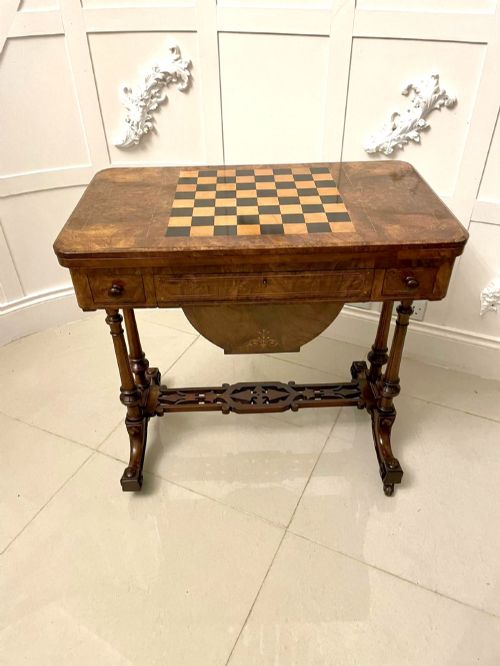
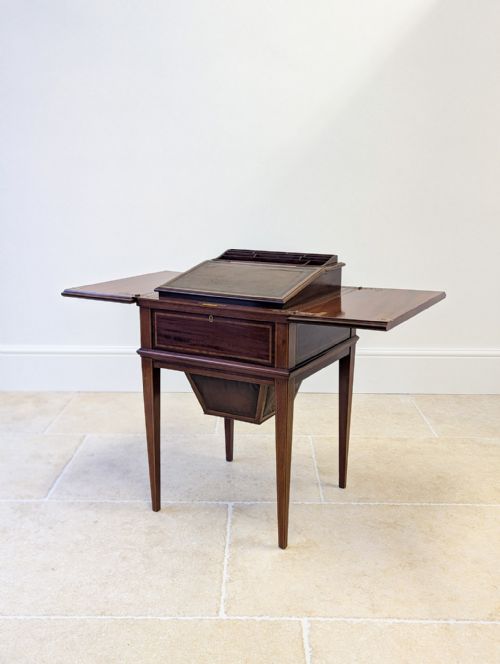
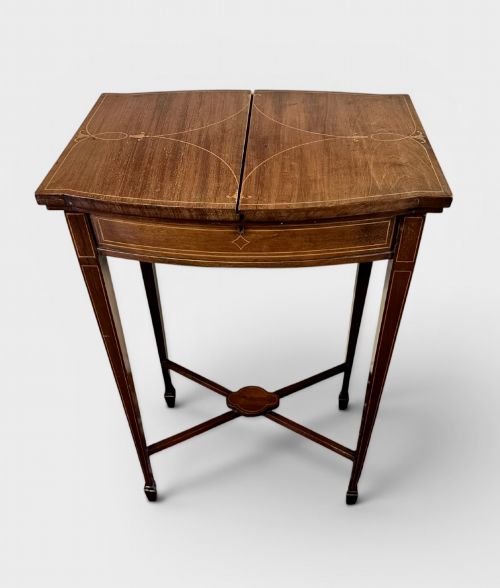
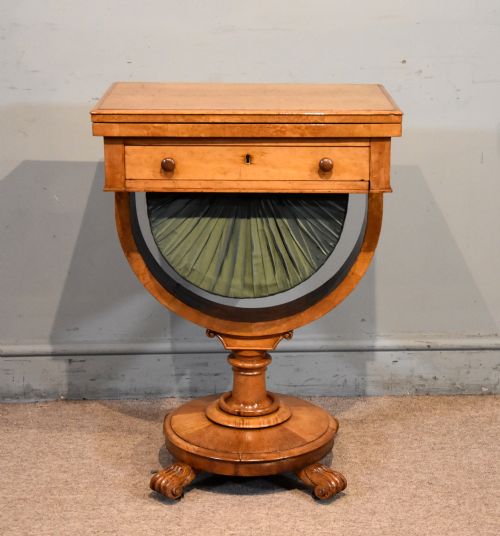
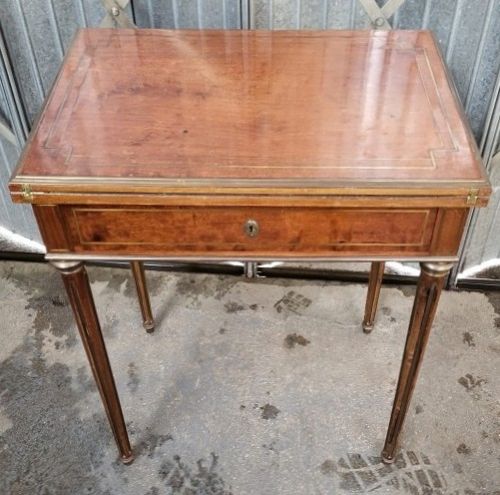
An antique folding work table serves multiple functions within the home, frequently combining a sewing compartment with a games surface or writing space. These pieces adapt to domestic needs through clever hinged tops, drop leaves and folding mechanisms.
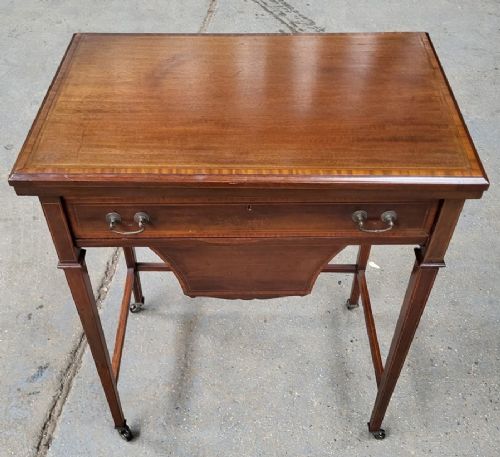
The selections span from Regency rosewood examples to Edwardian inlaid mahogany models, alongside Victorian burr walnut designs. Buyers frequently encounter versions that integrate fitted interiors, drawers and textile bags beneath the main surface.
Origins range across English workshops and nineteenth century French cabinet makers, with occasional industrial or garden variants appearing in pine, metal and iron. Each piece reflects the specific social habits and needlework traditions of its period.
How they were made
Cabinet makers utilised dense hardwoods such as mahogany, rosewood and walnut, frequently applying burr walnut veneers or satinwood crossbanding to the primary surfaces. Brass hardware supports the folding hinges, internal compartments and castors.
Interiors often feature fitted wooden compartments alongside suspended fabric or silk bags designed to hold sewing implements. Marquetry, inlay and painted finishes decorate the exterior panels of Edwardian and Victorian pieces.
Materials span walnut, burr walnut, mahogany, rosewood, maple, satinwood, fabric, brass, pine and painted metalwork.
What varies in quality
The refinement of the timber selection dictates the visual impact, particularly where figured burr walnut or book-matched rosewood veneers are deployed across the fold-over top. Precision in the marquetry and floral inlay separates standard production from finer cabinet work.
The mechanical ingenuity of the folding mechanism and the stability of the joints govern day-to-day utility. Intricate fitted interiors with original compartments and well-preserved internal construction retain greater structural integrity.
Gillows
The Antique Folding Work Table Glossary
- Metamorphic table
- A piece of furniture designed to transform its form or function through mechanical leaves, pivots or sliding sections.
- Marquetry
- Decorative veneer patterns formed from small pieces of wood, shell or ivory fitted into a geometric or floral design.
- Crossbanding
- A border strip of veneer laid around the edge of a tabletop so the grain runs perpendicular to the main panel.
- Drop-leaf table
- A table featuring hinged side flaps that fold down when not in use to save space.
- Palisander
- A dense, heavily figured exotic hardwood belonging to the rosewood family, frequently utilised in nineteenth-century cabinet making.
Antique Folding Work Table: Frequently Asked Questions
What is an antique folding work table?
These pieces are versatile domestic tables designed with hinged tops, drop leaves or folding actions to accommodate sewing, writing and games.
They typically incorporate internal compartments and drawers to store materials out of sight when the surface is closed.
How were work tables used historically?
Households utilised them in parlours and drawing rooms as dual-purpose furniture for needlework, card games and correspondence.
The folding mechanism allowed the furniture to occupy minimal space until needed for daily domestic tasks.
How do I identify Regency examples?
Regency pieces often display rich rosewood or maple timbers with clean architectural lines, brass stringing and classical pedestal bases.
They frequently combine a fold-over top for card playing with a fitted sewing drawer below.
What woods appear on Victorian tables?
Victorian versions commonly feature burr walnut and mahogany, frequently enhanced with floral marquetry or intricate crossbanding.
Rosewood also appears regularly, particularly on pieces produced during the middle decades of the nineteenth century.
How do I care for polished wood?
Keep the timber away from direct heat sources and strong sunlight to prevent the veneers from drying out and lifting.
Apply a traditional wax polish occasionally and buff gently with a soft cloth to maintain the finish.