


Folding Needlework Table
A folding needlework table combines a compact surface for card games with fitted compartments for sewing, making it a clever multi-purpose addition to any sitting room.
Folding Needlework Table
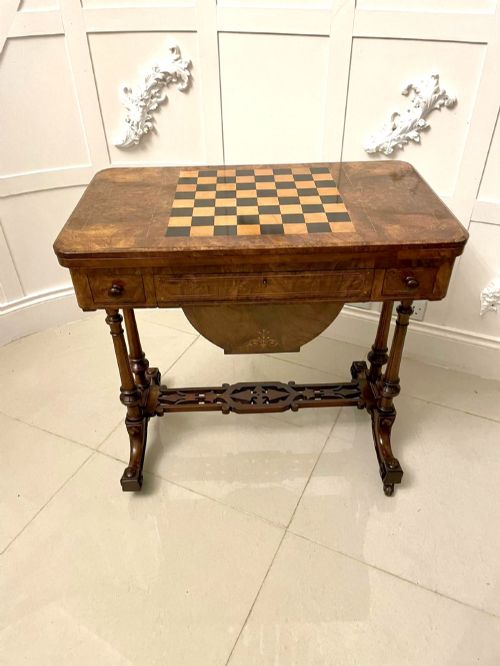
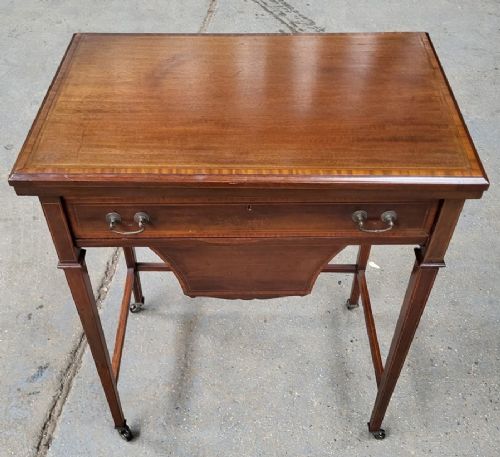
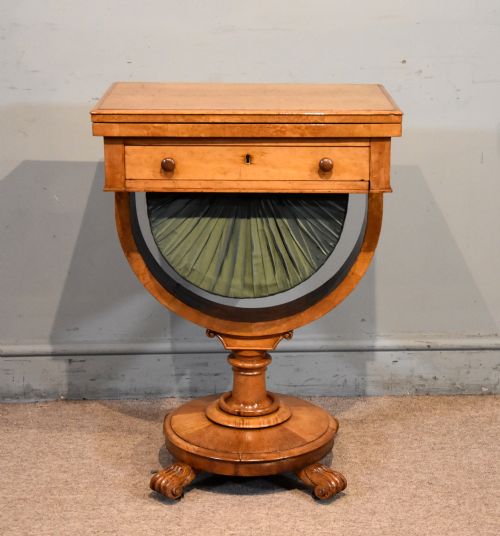
A folding needlework table is a versatile piece of furniture designed to serve both domestic craft and leisure. When you search for a folding needlework table, you encounter specimens primarily from the Regency, Victorian, and Edwardian periods, alongside examples dating to the nineteenth century and William IV era.
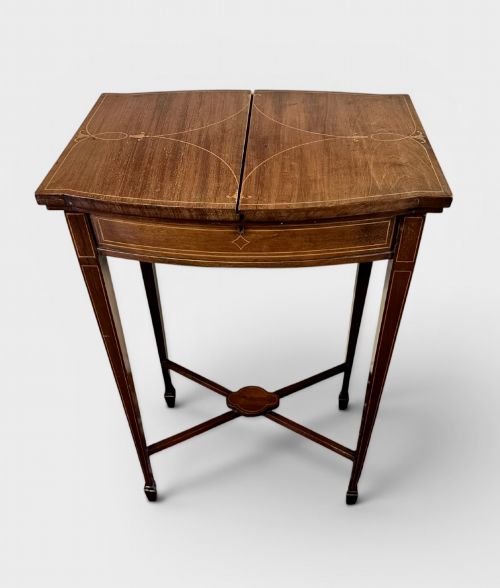
The forms span sewing tables, work tables, occasional tables, and games tables, often combining these functions within a single piece. You are most likely to meet Victorian burr walnut or Edwardian inlaid mahogany versions featuring fitted interiors and dual-purpose tops.
Materials and construction
Cabinet makers utilised a rich palette of timbers, including mahogany, walnut, burr walnut, maple, satinwood, and rosewood. These woods were frequently enhanced with decorative cross-banding and fine inlay work to create sophisticated surface patterns.
Structural integrity relied on traditional joinery while brass fittings were commonly applied to hinges, handles, and internal mechanisms. Lower compartments often incorporated fabric components to house textiles and sewing implements securely.
Some Victorian sewing tables secretly doubled as miniature betting dens once the card markers came out.
Judging quality and craftsmanship
Quality rests upon the choice of timber veneer and the precision of the inlay or cross-banding. Superior examples display carefully matched burr walnut or finely figured mahogany that remains stable and smooth across the folding top.
Interior execution further separates tiers of manufacture, seen in the neatness of fitted compartments for sewing tools and the smooth operation of folding mechanisms for games boards. Finer pieces demonstrate meticulous attention to hidden details and robust structural joints.
The Folding Needlework Table Glossary
- Cross-banding
- A border technique where thin strips of veneer are laid across the grain of the main surface. This provides a neat framing effect around table tops.
- Burr walnut
- A prized timber harvested from walnut tree growths, featuring swirling, highly decorative grain patterns. It elevates the visual appeal of Victorian tables.
- Fitted interior
- An internal compartment layout designed to organise sewing accessories, threads, and small tools. It often includes lidded boxes and small partitions.
- Games table
- A folding or pivoting furniture top lined for pastimes such as chess, checkers, or cards. Many sewing tables integrate this dual function.
Folding Needlework Table: Frequently Asked Questions
How were folding needlework tables used?
These tables served dual domestic purposes during the nineteenth and early twentieth centuries. Ladies utilised the fitted compartments and fabric bags to store sewing, embroidery, and needlework projects near the hearth.
The folding or rotating tops also revealed surfaces configured for card games and board pastimes, allowing the furniture to transition easily from daytime craft to evening recreation.
How do I date a sewing table?
Dating relies heavily on timber selection, decorative techniques, and overall stylistic markers. Regency pieces often showcase maple and classical proportions, whilst Victorian examples frequently employ burr walnut and heavier turning.
Edwardian and later nineteenth-century pieces tend to feature lighter mahogany frames with delicate inlay work and satinwood stringing. Examining the internal construction and hardware provides further clues to the manufacturing decade.
Are these tables suitable for modern rooms?
Their compact proportions make them exceptionally practical for contemporary living spaces as side tables or occasional desks. The concealed storage compartments offer a discreet place to keep modern small items tidy.
When positioned beside a sofa or chair, they provide a sturdy surface for drinks or books while retaining their historic character and conversational charm.