




Edwardian Inlaid Work Box
These edwardian inlaid work box pieces are compact repositories for sewing implements and trifles, combining refined marquetry with practical domestic utility.
Edwardian Inlaid Work Box
When you search for an edwardian inlaid work box, you encounter items designed to contain sewing tools, needlework, and personal valuables. These pieces range from small tabletop caskets to larger freestanding sewing and occasional tables fitted with internal compartments and fabric baskets.
The Edwardian examples predominate alongside related items from the Victorian and George V periods, as well as earlier Sheraton and Regency styles. You will frequently find mahogany and rosewood bodies enriched with contrasting stringing and shell motifs.
How They Were Made
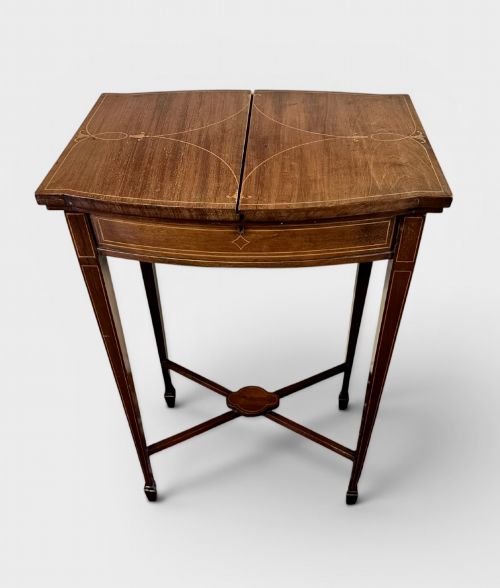
Cabinet makers constructed the foundational carcases using timbers such as mahogany, rosewood, and satinwood, often applying burr walnut or harewood veneers. Surfaces were then decorated with fine boxwood and brass inlay, utilising marquetry techniques to form geometric stringing and classical motifs.
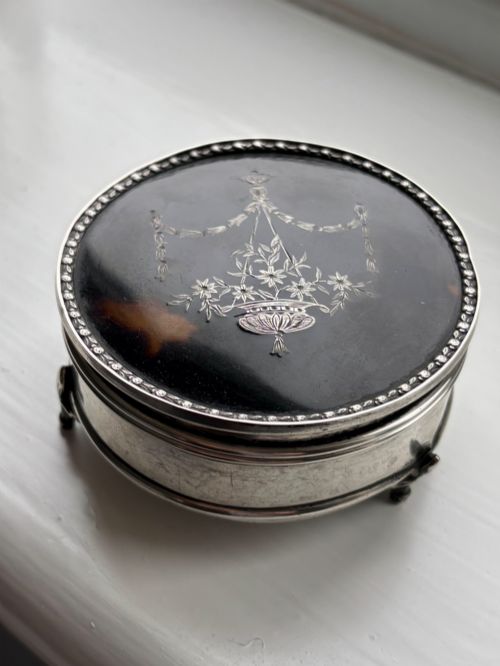
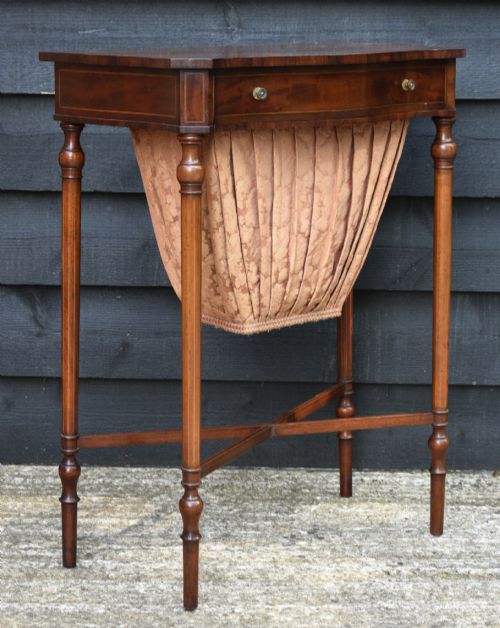
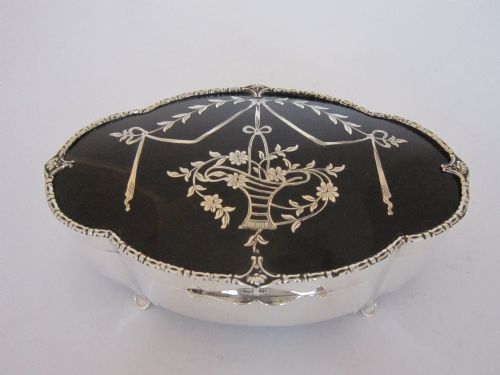
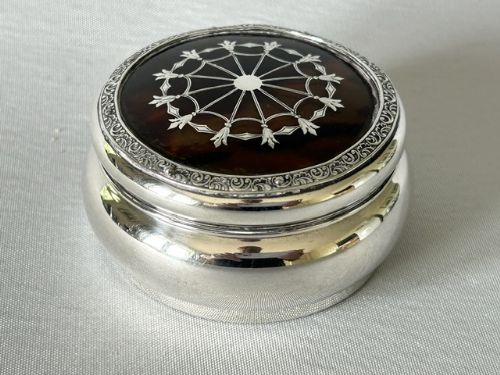
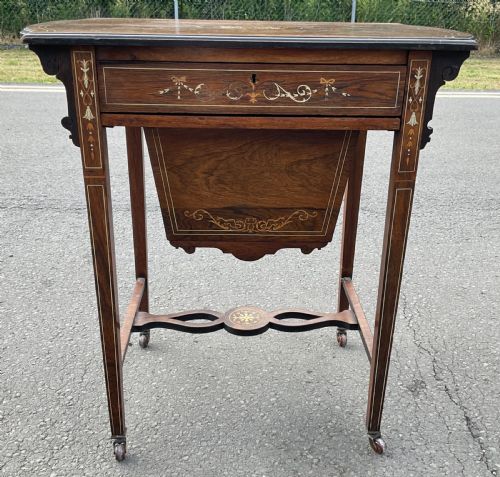
Freestanding sewing tables incorporate silk or fabric hanging baskets beneath the main body to hold ongoing needlework projects. Table boxes and caskets rely on hinged lids, fitted interiors, and occasionally sterling silver or tortoiseshell mounts.
Object forms range from compact tabletop trinket boxes to octagonal sewing tables with integrated silk baskets.
What Varies in Quality
The standard of an edwardian inlaid work box is largely determined by the precision of the marquetry and the choice of primary timbers. Pieces featuring crisp shell motifs, intricate boxwood stringing, and well-figured mahogany or satinwood represent the finer end of production.
Internal arrangement further distinguishes the build, with fully fitted compartments and intact original silk baskets commanding greater interest. Secondary woods and simpler box forms reflect more utilitarian workshop origins.
Ollivant and Botsford·Asprey and Co.
The Edwardian Inlaid Work Box Glossary
- Inlay
- A technique where contrasting materials are inserted into recessed cavities of a wooden base to form a decorative surface. This method creates geometric patterns and pictorial motifs.
- Marquetry
- Elaborate veneer work applied to furniture surfaces to create pictorial or decorative designs. It utilises various coloured woods to achieve tonal depth.
- Satinwood
- A durable tropical timber valued for its lustrous, golden appearance and smooth grain. Cabinet makers used it extensively for contrasting banding and veneering.
- Stringing
- Thin strips of contrasting wood embedded into the surface of furniture to outline panels and edges. It defines structural lines with delicate precision.
- Sarcophagus
- A monumental container shape featuring a domed lid and angled sides, adapted for nineteenth-century desktop and tabletop boxes. This form mimics ancient stone tombs on a miniature scale.
Edwardian Inlaid Work Box: Frequently Asked Questions
What is an edwardian inlaid work box?
These items are specialised household containers and small tables designed to hold sewing gear, threads, and personal trinkets. They combine decorative woodwork with practical internal storage for domestic needlework.
Most examples feature hinged lids opening to reveal fitted compartments. Some stand independently on slender legs with attached fabric work bags.
How were these boxes used daily?
Victorian and Edwardian ladies utilised these pieces to organise sewing needles, pins, spools, and ongoing embroidery tasks in the drawing room or bedroom. They kept necessary tools close at hand while maintaining a tidy interior.
Tabletop versions sat neatly on sideboards or dressing tables for small valuables. Freestanding variations doubled as occasional tables when closed.
How do I spot an Edwardian piece?
Edwardian items often display lighter timbers, refined satinwood or mahogany veneers, and delicate shell marquetry. The proportions tend to be slender and graceful compared to heavier Victorian counterparts.
Stylistic influences from the Sheraton Revival appear frequently in this era. Construction details also reflect early twentieth-century manufacturing standards.
How do I care for inlaid wood?
Keep these pieces away from direct sunlight and steady heat sources to prevent the wood veneers and delicate stringing from drying out or lifting. Maintain a stable room temperature to protect the antique polish.
Apply a light application of traditional wax polish occasionally to nourish the timber. Avoid using modern liquid sprays or excessive moisture on the surface.