

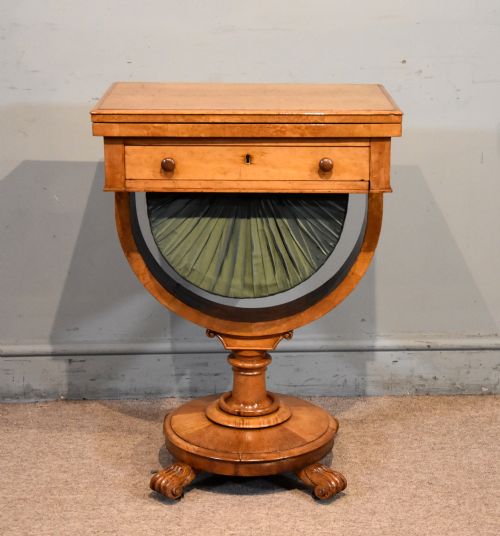


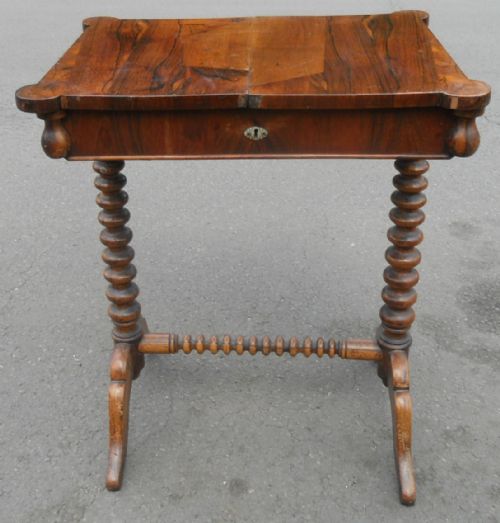

Antique Folding Sewing Table
An antique folding sewing table brings ingenious multi-purpose design to a room, combining a compact footprint with hidden compartments for needlework or gaming.
Antique Folding Sewing Table
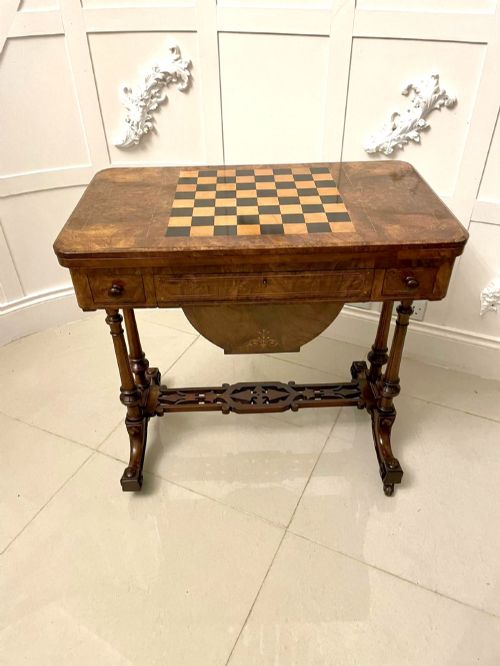
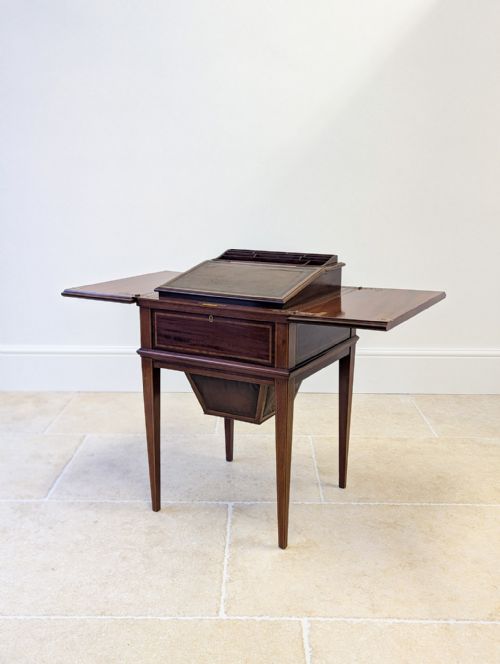
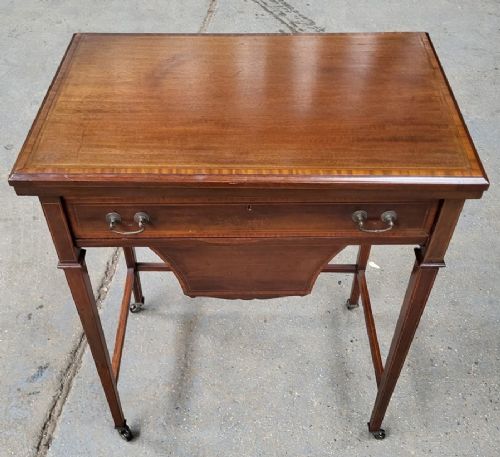
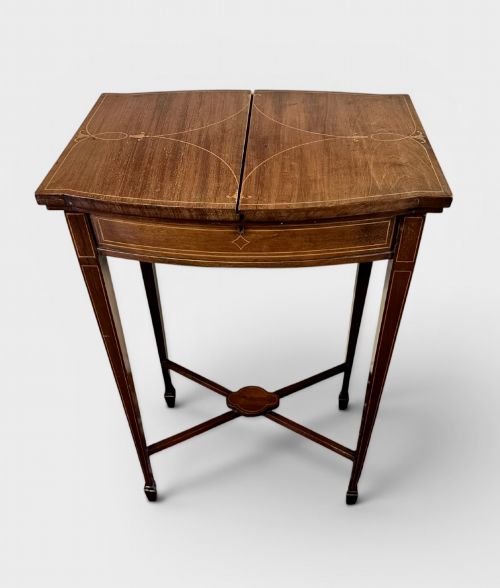
An antique folding sewing table is a versatile piece of furniture designed to serve multiple functions in a parlour, drawing room, or boudoir. The pieces on this page span several distinct periods, including Regency, William IV, Victorian, and Edwardian, alongside styles such as Georgian.
Makers utilised these forms to maximise utility in domestic spaces, often integrating chess or card surfaces alongside storage for cottons and implements. The Victorian and Edwardian iterations dominate the selection, showing how these designs evolved across the nineteenth and early twentieth centuries.
Materials and construction methods
Cabinetmakers constructed these tables using a variety of quality timbers, most notably rosewood, mahogany, walnut, burr walnut, maple, and satinwood. These woods were chosen for their rich grain patterns, which were frequently enhanced with cross-banding and fine inlay work.
Structural elements incorporated brass hardware for hinges, locks, and castors, while interiors often featured fabric-lined compartments or fitted trays. The folding mechanisms required precise joinery to ensure smooth operation of the fold-over tops and drop-leaf supports.
Some sewing tables hide your embroidery so successfully that even you will forget where the scissors went.
Distinctions in quality
The degree of sophistication in the timber selection and decorative inlay distinguishes standard examples from superior pieces. Finer tables exhibit carefully matched burr veneers, intricate cross-banding, and delicate marquetry rather than plain surfaces.
Mechanical execution also separates workshops, seen in the smooth deployment of folding tops, fitted drawers, and internal compartments. High-grade pieces maintain rigid stability when opened for games or writing, with precise alignment of brass components and joints.
The Antique Folding Sewing Table Glossary
- Cross-banding
- A strip of veneer applied perpendicularly to the grain of the main surface to create a decorative border.
- Burr walnut
- A prized timber cut from walnut tree growths, featuring swirling, highly figured grain patterns used on tabletops and drawer fronts.
- Metamorphic table
- A piece of furniture designed to transform from one form, such as a sewing table or desk, into another.
- Work table
- A nineteenth-century term for a small table fitted with compartments or a hanging bag for needlework.
- Palisander
- A dense, dark timber resembling rosewood, frequently utilised during the nineteenth century for cabinet work.
Antique Folding Sewing Table: Frequently Asked Questions
What is an antique folding sewing table used for?
These pieces were originally designed for domestic needlework, storing threads, needles, and fabric inside dedicated compartments beneath the surface. Many also incorporated fold-over tops lined for chess, cards, or writing.
Today, they function well as versatile occasional tables in living areas, offering concealed storage for small household items while maintaining a decorative presence.
How do I date an antique sewing table?
Dating relies on examining the timber, construction methods, and stylistic cues present in the design. Regency and William IV pieces often display classical lines in rosewood or mahogany, while Victorian examples frequently utilise burr walnut with heavier proportions.
Edwardian versions typically show lighter satinwood or inlaid mahogany framing, reflecting the tastes of the early twentieth century. Hardware such as hinges and castors also provides clues to the era of manufacture.
Are these tables sturdy enough for daily use?
Most antique sewing tables are structurally robust, having survived over a century of domestic service. The folding mechanisms and leaf supports are engineered to bear the weight of books, drinks, or games.
Care should be taken not to overload drop-leaves or force hinges that have stiffened with age. Regular gentle use helps keep the moving wooden parts conditioned.
How do I care for the wood finish?
Maintain the polished timber surfaces by keeping them away from direct sunlight and heat sources, which can dry out veneer and cause fading. Dust regularly with a soft, dry cloth and avoid silicone-based polishes.
Applying a traditional beeswax periodically will nourish the grain and protect the finish without building up residue.