

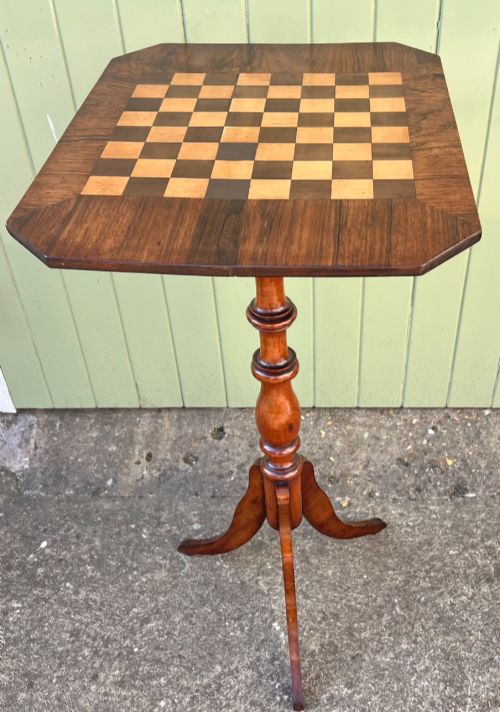
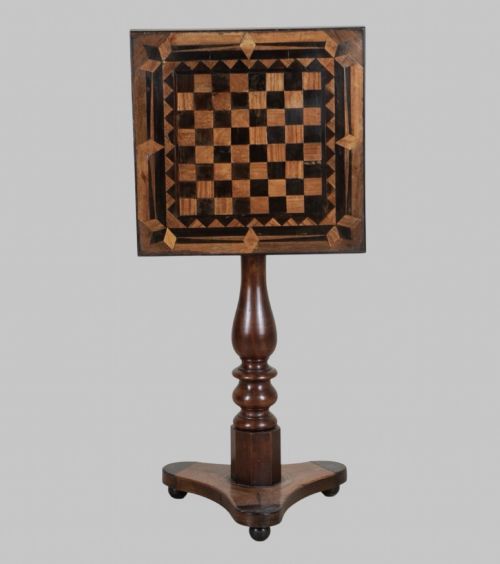
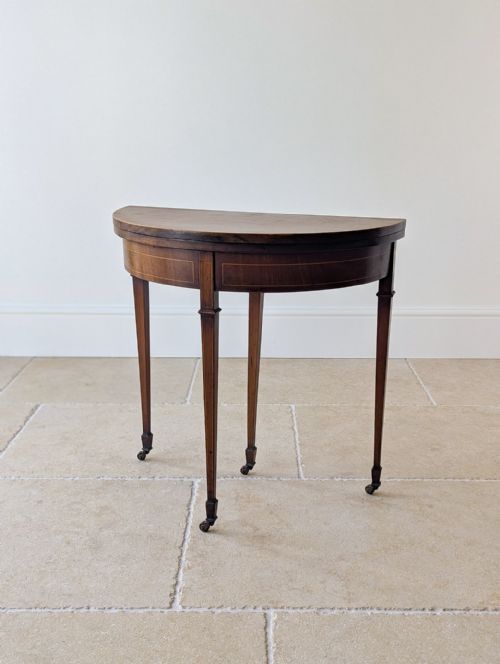
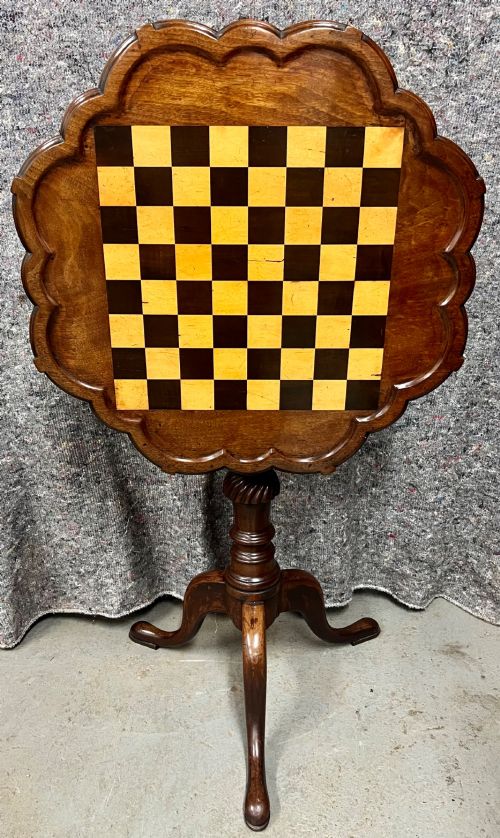

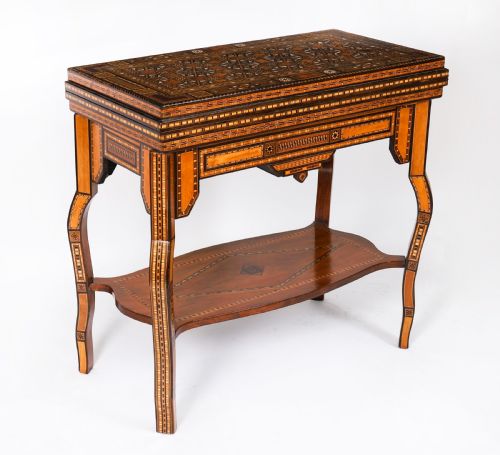
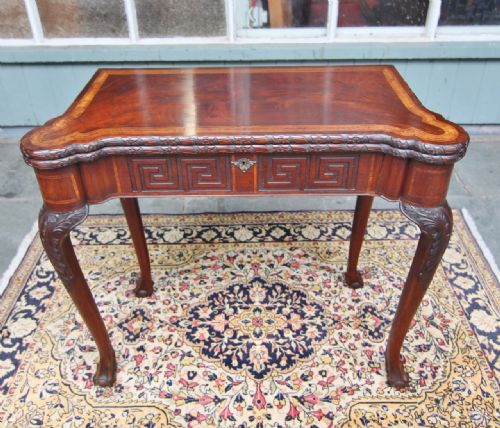
Inlaid Wood Games Table
When you search for an inlaid wood games table, you uncover dual-purpose furniture designed for domestic leisure across Georgian, Regency and Victorian interiors.
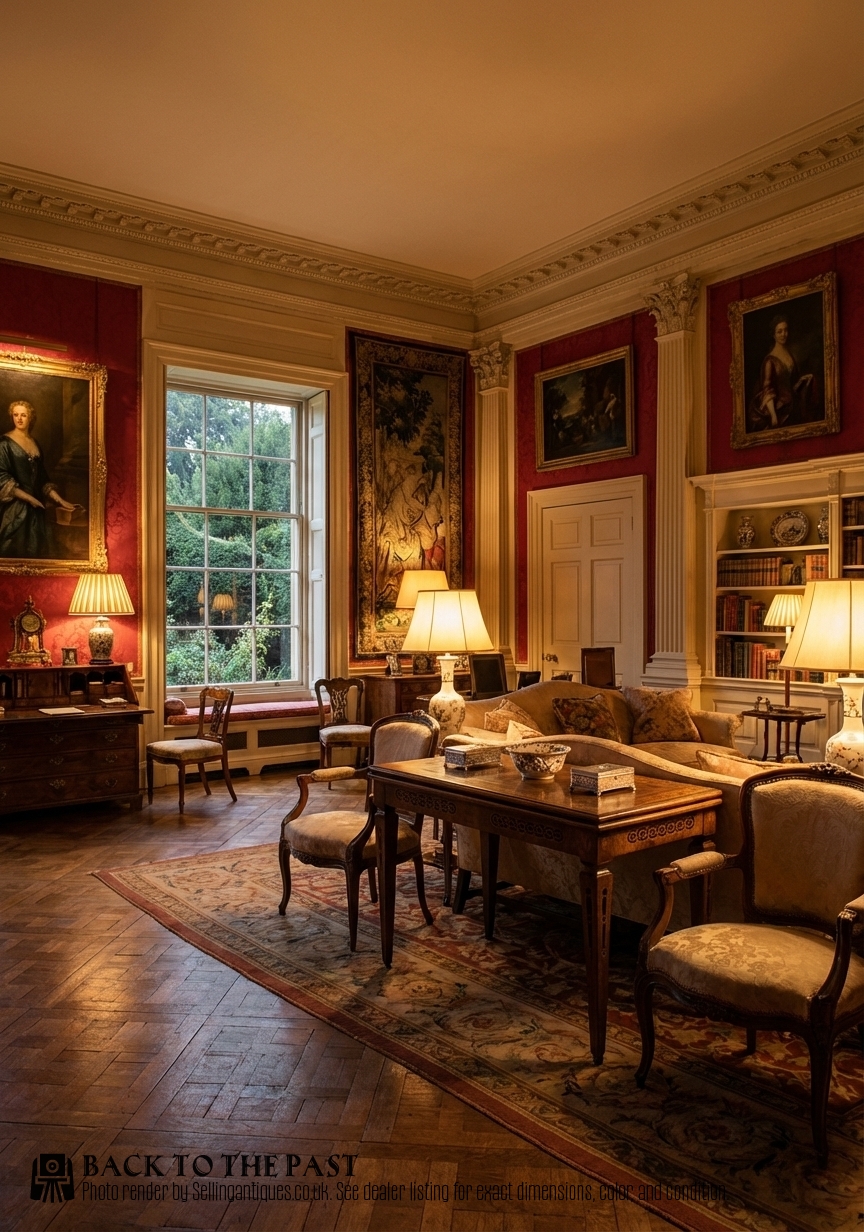
Inlaid Wood Games Table
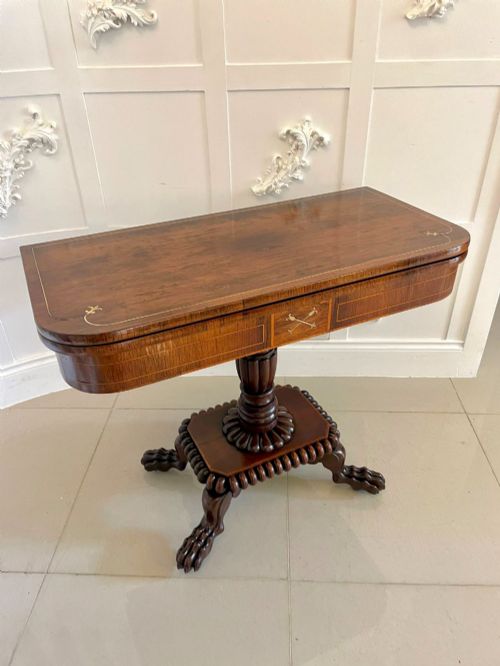
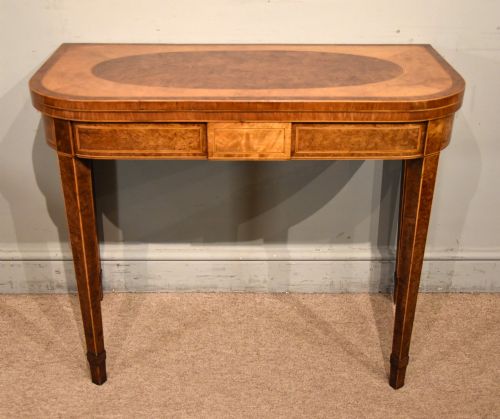
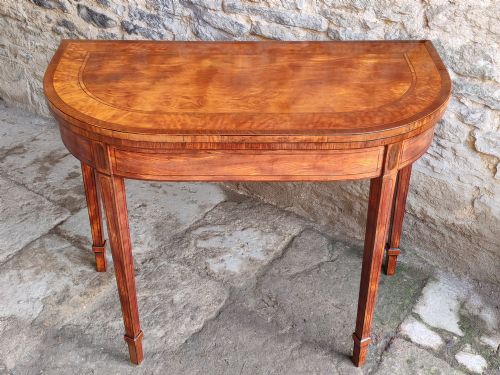
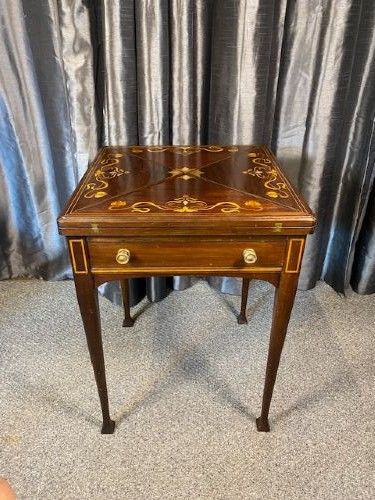
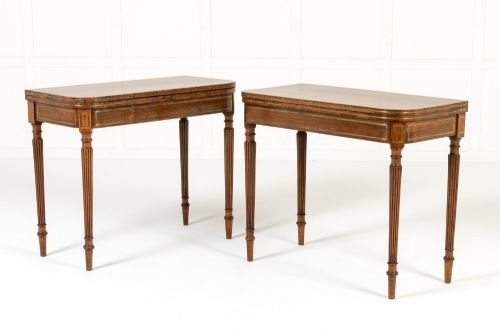
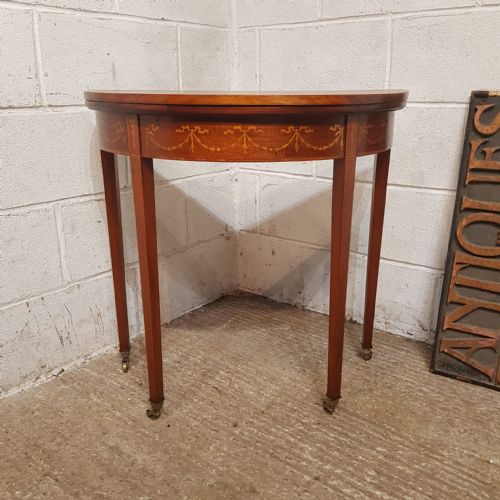
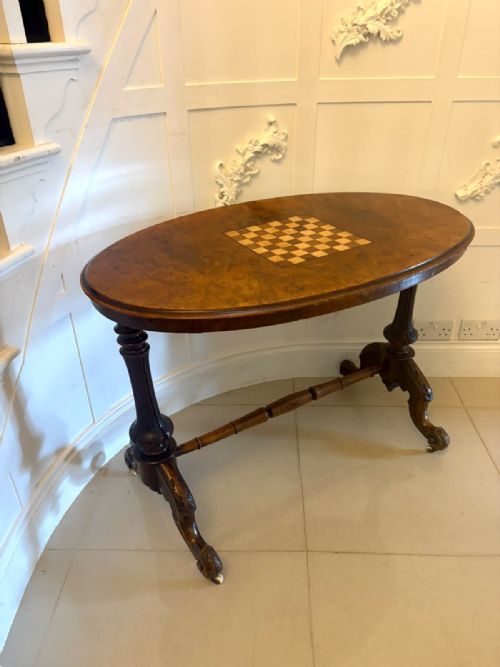
When you search for an inlaid wood games table, you encounter pieces spanning the Georgian, Regency, Victorian and Edwardian eras, designed to transition from console or side tables into functional surfaces for cards and chess. The forms vary widely, from folding demi-lune card tables and envelope tables with rotating leaves to tripod tables, nests of quartetto tables, and multi-purpose work tables fitted with storage boxes.
The origins reflect both British cabinet-making traditions and international workshops, including Syrian, Damascan and Ceylonese examples incorporating distinct regional inlay techniques. Rosewood and mahogany dominate the English examples from the nineteenth century, while satinwood and walnut define earlier Georgian and later Victorian creations.
Materials and Construction
Cabinet-makers constructed these surfaces using dense tropical hardwoods such as rosewood, mahogany and satinwood, often applied as fine veneers over secondary timber carcases. Burr walnut, maple and plum pudding mahogany frequently provide highly figured surfaces for the main panels.
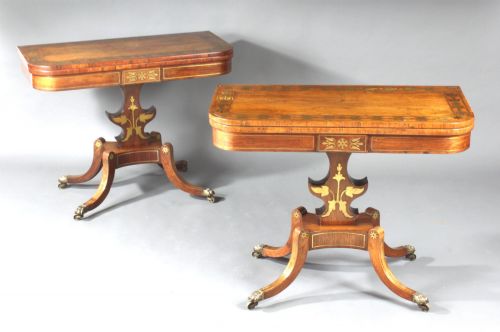
Inlay work combines contrasting timbers like boxwood, ebony, satinwood and tulipwood with geometric stringing, floral marquetry, or detailed brass brass-work embedded directly into the wood. Fold-over tops utilise pivoting wooden hinges or swing-out rear legs to support the expanded playing surface safely.
Listings feature rosewood, mahogany, satinwood, walnut, boxwood, and brass materials across Georgian, Regency, and Victorian periods.
Judging Quality
Quality rests upon the precision of the timber matching and the execution of the contrasting inlay work. Superior examples exhibit tight, seamless joints in the stringing and marquetry without visible gaps or excessive filler.
The choice of primary wood grain and the cleverness of the engineering distinguish finer pieces. Robust pivoting mechanisms, well-balanced pedestal bases or steady folding flaps dictate how successfully the furniture endures decades of active use.
George Bullock
The Inlaid Wood Games Table Glossary
- Demi-lune
- A half-moon shape popular for console and card tables that stood flat against a wall when closed. This design saved floor space in smaller period rooms.
- Envelope table
- A square card table with four triangular flaps that rotate and fold open together to reveal the playing surface. They often conceal small interior wells for counters.
- Marquetry
- Decorative patterns formed by fitting together thin slices of various coloured woods and veneers into a unified pictorial design. Master craftsmen used this technique to create elaborate floral or geometric motifs.
- Stringing
- Thin lines of contrasting wood inlay used to outline borders, edges and geometric panels on table tops. It defines the structural geometry of the timber surface.
- Quartetto tables
- A nested set of four graduating occasional tables designed to slide neatly beneath one another. Some integrated chess boards appear within these smaller multi-tiered suites.
Inlaid Wood Games Table: Frequently Asked Questions
How do you open an envelope games table?
An envelope table operates through a pivoted mechanism where lifting or rotating one triangular leaf causes the remaining three flaps to unfold simultaneously. The action reveals a baize-lined interior designed for card playing.
Inside these tables, small corner wells often provide storage for counters, dice or playing cards. Users should operate the top gently to avoid straining the central pivot.
Were these tables used for dining?
Most of these pieces served primarily for leisure, conversation and parlour games rather than family meals. Their folding or swivel tops concealed specialised surfaces intended for chess, backgammon or cards.
Because many examples feature delicate veneers, brass stringing or inlaid boards, heavy daily dining use would risk marking the polished wood. They functioned best as side, console or occasional furniture until evening entertainment began.
How do you distinguish a Georgian table from a Victorian one?
Georgian tables, particularly from the George III period, often favour mahogany and satinwood with restrained stringing and elegant tapered legs. They rely on architectural proportion and understated timber figuring.
Victorian versions frequently employ dark rosewood or burr walnut paired with elaborate brass inlay, marquetry, and heavier pedestal or carved pillar supports. Envelope tables and multi-functional work-games hybrids became especially popular during the later nineteenth century.
How do you care for an antique wood games surface?
Maintenance requires keeping the timber away from direct sunlight and steady heat sources to prevent the veneers from drying out or splitting. Gentle dusting with a dry, soft cloth preserves the polish without introducing moisture.
Traditional beeswax can be applied sparingly to nourish the wood and maintain its natural lustre. Avoid placing damp items directly onto the vulnerable inlaid playing surfaces.