

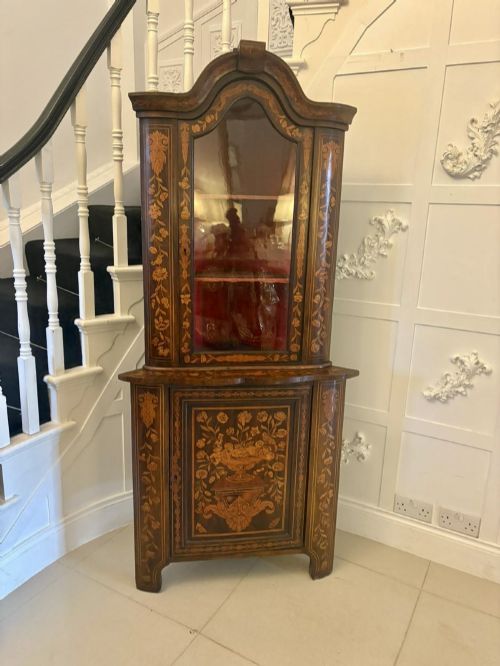
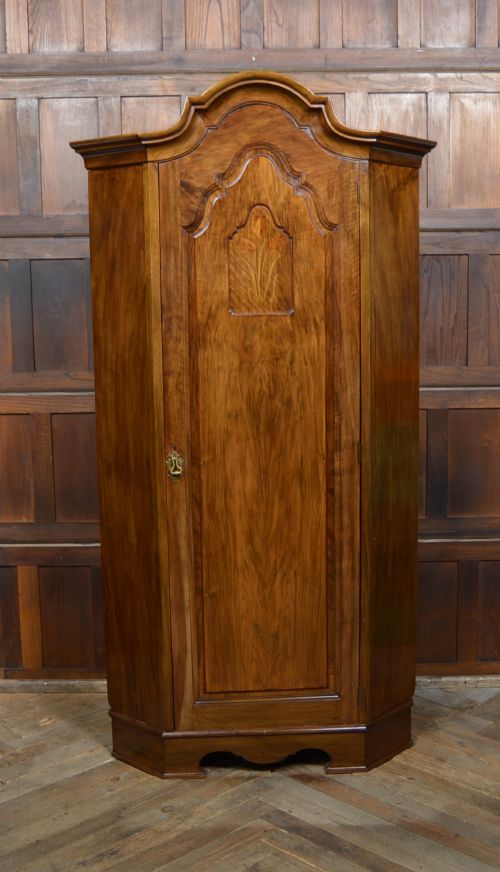
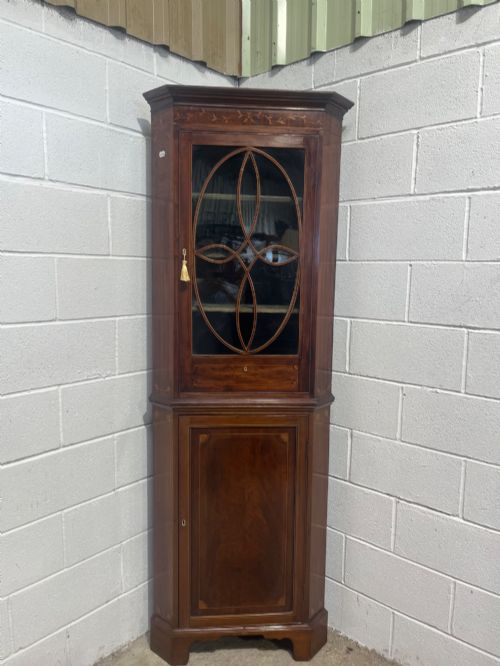
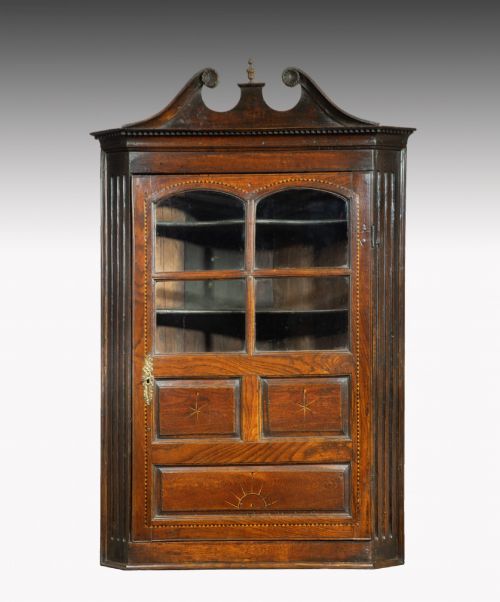


Inlaid Wood Corner Cupboard
An inlaid wood corner cupboard turns dead room junctions into architectural display, bringing historic timber and precise stringing to neglected angles.
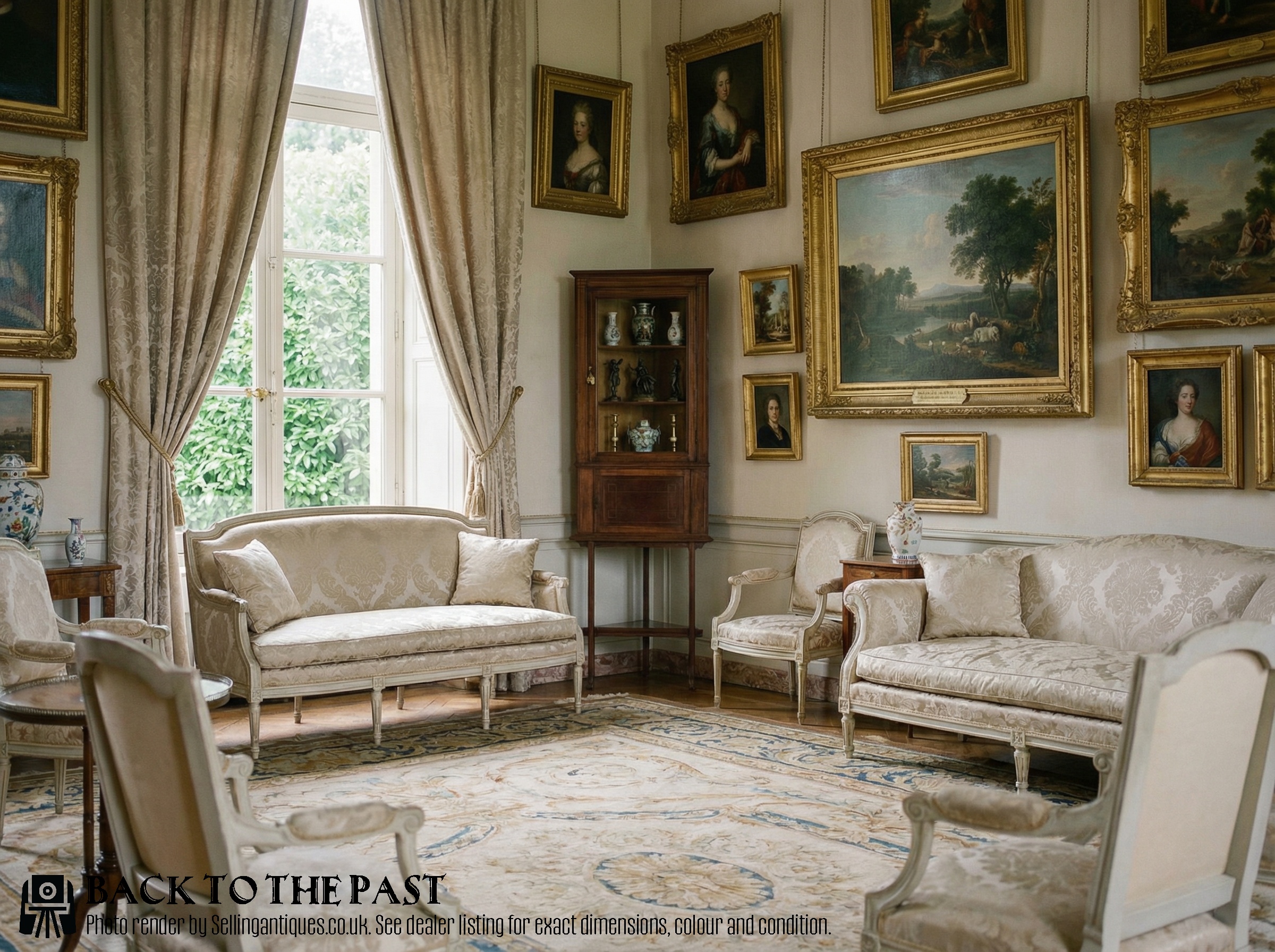
Inlaid Wood Corner Cupboard
An inlaid wood corner cupboard provides storage designed specifically to fit the junction of two walls, making economical use of domestic space. The selection spans wall-hanging units, floor-standing models, and taller cabinets with glazed or solid doors.
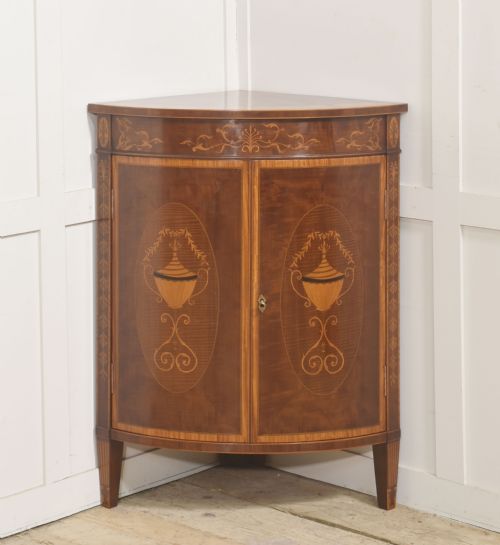
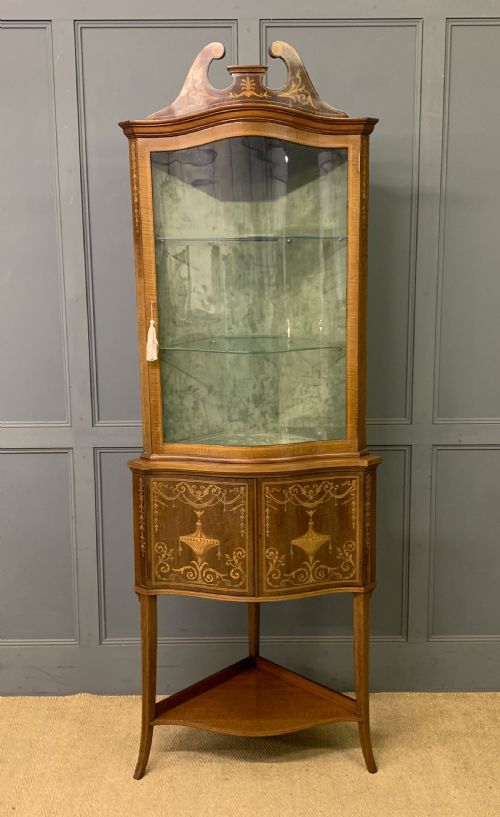
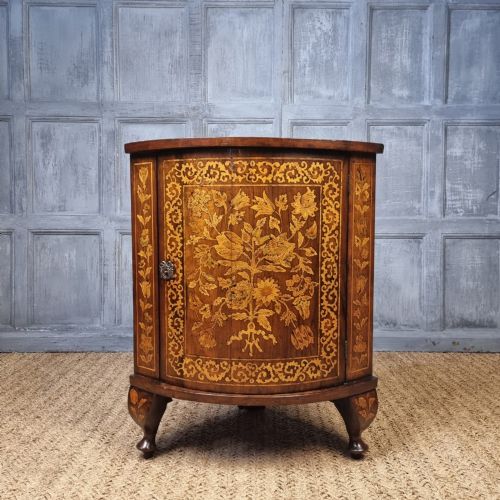
Georgian pieces and Edwardian revivals dominate the selection, alongside Victorian interpretations and occasional Dutch marquetry works. Mahogany and oak form the structural core of many examples, accented with satinwood, boxwood, and contrasting veneers.
How they were made
Cabinetmakers constructed the carcase primarily from solid timbers like mahogany, oak, and walnut, frequently utilising curved or bow fronts that required precise joint work. Timber selection prioritized straight-grained woods for structural stability alongside richly figured veneers for visual depth.
Decoration relied on contrasting inlays, with satinwood, boxwood, and marquetry panels inserted into the primary face. Brass hardware, such as hinges and escutcheons, alongside occasional ormolu mounts, completed the construction.
Mahogany, oak, and walnut form the primary structural timbers across these listings, supplemented by decorative veneers in satinwood and boxwood.
What varies in quality
The sophistication of the timber preparation and the precision of the inlay work largely determine the standing of an individual piece. Subtle contrasts in wood grain and harmonious integration of stringing separate standard utility pieces from more ambitious cabinetmaking.
Proportion and architectural integrity dictate visual success, particularly where cornices, glazing bars, and bracket feet meet. Pieces that retain their original brassware and unaltered timber patination hold greater integrity than those with replaced elements.
The Inlaid Wood Corner Cupboard Glossary
- Marquetry
- A decorative technique where small pieces of veneer are assembled to form pictorial or geometric patterns on a timber surface. This method appears frequently on Edwardian and Dutch revival pieces.
- Crossbanding
- A border of veneer laid around the perimeter of a panel with the grain running perpendicular to the central section. It frames the primary timber of the door or drawer front.
- Astrigal
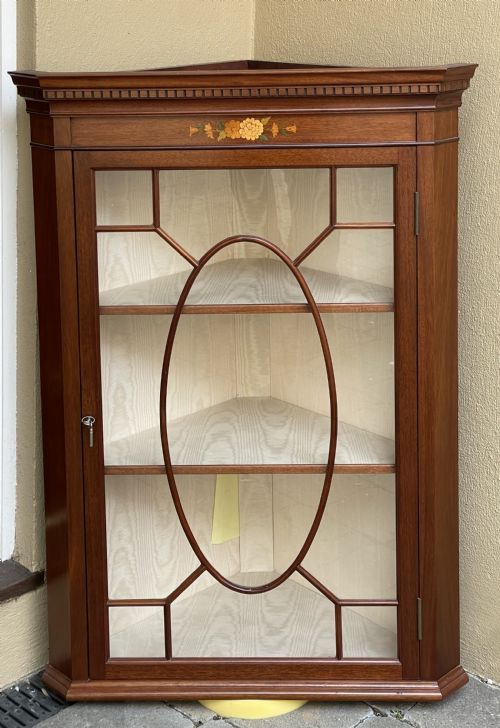
- A small convex moulding used to divide panes of glass within a cabinet door. These fine timber strips create geometric patterns across display windows.
- Bow front
- A cabinet front that curves outward in a convex shape. This curved form requires advanced woodworking skill to shape both the timber carcase and the corresponding doors.
- Stringing
- Thin lines of contrasting wood inlaid into narrow channels cut into the surface of the furniture. This linear detail defines panels and outlines structural borders.
Inlaid Wood Corner Cupboard: Frequently Asked Questions
Where should I place a corner cupboard?
These cabinets suit awkward room intersections, dead angles, or empty wall junctions where standard rectangular furniture cannot fit. Hanging versions mount directly to plaster or wood walls at eye level, while floor-standing models anchor larger rooms.
Position them away from direct heat sources and strong sunlight to protect historic veneers and polished timber surfaces from drying out or fading over time.
How do I tell Georgian from Edwardian pieces?
Georgian examples usually exhibit heavier structural timbers like oak and early mahogany, built for functional utility with restrained proportions. Their construction details reflect eighteenth-century workshop practices.
Edwardian pieces often revive earlier Sheraton styles using lighter satinwood inlays, brighter mahogany, and more delicate marquetry. These later items frequently display machine-assisted precision in their internal framing.
Are hanging and standing cupboards different?
Hanging models feature robust bracket fixings at the rear designed to support the weight of the timber carcase and its contents. They save floor space in smaller rooms.
Standing versions rely on plinths, bracket feet, or separate bases to distribute their weight evenly across the floor. Some larger examples extend to full room height.