



Inlaid Wood Corner Cabinet
An inlaid wood corner cabinet makes efficient use of awkward domestic angles while displaying decorative skill through contrasting timber veneers.
Inlaid Wood Corner Cabinet
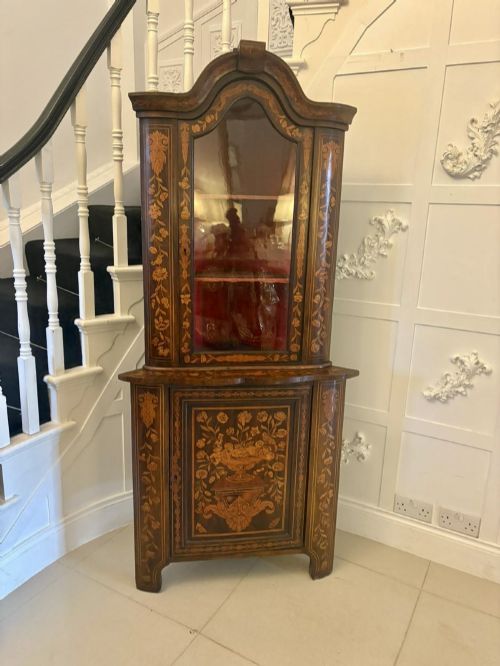
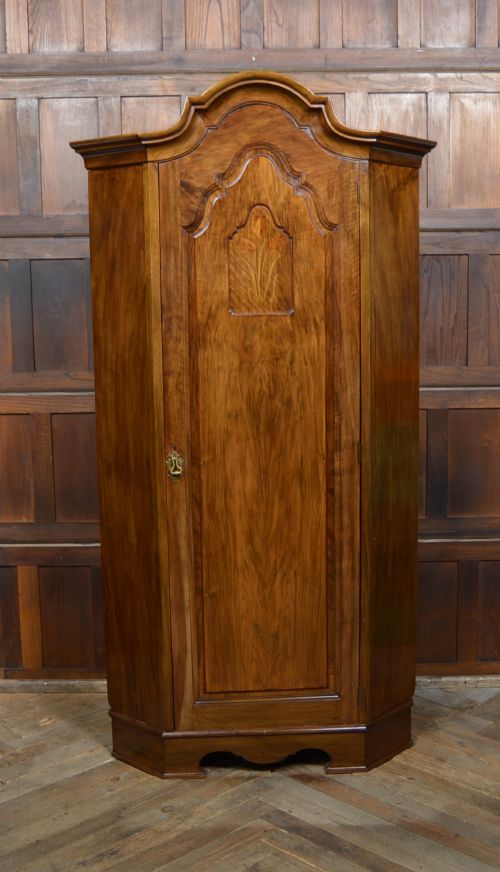
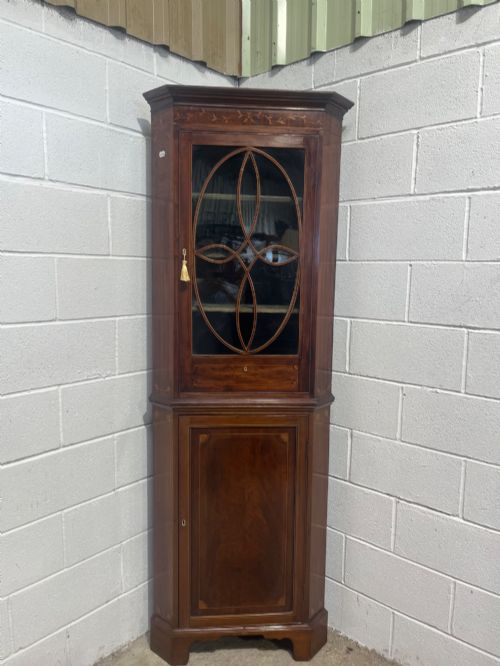
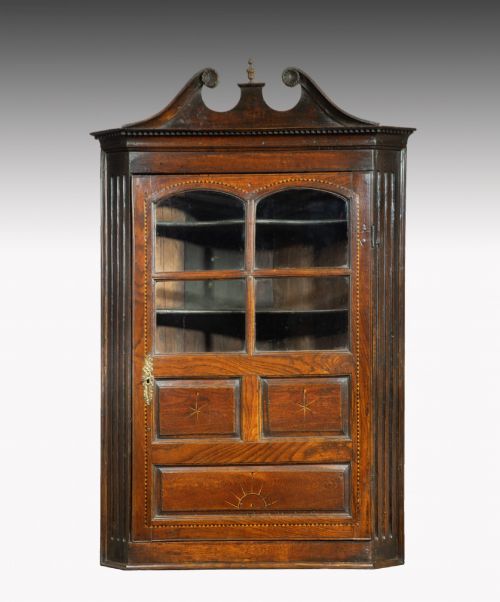
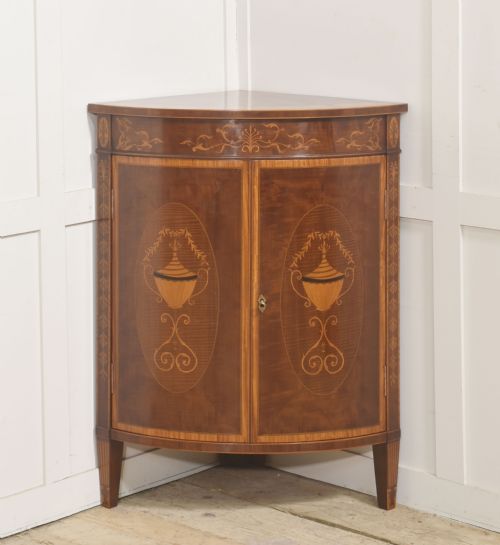
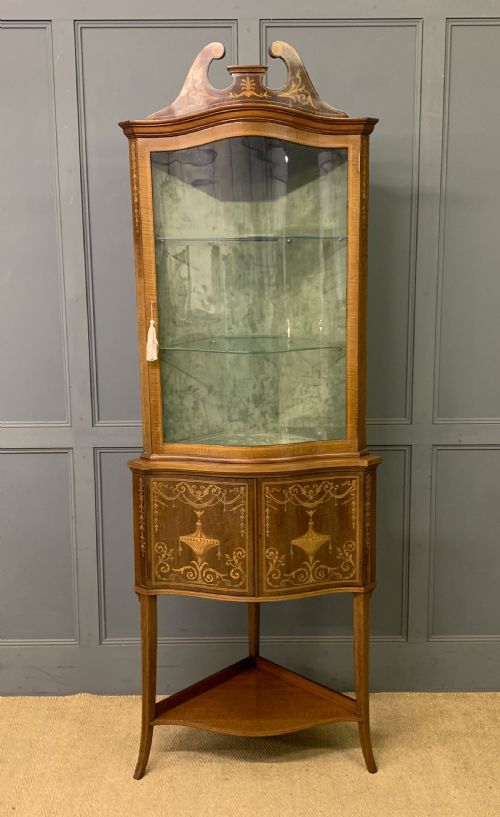
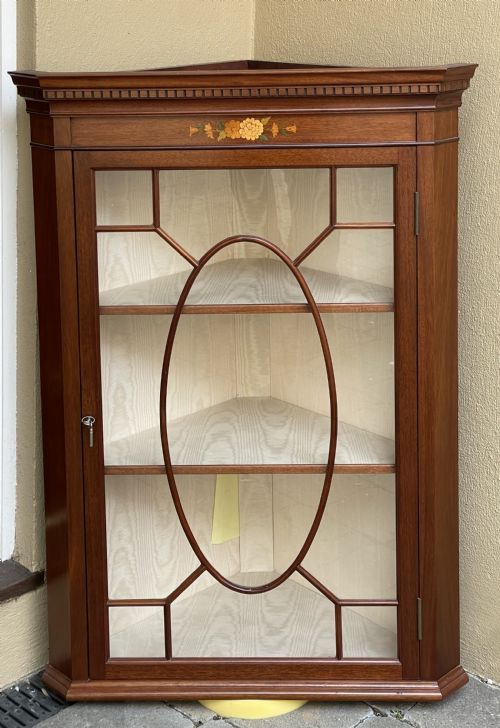
An inlaid wood corner cabinet serves to utilise domestic room angles efficiently, appearing frequently in hanging, floor-standing and wall-mounted formats across this selection. Buyers encountering these pieces will find both compact wall-hung cupboards designed for limited spaces and tall, freestanding floor units built for substantial display.
The styles range from robust 18th-century oak and mahogany Georgian examples to lighter Edwardian and Sheraton Revival interpretations. Many pieces feature glazed doors for display or solid timber panels concealing interior shelving.
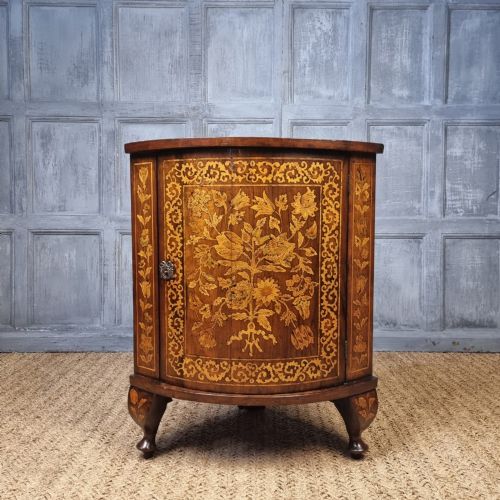
Makers often shaped the front profile into a bow front or serpentine curve rather than a simple flat angle, softening the strict geometry of the corner. These varied silhouettes determine how the furniture sits within a room and how light catches the surface grain.
Materials and construction
Cabinet makers relied primarily on structural timbers such as mahogany, oak and walnut for the main carcase, applying secondary woods for internal linings and shelving. Surface decoration frequently incorporates satinwood, boxwood, and various fruitwoods cut into thin veneers for contrasting colour and grain.
Marquetry and inlay techniques involve cutting intricate floral, scrolling or geometric patterns into the timber surface and recessing contrasting wood pieces flush into the ground. Crossbanding frames the primary panels with border veneers running perpendicular to the central grain direction.
The listings span multiple centuries, uniting 18th-century Georgian oak cupboards with Edwardian satinwood display cabinets and later 1960s interpretations.
Markers of distinction
Quality rests upon the precision of the veneer work and the crispness of the inlaid motifs, where superior pieces exhibit seamless joints between contrasting timbers without excessive filler. The choice of primary timber also dictates the tier, with finely figured mahogany, burr woods, and richly coloured rosewood sitting above plain oak or secondary pine carcases.
Structural integrity reveals itself in the alignment of the doors, the retention of original brass or glass hardware, and the stability of the corner mitres under shifting household temperatures. Superior examples maintain original surface patination, reflecting decades of careful maintenance rather than heavy modern restoration.
Maple & Co·Edwards and Roberts
The Inlaid Wood Corner Cabinet Glossary
- Marquetry
- Decorative veneer work forming pictorial or geometric patterns using various coloured woods. Craftsmen assemble these thin wooden elements meticulously before gluing them to the main carcase.
- Crossbanding
- A border veneer strip where the grain runs perpendicular to the central panel. This technique frames the primary wood and adds visual depth to cabinet doors.
- Bow front
- A convex, outwardly curved front profile popular on Georgian and Victorian corner units. This shape softens the sharp angles inherent in corner furniture.
- Boxwood
- A dense, pale yellow hardwood frequently utilised for stringing and fine inlay details. Its neutral tone provides sharp contrast against darker timbers like mahogany and walnut.
- Serpentine
- A shaped furniture front featuring a concave centre flanked by convex curves. This undulating line requires advanced woodworking skill to execute accurately.
Inlaid Wood Corner Cabinet: Frequently Asked Questions
How do I hang a wall cabinet?
Hanging models rely on robust internal fixing blocks or sturdy brass brackets secured directly to the back framing timbers. These attachment points must anchor securely into masonry or timber studs to bear the weight of the solid wood carcase.
Professional installation is recommended due to the heavy combination of hardwood and glass doors. Ensuring the unit is level prevents the doors from sagging on their hinges over time.
Are these cabinets difficult to clean?
Routine maintenance requires only a soft, dry cloth to remove dust from the intricate veneer and carved mouldings. Avoid commercial silicone polishes, which build up a hazy film over older wax and shellac surfaces.
Applying a traditional beeswax occasionally nourishes the dry timber and maintains the natural lustre of the grain. Keeping the furniture away from direct sunlight and radiators prevents the delicate inlays from lifting.
What rooms suit a corner cabinet?
These units perform well in dining rooms, drawing rooms and hallways where standard rectangular furniture wastes valuable floor space. Their angled backs allow them to nestle neatly into unused 90-degree junctions.
Display variations with glass doors suit the exhibition of ceramics and glassware, while solid door versions conceal tableware or books. Their compact footprint makes them practical for smaller domestic interiors without sacrificing storage capacity.
How do I distinguish Edwardian from Georgian?
Georgian examples, dating from the 18th century, typically employ heavy native timbers like oak and dense mahogany with restrained brass H-hinges and simple mouldings. Their construction focuses on structural solidity and deep, aged patination.
Edwardian and Sheraton Revival pieces, produced around 1900, often feature lighter satinwood borders, extensive floral marquetry, and slender proportions. These later revivals reflect a lighter aesthetic taste influenced by earlier design periods.