

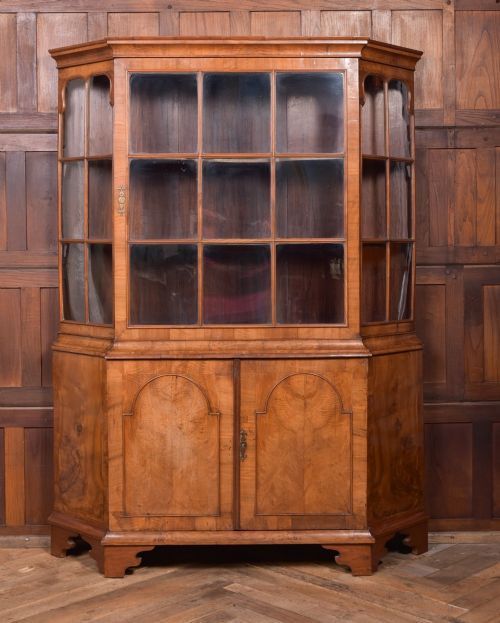
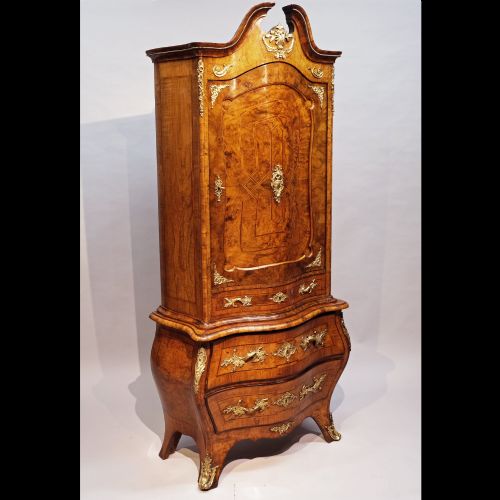
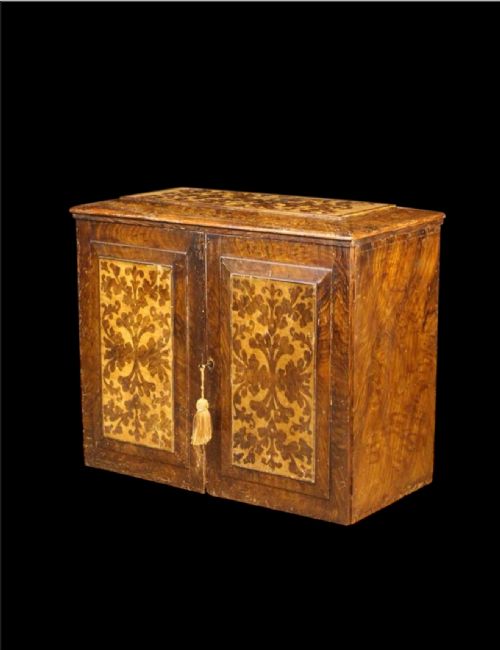


19th Century Dutch Cupboard
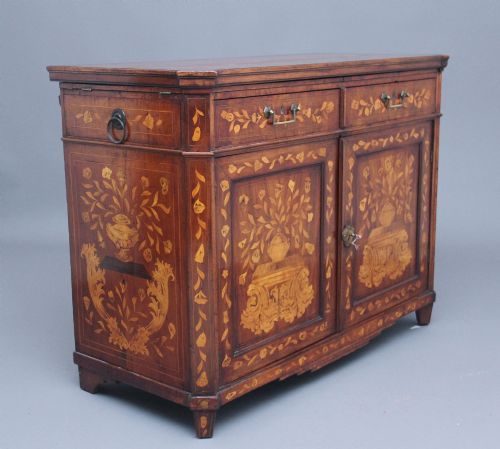
These 19th century dutch cupboard examples combine practical storage with rich floral marquetry and fine timbers.
19th Century Dutch Cupboard
A 19th century dutch cupboard serves as a substantial storage piece or display unit, often standing tall in rooms where people require generous capacity for household goods. You will frequently encounter tall display cabinets, corner cabinets, and large armoires on this page rather than smaller bedside versions.
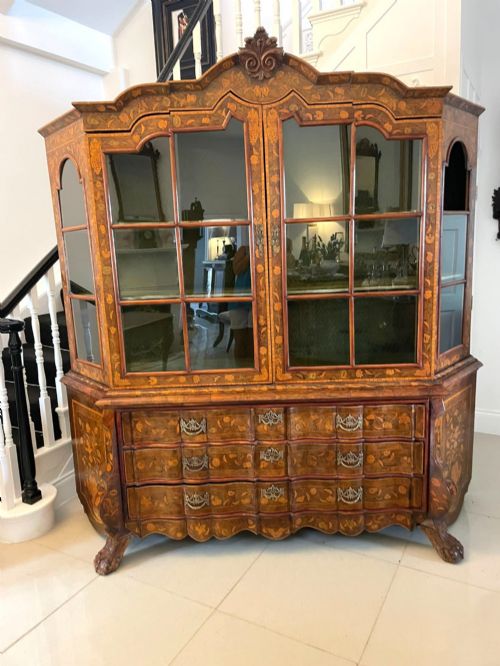
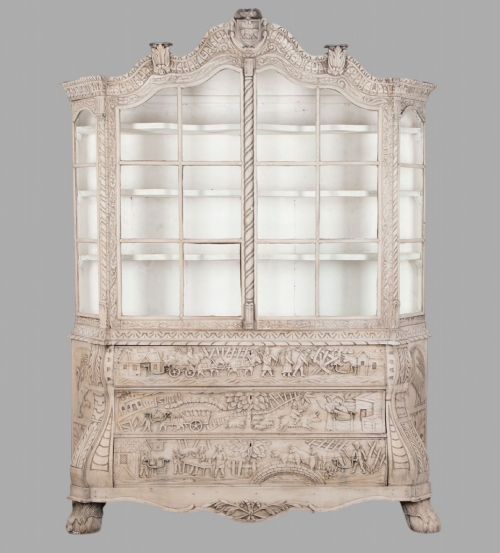
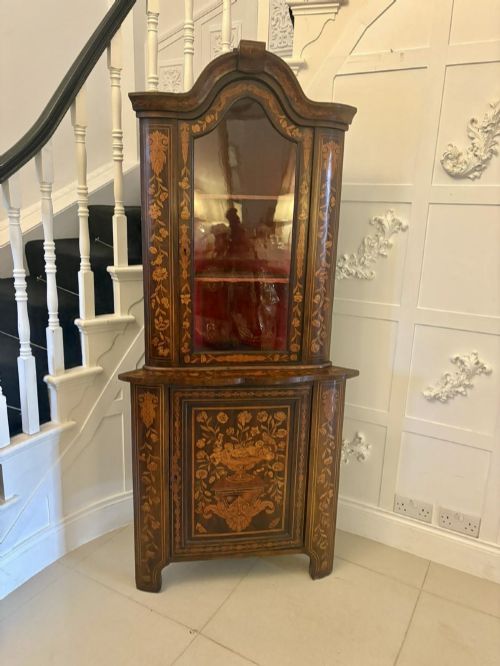
The objects span varied forms, from corner cupboards fitted with glass doors to grand bombé display cabinets resting on chests. Their origins reflect regional traditions, notably through floral marquetry decoration and rich timber use across the period.
Markers of quality
The finesse of the floral marquetry dictates much of the visual standard, with superior pieces showing tight joints in the inlaid sections and lifelike floral detail. Simpler items rely on plain timber surfaces without the extensive pictorial veneer work.
Structural heft and timber selection also separate standard examples from finer works, particularly where burr walnut or ebony is used extensively. The proportion of the cabinet, especially on bombé or breakfront forms, dictates the visual balance.
19th Century Dutch Cupboard Retail Price Guide 2026
Typical asking prices for 19th century dutch cupboard among the pieces listed under this phrase on Sellingantiques today, from the lower quarter to the upper quarter. They describe what is for sale here now, not the wider market.
Samuel Pepys makes an unexpected appearance in an ebony cabinet title, linking maritime timber directly to diary-keeping history.
The 19th Century Dutch Cupboard Glossary
- Bombé
- A swelling, outward-curving profile found on the lower sections of certain cabinets. This bulging shape demands advanced woodworking skill to construct from solid timber or thick veneers.
- Marquetry
- The art of applying decorative veneer pieces of different woods to a structure to form intricate patterns. Floral designs are especially common on pieces from this regional tradition.
- Kas
- A large traditional double-door wardrobe or cupboard used for linen storage. These pieces typically feature heavy cornice moulding and substantial proportions.
- Vitrine
- A glass-fronted display cabinet designed for exhibiting porcelain or small objects. The framing glass allows light to enter the interior shelves.
- Corner Cupboard
- A storage unit built with an angled back to fit directly into the corner of a room. This form makes efficient use of domestic floor space.
19th Century Dutch Cupboard: Frequently Asked Questions
What is a 19th century dutch cupboard?
A 19th century dutch cupboard is a wooden storage or display piece originating from the Netherlands during the eighteen-hundreds. These items range from corner units and bedside cabinets to large wardrobes and floral-inlaid vitrines.
They serve both decorative and practical roles in a home, offering enclosed shelving, drawers, or glass-fronted compartments for household storage.
How do I clean the marquetry?
Clean marquetry surfaces gently using a soft, dry cloth to remove dust from the grain and inlaid sections. Avoid soaking the wood or using harsh chemical cleaners that might loosen the veneer.
Applying a traditional beeswax polish periodically helps maintain the sheen of the walnut, satinwood, or fruitwood without harming the historic finish.
Where were these cabinets placed?
These cabinets sat in principal rooms, dining spaces, or bedrooms depending on their specific form and size. Corner cupboards maximised unused wall angles, while tall display cabinets stood prominently in reception rooms.
Larder or linen cupboards were typically positioned in utility areas or bedrooms to store household textiles and provisions.
How can I tell the period?
Dating relies on stylistic shifts such as the transition from early floral marquetry and Rococo Revival curves toward later Victorian walnut forms. Construction methods, including drawer dovetails and timber selection, also indicate the approximate decade of production.
Labels, stamps, or specific regional cabinet-making traits help narrow the origin further when present on the piece.