





Dutch Marquetry Cupboard
A dutch marquetry cupboard brings exuberant floral inlay and rich walnut timbers together, offering both statement storage and centuries of continental craft.

Dutch Marquetry Cupboard
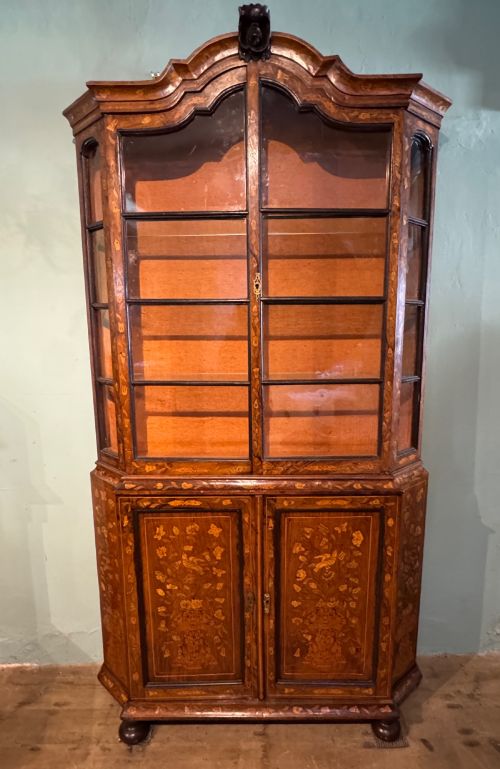
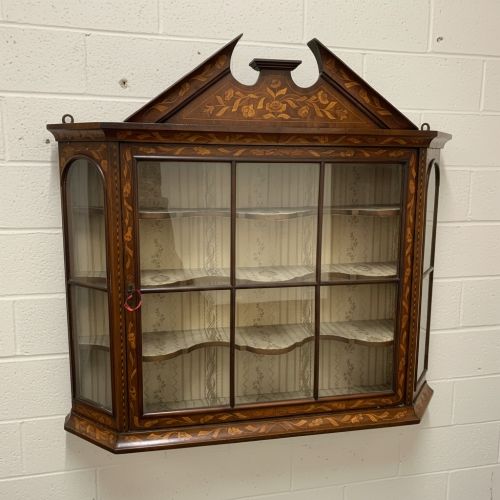
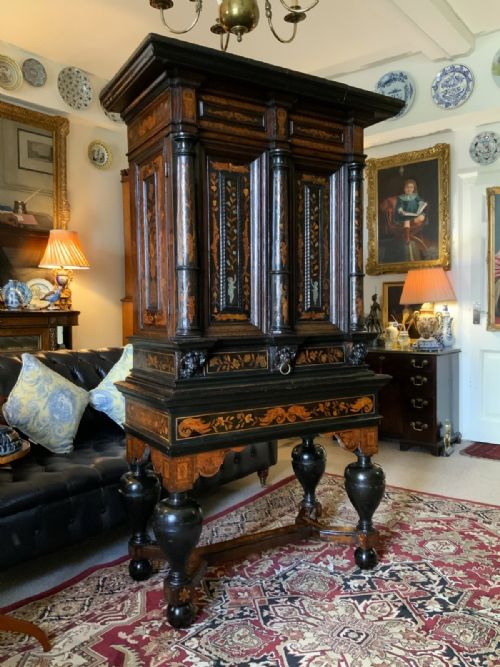
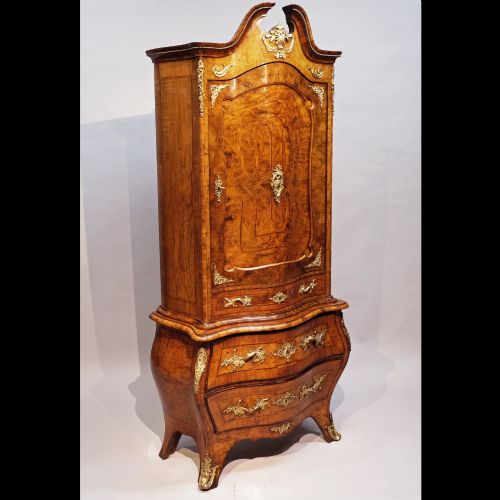
A dutch marquetry cupboard encompasses a diverse range of storage forms, from grand linen presses and bureau bookcases to floor-standing corner cabinets and wall-hanging display cases. These pieces originate primarily across the seventeenth, eighteenth, and nineteenth centuries, spanning periods from Dutch Baroque to Victorian revivals.
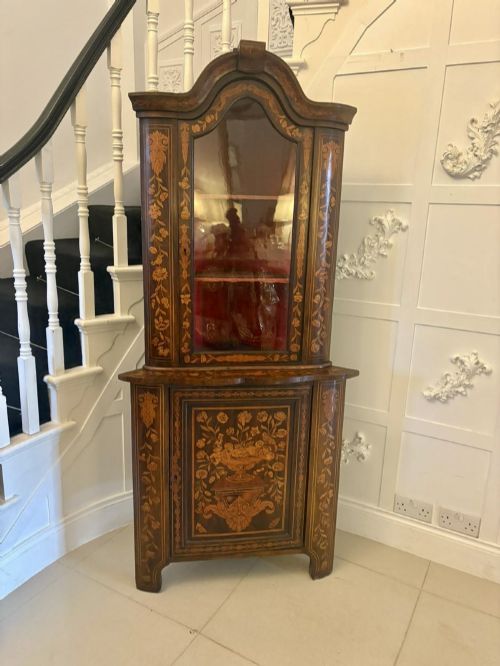
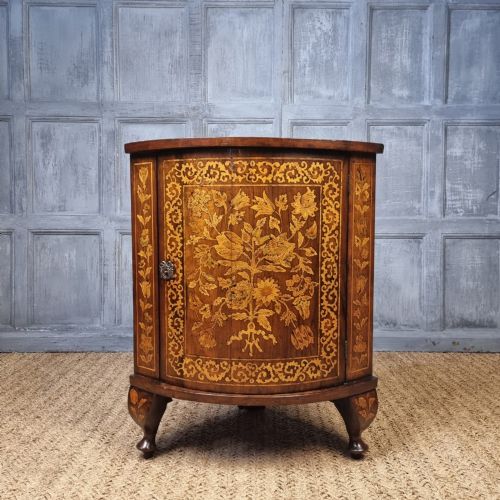
The version most commonly met on this page is the corner cabinet or display cabinet executed in walnut or fruitwood. Such pieces display elaborate floral or pictorial inlay across their doors and panels, reflecting the enduring domestic appeal of continental cabinet-making traditions.
Materials and Technique
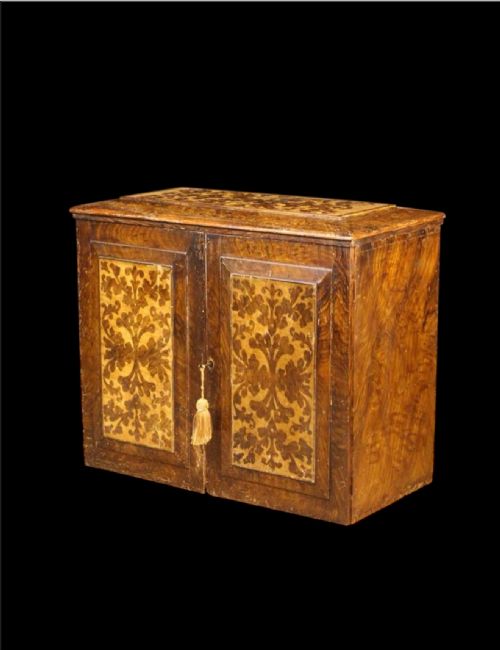
Construction relies heavily on robust foundational timbers such as oak and walnut, which provide stable carcases for the decorative veneers applied externally. Cabinet-makers layered burr walnut and fruitwoods onto these surfaces to create varied textural depth and tonal contrast.
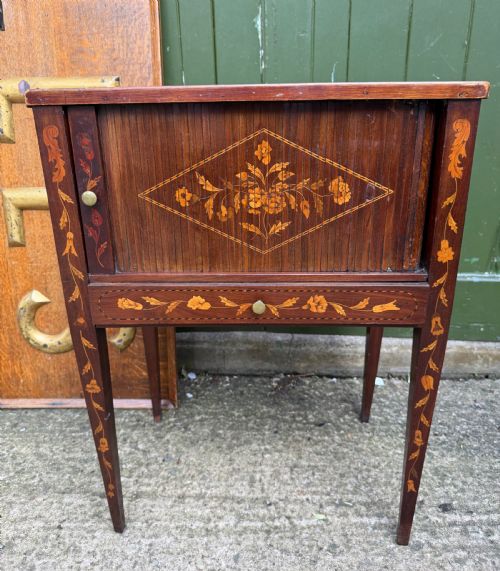
The distinctive ornamentation is achieved through detailed marquetry and inlay work, combining fruitwood, satinwood, and occasionally pewter to form elaborate floral arrangements. Master artisans carefully cut and fitted these contrasting botanical motifs directly into the primary ground timber before polishing.
The listings span multiple centuries, incorporating oak, walnut, burr walnut, fruitwood, satinwood, glass, and brass.
Standards of Execution
Quality separates along the precision and complexity of the marquetry cutting, where superior examples exhibit seamless joints and intricate shading within the floral petals and leaves. Lesser pieces rely on repetitive, simpler stamping or coarser inlay work with minimal tonal gradation across the design.
Structural integrity of the underlying carcase and the retention of original brass hardware heavily influence overall standard. Finer specimens maintain crisp architectural mouldings, well-fitted doors, and unwarped timber panels that have aged uniformly over the centuries.
The Dutch Marquetry Cupboard Glossary
- Marquetry
- Decorative veneer work arranged in detailed pictorial patterns, typically using contrasting woods to form floral or geometric scenes.
- Vitrine
- A glass-fronted display cabinet designed for showcasing porcelain, books, or curiosities.
- Linen Press
- A tall storage cabinet featuring upper sliding trays or shelves originally intended for household textiles and garments.
- Bureau Cabinet
- A multipurpose form combining a slant-front writing desk with enclosed shelving or cupboard space above.
- Serpentine
- A gently curved furniture front characterised by a convex central section flanked by concave sweeps.
Dutch Marquetry Cupboard: Frequently Asked Questions
How do I date a marquetry cupboard?
Dating relies on examining the secondary timbers used inside the drawers and carcase, alongside the evolution of the hardware and locking mechanisms. Structural joinery methods also shift noticeably between the seventeenth and nineteenth centuries.
The style of the marquetry itself offers further clues, as seventeenth-century Baroque panels differ significantly from later neoclassical or Victorian revival interpretations.
Where should I place a corner cabinet?
Corner cabinets are specifically designed to utilise empty room junctions efficiently, making them ideal for dining rooms, hallways, or drawing rooms where floor space is limited. Floor-standing versions anchor a corner visually, while wall-hanging variants free up floor area entirely.
Placement should avoid direct sunlight to protect the fragile fruitwood veneers and prevent the walnut timber from fading over time.
Are these cupboards suitable for daily use?
These pieces function well for modern storage provided they are treated with care and kept in stable environmental conditions. Adjustable or fixed shelving inside display cabinets and linen presses accommodates books, glassware, or tableware securely.
Care must be taken not to overload historical shelving, and interior humidity should remain relatively constant to safeguard antique wood veneers.
What is the difference between inlay and marquetry?
Inlay involves inserting pieces of contrasting material into depressions carved directly into a solid wooden surface. Marquetry is a broader veneer technique where entire pictorial compositions are assembled on a backing sheet before being applied to the carcase.
Dutch cabinet-makers specialised heavily in marquetry, creating elaborate botanical veneers that covered entire door fronts rather than simple inset lines.