

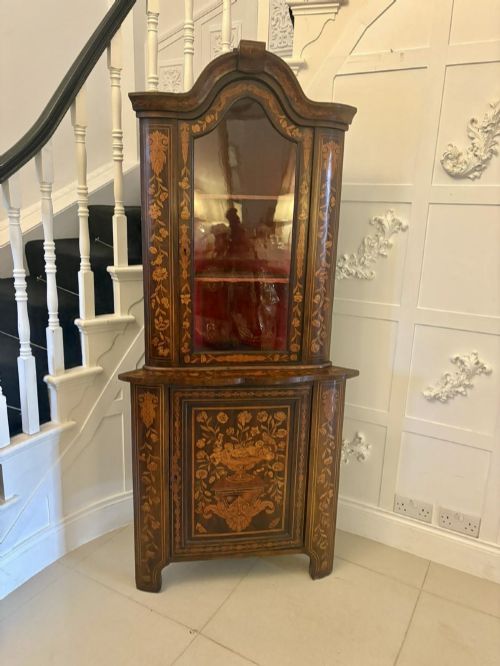
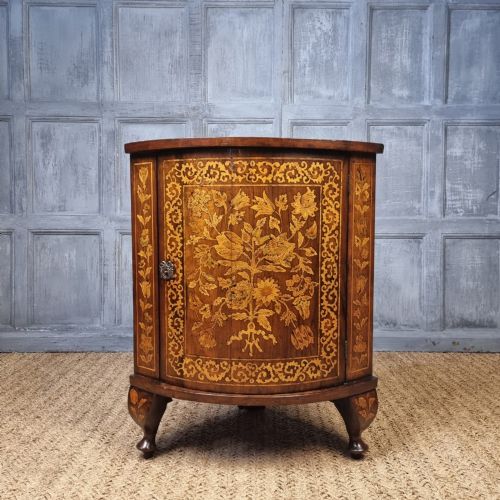
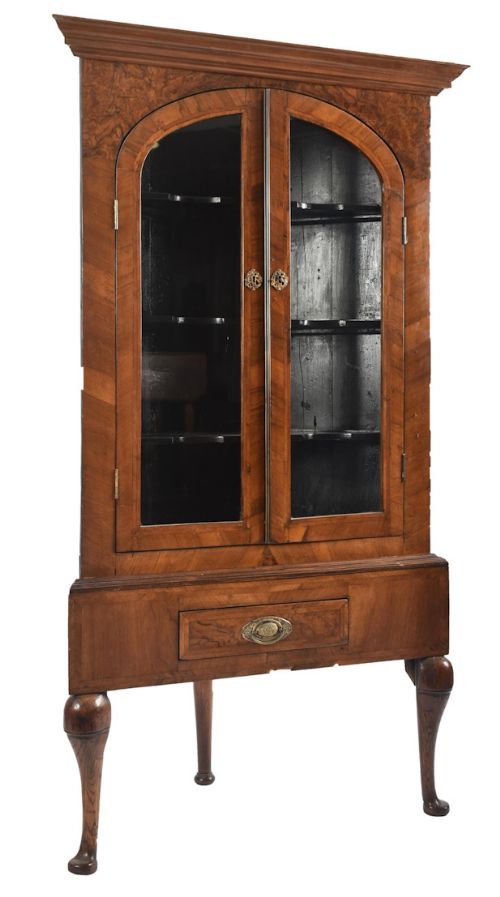


Dutch Corner Cabinet
A dutch corner cabinet brings architectural proportion and rich timber tone to an awkward domestic angle.
Dutch Corner Cabinet
A dutch corner cabinet provides triangular shelving designed specifically to fit the intersection of two walls, making clever use of dead space in a room. These pieces range from hanging wall cupboards to substantial floor-standing vitrines and display cabinets.
The forms span several centuries, with 18th century examples alongside 19th century interpretations and revival styles. Walnut and fruitwood predominate, often enriched with detailed marquetry or lacquer work.
Buyers meet both glazed display units for porcelain and solid-door cupboards designed to conceal household stores. The serpentine double corner cabinet represents the more ambitious architectural end of this form.
How they were made
Cabinet makers constructed these carcasses primarily in oak, walnut, or fruitwood, utilising timber selected for stability and grain movement. Marquetry panels involved intricate inlay work using various contrasting woods to create floral or geometric motifs.
Surface finish depended on the period, ranging from clear polished walnut to painted wood and rich lacquer. Glazed doors utilised leaded or wooden muntins to hold individual panes of glass securely within the angled frame.
Dutch Corner Cabinet Retail Price Guide 2026
Typical asking prices for dutch corner cabinet among the pieces listed under this phrase on Sellingantiques today, from the lower quarter to the upper quarter. They describe what is for sale here now, not the wider market.
Periods represented span from the eighteenth century and the Georgian era through the nineteenth century, including specific dates around eighteen hundred and nineteen twenty.
What varies in quality
The distinction between standard and exceptional pieces rests on the ambition of the timber work and the crispness of the marquetry inlay. Cabinets displaying complex serpentine fronts or dense floral marquetry require a higher level of joinery skill than plain panelled versions.
Proportion and hardware also separate the grades. Finely cast brass escutcheons and hinges complement timber selected for depth of grain, whereas lesser examples rely on simpler construction and plain secondary woods.
The Dutch Corner Cabinet Glossary
- Marquetry
- Decorative veneer work arranged in patterns or pictures using different coloured woods. It appears frequently on eighteenth and nineteenth century cabinet doors.
- Vitrine
- A glass-fronted display cabinet used for showing porcelain or small valuables. These pieces often feature glazed upper sections.
- Serpentine
- A curved line that is convex in the middle and concave at the ends, giving furniture fronts a flowing contour. This shape demands expert woodworking skill.
- Cupboard
- An enclosed piece of furniture with shelves for storage. These items may hang on a wall or stand directly on the floor.
- Fruitwood
- Timber derived from fruit-bearing trees such as pear or apple, used extensively for cabinet making and inlay. It offers a smooth texture and warm tone.
Dutch Corner Cabinet: Frequently Asked Questions
Where should I place a corner cabinet?
These cabinets fit neatly into the junction of two walls, transforming unutilised angles into storage or display space. Floor standing models anchor a dining room or hallway effectively.
Hanging versions mount securely at eye level above a sideboard or desk. Their triangular footprint ensures they consume minimal floor area while adding considerable presence.
How do I distinguish walnut from fruitwood?
Walnut displays a rich, dark brown tone with prominent grain patterns and occasional lighter figuring. It forms the primary material for many formal eighteenth century pieces.
Fruitwood generally exhibits a smoother, warmer, and more uniform appearance with a finer grain structure. Cabinet makers often selected it specifically for detailed inlay work.
How do I identify a revival style piece?
Revival pieces combine historical design motifs from the seventeenth or eighteenth centuries with later nineteenth or twentieth century manufacturing methods. Secondary woods and modern joinery indicators often help date these items.
Stylistic cues such as heavy baroque flourishes or exaggerated curves frequently point towards later nineteenth century interpretations rather than original period work.