


Inlaid Wood Clock
When you search for an inlaid wood clock, you seek the craftsmanship of past centuries expressed in timber and precision timekeeping.
Inlaid Wood Clock
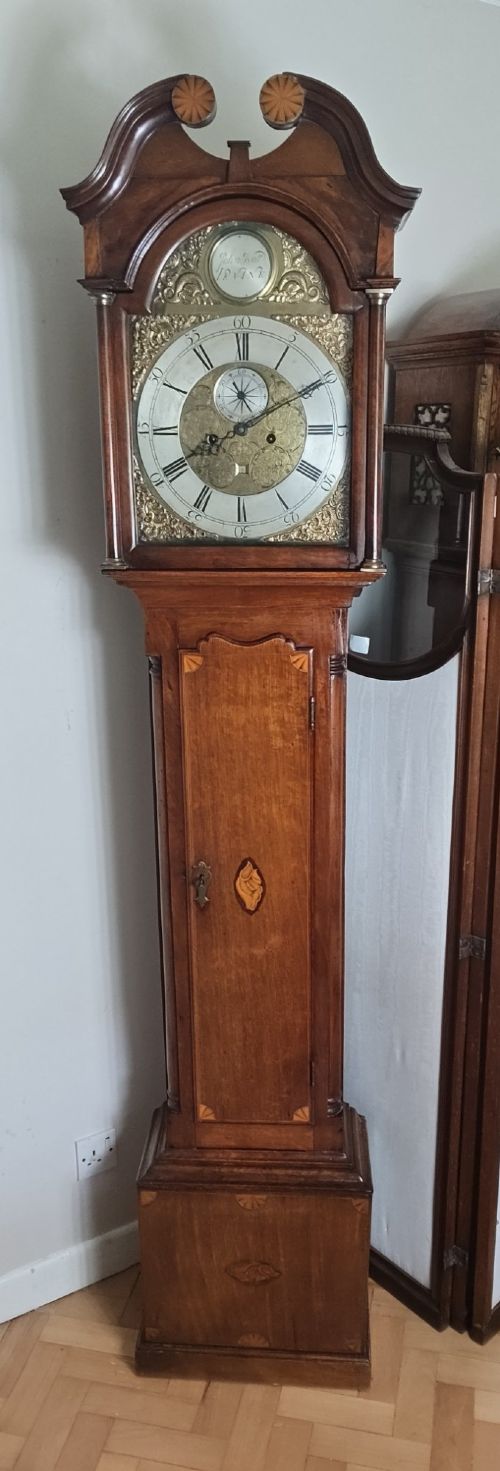
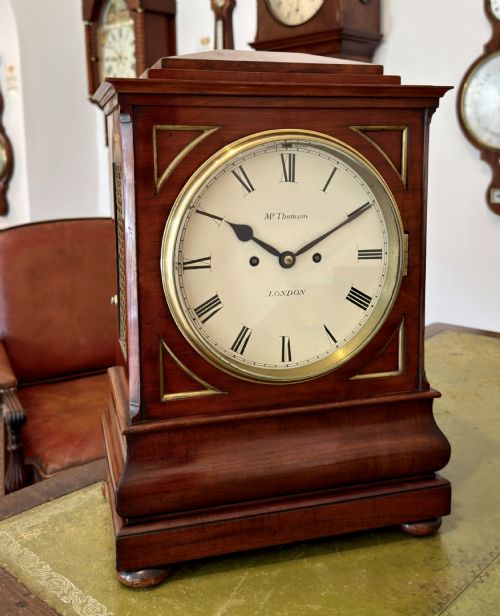
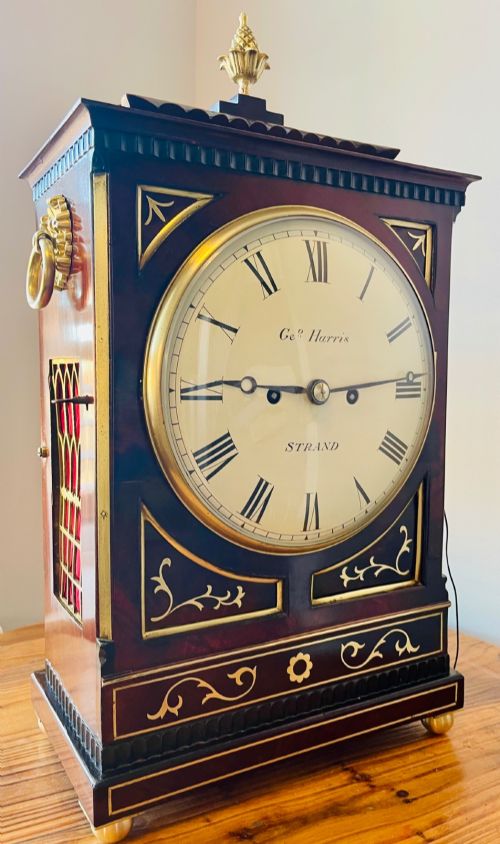
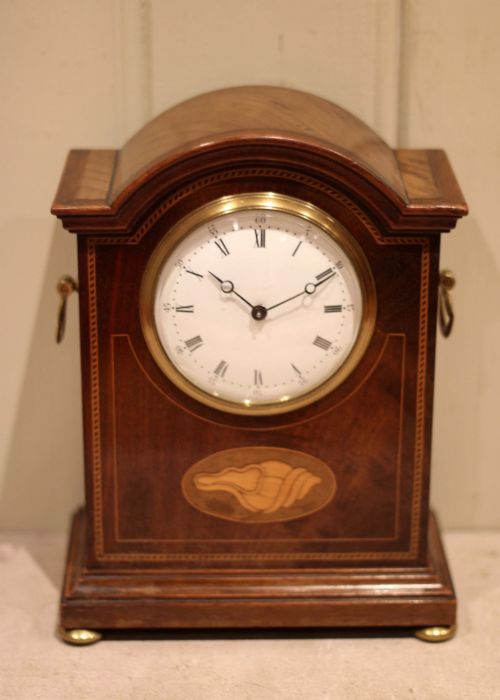
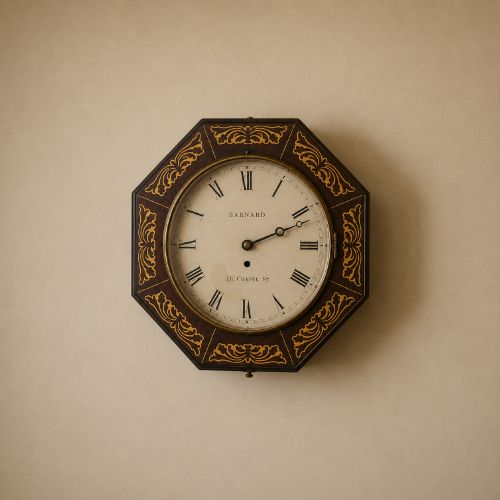
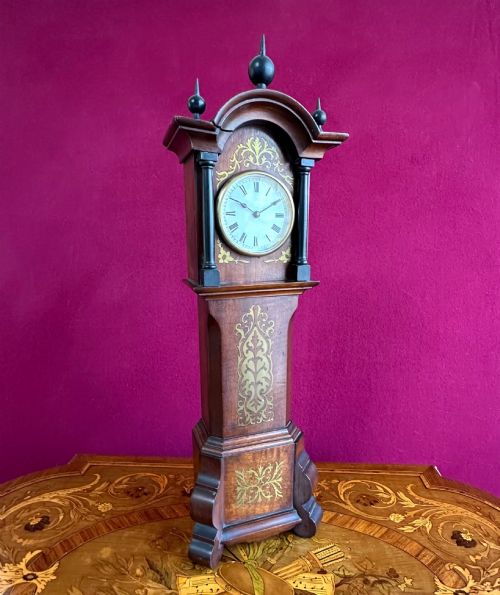
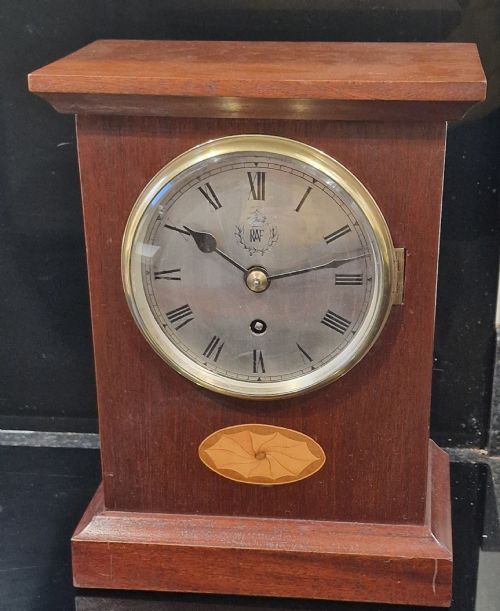
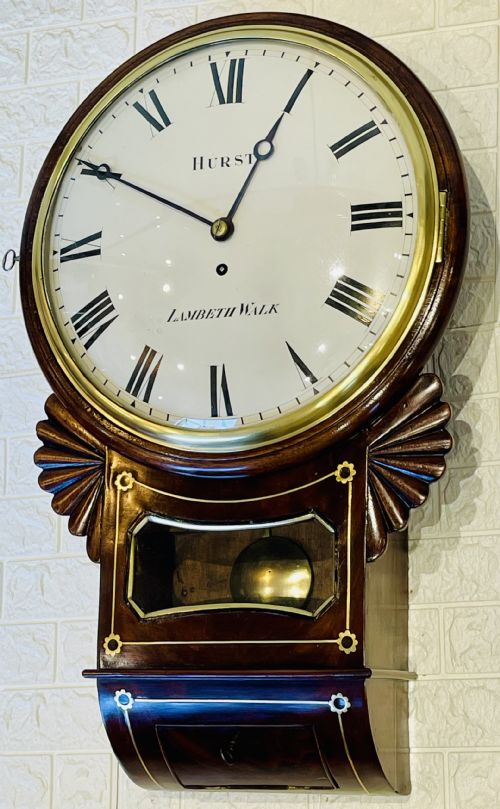
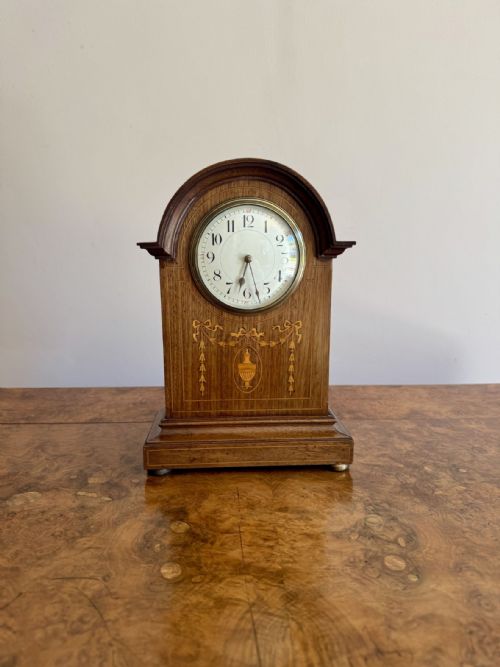
An inlaid wood clock brings together cabinetmaking and horology across various forms, including mantel clocks, bracket clocks, wall clocks, and grand grandfather longcase clocks.
The pieces appearing on this page span several periods, from Georgian and Regency eras through Victorian, Edwardian, and the early twentieth century.
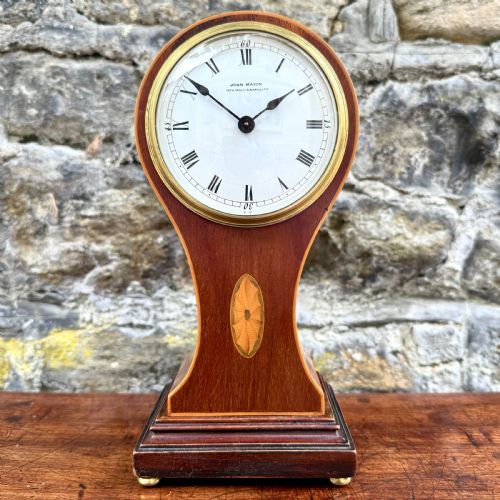
Mahogany and rosewood cases dominate the selection, often embellished with contrasting stringing, paterae, or floral marquetry using satinwood, boxwood, and lemon wood.
How They Were Made
Cabinetmakers constructed solid or veneered timber carcasses using mahogany, rosewood, and satinwood, then routed recesses into the wood surfaces to receive lighter contrasting veneers for geometric inlay or floral motifs.
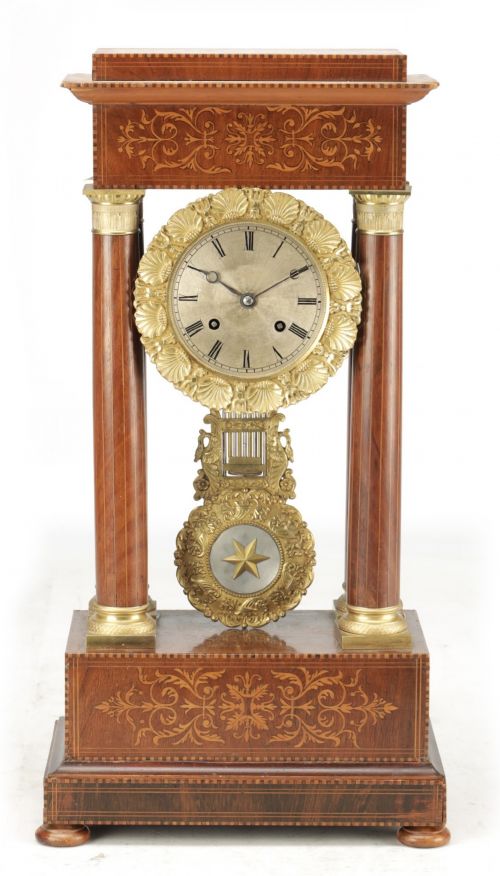
Brass featured heavily both for mechanical movements - such as fusee or bell-striking mechanisms - and for exterior decorative elements including inlaid brass lines, side frets, or ormolu mounts.
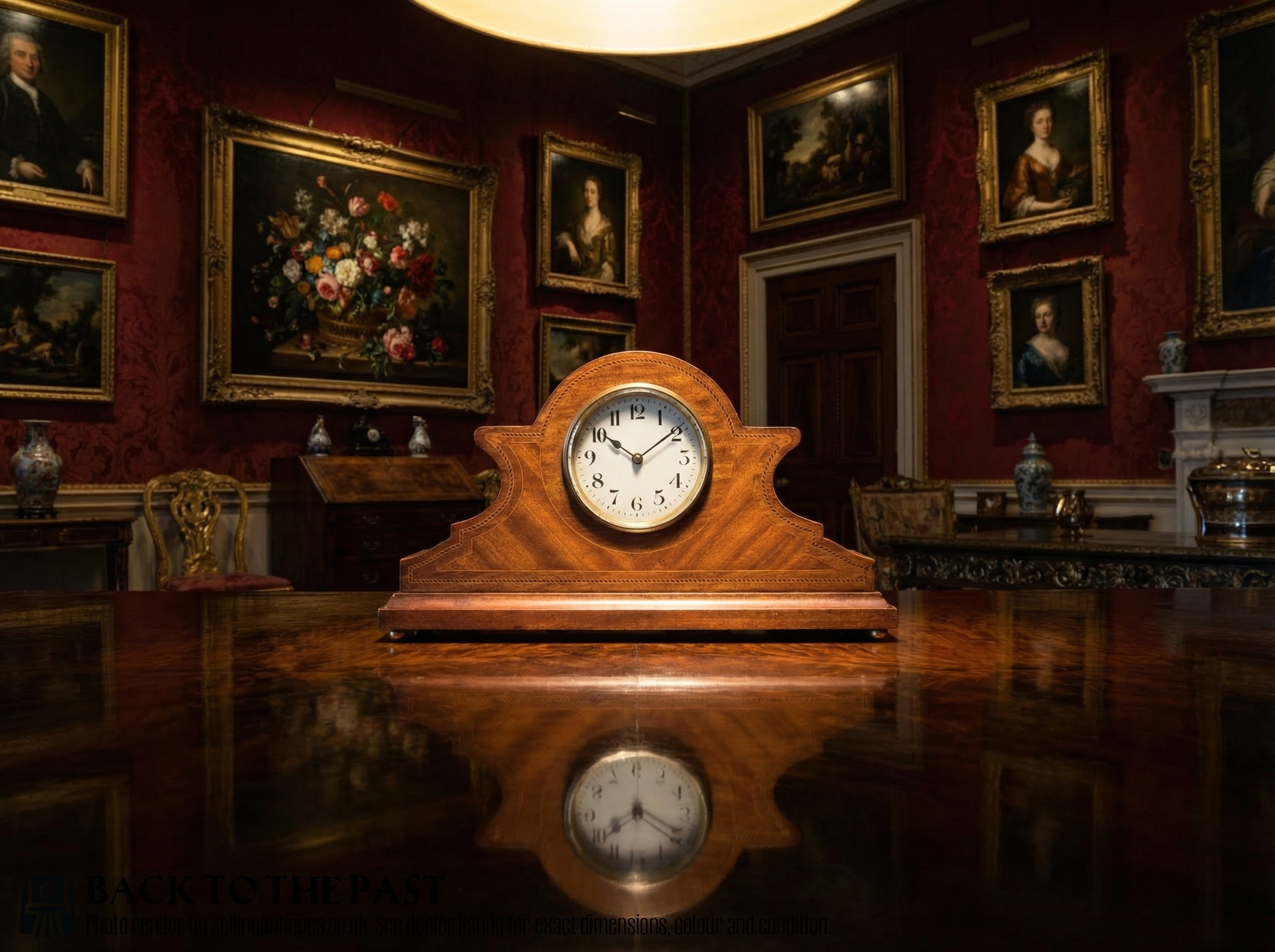
Some Edwardian mantel clocks took on a whimsical 'balloon' silhouette, rounding out the stern geometric authority of earlier Victorian timepieces.
What Varies in Quality
The refinement of the cabinetwork dictates the standard of an inlaid wood clock, visible in the precision of the timber joints and the crispness of the fitted contrasting inlays.
Movement sophistication also divides ordinary timepieces from superior examples, as seen in the presence of twin fusee setups, chiming trains, and signatures from noted makers.
Thomson of London·John Denbigh Merton Park·Thomas Connold of Alysham·Joseph Jump of London·Paul Garnier·Henry Marc·Mappin & Webb
The Inlaid Wood Clock Glossary
- Fusee
- A conical pulley connected to the mainspring by a chain or cord, designed to equalise the driving force as the spring unwinds. This mechanism is a hallmark of better British timepieces.
- Paterae
- Small circular or oval decorative ornaments carved or inlaid into furniture and clock cases. They frequently appear in classical Georgian and Regency designs.
- Marquetry
- The art of forming decorative patterns by fitting together thin veneers of various coloured woods. It allows for elaborate floral or pictorial scenes across clock doors and plinths.
- Drop Dial
- A wall clock design featuring an extended wooden trunk below the circular dial. This lower portion often incorporates glass windows to view the swinging pendulum.
- Portico Clock
- A architectural mantel clock styled to resemble a classical temple with columns. These French designs often utilise rich rosewood veneers paired with ormolu accents.
Inlaid Wood Clock: Frequently Asked Questions
What is a fusee movement?
A fusee movement uses a conical pulley and chain to ensure even tension is delivered to the clock gears as the mainspring loses power.
This system helps maintain accurate timekeeping throughout the duration of the wind.
How do I identify a bracket clock?
Bracket clocks were originally designed to sit on wall brackets, featuring portable wooden cases with carrying handles on top.
Over time, the term became associated with larger table clocks featuring fine dial work and striking mechanisms.
Where were these clocks displayed?
Mantel and bracket clocks sat on fireplace mantels, library shelves, or tables in principal rooms, while larger longcase clocks stood in hallways.
Wall clocks were typically placed in functional spaces like offices, stairwells, or station rooms where clear visibility was required.
How do I tell Edwardian clocks from Victorian ones?
Victorian clocks often favour heavier rosewood or mahogany cases with dense brass inlay, ornate carving, or architectural pediments.
Edwardian examples frequently utilise satinwood or fruitwood with lighter inlay work, reflecting the transition toward airier Art Nouveau and Edwardian decorative tastes.