
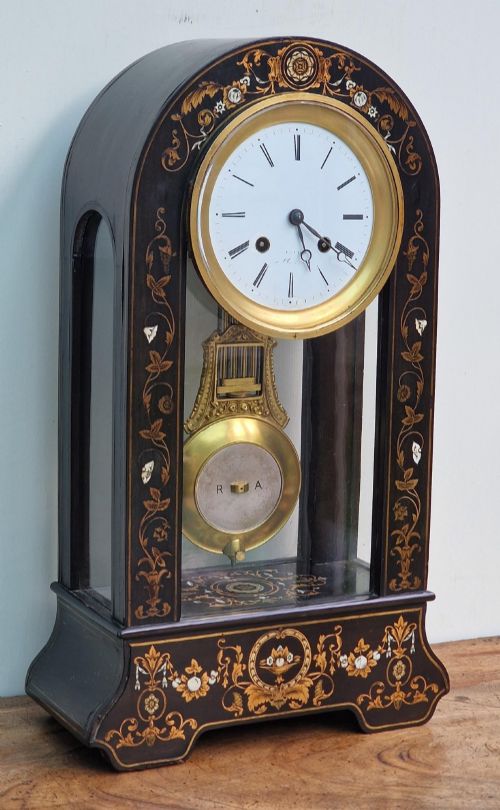
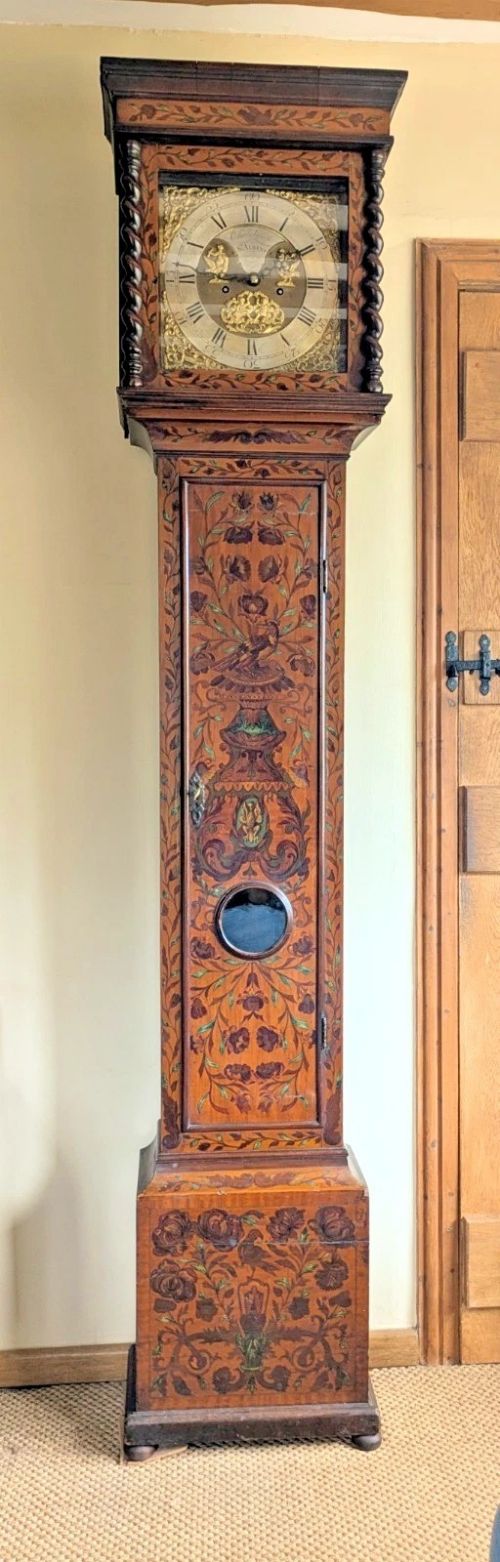
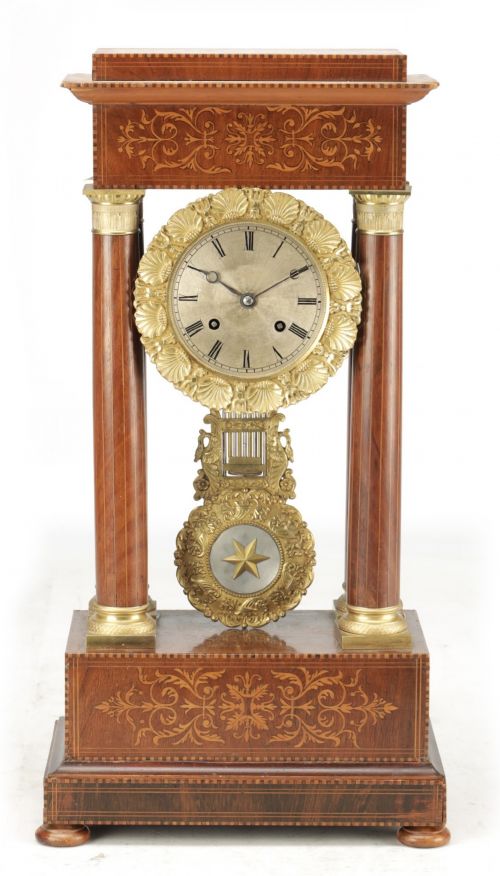


Floral Inlaid Clock
These floral inlaid clock pieces unite precise timekeeping with botanical marquetry, bringing centuries of skilled cabinet-making into any room.
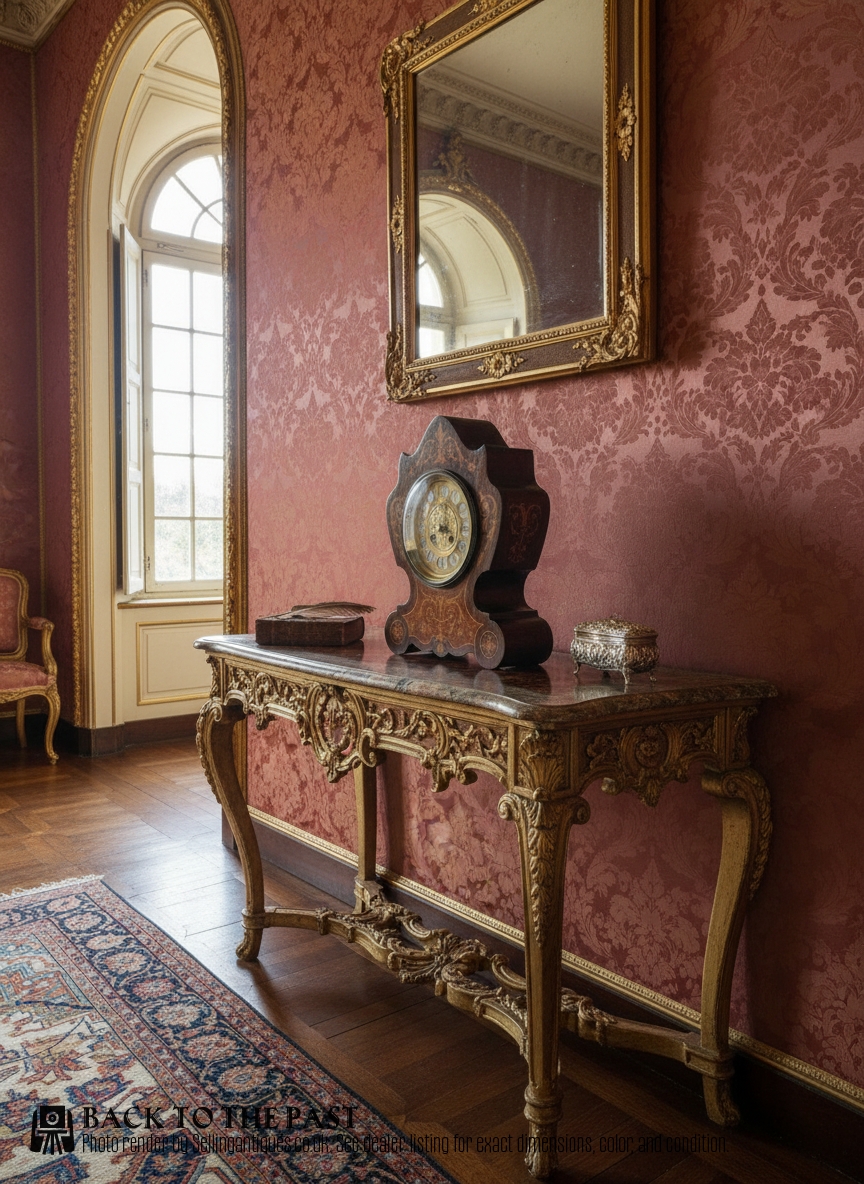
Floral Inlaid Clock
A floral inlaid clock combines traditional timekeeping mechanics with intricate woodwork, taking the form of tall longcase clocks, compact mantel pieces, and wall-mounted timepieces. The selection spans centuries of design, moving from early English masterwork longcase clocks to nineteenth-century French mantel and portico pieces.
Makers utilised various scales, ranging from grand seventeenth-century floor-standing models down to delicate Edwardian mantel clocks adorned with floral motifs like poppies. Walnut, rosewood, and mahogany provide the primary chassis for these botanical designs.
How they were made
Craftsmen built these cases using timbers such as walnut, mahogany, and rosewood, applying contrasting boxwood and marquetry inlay to form floral patterns. The wooden surfaces receive careful polishing to highlight the natural grain beneath the botanical decoration.
Listings feature periods spanning from the 17th Century through to Edwardian and Art Nouveau eras, utilising rosewood, walnut, mahogany, and boxwood.
What varies in quality
Quality rests in the precision of the marquetry inlay and the fidelity of the botanical details rendered in boxwood and contrasting timbers. Stronger examples display crisp floral definition across the wood surface rather than simpler painted or superficial decoration.
The sophistication of the movement and the signature of the maker elevate a piece significantly. Finer instances feature signed brass dials, robust eight-day mechanical movements, and harmonious proportions between the clock case and its floral ornamentation.
Charles Louch St. Albans·Nathaniel Pyne·Henry Marc·Savory & Fils A Paris·Henry Massy·Richard Baker·Malecot of Paris
The Floral Inlaid Clock Glossary
- Marquetry Inlay
- A technique where pieces of contrasting wood, such as boxwood, are fitted into a veneer to create decorative floral patterns on the clock body.
- Longcase Clock
- A tall, floor-standing clock containing a pendulum, frequently produced in the seventeenth and eighteenth centuries with elaborate wooden cases.
- Portico Clock
- A architectural style of mantel clock featuring side columns supporting a horizontal entablature, often accented with gilt details and rosewood.
- Bracket Clock
- A portable clock originally designed to sit on a wall bracket or table, developing into decorative mantel clock forms by the Edwardian era.
Floral Inlaid Clock: Frequently Asked Questions
How do I wind a floral inlaid clock?
Most mechanical versions utilise an eight-day movement requiring a specialised key inserted into the dial face. Turn the key gently until resistance signals the spring or weight is fully tensioned.
Take care not to overwind the mechanism, as this can damage the internal brass gears. Consult the specific pendulum or weight requirements if you relocate the longcase or mantel piece.
Where should I place a longcase clock?
Position your longcase against a stable interior wall away from direct sunlight and fluctuating heat sources. Wood veneers and marquetry inlay react poorly to rapid temperature shifts.
Ensure the floor surface is level so the pendulum swings evenly. A plumb setup guarantees accurate timekeeping and prevents uneven wear on the anchor escapement.
How do I care for the wood and marquetry?
Dust the rosewood, walnut, or mahogany surfaces regularly with a soft, dry cloth. Avoid commercial silicone polishes that can degrade historic French polish finishes.
Feed the timber periodically with an appropriate wax to preserve the boxwood and floral inlay. Keeping the humidity stable prevents the delicate wood pieces from lifting or cracking.
How can I tell a seventeenth-century clock apart from an Edwardian one?
Examine the overall architectural proportions and the style of the floral marquetry. Seventeenth-century longcases often feature restrained, precise floral work on dark walnut, associated with makers like Nathaniel Pyne.
Edwardian pieces tend toward lighter satinwood or mahogany bodies with distinct botanical motifs such as poppies, reflecting later design movements. The construction methods and dial typography also shift noticeably across these centuries.