
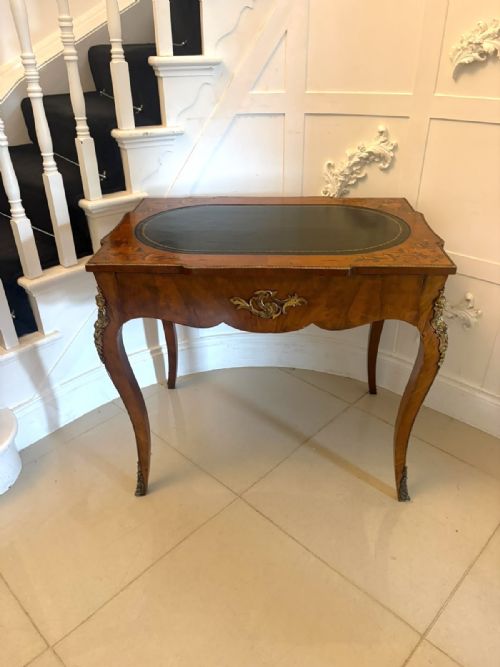
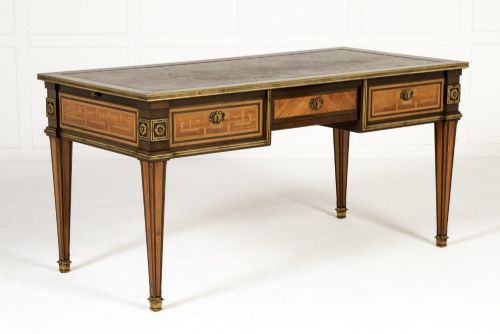


Inlaid Walnut Writing Table
An inlaid walnut writing table brings distinct timber grain and decorative contrast into a study, functioning as a practical writing surface with refined presence.
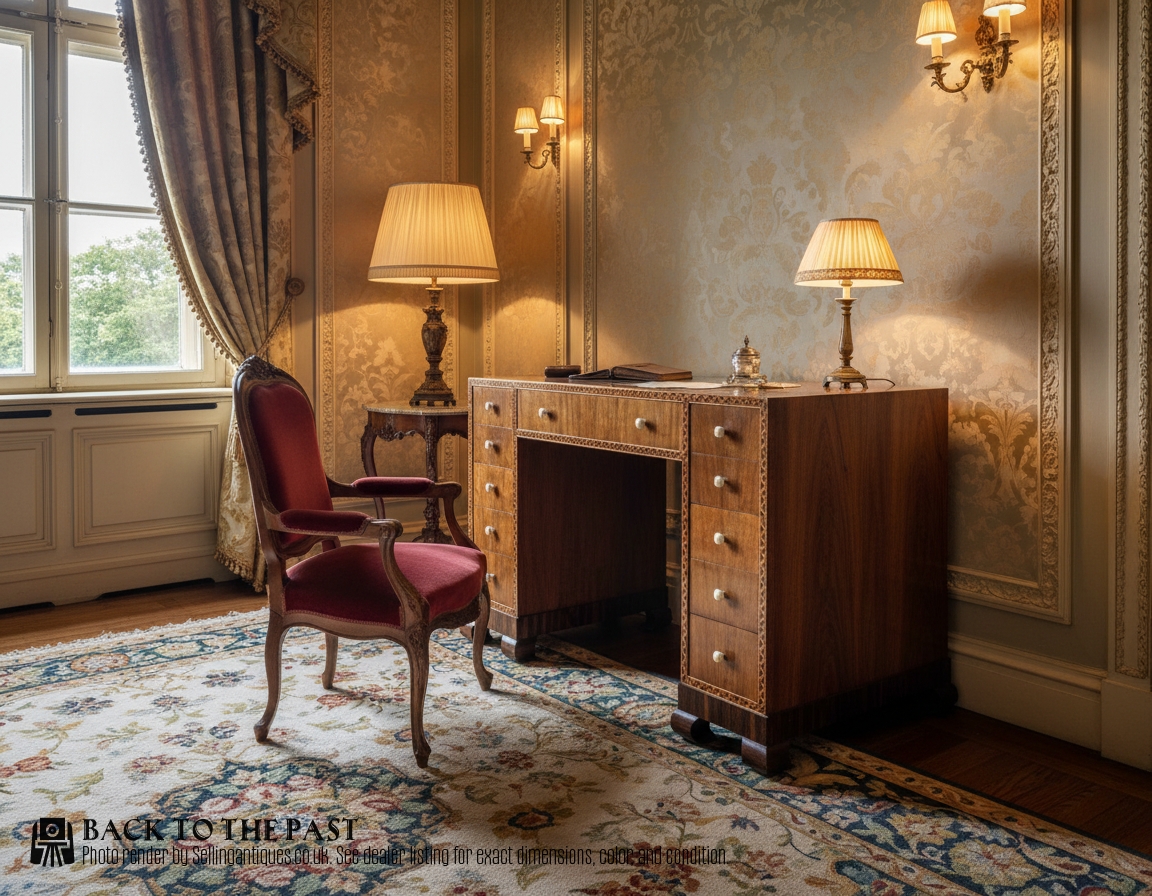
What they are
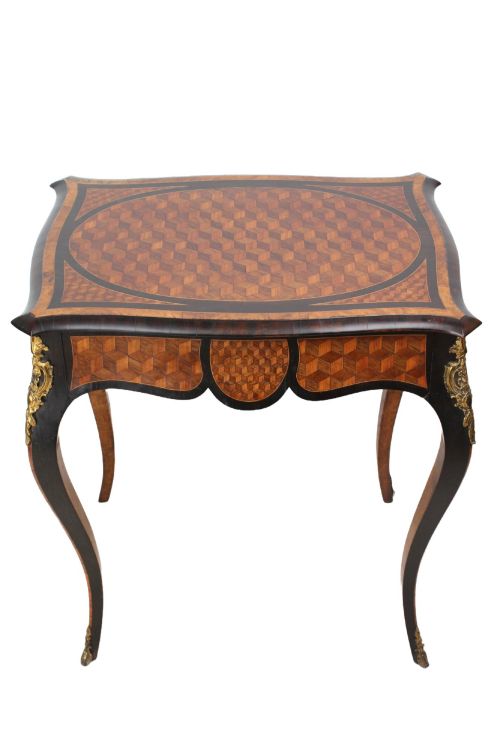
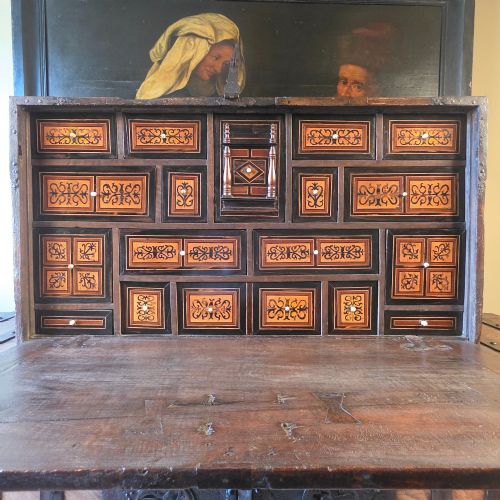
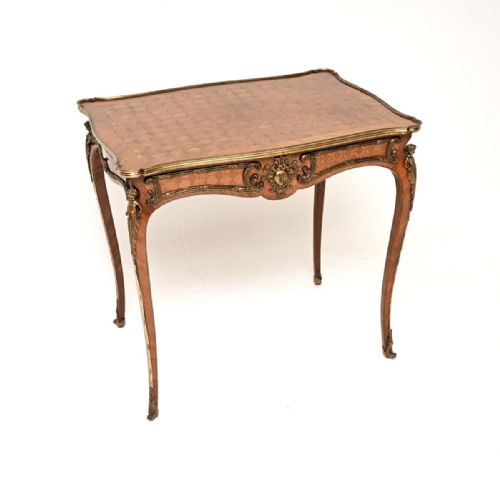
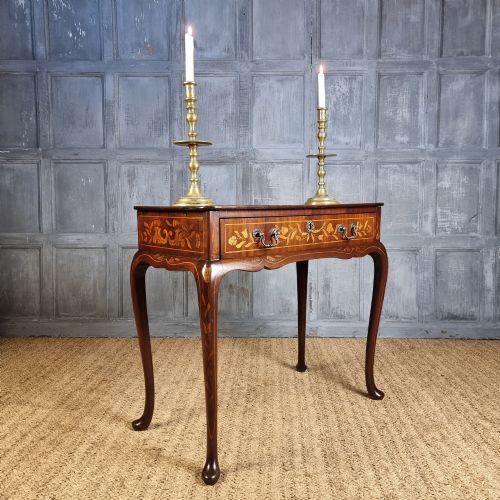
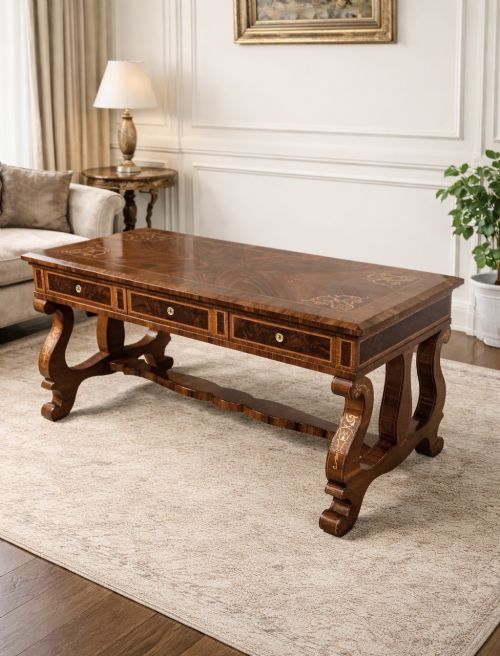
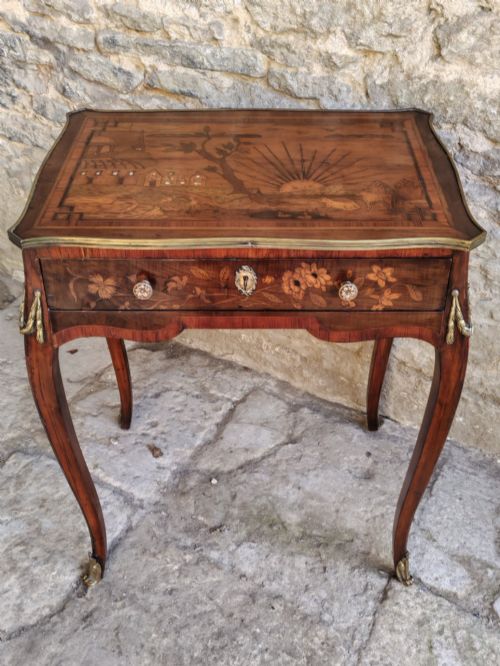
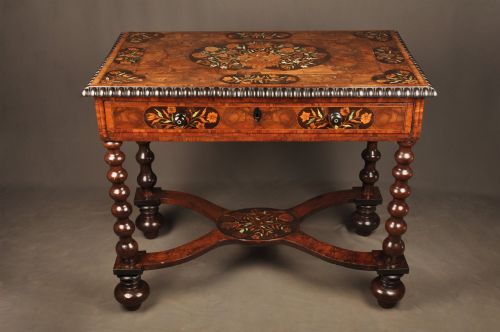
An inlaid walnut writing table combines a functional surface for correspondence with decorative marquetry, parquetry, or stringing. The pieces seen across the archive and current listings span several decades of the nineteenth century alongside later twentieth-century examples.
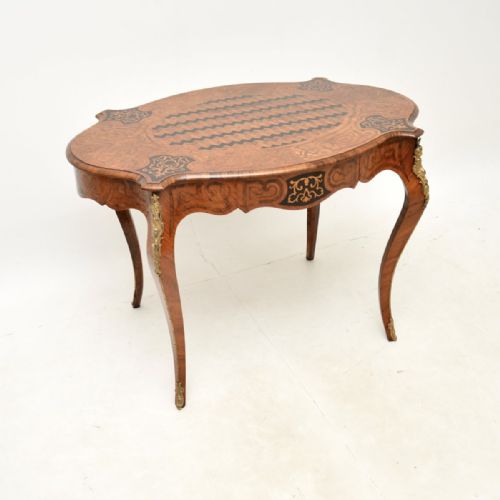
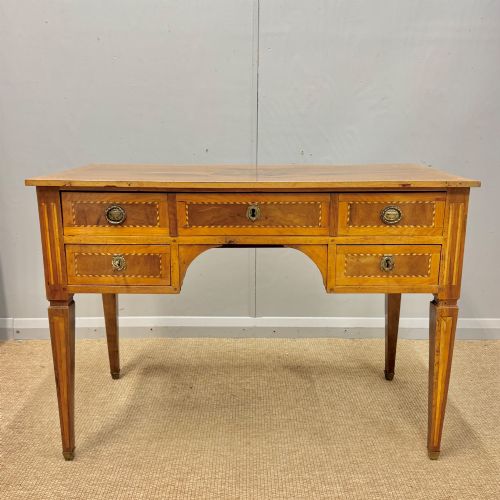
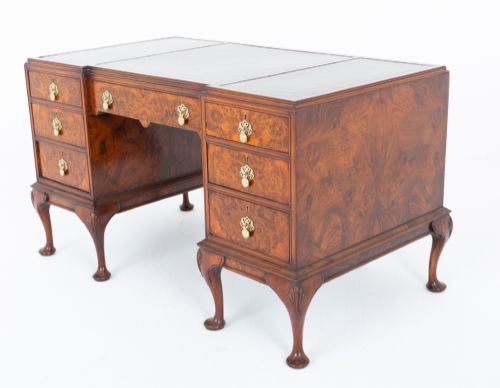
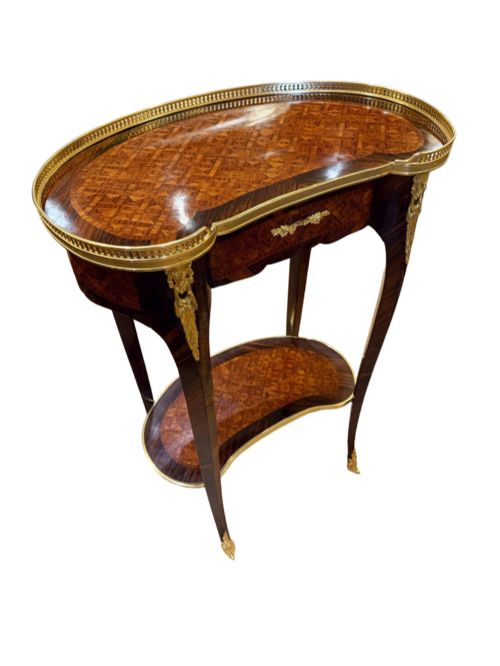
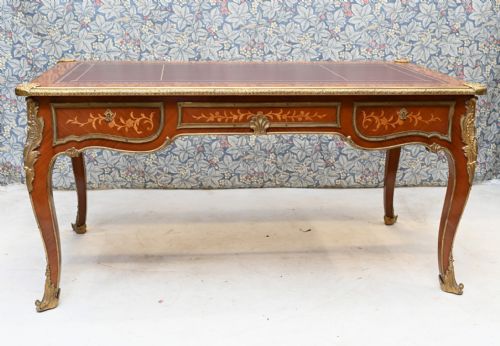
Kidney-shaped forms appear frequently, often designed as freestanding centre tables intended to sit away from walls. Other variations include rectangular library desks, bureau plat designs, and smaller Davenport styles.
The style vocabulary draws heavily on Victorian sensibilities alongside French Louis XV, Louis XVI, and Rococo revivals, plus occasional Art Deco interpretations. Walnut veneers and solid walnut provide the primary foundation for these varied silhouettes.
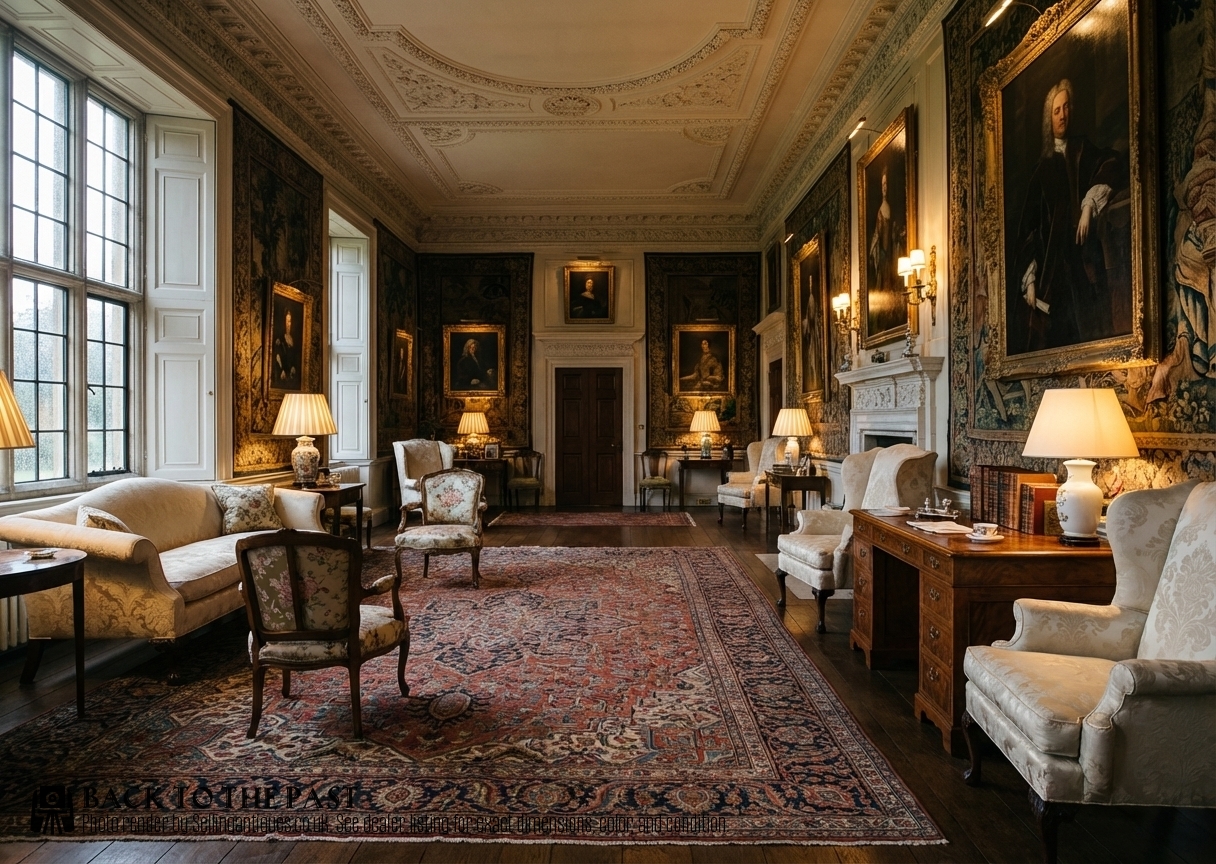
What varies in quality
The sophistication of the timber selection dictates much of the visual impact, particularly the choice of heavily figured burr walnut against simpler grain. Finer examples display meticulous execution in the boxwood inlay and complex marquetry or parquetry arrangements.
The integration of cast ormolu mounts and the precision of freestanding construction distinguish more ambitious workshop productions from standard utilitarian desks. Proportions and the grace of curved outlines, such as kidney tops, set individual pieces apart.
Retail Price Guide 2026
Typical UK retail prices for inlaid walnut writing table, calculated from the Sellingantiques database of over a million retail prices indexed since 2003. This retail price guide relies exclusively on Sellingantiques data; no external sources or auction records are used, so the figures do not describe the wider market.
Listings demonstrate a strong prevalence of nineteenth-century pieces, with burr walnut and boxwood inlay forming the dominant material combination.
Johnstone and Jeanes·Holland and Sons·Edwards and Roberts
The Inlaid Walnut Writing Table Glossary
- Burr walnut
- Timber taken from the wart or burl growth of a walnut tree, producing highly twisted and decorative grain patterns. This veneer forms the primary visual feature on many high-end Victorian desks.
- Marquetry
- The art of applying small pieces of veneer to a structure to form decorative patterns or pictorial scenes. Makers use contrasting timbers like boxwood to achieve detailed motifs.
- Ormolu
- Gilded bronze mounts applied to furniture for decorative enrichment, frequently seen on French-influenced nineteenth-century designs. It provides a metallic contrast to the dark walnut body.
- Bureau plat
- A table form of French origin featuring a flat writing surface and one or more drawers in the frieze. These pieces often stand away from walls as centre tables.
- Parquetry
- Geometric mosaic woodwork formed by small veneer blocks arranged in patterns such as cubes or chequers. It differs from curved marquetry through its reliance on straight-edged shapes.
Frequently Asked Questions
Where should an inlaid walnut writing table be placed?
Many examples are finished on all sides as freestanding centre tables, allowing them to sit prominently in the middle of a room rather than pushed against a wall.
Smaller kidney shapes and Davenport formats suit tighter corners or smaller studies while maintaining a decorative focal point.
How do I care for the leather writing surface?
Leather inserts benefit from occasional cleaning with specialist balms to prevent drying and cracking over time. Avoid exposing the surface to direct sunlight or excessive moisture.
Keep sharp objects away from the leather to preserve the original writing texture.
What is the difference between marquetry and parquetry?
Marquetry involves curved, pictorial, or floral veneer designs composed of various contrasting woods. It creates organic patterns across table tops and drawer fronts.
Parquetry relies on geometric and angular shapes like cubes or tiles to form repeating patterns across the wooden surface.
How do I identify a Victorian walnut writing table?
Nineteenth-century pieces often display characteristic burr walnut veneers paired with boxwood stringing and occasional ormolu mounts. Formats like the kidney-shaped freestanding desk appear frequently during this era.
Construction details such as hand-cut dovetails inside the drawers and traditional timber framing point towards nineteenth-century manufacturing methods.