



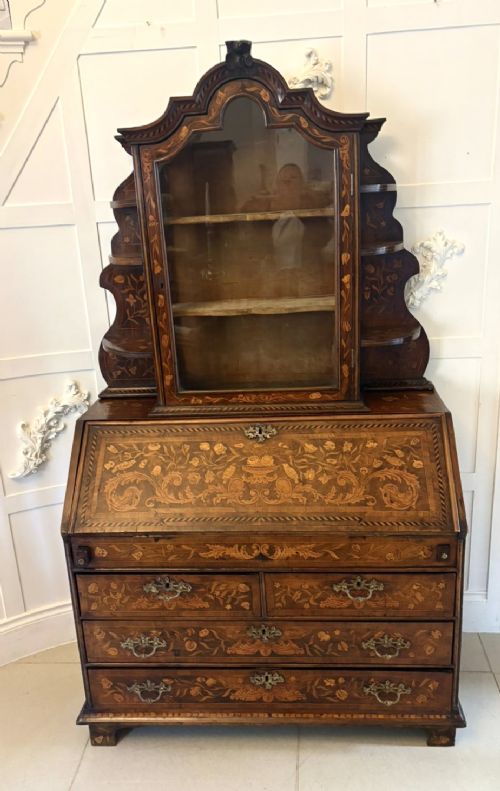


Inlaid Walnut Writing Cabinet
An inlaid walnut writing cabinet combines refined marquetry with practical desk space, offering collectors a striking piece of period furniture.
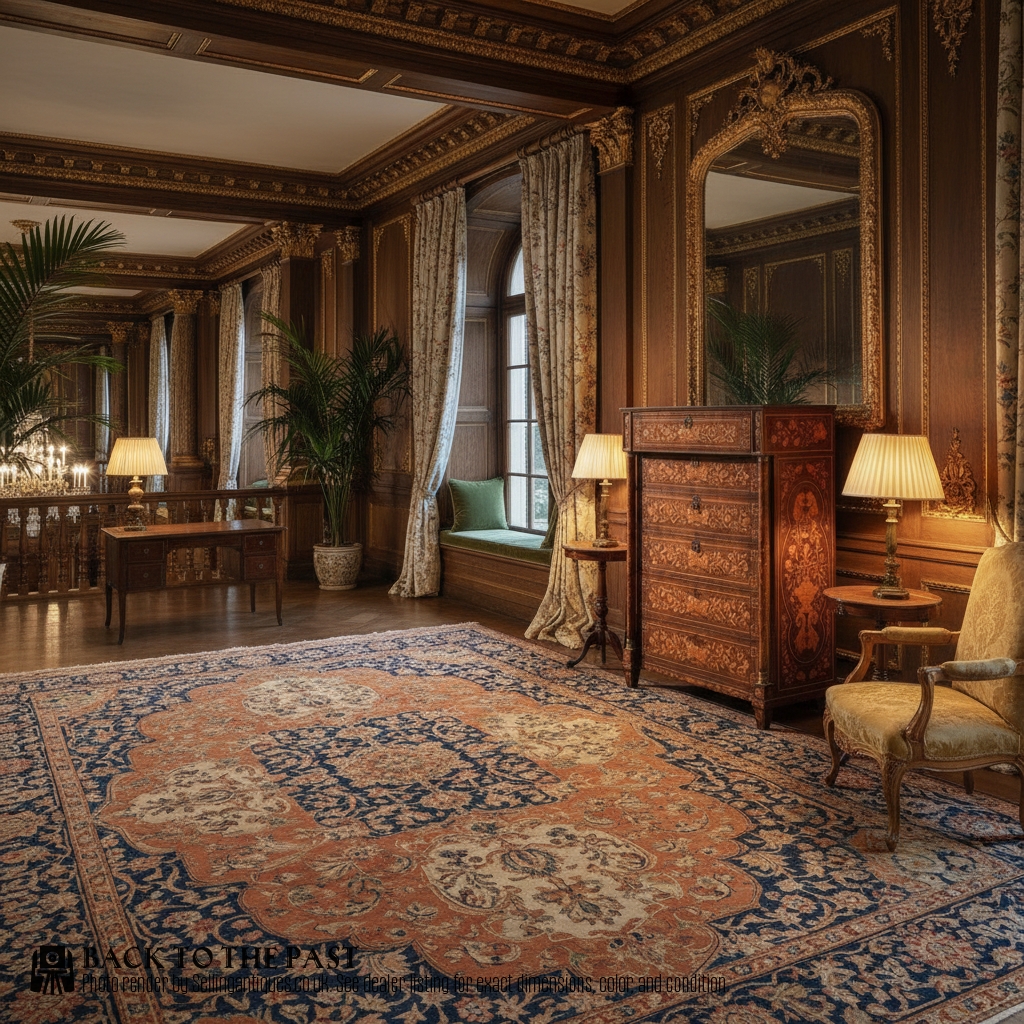
Inlaid Walnut Writing Cabinet
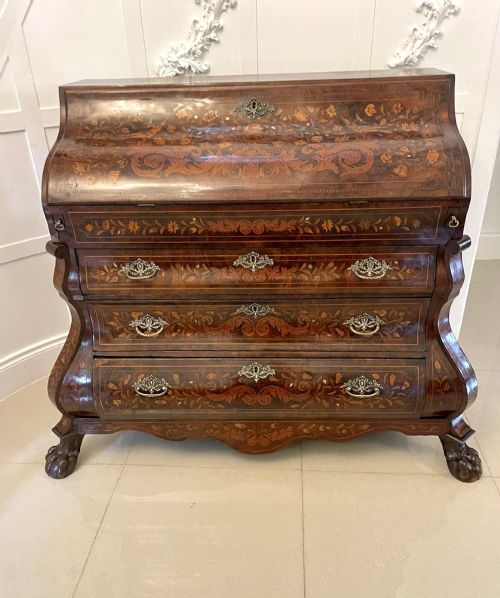
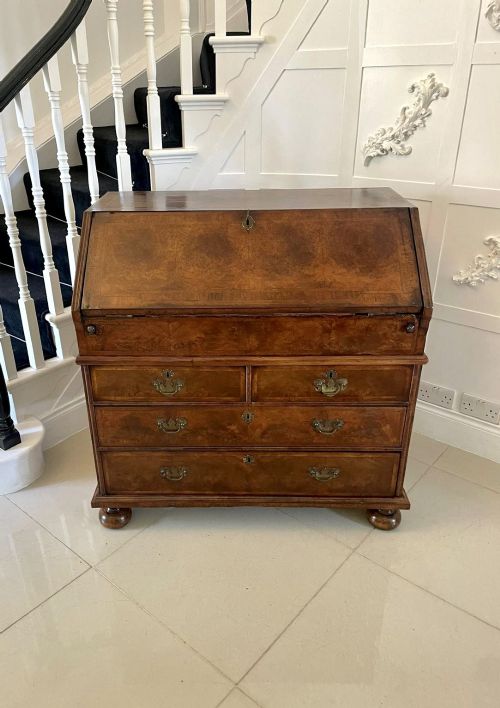
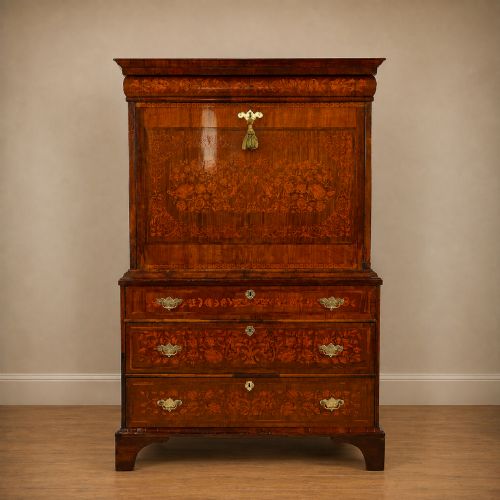
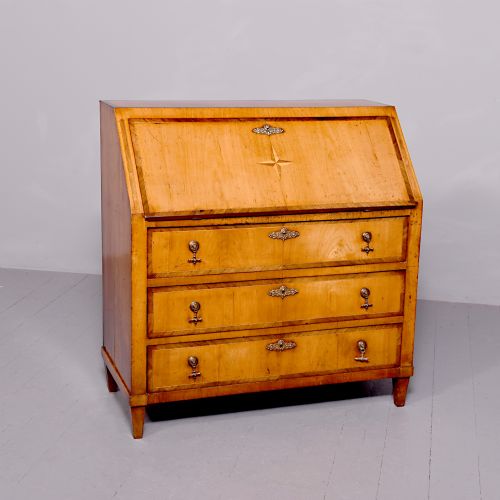
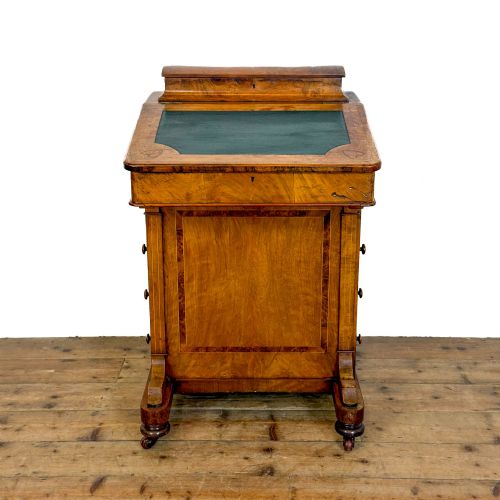
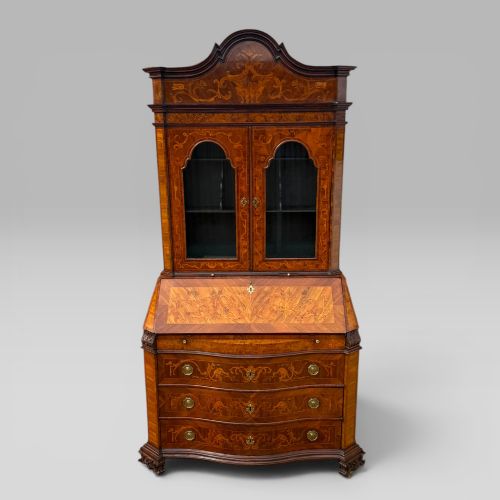
When you search for an inlaid walnut writing cabinet, you encounter diverse forms ranging from compact Victorian Davenport desks to large 18th-century Dutch bureau bookcases. The selection spans the 17th, 18th, and 19th centuries, incorporating Georgian, Victorian, and Baroque styles.
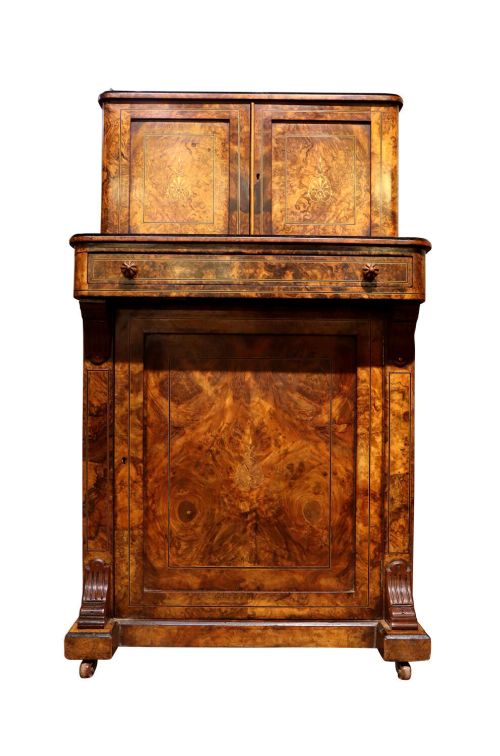
Bureau bookcases and bureau cabinets dominate the larger formats, while smaller pieces include writing desks, Davenport desks, and Bonheur de Jour tables. Many examples reflect continental origins, particularly Dutch and Italian craftsmanship, alongside English pieces.
Materials and construction
Walnut and burr walnut form the primary timber, often enhanced by contrasting veneers like kingwood, tulipwood, and satinwood. Marquetry decoration utilises fruitwood and various dyed veneers to create intricate floral and geometric patterns.
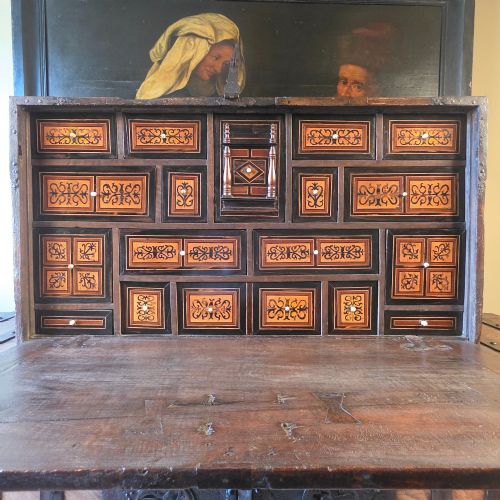
Fine cabinet making incorporates secondary woods, dovetail joinery, and sometimes ormolu mounts or brass inlay. Interior compartments frequently feature leather writing surfaces and concealed drawers.
Inlaid Walnut Writing Cabinet Retail Price Guide 2026
Typical asking prices for inlaid walnut writing cabinet among the pieces listed under this phrase on Sellingantiques today, from the lower quarter to the upper quarter. They describe what is for sale here now, not the wider market.
Periods represented span from the 17th century through the Georgian and Victorian eras up to Edwardian times.
Assessing craftsmanship
The refinement of the marquetry inlay distinguishes standard production from exceptional work, particularly in the precision of floral motifs and botanical details. The choice of burr walnut veneer also plays a major role, with lively, highly figured grain patterns commanding greater attention.
Structural complexity, such as bombe fronts, double dome cornices, or elaborate fitted desk interiors, separates ambitious cabinet making from simpler utilitarian forms. The integration of secondary materials like ormolu mounts and brass stringing further indicates the level of original investment.
Adriano Brambilla
The Inlaid Walnut Writing Cabinet Glossary
- Marquetry
- Decorative veneer work forming pictures or patterns by assembling small pieces of wood, shell, or ivory. This technique defines the surface ornamentation on many cabinet fronts and slopes.
- Burr walnut
- Wood taken from the abnormal growth of a walnut tree, yielding highly swirled and mottled grain patterns. Cabinet makers prize this timber for its rich visual texture.
- Bureau bookcase
- A writing cabinet featuring a sloping desk flap above or below shelving enclosed by doors. These large pieces combine storage with a dedicated writing surface.
- Davenport desk
- A compact Victorian writing desk featuring a sloped top and drawers opening to the side. This form suits smaller spaces while providing internal stationery storage.
- Ormolu
- Gilded bronze used for decorative mounts and furniture trim. This material adds metallic contrast to dark wood surfaces.
Inlaid Walnut Writing Cabinet: Frequently Asked Questions
What is a bureau bookcase?
A bureau bookcase combines a sloping desk compartment with upper shelving enclosed by doors. It serves as both a workspace and a display or storage unit.
These pieces often feature elaborate marquetry and multiple internal drawers for correspondence and documents.
How do I identify a Davenport desk?
A Davenport desk is a compact form featuring a sloping, leather-inset writing surface above a pedestal of side drawers. They are typically Victorian and freestanding.
Many examples include a stationery compartment on top and pull-out pen drawers.
What is Dutch marquetry?
Dutch marquetry involves detailed floral and bird inlay work using various tinted woods on a walnut ground. It frequently appears on 18th-century bureau cabinets and bombe furniture.
The style emphasises dense, naturalistic decoration across curved surfaces.
Where were writing cabinets placed?
Writing cabinets originally stood in private studies, libraries, or withdrawing rooms where correspondence took place. Their finished backs often allowed them to sit away from walls.
Today, they function as focal points in living spaces while retaining their original storage utility.