

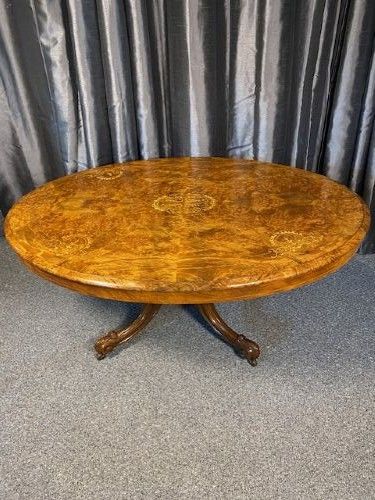
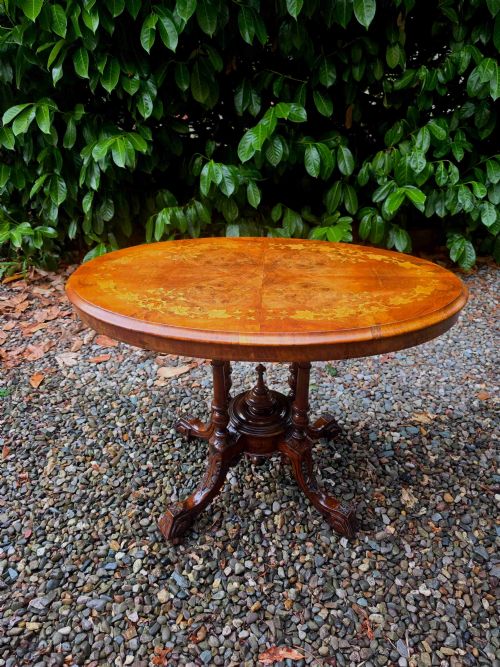
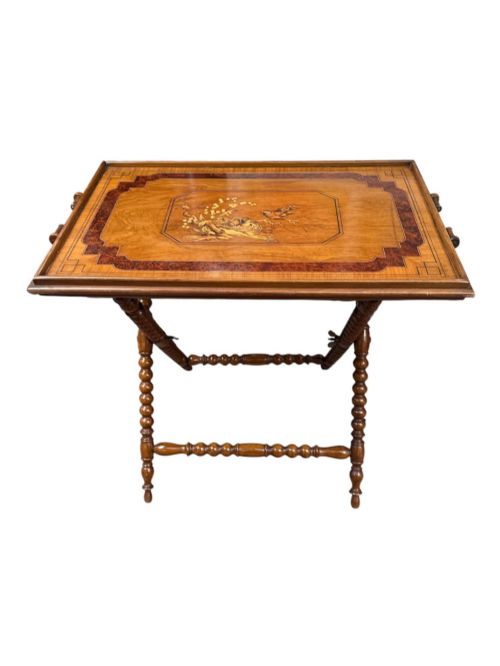
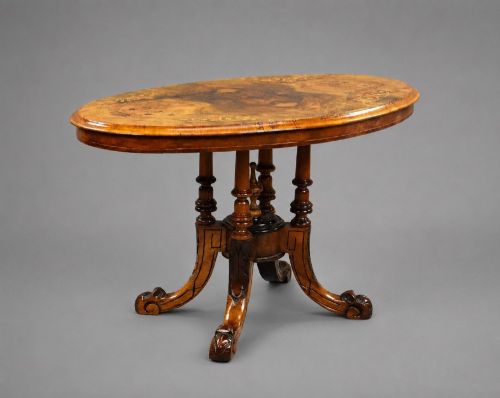
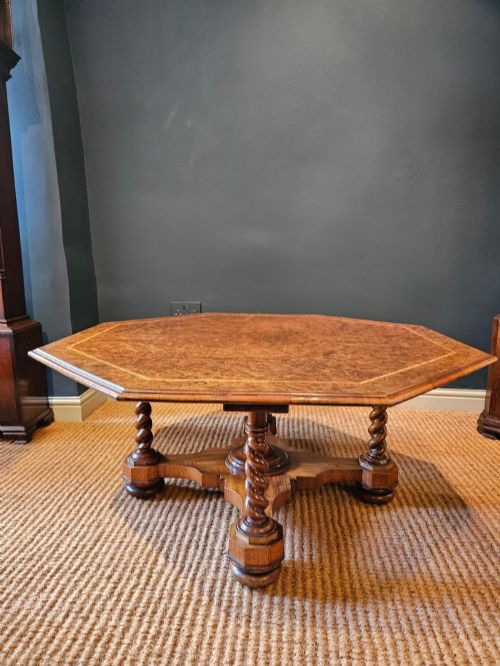
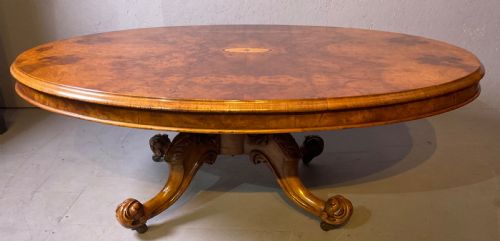
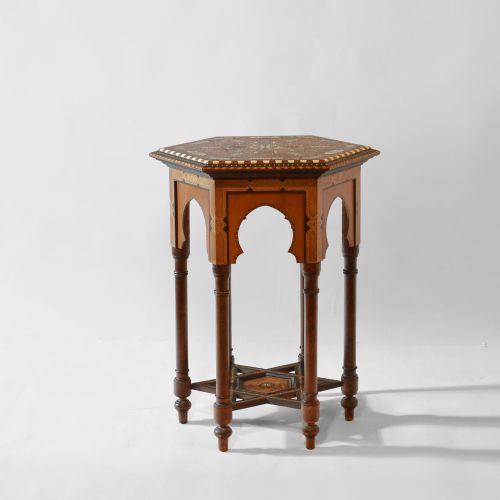
Inlaid Walnut Tea Table
An inlaid walnut tea table brings rich timber grain and intricate marquetry directly into a sitting room, offering both surface utility and period character.
What these tables are
An inlaid walnut tea table combines figured timber with decorative marquetry, turning a domestic surface into a focal point. These pieces span several distinct periods, showing how social habits and interior tastes changed over time.
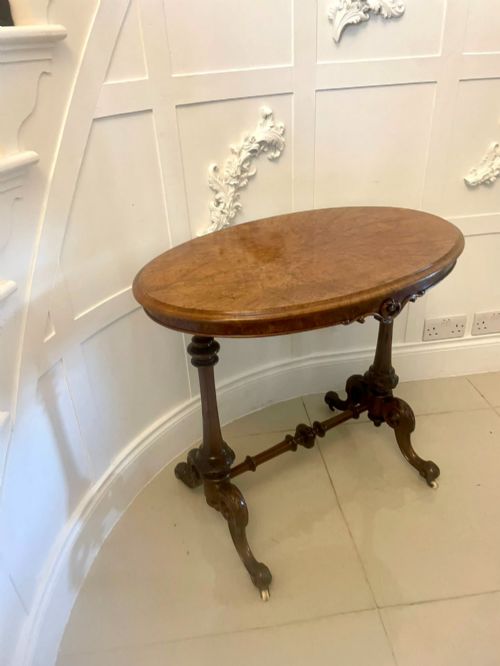
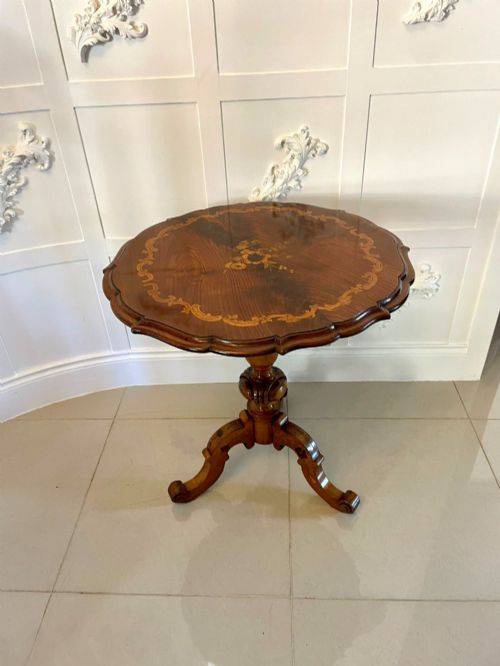
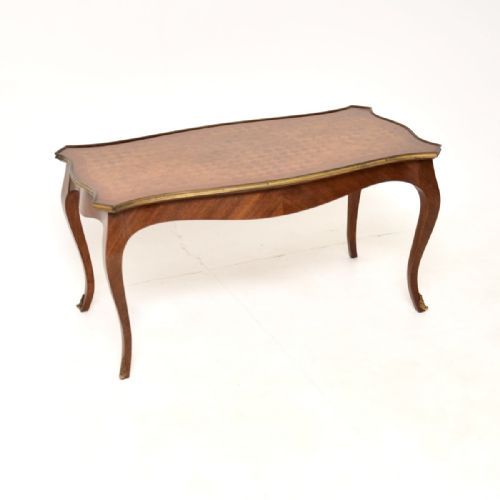
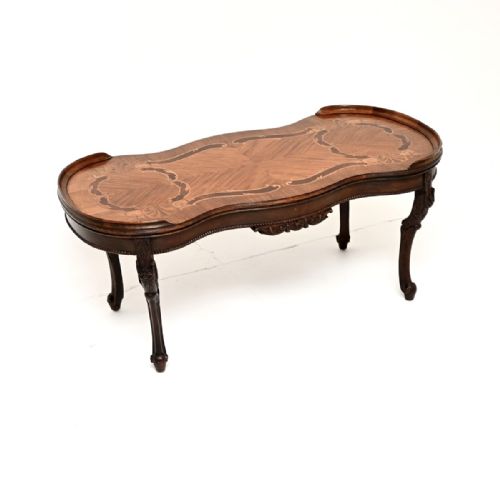
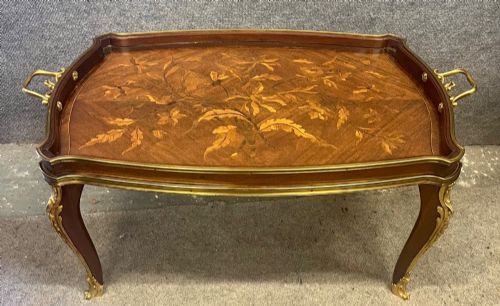
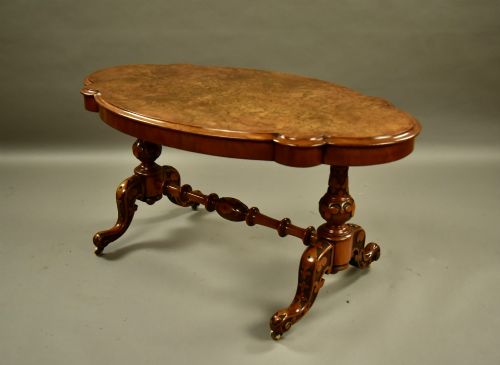
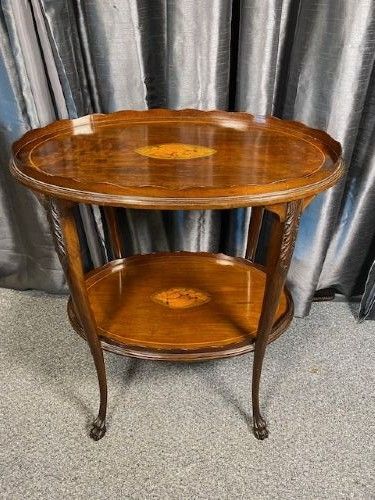
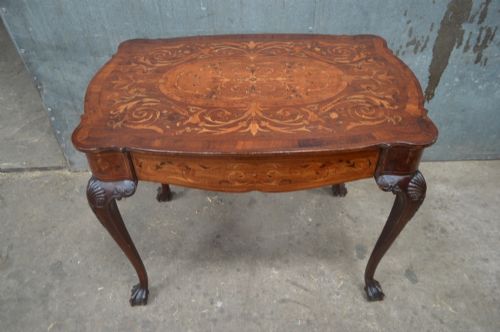
The selection here encompasses eighteenth-century Dutch marquetry work, mid-Victorian burr walnut occasional pieces, and later twentieth-century interpretations in the Queen Anne style. While historic examples served for beverage service or card games, later variations function readily as lamp or coffee tables.
Buyers encountering this search phrase find formats ranging from oval Sutherland tables and silver-top tables to compact side and wine tables. The fundamental form remains anchored in walnut timber, elevated by contrasting wood inlay and period joinery.
How they were made
Cabinet makers constructed these pieces primarily using walnut and burr walnut veneers over secondary timbers, often incorporating fruitwood, boxwood, and ebonised wood to achieve chromatic contrast in the decoration.
Surface ornament relied heavily on wood marquetry and detailed inlay, depicting floral and avian motifs in the Dutch Rococo or Victorian manners. Brass hardware and hinges appeared where mechanical folding or drop-leaf actions were required.
Retail Price Guide 2026
Typical UK retail prices for inlaid walnut tea table, calculated from the Sellingantiques database of over a million retail prices indexed since 2003. This retail price guide relies exclusively on Sellingantiques data; no external sources or auction records are used, so the figures do not describe the wider market.
Materials appearing across these tables include burr walnut, fruitwood, boxwood, ebonised wood, and brass.
What varies in quality
The distinction between ordinary and exceptional pieces rests in the depth of the burr walnut figuring and the precision of the marquetry cutter's hand. Finer examples display meticulous botanical or avian detailing that integrates seamlessly with the surrounding grain.
Structural integrity and the retention of original timber surfaces dictate the standing of a piece. Tables that preserve their uncompromised nineteenth-century or eighteenth-century patination carry a visual honesty missing from later, heavily restored equivalents.
The Inlaid Walnut Tea Table Glossary
- Burr walnut
- A figured wood grain taken from the burls or growths of walnut trees, prized for its swirling, highly decorative pattern. Cabinet makers used veneers of this timber on prominent surfaces.
- Marquetry
- A technique where pieces of different coloured wood veneer are assembled into pictorial or decorative patterns. It differs from inlay by covering the entire surface rather than being set into recesses.
- Ebonised wood
- Timber treated with a chemical stain or dark finish to imitate ebony. This dark material often frames lighter marquetry panels.
Frequently Asked Questions
How do I date an inlaid walnut tea table?
Dating relies on examining the timber construction methods, the secondary woods used underneath, and the specific style of the marquetry. Eighteenth-century examples often feature elaborate Dutch floral designs, while Victorian pieces show distinct proportions and turning.
Hardware, such as brass hinges or locks, also offers clues to the era of manufacture. Comparing the joinery against documented period examples helps confirm the decade of origin.
Can I use an antique tea table every day?
These tables accommodated heavy silver service and social gatherings in the past, meaning they were built for active use. Standard domestic placement poses little risk to robust timber frames.
Careful placement away from direct heat sources and radiators prevents the walnut veneer from drying or cracking. Using coasters preserves the polished surface without diminishing the character of the wood.
What is the difference between a coffee table and an occasional table?
Occasional tables generally stand taller and served multiple domestic functions in period drawing rooms, from holding lamps to displaying ornaments. Coffee table adaptations often reflect later height adjustments or twentieth-century design choices.
Both categories utilise the same rich walnut and marquetry vocabulary. The primary distinction lies in how the height suits modern seating arrangements.
How should I clean burr walnut veneer?
Dusting with a dry, soft cloth prevents particulate accumulation from scratching the polished finish. Avoid modern silicone sprays that can penetrate micro-fissures in the antique surface.
Occasional application of traditional beeswax feeds the timber and maintains the natural lustre of the walnut. Gentle care preserves the historical patination developed over centuries.