
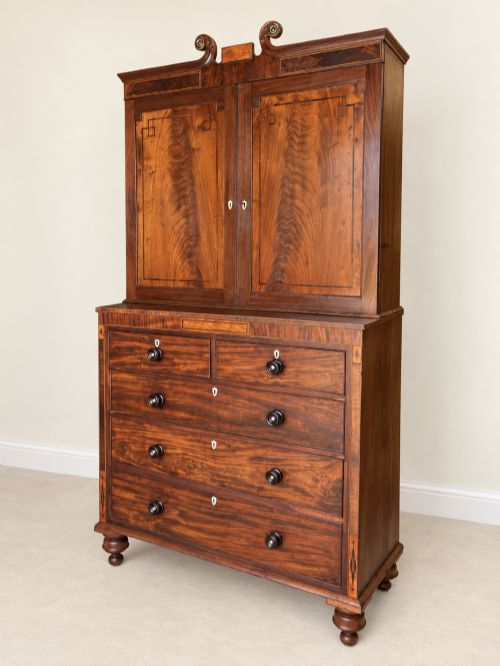
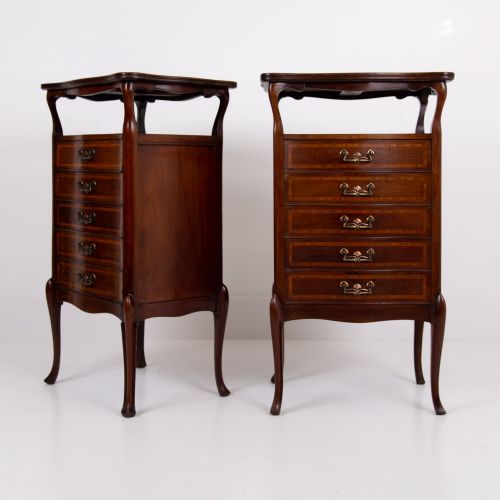
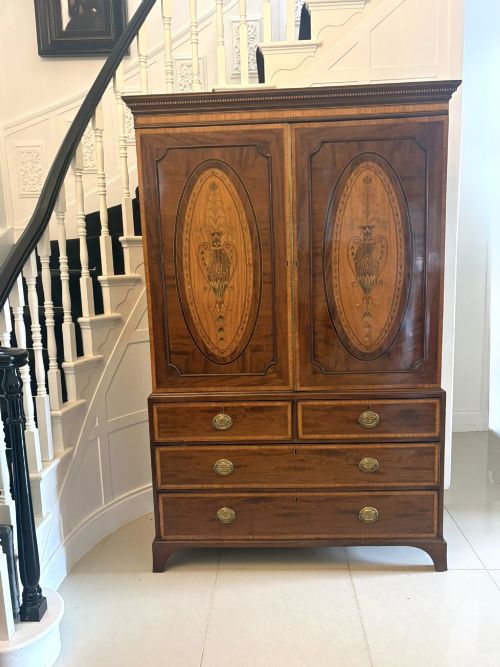

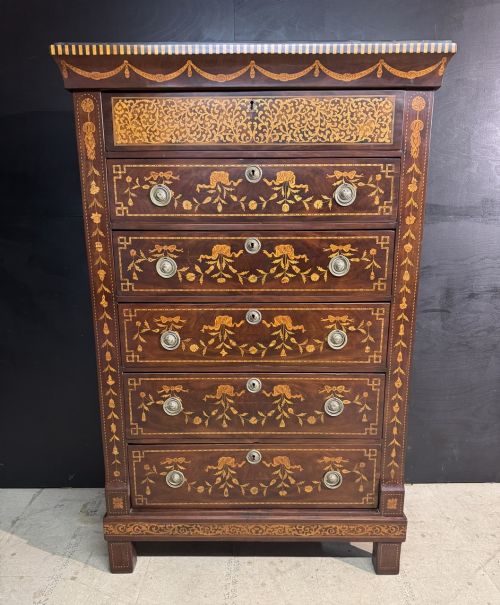
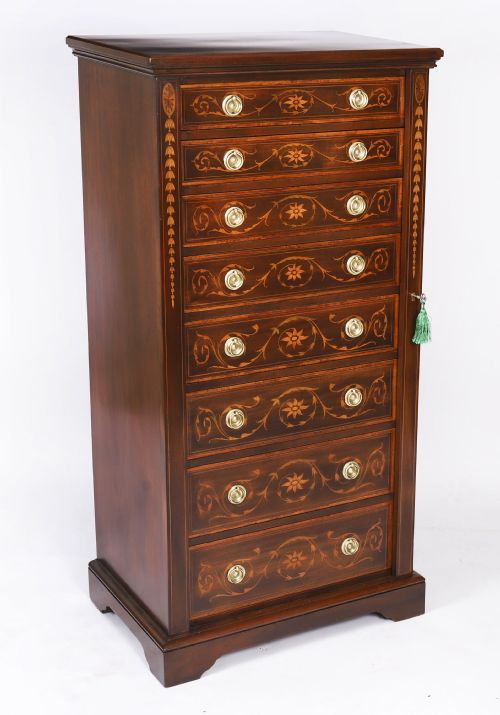
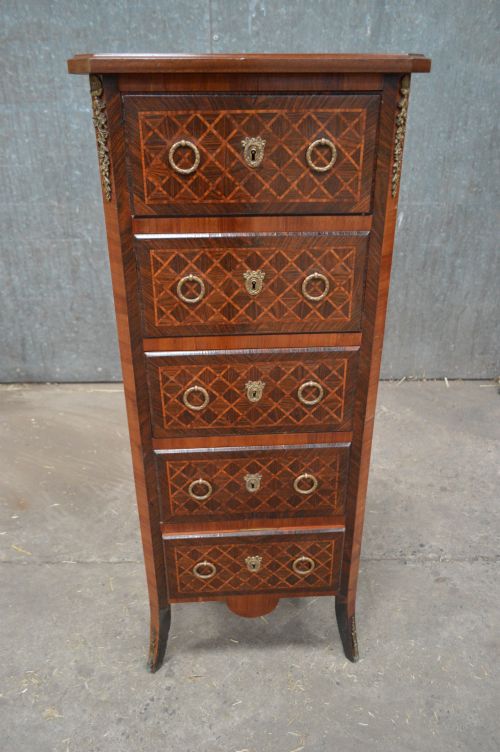
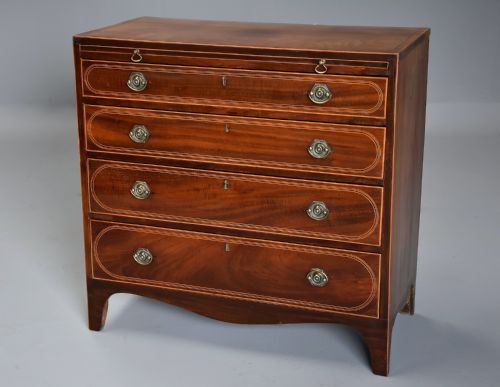
Inlaid Tallboy Chest
An inlaid tallboy chest combines vertical storage with decorative surface work, offering collectors a striking piece of period furniture that commands attention in a room.
Inlaid Tallboy Chest
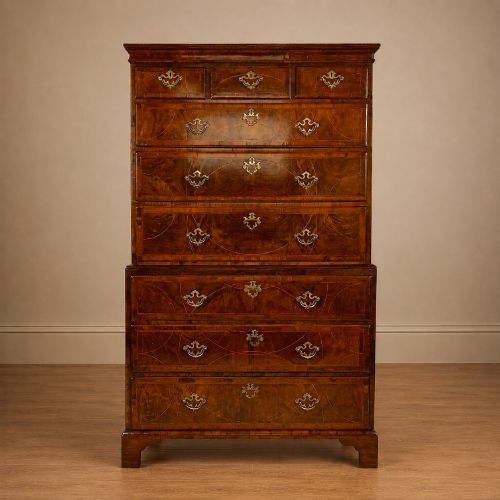
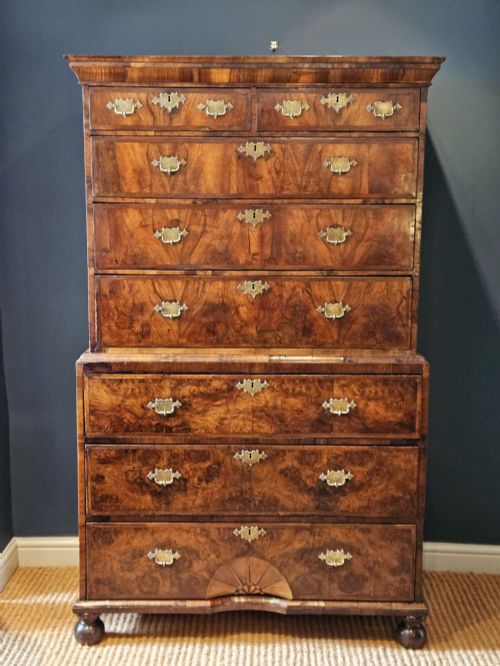
When you search for an inlaid tallboy chest, you enter a category defined by vertical capacity, stacking tall proportions that maximise floor space. These pieces emerge across the Georgian, Victorian, and Edwardian eras, spanning walnut, oak, and mahogany timbers.
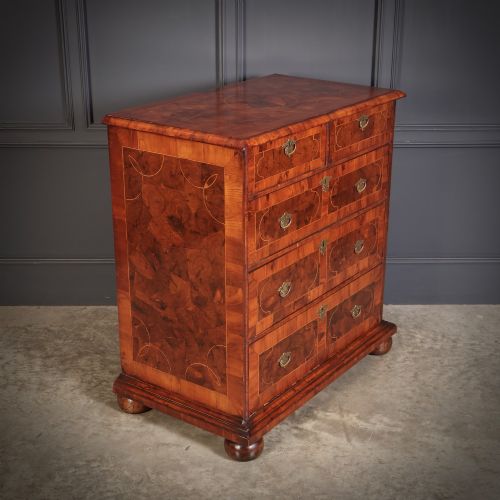
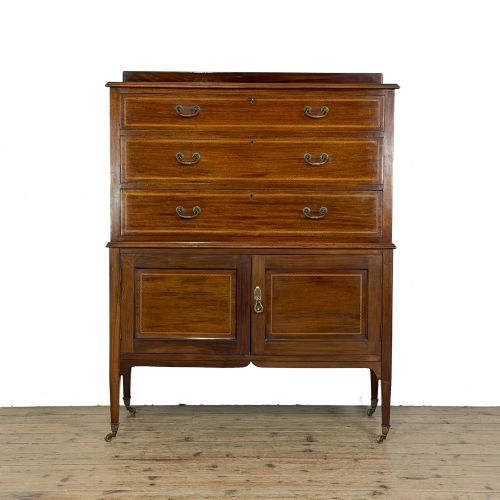
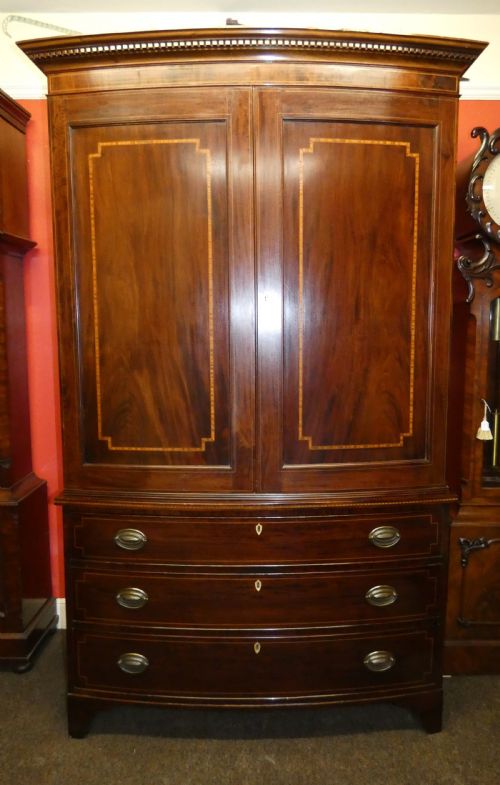
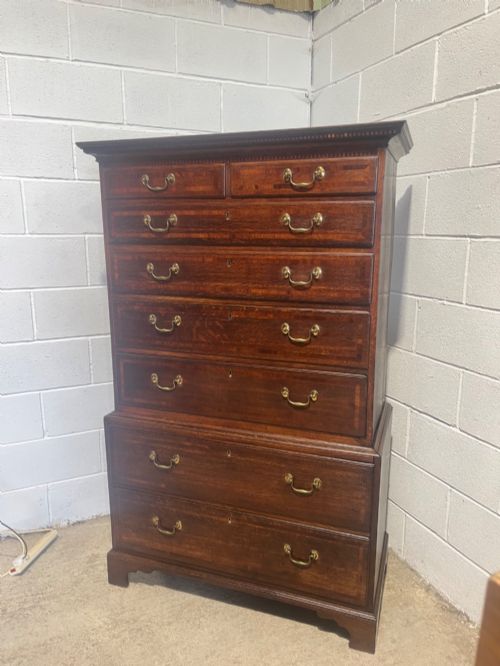
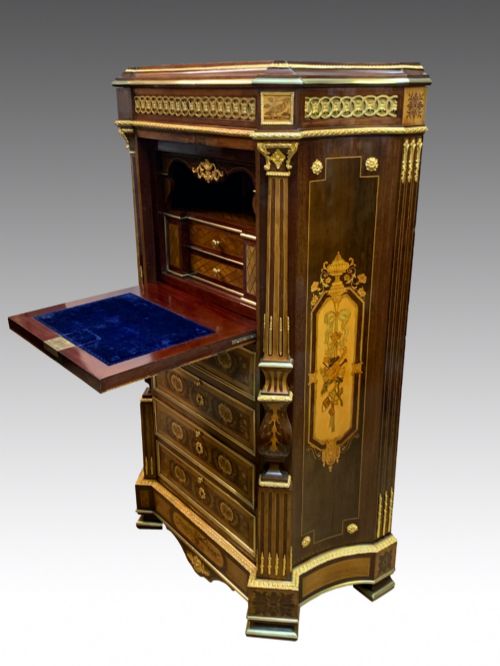
The evidence shows forms ranging from classic chests on chest to Dutch marquetry tall chests, linen presses, and secretaire semaniters. You are most likely to encounter Edwardian and Georgian mahogany or walnut iterations featuring refined line inlay or elaborate floral marquetry.
Origins stretch from English workshops to continental makers in France and the Netherlands, bringing distinct regional decorative treatments to the same foundational tall carcass.
Materials and Technique
Cabinetmakers constructed these carcases using dense primary timbers like mahogany, walnut, and oak, often applying figured veneers to large flat surfaces. Secondary woods internal to the drawer linings reflect the regional origins and period of manufacture.
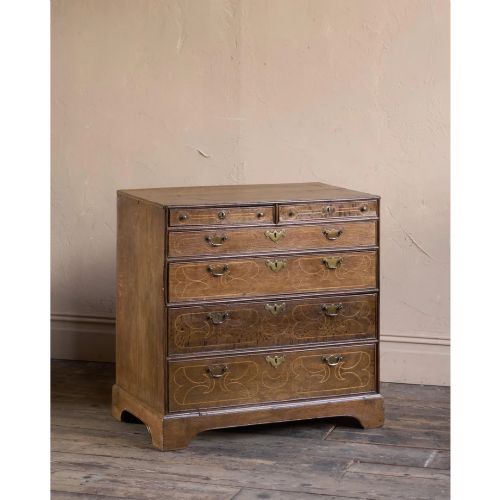
Decoration relies on precision cutting, setting contrasting timbers such as boxwood and satinwood into recesses to form lines, arabesques, or pictorial floral motifs. Brass hardware, from drop handles to escutcheons, secures the structural function while framing the drawer fronts.
Listings feature walnut, mahogany, oak, satinwood, and rosewood across Georgian, Victorian, and Edwardian periods.
Assessing the Workmanship
The distinction between tiers of quality rests on the precision of the timber selection and the sharpness of the inlay work. Finer examples display continuous grain matching across drawer tiers and meticulous inlay fitted without visible gaps.
Structural integrity of the internal carcase, timber thickness in the drawer sides, and the preservation of original brass fittings also govern the standing of an individual piece.
Maison Krieger·J Shoolbred·Druce & Co
The Inlaid Tallboy Chest Glossary
- Tallboy
- A tall chest of drawers, often constructed as one chest stacked upon another, also known as a chest on chest. This form provides substantial storage within a compact footprint.
- Marquetry
- Decorative veneer work forming pictorial or geometric patterns using various coloured woods. Craftsmen assemble these patterns prior to applying them to the carcase surface.
- Line inlay
- Thin strips of contrasting wood embedded into grooves on the furniture face to create geometric borders. This technique highlights the drawer outlines and architectural panels.
- Oyster veneering
- Cutting branch wood across the grain to produce circular or oval patterns resembling oyster shells. This decorative surface treatment appears frequently on 17th-century pieces.
- Secretaire
- A desk disguised as a standard chest of drawers, featuring a fall-front writing flap that conceals small drawers and pigeonholes. It merges writing utility with vertical storage.
Inlaid Tallboy Chest: Frequently Asked Questions
What is a tallboy chest?
A tallboy is a tall chest of drawers that typically stacks one section on top of another to provide high-capacity storage.
This vertical format allows furniture to hold large volumes of textiles while occupying minimal floor space in a bedchamber.
How do I date an inlaid piece?
Dating relies on identifying the primary timber, construction methods of the drawer joints, and the style of the inlay work. Georgian pieces often feature crisp mahogany with fine line stringing, while Edwardian revivals utilise lighter satinwood accents.
Examining the secondary woods inside the drawers provides further clues regarding the period and workshop origin.
Where should I place a tallboy?
These vertical pieces suit bedrooms, dressing rooms, and high-ceilinged hallways where floor space is limited but vertical clearance is ample.
Because of their height, securing them to a wall prevents tipping and protects the antique carcase.
What distinguishes marquetry from inlay?
Inlay involves inserting contrasting pieces of wood into pre-carved recesses on a solid or veneered surface to form simple lines or geometric borders.
Marquetry creates complete pictorial or floral mosaic scenes by assembling an entire veneer sheet of various timbers before applying it to the carcase.