

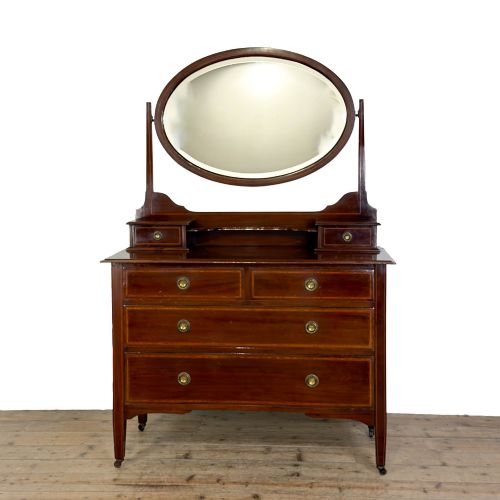

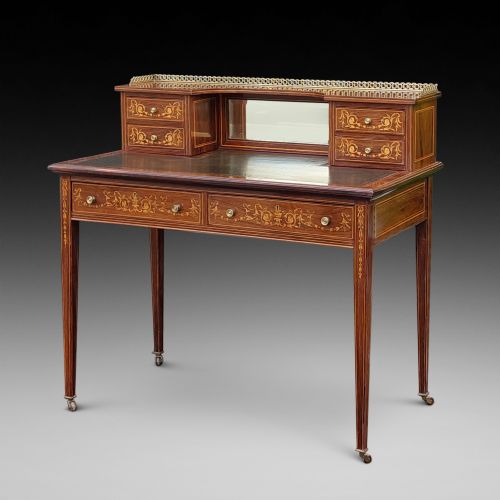
Inlaid Table Mirror
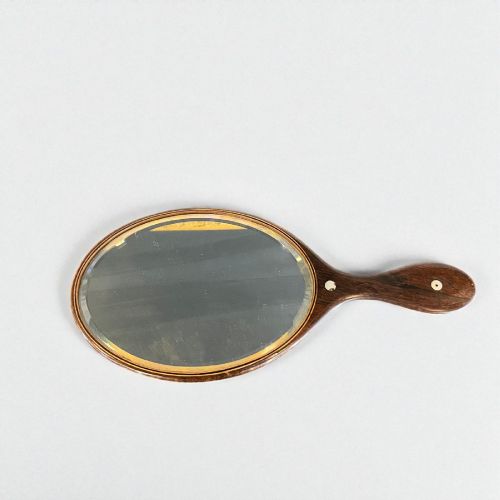
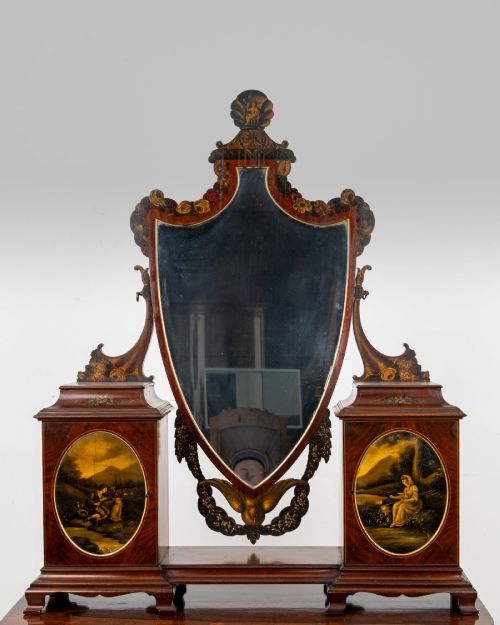
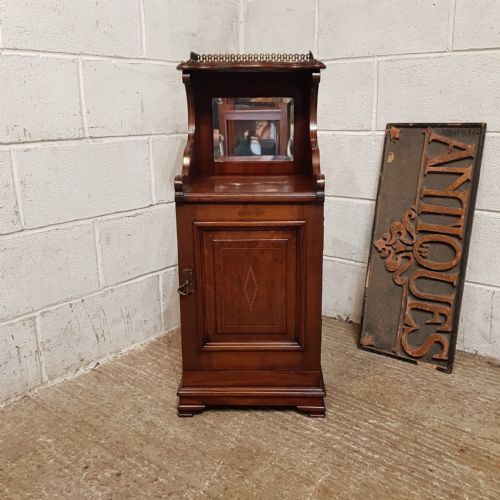
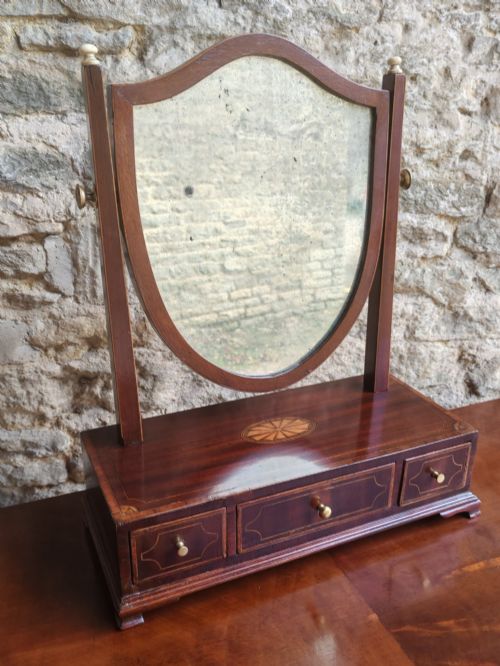
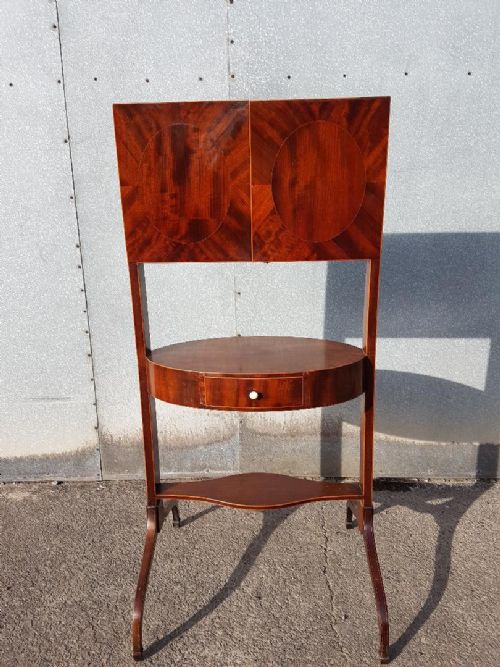
An inlaid table mirror brings polished timber, delicate stringing and practical glass together on a dressing surface.
Inlaid Table Mirror
When you search for an inlaid table mirror, you encounter pieces designed to sit upon chests, side tables and dressing surfaces for grooming and reflection.
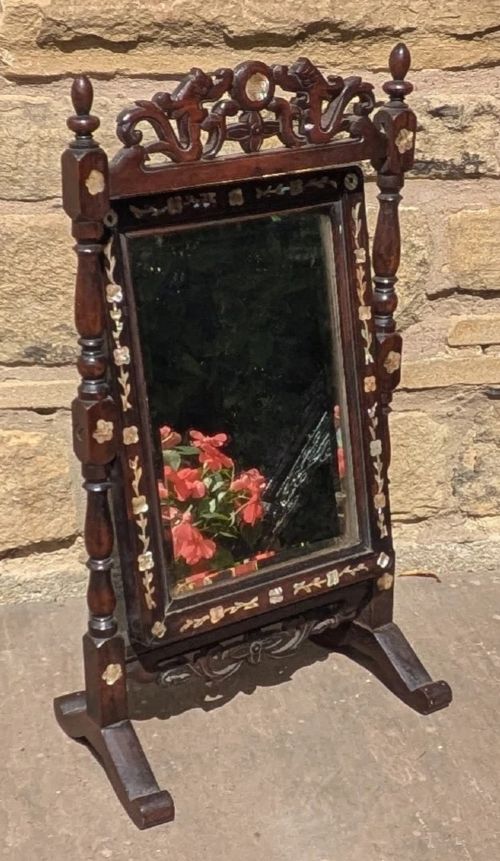
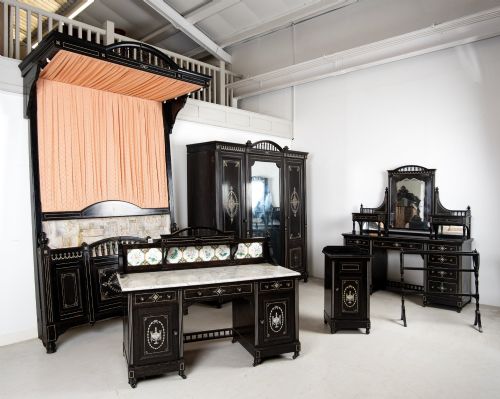
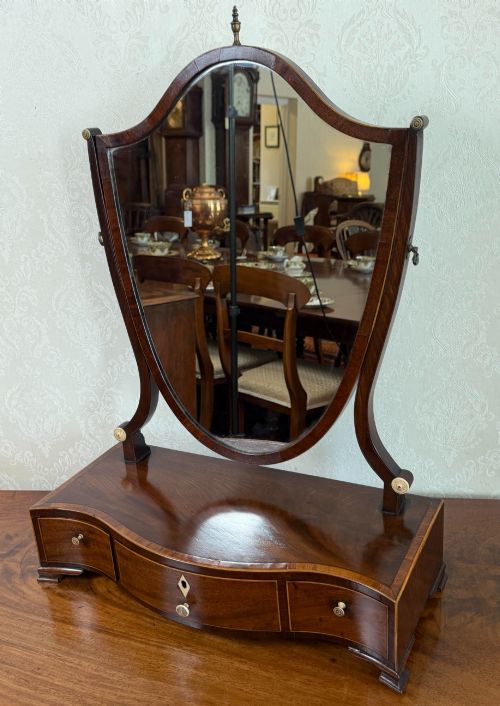
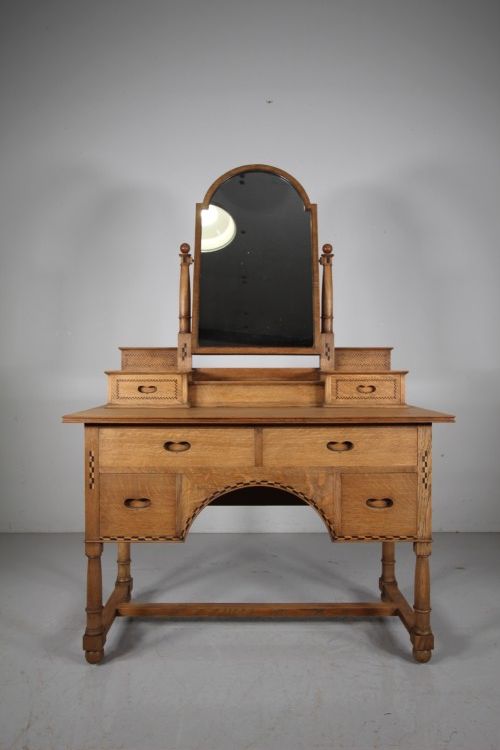
The selections on this page span Georgian, Victorian and Edwardian periods, frequently taking the form of swing mirrors with box bases or compact cheval frames.
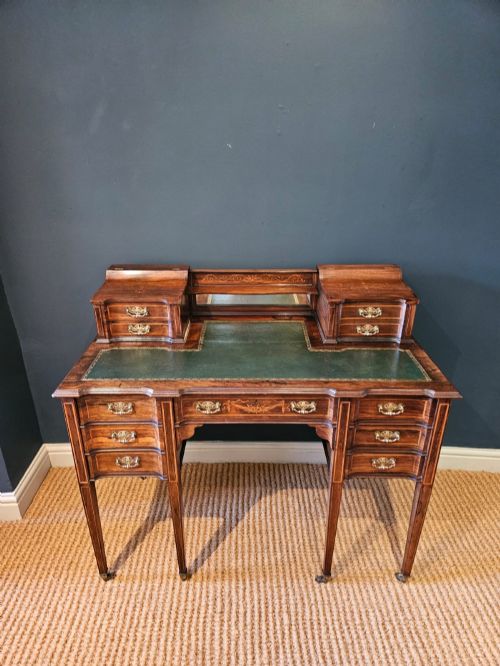
Mahogany and satinwood predominate, often enhanced by contrasting wood inlay, crossbanding or delicate boxwood stringing along the uprights and drawer fronts.
Materials and construction
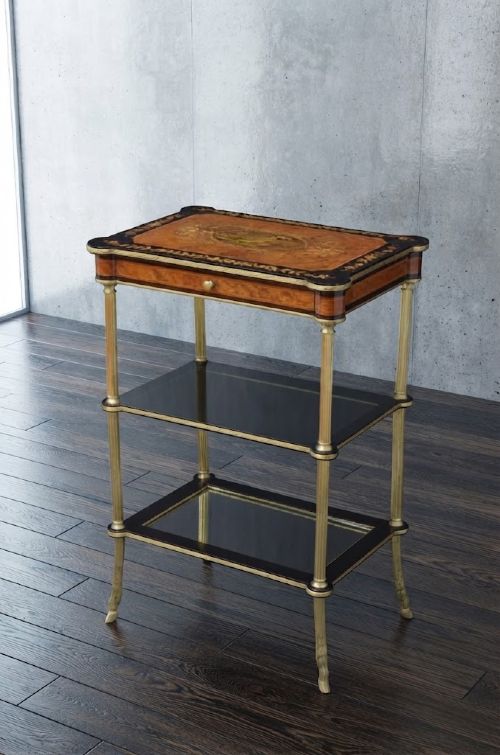
Cabinet makers utilised solid timbers and fine veneers, pairing mahogany, walnut and satinwood with contrasting light and dark woods for intricate inlay work.
Frames incorporate pivoting swing mechanisms supported by upright arms, set upon stable box bases that frequently conceal small storage drawers.
Some miniature drawer bases hide secret compartments intended for secret correspondence and trinkets.
Evaluating the craftsmanship
Distinction lies in the crispness of the wood inlay, the precision of the mitred joints and the depth of the timber figure rather than the scale of the piece.
Finely judged proportions, original brass hardware and well-figured grain separate standard utility pieces from exceptional examples.
Maple and Co·Edwards and Roberts·Shapland and Petter·Wright and Hunter·Gillows
The Inlaid Table Mirror Glossary
- Swing mirror
- A glass plate mounted on pivoted pins allowing the angle of reflection to be adjusted. This mechanism is housed between two vertical support arms.
- Box base
- The plinth or miniature chest of drawers upon which the mirror frame rests. It provides stability and concealed storage.
- Crossbanding
- A narrow strip of veneer applied across the grain of the primary timber to form a decorative border. It frames the perimeter of drawer fronts and mirror stands.
- Stringing
- Thin lines of contrasting wood inlaid into channels cut into the surface of the timber. It creates geometric outlines around panels and edges.
- Cheval mirror
- A full-length or large-scale standing mirror suspended in a frame that permits swinging through a full arc. Smaller versions sit upon tables.
Inlaid Table Mirror: Frequently Asked Questions
What is an inlaid table mirror?
An inlaid table mirror is a portable dressing glass set into a wooden frame and base embellished with decorative wood veneers and contrasting stringing.
These pieces were made to rest on top of chests of drawers or dressing tables, providing a functional reflective surface while displaying cabinet-making skills.
How do I date an inlaid mirror?
Dating relies on identifying the primary timber, the style of the inlay work, and the construction methods used on the base and mirror supports.
Georgian and Regency examples tend to feature simple shield or oval plates with fine mahogany framing, while Edwardian pieces often display satinwood and elaborate Sheraton Revival motifs.
Where should I place a table mirror?
These mirrors suit dressing tables, sideboards, or large chest tops where their proportions and timber tones complement surrounding furniture.
Placing them near a natural light source enhances the reflection and highlights the grain and inlaid details of the wooden frame.
Are the mirror plates original?
Many surviving pieces retain their original mercury or early silvered glass, which often exhibits minor foxing or age spots.
Replacement glass is common in older frames, so examining the backboards, fixings and silvering helps determine the age of the plate.