




George III Dressing Glass
A george iii dressing glass brings tabletop elegance to a room, offering adjustable mirrors framed in rich mahogany and satinwood.
George III Dressing Glass
When you search for a george iii dressing glass, you encounter movable mirrors designed for vanity tables and chest tops. These items belong primarily to the Georgian and 18th Century periods, spanning forms like toilet mirrors and dressing table mirrors.
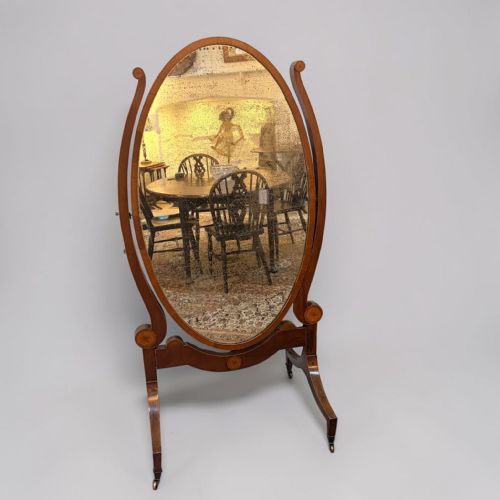
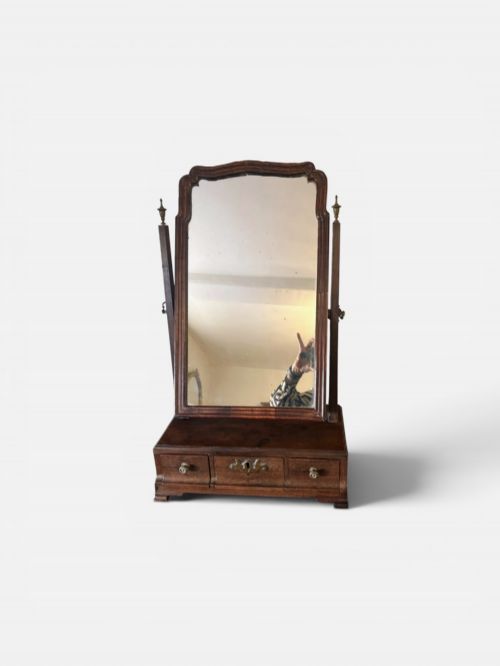
The pieces you meet on this page most often feature mahogany frames mounted on small box bases fitted with drawers. Alongside standard swing mirrors, larger cheval mirror formats appear for full-length reflection.
Makers of this era employed varied timbers such as harewood, burr maple, and walnut alongside the dominant mahogany. Edwardian interpretations also emerge, showing how later cabinetmakers revisited these classic proportions.
How they were made
Cabinetmakers constructed these frames using solid and veneered timbers, setting mirror glass into shaped surrounds supported by upright arms. Brass pivot screws and fittings allowed the glass plate to tilt securely to the desired angle.
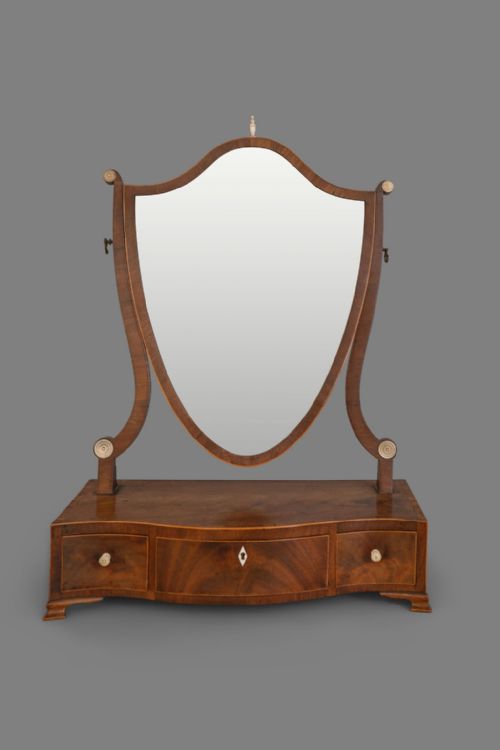
Drawer boxes incorporated fine dovetail joinery to house small personal items, often accented with inlay work in satinwood or bone. The underlying structure relied on traditional joinery techniques appropriate to each specific wood type.
Objects on this page range from compact toilet mirrors and swing glasses to grand serpentine dressing tables and cheval mirrors.
What varies in quality
Excellence in a george iii dressing glass rests on the choice of timber figure, such as richly grained burr maple or finely figured mahogany. Superior examples integrate serpentine fronts and delicate stringing that demonstrate high levels of joinery skill.
The refinement of the supporting standards and the proportion of the base drawers relative to the mirror frame dictate the visual balance of the piece. Original mirror glass plates and undisturbed brass hardware carry greater weight among collectors.
The George III Dressing Glass Glossary
- Toilet mirror
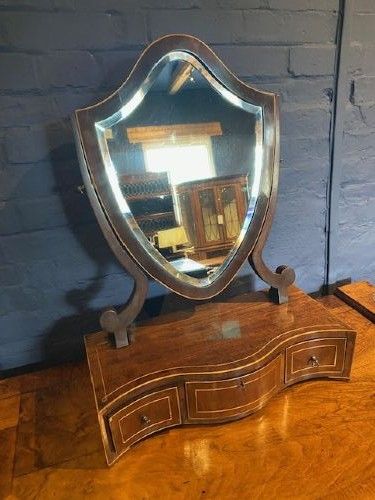
- A smaller mirror designed to sit atop a dressing table or chest of drawers. These typically include small storage drawers in the base.
- Cheval mirror
- A large freestanding full-length mirror supported on a four-legged frame with vertical pivots. This allows the entire glass panel to swing freely.
- Serpentine
- A curved shape featuring a convex centre flanked by concave sides. This undulating outline appears on the front of dressing table mirror bases.
- Harewood
- Sycamore wood that has been stained grey, frequently utilised for decorative veneer work in high-status cabinetmaking.
- Satinwood
- A durable tropical timber with a lustrous golden yellow appearance. Craftsmen used it for contrasting inlay and banding details.
George III Dressing Glass: Frequently Asked Questions
What is a george iii dressing glass?
A george iii dressing glass is a tabletop or freestanding mirror created during the Georgian era. These pieces allowed individuals to adjust their reflection while attending to their hair and garments.
They combine practical mirror glass with small storage compartments, making them functional items of bedroom furniture.
How were these mirrors used historically?
These mirrors rested upon dressing tables, chests, or special stands in bedrooms and dressing rooms. People used them daily for personal grooming and putting on accessories.
The small drawers beneath the glass held items like pins, cosmetics, and trinkets close at hand.
Where should I place a dressing mirror today?
A dressing glass sits well on top of a heavy chest of drawers, a sideboard, or a dedicated dressing table. Freestanding cheval versions suit corners of bedrooms or dressing areas where they provide a full-length view.
Position the piece near natural light to make the most of the adjustable glass angle.
How do I identify a Georgian period mirror?
Look for construction traits typical of the eighteenth century, including secondary timbers, hand-cut dovetails on the drawers, and brass pivot hardware. Mahogany and walnut were the primary woods utilised during this era.
Proportions tend to be balanced, often featuring serpentine shaping or subtle inlay work.