
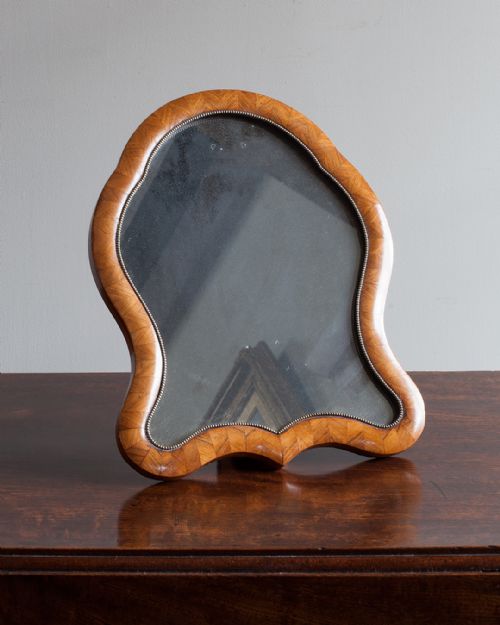


Marquetry Dressing Mirror
A marquetry dressing mirror brings floral or geometric wood-inlaid detail to a dressing table or freestanding frame.
Marquetry Dressing Mirror
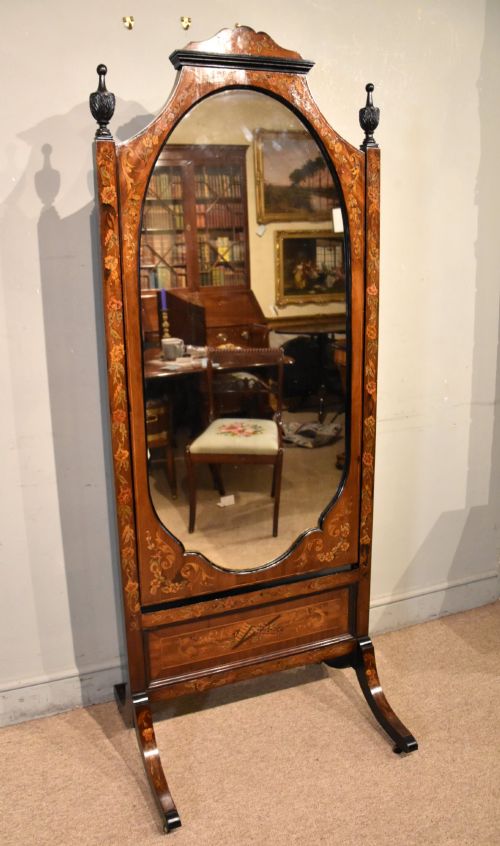
A marquetry dressing mirror combines a functional glass swing plate with decorative wood-inlaid veneers across the frame or base. When you search for a marquetry dressing mirror, you encounter pieces spanning the Georgian, Victorian, and Edwardian eras, alongside earlier 19th-century examples.
The forms on offer range from compact toilet swing mirrors designed to sit on top of a chest to large floor-standing cheval mirrors. Many carry the distinct floral or bird motifs associated with Dutch styles, while others follow English satinwood, mahogany, or walnut traditions.
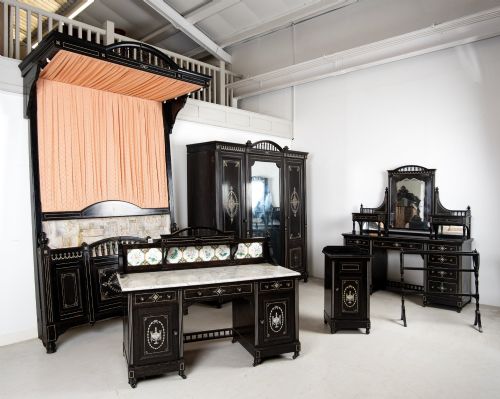
Beyond standalone table and toilet mirrors, related bedroom furnishings occasionally appear, including full dressing tables, kneehole desks, and occasional pieces featuring matching inlaid surfaces.
Materials and Construction
Cabinetmakers built the structural carcases using timbers such as mahogany, walnut, oak, and satinwood, applying thin veneers over the primary wood. The decorative surfaces rely on precise cutting of contrasting woods, sometimes including harewood or olive wood, to form intricate floral, scroll, or pictorial patterns.
The glass plates are held within adjustable swing frames supported by upright arms, often mounted on small drawer bases or box stands. Brass fittings, including pivot screws and small drawer knobs, complete the construction of the smaller table variants.
Listings feature pieces spanning the 18th, 19th, and 20th centuries, including Georgian, Victorian, and Edwardian periods.
Assessing Quality and Execution
Quality rests primarily in the crispness and complexity of the wood inlay work and the choice of background veneers. Finer examples display tightly fitted contrasting elements without excessive filler, maintaining sharp detail in floral and foliage patterns.
The underlying cabinetwork dictates the integrity of the piece, from the dovetailing on small trinket drawers to the stability of the mirror support standards. The selection of primary timbers, such as figured mahogany or rich satinwood, separates standard utility items from exhibition pieces.
Edwards & Roberts·Gillows·B Cohen & Sons
The Marquetry Dressing Mirror Glossary
- Marquetry
- A decorative technique where small pieces of veneer are fitted together to form pictorial or geometric patterns on a wooden surface. This differs from inlay by covering the entire background rather than being set into recessed channels.
- Cheval mirror
- A full-length swing mirror supported by a freestanding frame with four legs or a steady base. The name derives from the French word for horse.
- Toilet mirror
- A smaller swing mirror mounted on a box base or small set of drawers, historically used on a dressing table or commode. These items were essential bedroom accessories throughout the Georgian and Victorian periods.
- Satinwood
- A hard, yellowish timber native to Ceylon and India, prized for its lustrous grain and used extensively for high-status English furniture in the late 18th and 19th centuries.
- Veneer
- A thin layer of choice wood applied to a commoner underlying timber to provide a decorative exterior surface.
Marquetry Dressing Mirror: Frequently Asked Questions
How do I date a dressing mirror?
Dating relies on examining the timber species, construction methods of the base drawers, and the style of the mirror supports. Earlier Georgian and Regency examples often feature hand-cut dovetails and distinct secondary woods.
Later Victorian and Edwardian pieces show machine-sawn elements and different veneering thicknesses. The bevel of the glass plate and the type of mirror backs also offer clues to the period.
Where should I place a toilet mirror?
These mirrors suit placement on top of a sturdy chest of drawers, a dedicated dressing table, or a sideboard. Because they require a stable surface, ensure the width of the base matches the furniture piece below.
Keep them away from direct sunlight and damp environments to protect the delicate wood veneers and the silvering on the glass plate.
Are the mirror plates original?
Mirror glass frequently gets replaced over the centuries due to foxing, silver loss, or breakage. Older glass often exhibits slight imperfections, uneven thickness, or minor distortion.
Replacement glass does not necessarily diminish the utility of the piece, though surviving original mercury glass remains desirable for collectors.