
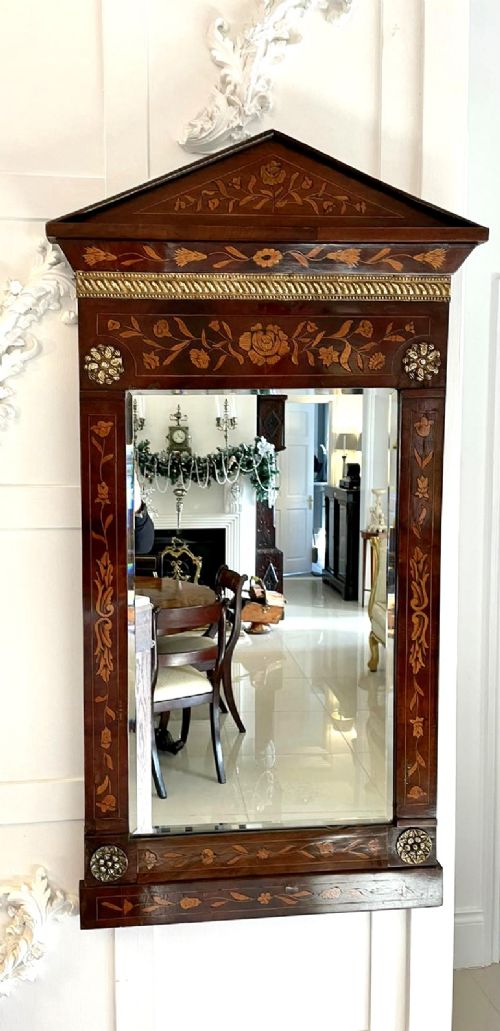


Dutch Floral Inlay Mirror
A dutch floral inlay mirror brings warmth and intricate botanical detail into a room, framed in rich marquetry.
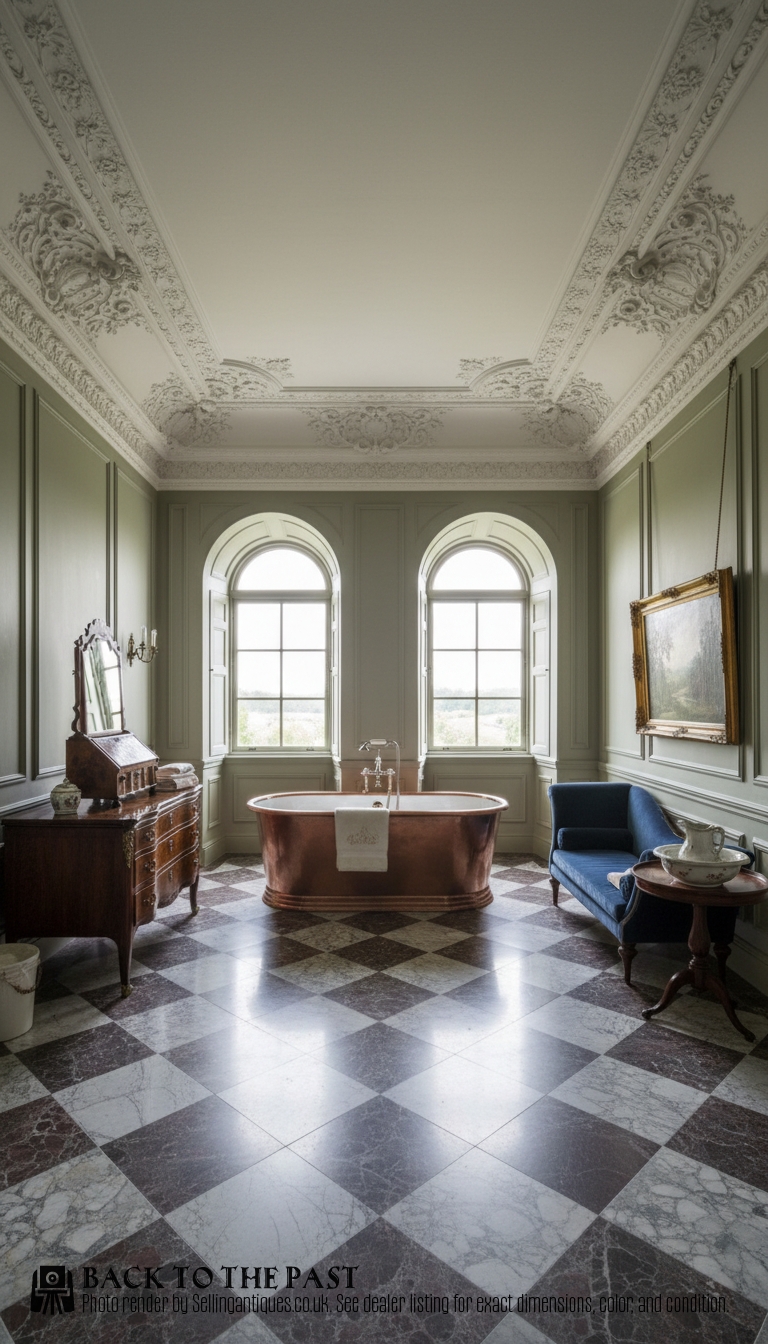
Dutch Floral Inlay Mirror
When you search for a dutch floral inlay mirror, you are looking at timber frames decorated with detailed floral marquetry. These pieces originate across the eighteenth and nineteenth centuries, spanning eras from the Georgian period through the Victorian era.
The versions you are most likely to meet on this page take the form of toilet mirrors, dressing table mirrors, and wall mirrors. Many stand on small table bases or swing frames, while others hang directly on the wall.
Makers shaped these items from woods such as mahogany, walnut, and fruitwood, often embellishing the surfaces with lighter boxwood inlays. The forms range from compact dressing mirrors to larger wall-hung designs.
How they were made
Craftsmen built the underlying carcases using timber boards of mahogany, walnut, or fruitwood. These foundational woods provided a stable base for the decorative surface work.
Makers applied intricate marquetry veneers featuring floral motifs, cutting fine pieces of boxwood and contrasting timbers to form botanical patterns. The glass was then set within these ornate wooden frames.
Listings span the eighteenth and nineteenth centuries, including the eras of eighteen hundred and eighteen fifty.
What varies in quality
The standard of a piece rests largely on the fineness and complexity of the marquetry cutting. Crisp botanical outlines and well-preserved contrasting woods separate finer examples from simpler work.
The choice of primary timber also distinguishes individual items. Dense, well-figured mahogany and richly grained walnut provide a better foundation than plain secondary woods.
The Dutch Floral Inlay Mirror Glossary
- Marquetry
- Decorative veneer work formed by fitting together small pieces of wood to create pictorial designs. On these mirrors, this technique typically depicts floral and botanical scenes.
- Toilet mirror
- A smaller mirror designed to sit atop a dressing table or chest of drawers. These often feature a swing frame supported by upright arms.
- Boxwood
- A dense, pale wood frequently utilised for the contrasting light elements in floral inlay. It allows craftsmen to carve or cut sharp details.
- Fruitwood
- A collective term for timbers from fruit-bearing trees, such as pear or apple, used historically for cabinetmaking and inlay. These woods offer warm tones and subtle grain patterns.
Dutch Floral Inlay Mirror: Frequently Asked Questions
What is a dutch floral inlay mirror?
A dutch floral inlay mirror is a wooden looking glass decorated with botanical marquetry patterns. These pieces date from the eighteenth and nineteenth centuries.
They appear as both wall-hung frames and portable dressing table mirrors. The construction typically involves woods like mahogany, walnut, and fruitwood.
How do I identify the period?
Dating relies on observing the timber choice, construction methods, and stylistic traits of the frame. Pieces span the eighteenth century and the nineteenth century.
Earlier examples often align with Georgian styles, while later items reflect Victorian interpretations. Examining the backboards and fixings also aids in establishing age.
Where should I place one?
These mirrors suit rooms that benefit from warm timber tones and decorative wooden surfaces. Wall-hung versions fit well above side tables or in hallways.
Table mirrors sit comfortably on chests of drawers or dressing tables. Their reflective glass and floral details add depth and character to a space.
What woods were used?
Cabinetmakers utilised a variety of timbers for both the carcase and the decorative veneer work. Primary woods include mahogany, walnut, and fruitwood.
Lighter elements, particularly the floral details, are often formed from boxwood. This combination creates high contrast across the frame.