


Inlaid Shelf Clock
An inlaid shelf clock brings precise mechanical movement together with decorative cabinetwork for domestic interiors.
Inlaid Shelf Clock
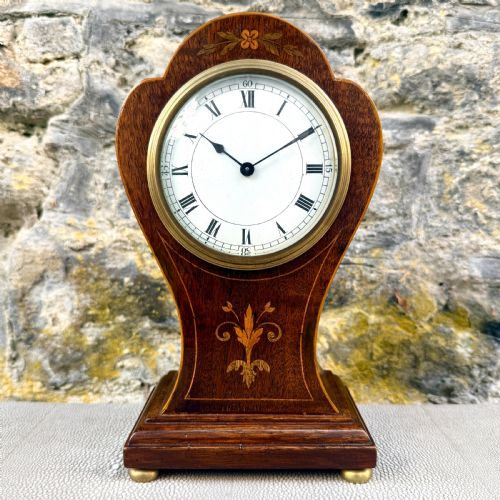
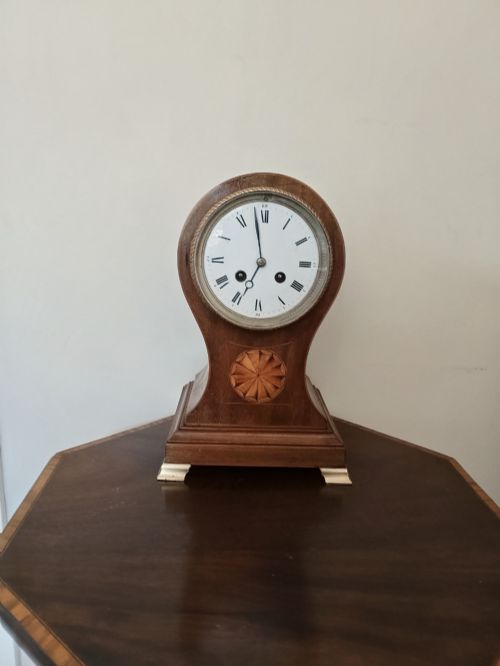
An inlaid shelf clock is a domestic timekeeper designed for mantelpieces, brackets, and tables, encompassing mantel clocks, bracket clocks, and table clocks. Buyers searching for an inlaid shelf clock will frequently encounter Edwardian and Victorian examples alongside pieces from the Regency and Georgian periods.
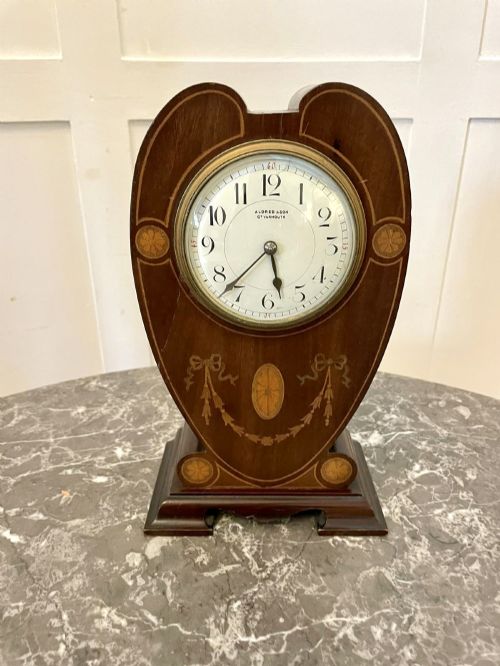
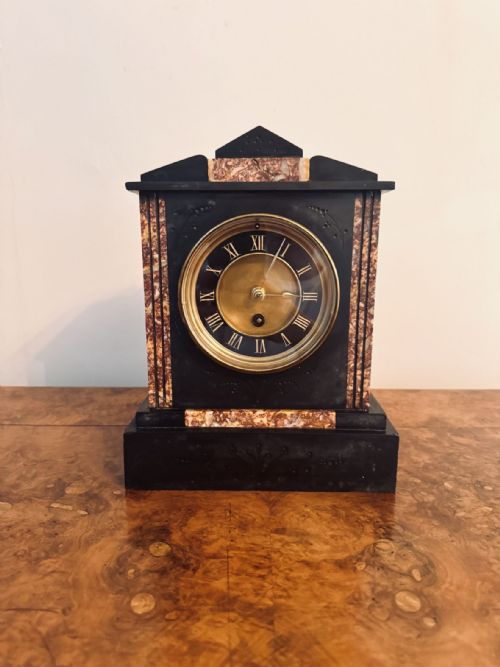
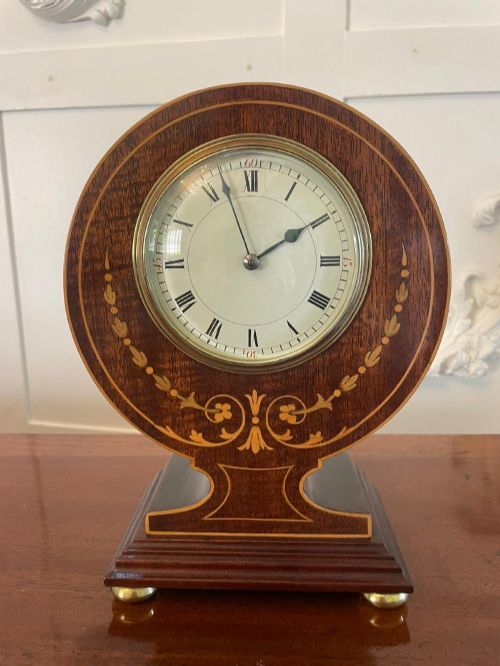
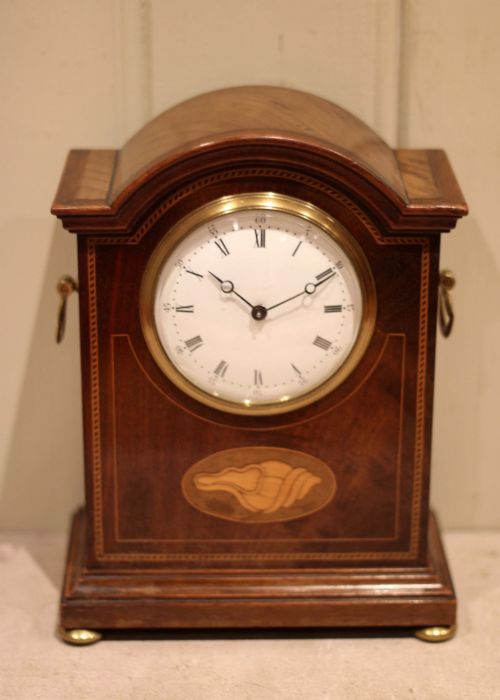
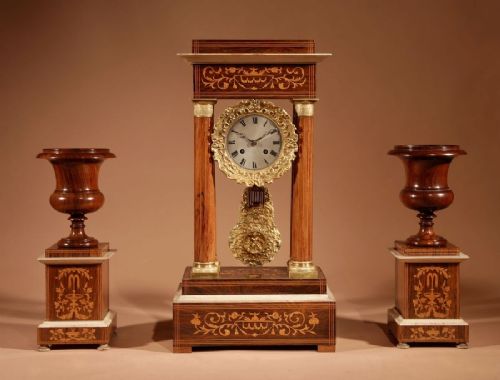
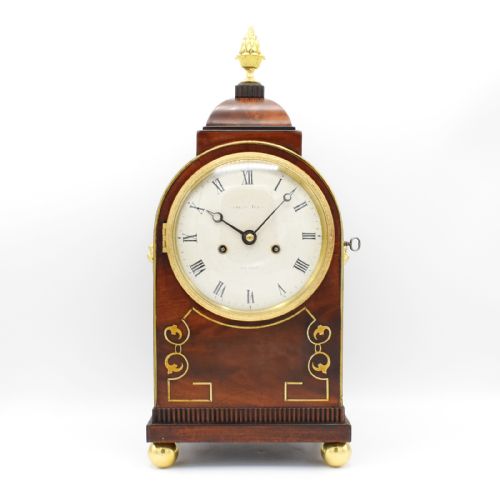
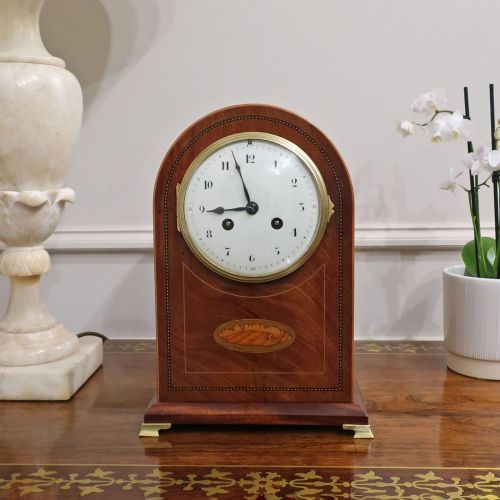
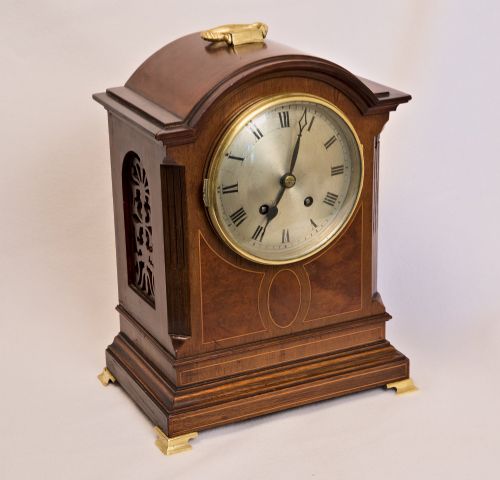
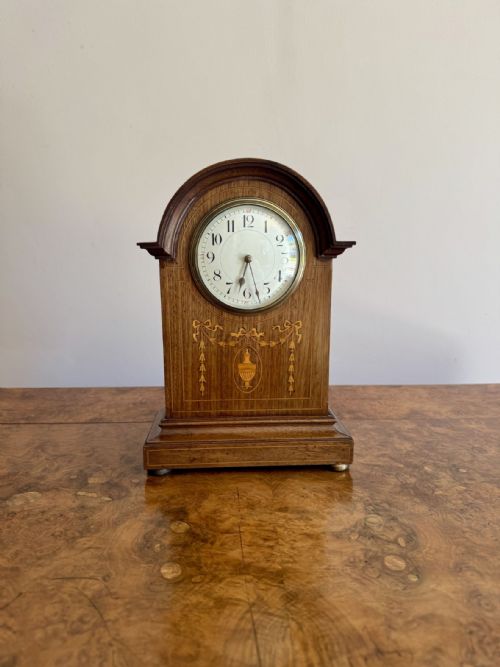
The prevailing format on this page is the mahogany mantel clock decorated with fine stringing or marquetry, often housing a French or English movement. Alongside these mahogany pieces, walnut, rosewood, and marble variants appear, spanning the nineteenth and early twentieth centuries.
Materials and construction
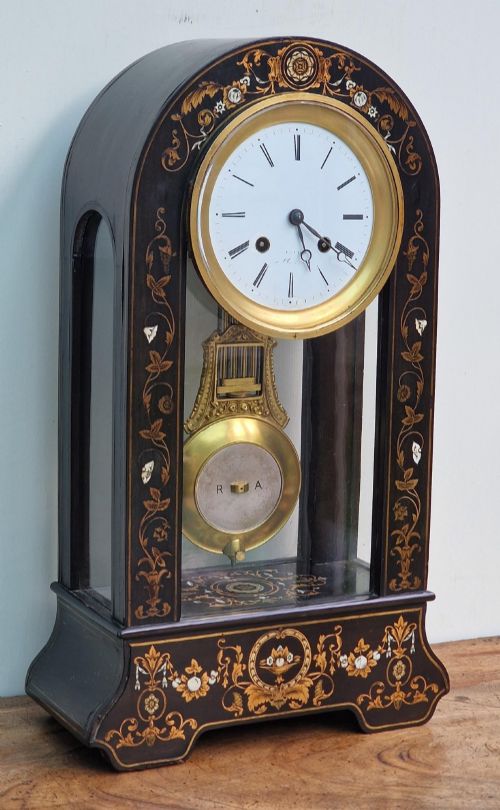
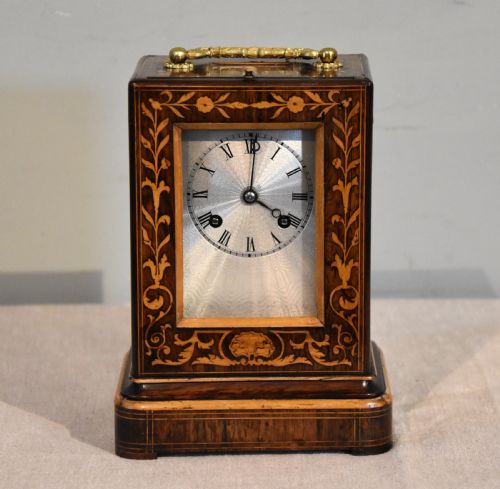
Cabinetmakers constructed the cases using dense hardwoods such as mahogany and rosewood, frequently incorporating contrasting boxwood stringing, satinwood marquetry, and ebonised details. Brass mounts, bezels, and dial surrounds provide structural framing and metallic contrast against the polished timber and marble surfaces.
Enamel and brass feature heavily on the visible dials, protected behind bevelled glass panes. The underlying mechanical movements utilise brass gear trains and steel arbors, housed within carved or veneered timber enclosures and heavy stone or marble housings.
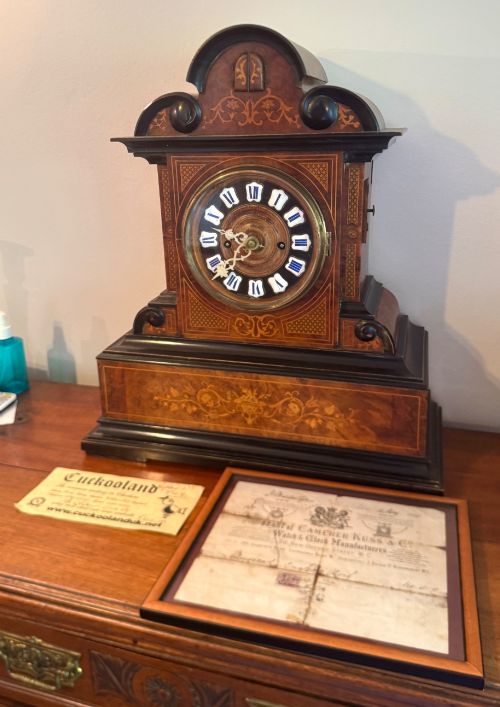
Some models feature cuckoo mechanisms alongside traditional striking bells, adding an unexpected pocket of forest theatre to the formal parlour.
Judging execution and finish
The division between standard production and superior work rests upon the crispness of the cabinetmaker's marquetry and the precision of the brass inlay. Finer examples display meticulously fitted contrasting veneers and clean, deliberate carving rather than heavy-handed or hasty decoration.
Movement sophistication also dictates standard, where signed plates, delicate escapements, and bell-striking mechanisms elevate a clock above simpler timepieces. The integration of high-grade materials like figured rosewood or finely polished Sienna marble indicates an elevated tier of manufacture.
Charles Pratt London·Seller of Reading·John Bull of Bedford·Baby and Jannings·Thomas A Paris·Barrett London·Junghans German·Paul Garnier·Henry Marc
The Inlaid Shelf Clock Glossary
- Bracket clock
- A portable timekeeper originally designed to sit on a wall bracket. These clocks typically feature substantial brass movements and architectural timber cases.
- Marquetry
- The art of applying decorative veneer pieces to a structure to form geometric or floral designs. Cabinetmakers use contrasting timbers like satinwood and boxwood for this intricate work.
- Fusee
- A conical pulley used in mechanical clocks to maintain an even pull on the gear train as the mainspring unwinds. This mechanism improves timekeeping accuracy across the power reserve.
- Stringing
- A narrow inlay of contrasting wood inserted into the surface of a timber case. It outlines panels and edges to add visual definition to the cabinetwork.
Inlaid Shelf Clock: Frequently Asked Questions
Where should I place an inlaid shelf clock?
These timepieces suit mantelpieces, heavy sideboards, and dedicated wall brackets where their timber grain and brass details remain visible. Stable, level surfaces prevent any disruption to the pendulum or escapement.
Keep them away from direct sunlight and damp environments to protect the polished veneer and delicate stringing from warping or fading over time.
How do I identify an Edwardian inlaid clock?
Edwardian examples often feature light mahogany cases decorated with delicate boxwood and satinwood stringing, reflecting the lighter aesthetic of the early twentieth century. The dials frequently incorporate clear Arabic numerals behind bevelled glass and brass bezels.
These pieces generally display refined proportions and softer domestic styling compared to the heavier, more imposing Victorian stone or dark wood designs.
What is the difference between a mantel clock and a bracket clock?
Bracket clocks derive from earlier portable designs built with carrying handles and flat bases intended for wall brackets, though later examples sat comfortably on furniture. Mantel clocks were conceived specifically to stand upon fireplace mantelpieces.
While their functions overlap significantly in later periods, bracket clocks traditionally housed more complex movements and architectural timber cases.