




Ebonised Regulator Clock
An ebonised regulator clock is a precise timekeeper mounted on the wall, combining dark wood finishes with accurate movements.
Ebonised Regulator Clock
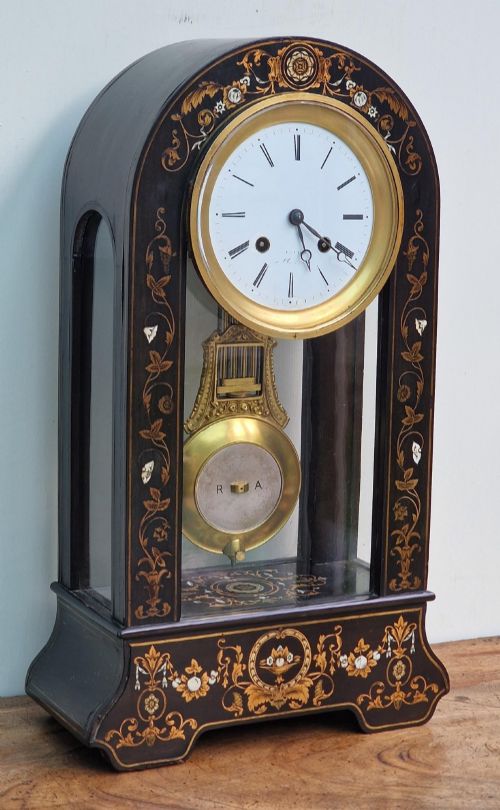
When you search for an ebonised regulator clock, you encounter precision wall timepieces designed for accuracy and presence. These items originate predominantly from the nineteenth century, including Victorian examples and continental designs.
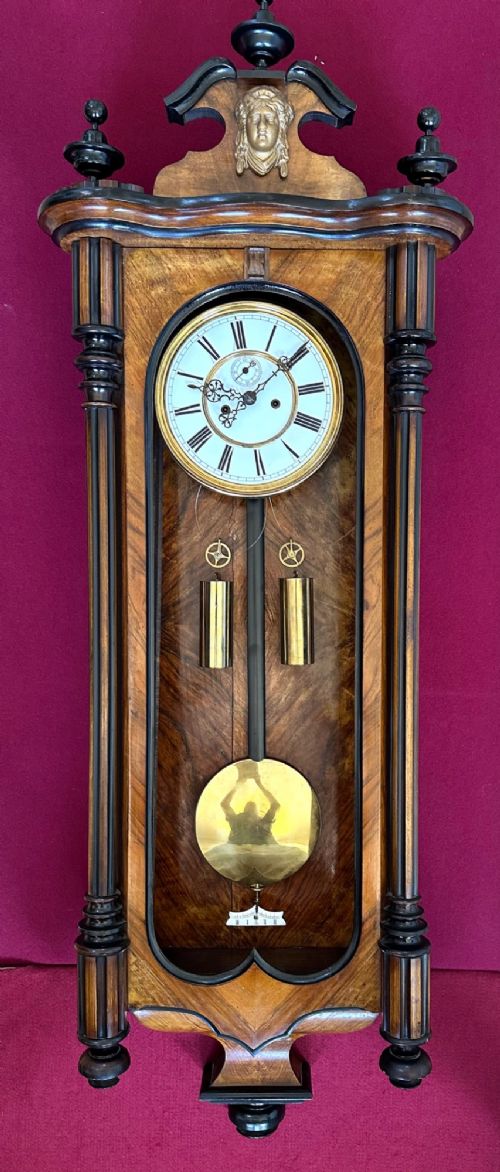
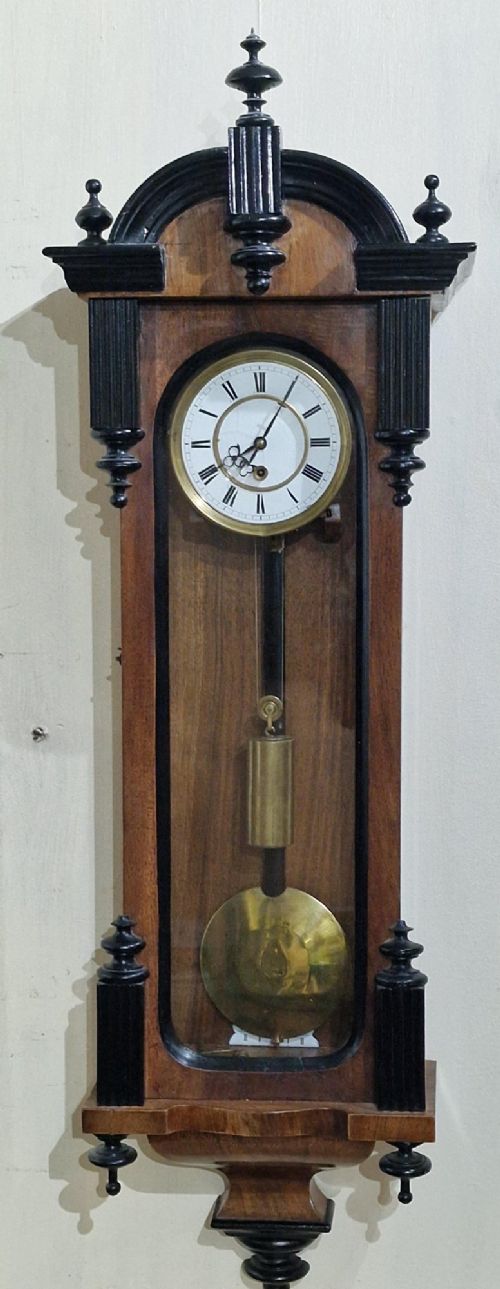
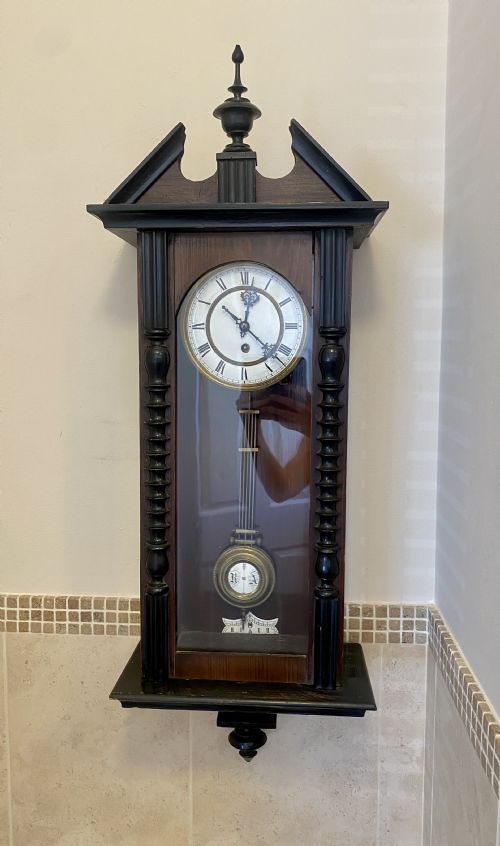
The most common versions on this page are Vienna regulators and wall clocks featuring walnut and ebonised wood cases. They span from eight-day striking models to month-duration and grande sonnerie variations.
Makers such as Gustof Becker appear alongside Austrian Biedermeier and Victorian interpretations. Collectors seek these wall-mounted instruments for their mechanical complexity and dark timber aesthetics.
Construction and materials
Cases combine walnut with ebonised wood, creating a contrasting dark finish that frames the glass dial door. Glazed panels allow visibility of the pendulum and weights operating within.
Movements utilise brass for the mechanical gears, while dials feature enamel markings for clarity. Spring-driven and weight-driven systems power the eight-day, month duration, and grande sonnerie striking trains.
Some clocks demand a full month of patience between windings, while others chime every quarter hour just to remind you they are paying attention.
Judging quality and merit
Quality rests in the mechanical duration and movement complexity, ranging from standard eight-day timepieces to month-duration and grande sonnerie systems. Gustof Becker examples demonstrate the refined standards of nineteenth-century production.
Case execution separates ordinary items from superior ones, visible in the handling of walnut and ebonised timber alongside proportion and glass fitting. Miniature formats and double weight systems represent distinct tiers of technical ambition.
Gustof Becker
The Ebonised Regulator Clock Glossary
- Ebonised wood
- Timber treated to resemble ebony, providing a deep black finish popular on nineteenth-century clock cases. This technique creates a formal, dark aesthetic.
- Vienna regulator
- A precision wall clock originating from Austria, prized for accurate movements and long pendulums. These pieces often feature glass-sided cases to display the mechanism.
- Grande sonnerie
- A striking mechanism that chimes both the hours and the quarters automatically. It represents a high level of horological complexity.
- Month duration
- A clock movement designed to run for thirty days on a single winding. Such extended operation requires robust engineering.
Ebonised Regulator Clock: Frequently Asked Questions
What is an ebonised regulator clock?
An ebonised regulator clock is a precision wall timekeeper housed in a dark, treated timber case. These nineteenth-century pieces are designed for high accuracy.
They display the pendulum and dial behind glass panels, combining mechanical complexity with striking visual contrast.
How do I hang a wall clock?
Wall clocks require secure mounting directly into solid wall studs or using appropriate heavy-duty fixings. Because many nineteenth-century models are heavy, proper support is essential.
Ensure the case hangs level so the pendulum swings evenly and the movement operates without stopping.
How often do they need winding?
Winding frequency depends on the specific movement, with eight-day models requiring attention weekly. Month-duration variants require winding significantly less often.
Following the correct winding routine maintains tension on the brass springs or suspended weights.
What does Vienna regulator mean?
A Vienna regulator refers to a high-precision wall clock style developed in Austria during the nineteenth century. These clocks were built for exceptional timekeeping accuracy.
They typically feature elegant wooden cases, enamel dials, and visible pendulums.