

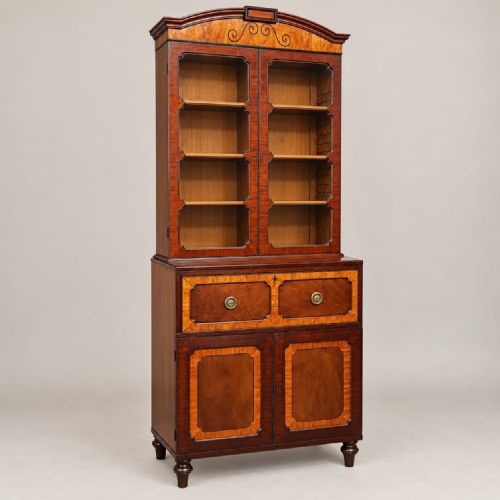
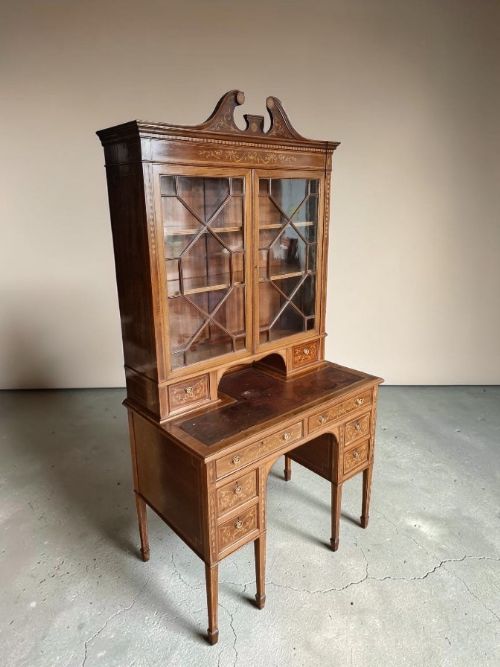
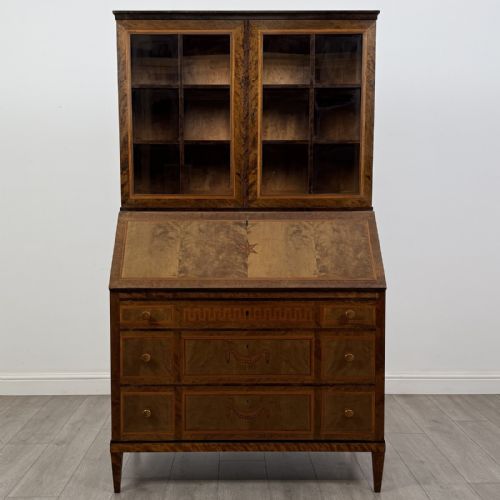
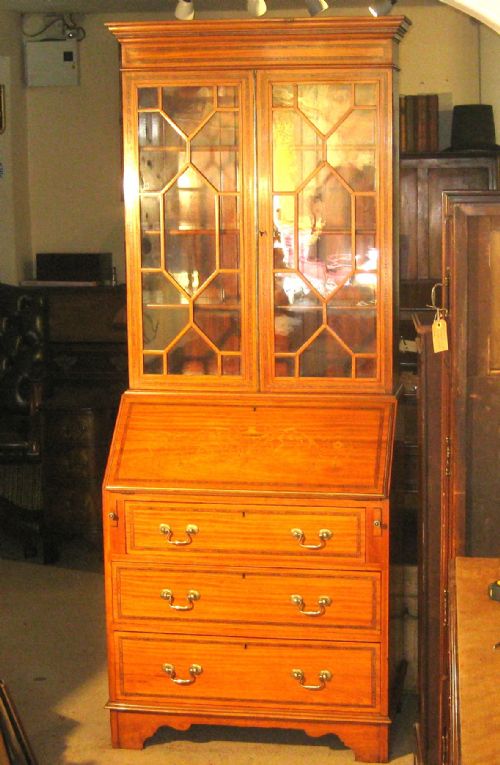


Inlaid Satinwood Bureau Bookcase
An inlaid satinwood bureau bookcase combines refined writing storage with shelved display, offering a sophisticated centrepiece for a traditional study or drawing room.
Inlaid Satinwood Bureau Bookcase
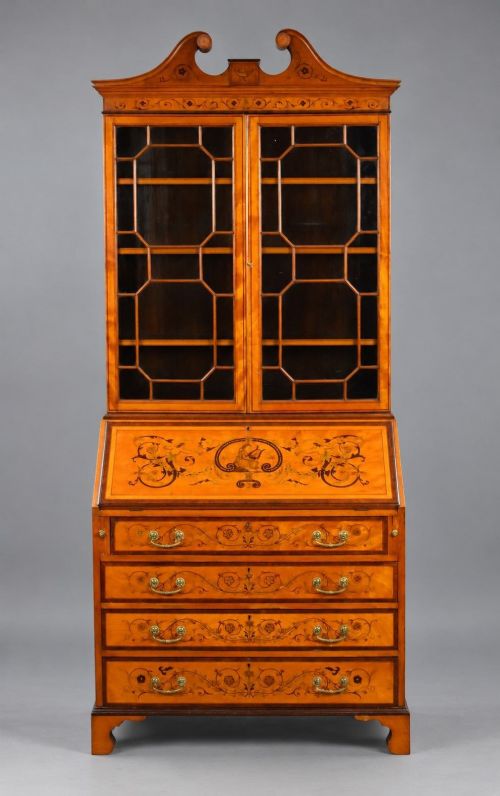
An inlaid satinwood bureau bookcase is a dual-purpose furniture form comprising a lower writing cabinet and an upper shelving section enclosed by glass doors. These architectural pieces combine display space for books with a fitted writing desk, typically featuring a fall-front flap or a cylinder top that conceals pigeonholes and small drawers.
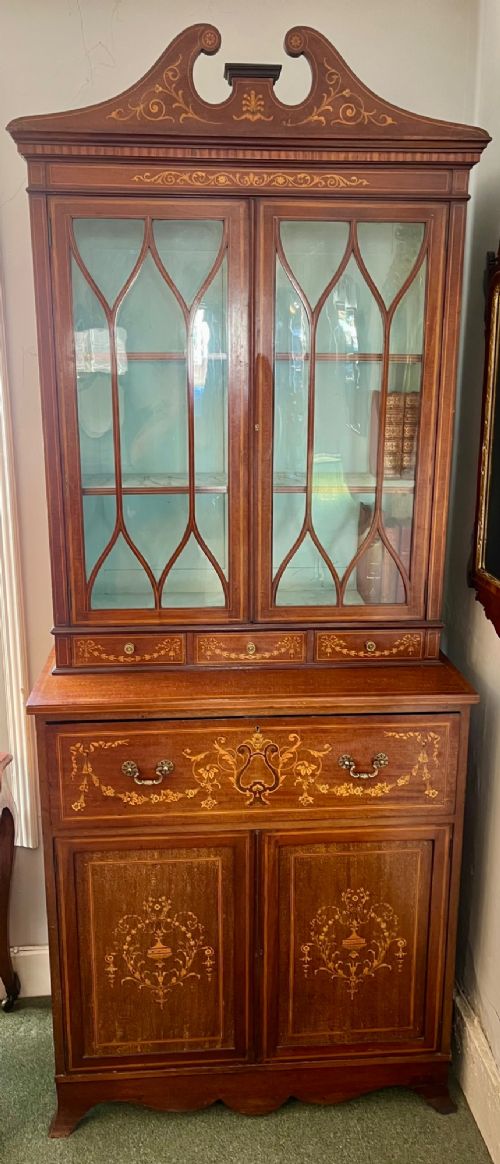
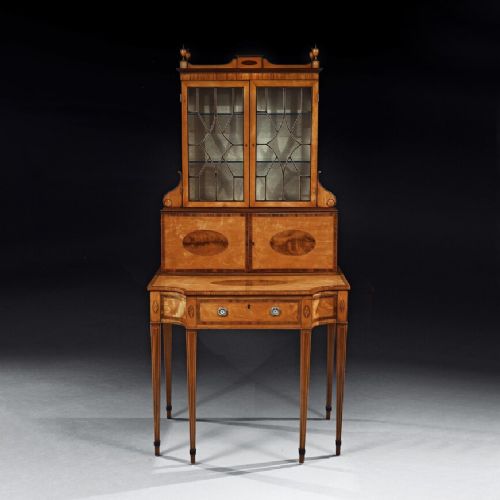
Buyers searching for an inlaid satinwood bureau bookcase encounter pieces predominantly from the George III and Edwardian Sheraton Revival periods, alongside Victorian interpretations. The selection spans grand 18th-century writing cabinets in satinwood and sabicu to lighter Edwardian mahogany and satinwood hybrids finished with delicate marquetry.
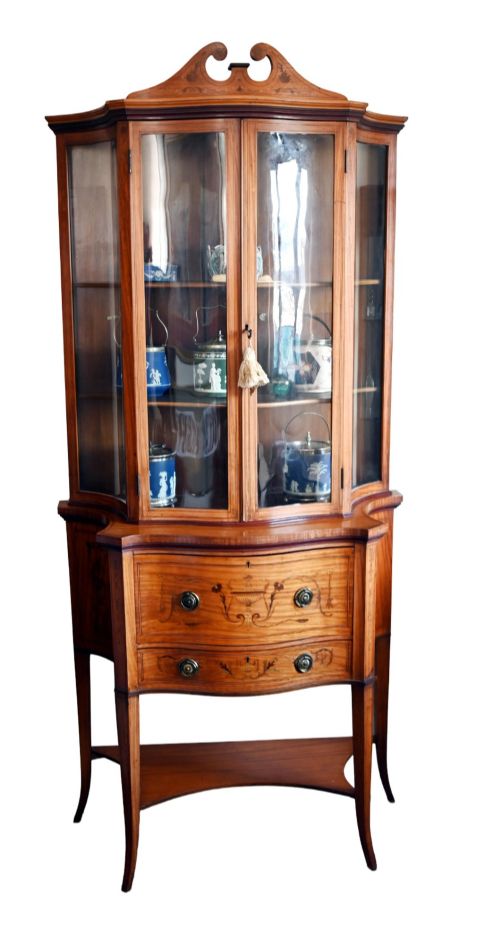
The objects listed range from formal bureau bookcases and secretaire bookcases to related writing cabinets and display cabinets. These forms reflect evolving domestic interiors, moving from the rich timbers of the 18th century to the lighter, revived classical aesthetics of the Edwardian era.
How they were made
Cabinetmakers constructed these pieces using primary timbers such as satinwood and mahogany, frequently pairing them with contrasting woods like sabicu for structural variety and visual depth. Glass panels were glazed into upper doors to protect libraries, while brass hardware fitted key escutcheons and drawer pulls.
Marquetry and detailed inlay work defined the decorative surface, utilising precise botanical or geometric motifs set into the satinwood ground. Writing surfaces often incorporated fitted leather inserts alongside intricate internal pigeonholes and secret compartments operated by hidden springs.
Inlaid Satinwood Bureau Bookcase Retail Price Guide 2026
Typical asking prices for inlaid satinwood bureau bookcase among the pieces listed under this phrase on Sellingantiques today, from the lower quarter to the upper quarter. They describe what is for sale here now, not the wider market.
Behind the gleaming satinwood facade, hidden spring-loaded compartments wait patiently to guard secret love letters from prying eyes.
What varies in quality
The standard of an inlaid satinwood bureau bookcase rests on the crispness of its marquetry and the selective figure of the timber veneers. Superior examples display seamless grain matching across the fall-front or cylinder, where delicate floral or classical inlay remains sharp and intact without lifting.
Internal joinery and drawer construction further differentiate the range, as fine pieces retain original brass handles, smoothly operating secret compartments, and precisely dovetailed interior drawers. The structural integration of the upper bookcase and lower desk demonstrates the maker's skill in balancing architectural proportion with decorative restraint.
Edwards and Roberts
The Inlaid Satinwood Bureau Bookcase Glossary
- Satinwood
- A light, lustrous timber native to tropical regions, prized by cabinetmakers for its golden sheen and smooth grain. It forms the primary visual surface on fine Georgian and Edwardian neoclassical furniture.
- Secretaire
- A desk form featuring a pull-out drawer or drop-front flap designed for writing, fitted with internal compartments. In these pieces, the secretaire drawer is integrated into the upper section of the lower cabinet.
- Marquetry
- The art of applying decorative veneer pieces to a structure to form intricate pictorial designs. Craftsmen use varied coloured woods to create botanical and geometric patterns across the cabinet doors and fall-fronts.
- Sabicu
- A dense, durable hardwood sometimes utilised alongside mahogany and satinwood in 18th-century cabinetmaking. Its deep colour provides a strong contrast to lighter decorative veneers.
- Sheraton Revival
- A late 19th and early 20th-century design movement inspired by the neoclassical furniture of George Thomas Sheraton. Pieces from this period frequently feature satinwood ground veneers, painted details, and classical proportions.
Inlaid Satinwood Bureau Bookcase: Frequently Asked Questions
What is a bureau bookcase?
A bureau bookcase is a tall piece of furniture featuring a lower writing cabinet with a sloping lid or cylinder front, topped by a glazed shelving unit for books.
These pieces served as functional home offices and libraries in period drawing rooms and studies.
How do I use one today?
You can use an inlaid satinwood bureau bookcase as a working writing desk while displaying books or collections behind the upper glass doors.
The fitted interior compartments also provide convenient storage for modern stationery, correspondence, and small valuables.
How do I tell periods apart?
18th-century examples tend to feature heavy timber construction in satinwood and sabicu with restrained, high-craft marquetry.
Edwardian Sheraton Revival pieces often utilise lighter mahogany frames with satinwood veneers, reflecting a brighter, revivalist aesthetic.
What is a cylinder secretaire?
A cylinder secretaire is a bureau variant featuring a rolling curved wooden shutter that conceals the writing surface and internal drawers when closed.
This mechanism offers a clean architectural front compared to the traditional hinged drop-front flap.