



Inlaid Rosewood Slope
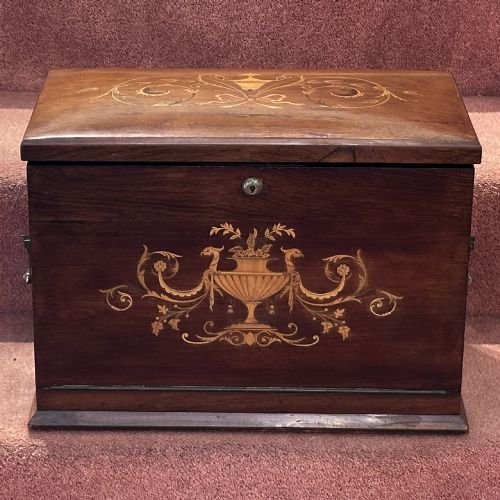
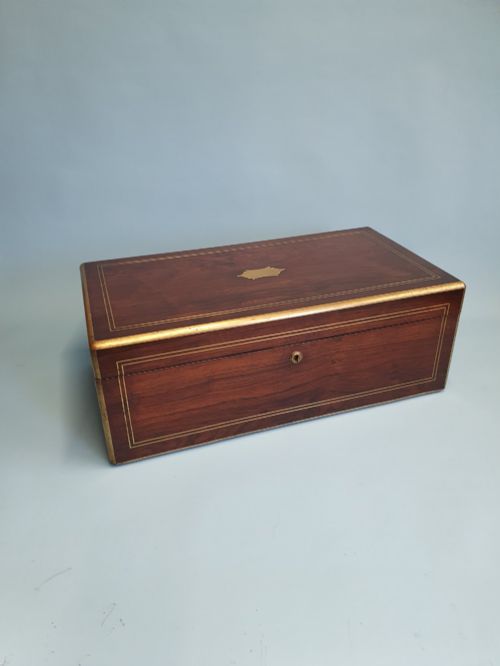
An inlaid rosewood slope offers a portable writing surface framed in dark, richly grained timber and detailed with metallic or shell enrichment.
Inlaid Rosewood Slope
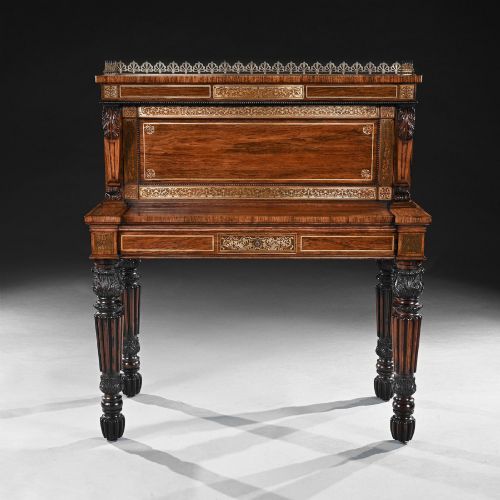
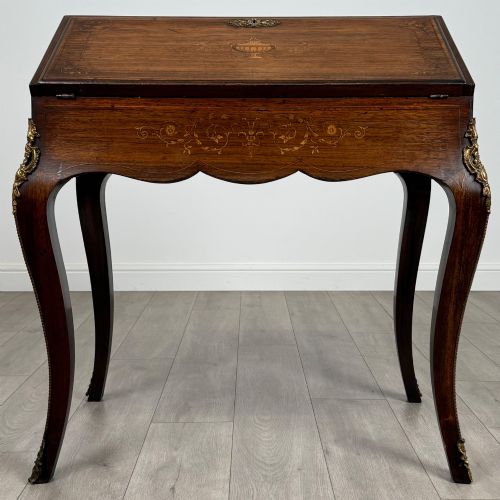
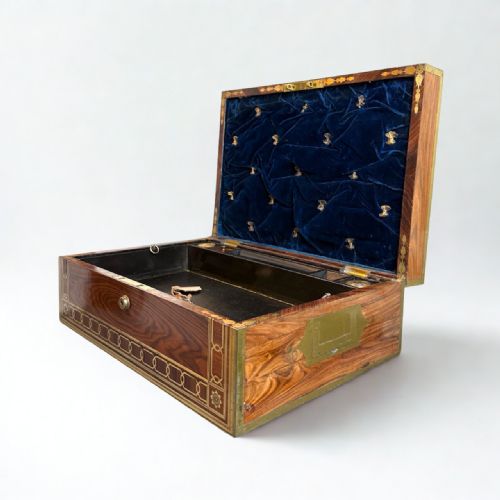
An inlaid rosewood slope typically takes the form of a portable rectangular box that unfolds to reveal a baize or leather lined writing surface alongside compartments for ink and nibs. Buyers will frequently encounter compact Regency and Victorian examples designed for travel, alongside larger stationary boxes and Davenport desks intended for static domestic use.
The objects serve as functional correspondence furniture from the Georgian, Regency, and Victorian eras, bridging the gap between portable campaign gear and refined boudoir writing desks. Surviving pieces often retain internal secret drawers, pen trays, and original glass inkwells.
Materials and construction
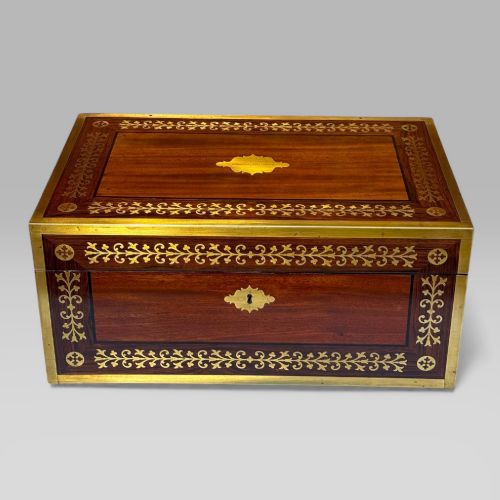
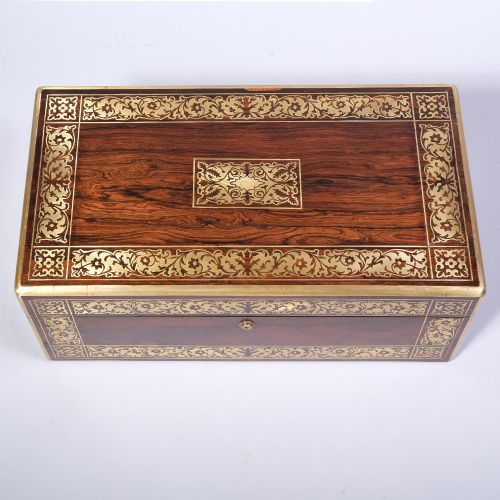
Cabinet makers constructed the carcase using dense tropical rosewood veneers laid over a secondary timber foundation, often applying linear brass stringing or foliate cut brass escutcheons to the exterior surfaces. Mother of pearl, abalone, and pewter inlays were frequently hand cut and embedded directly into the wood to form intricate geometric or floral motifs.
Internal compartments, secret drawers, and slope panels utilised secondary woods such as mahogany, cedar, or pine, fitted with working brass locks and hinges. Leather or velvet writing surfaces were glued and gold tooled around the folding interior flaps to provide a smooth tactile plane for quill or pen.
Secret drawers often require pressing a hidden spring or removing an inkwell to unlock.
Distinctions in craftsmanship
Quality rests in the precision of the cabinet work, particularly the tightness of the brass or mother of pearl inlay and the alignment of the grain across the folding lid. Superior examples feature well executed secret drawer mechanisms, crisp foliate engraving on the brass mounts, and intact original fitted interiors rather than later replacements.
Lesser pieces exhibit lifting inlays, mismatched veneer patches, or replacement internal components that disrupt the historical integrity of the box. The weight of the timber, the depth of the rosewood figuring, and the presence of documented workshop signatures further separate standard production items from elite pieces.
Gillows Oxford Street Workshop·George Austin
The Inlaid Rosewood Slope Glossary
- Campaign slope
- A portable writing box designed for travel, frequently fitted with flush brass carrying handles and reinforced corners to withstand military transport.
- Secret drawers
- Concealed compartments hidden behind false panels or accessed through spring loaded catches within the interior of the box.
- Stringing
- Thin inlaid lines of contrasting wood, brass, or light timber used to outline the geometric panels of a box lid or front.
- Escutcheon
- A protective plate surrounding a keyhole, often cast in brass or formed from inlaid mother of pearl.
- Bureau de dame
- A small decorative ladies writing desk, often featuring a sloped writing flap and an upper superstructure of small drawers or pigeonholes.
Inlaid Rosewood Slope: Frequently Asked Questions
What is an inlaid rosewood slope?
An inlaid rosewood slope is a portable writing box covered in dark, highly figured rosewood veneer and decorated with contrasting materials like brass or mother-of-pearl. When opened, the hinged lid forms a slanted writing surface.
These boxes date primarily from the Georgian, Regency, and Victorian periods. They were built to hold stationery, inkwells, and writing instruments securely during travel or daily domestic use.
How were these boxes used originally?
Owners used them for personal correspondence, storing letters, ink, nibs, and documents while travelling or at home. The folding lid provided an immediate, stable writing desk wherever the owner happened to be.
Many examples include built-in secret compartments for hiding valuables or sensitive letters. The lockable design ensured privacy for the owner's correspondence.
How do I date a rosewood slope?
Dating relies on stylistic clues such as the type of inlay, hardware, and overall form. Regency and early 19th-century models often feature heavy brass corner mounts and foliate brass stringing.
Later Victorian versions frequently incorporate mother-of-pearl or abalone shell inlay alongside fitted stationary tiers. The construction methods and secondary timbers used inside also help establish the approximate period of manufacture.
How should I care for rosewood furniture?
Rosewood requires stable humidity and protection from direct sunlight to prevent the timber from drying out or fading. Gentle dusting with a dry, soft cloth is usually sufficient for regular maintenance.
Avoid placing damp items or unsealed inkwells directly onto the wood or leather interior. Periodic light polishing with traditional wax helps maintain the natural lustre of the polished veneer.