


Inlaid Rosewood Casket
An inlaid rosewood casket brings rich grain and sharp brass or mother-of-pearl detail to a desk or dressing table.
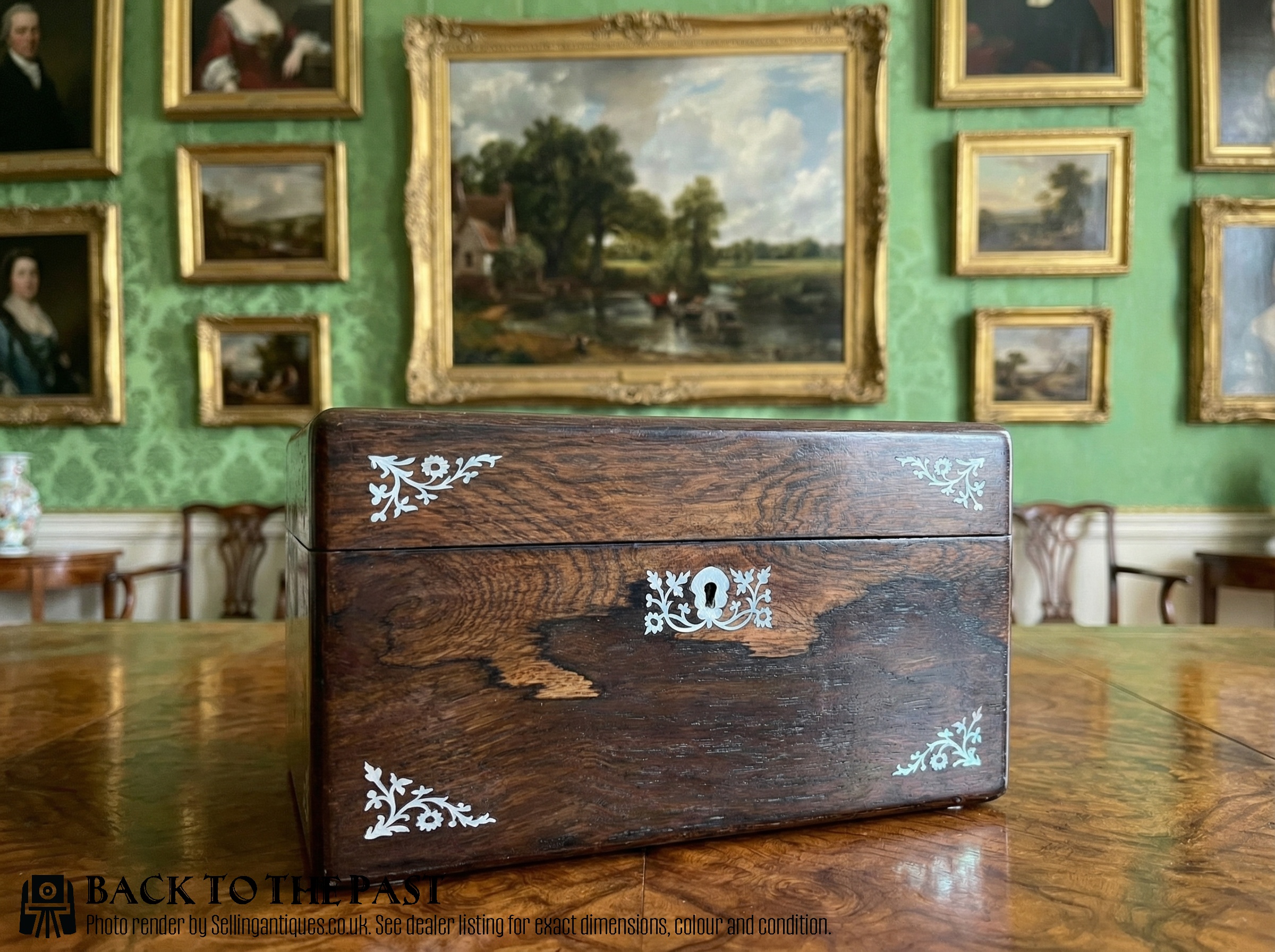
Inlaid Rosewood Casket
An inlaid rosewood casket covers a broad span of nineteenth-century decorative containers made for jewellery, documents, tea, or needlework. Buyers encounter Regency and Victorian examples most frequently on this page, alongside specific regional types like Tunbridge Ware.
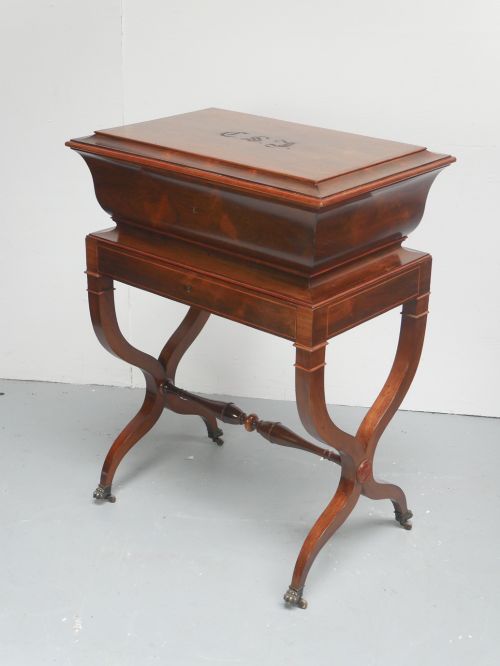
The objects range from small trinket boxes and glove boxes to fully fitted dressing caskets with lifting trays and secret drawers. Many adopt architectural shapes such as the sarcophagus, while others take the form of compact tabletop cabinets or campaign boxes.
Origins stretch from English workshops to French cabinet-makers and German manufacturers, spanning the Georgian era through to the turn of the twentieth century.
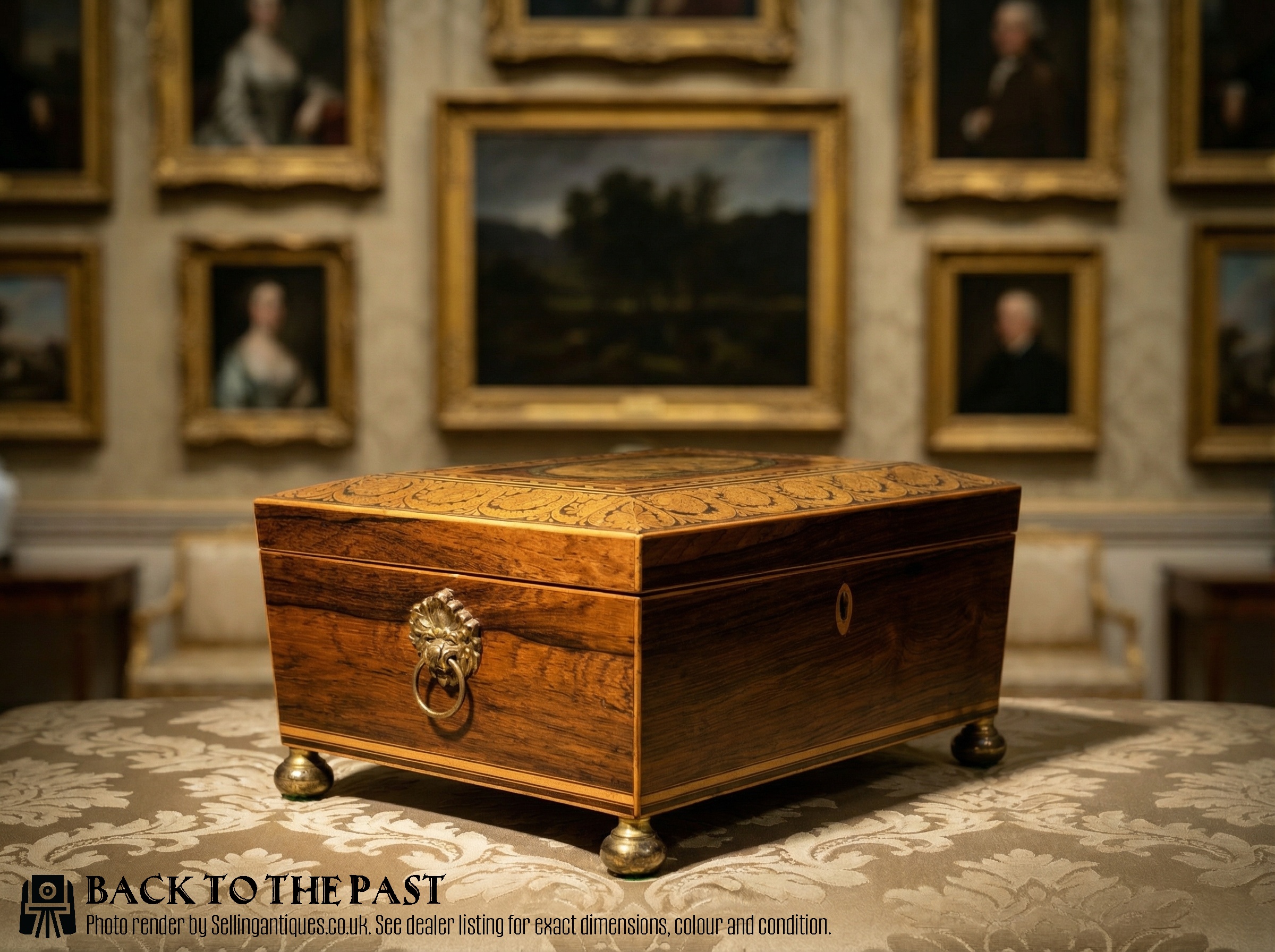
Materials and construction
Rosewood provides the dense, dark ground timber for these pieces, often selected for its dramatic grain pattern. Makers applied this timber in veneers over a secondary wood or constructed smaller boxes in solid stock.
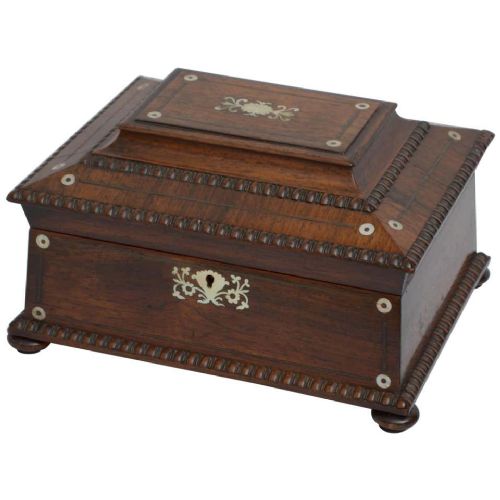
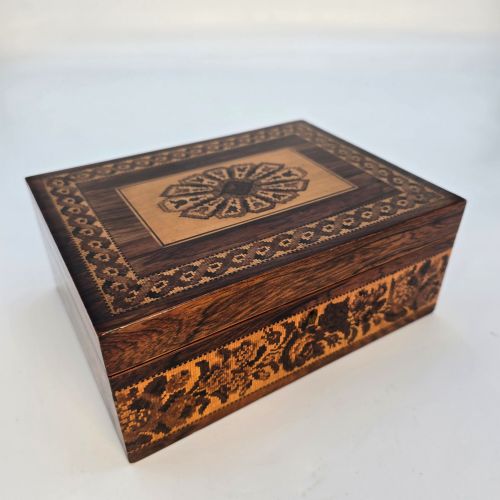
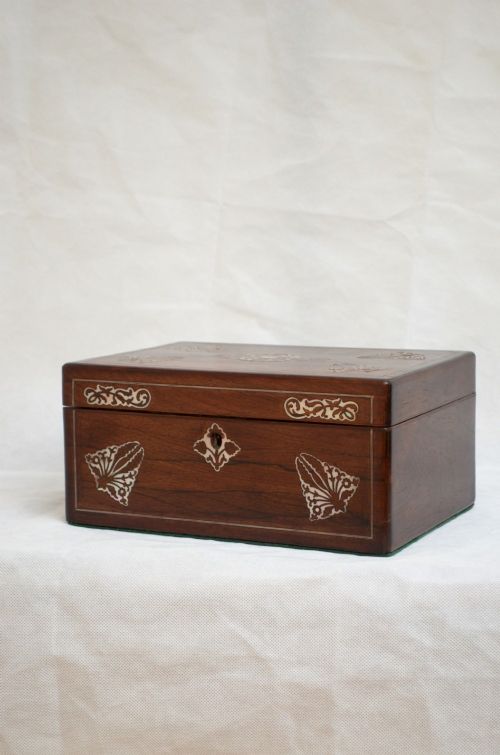
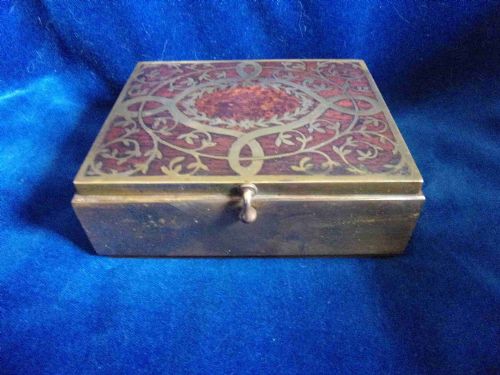
Inlay work defines the decoration, utilising contrasting materials such as mother-of-pearl, boxwood, and cut brass. Tunbridge Ware examples employ thousands of tiny tinted wood blocks to build up intricate mosaic pictures, while marquetry incorporates floral and geometric motifs.
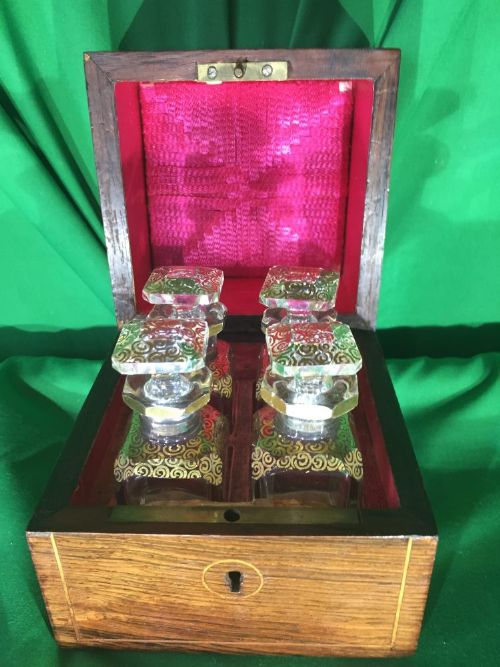
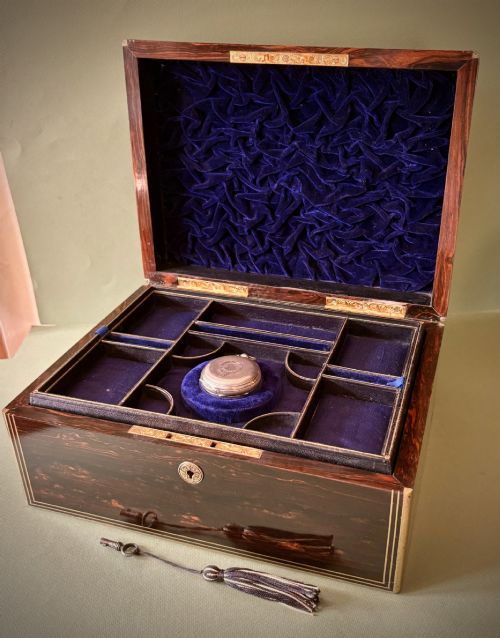
Internal fittings combine silk linings, velvet pads, and segmented wooden trays with cast brass handles, escutcheons, and locking mechanisms.
Some glove boxes feature gently domed lids designed specifically to accommodate the delicate curve of stacked leather gloves.
Judging the workmanship
The precision of the inlay separates standard containers from superior pieces. Crisp, tightly fitted brass stringing or exact mosaic tesserae indicate master carpentry, whereas gaps and heavy adhesive point to lesser execution.
Internal organisation and survival of original components dictate the standing of a box. Fully fitted interiors with matching glass scent bottles, intact silk trays, and working locks elevate the status of a casket significantly.
The handling of the rosewood grain and the subtlety of the marquetry design determine visual impact. Strong contrast and balanced proportions mark the work of notable makers such as Edmund Nye or Erhard and Söhne.
Edmund Nye·Erhard and Sohne·Lesage
The Inlaid Rosewood Casket Glossary
- Tunbridge Ware
- Woodware decorated with mosaic patterns made from tiny tinted wooden tesserae. This technique creates detailed geometric designs or pictorial views.
- Marquetry
- The art of applying pieces of veneer to a structure to form decorative patterns. Makers use various coloured woods to achieve pictorial effects.
- Sarcophagus
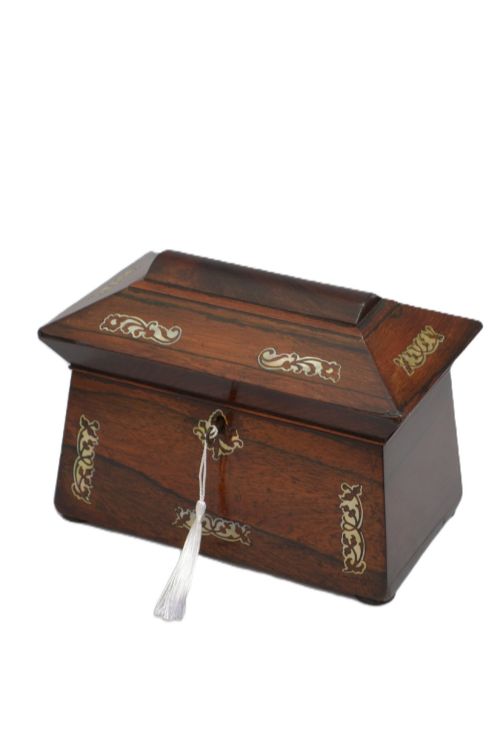
- A box shape featuring a domed or sloping lid resting on a rectangular base. This classical form appears frequently in Regency and Victorian tea caddies and work boxes.
- Escutcheon
- A flat plate surrounding a keyhole. It protects the surrounding wood from wear and often matches the brass inlay of the casket.
- Stringing
- Thin lines of contrasting wood or metal inlaid into the surface of a box. This technique outlines panels and borders.
Inlaid Rosewood Casket: Frequently Asked Questions
What were inlaid rosewood caskets used for originally?
These boxes served domestic and personal storage needs for wealthy households. Owners kept jewellery, letters, sewing implements, and tea inside them.
Many contained specialised compartments, velvet trays, and glass bottles tailored to specific daily rituals.
How do I date a rosewood casket?
Stylistic clues and construction methods indicate the period of manufacture. Regency pieces often feature bold brass inlay and sarcophagus profiles, whereas Victorian examples lean toward mother-of-pearl cartouches and Tunbridge mosaics.
Interior paper linings, lock types, and hinge styles also help narrow down the decade.
How should I care for rosewood and inlay?
Keep the wood away from direct sunlight and steady heat sources to prevent the rosewood from splitting and the veneer from lifting. Dust gently with a dry cloth.
Avoid liquid polishes that can seep into the grain or loosen old animal glues holding the mother-of-pearl and brass.
Are the locks and keys usually original?
Many caskets retain their original working lever locks, though replacement keys are common because originals were easily lost over the generations.
A matching key that operates smoothly adds convenience, but the quality of the box remains the primary consideration.