
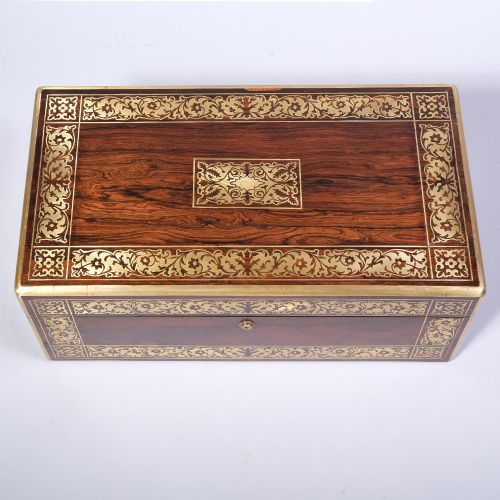
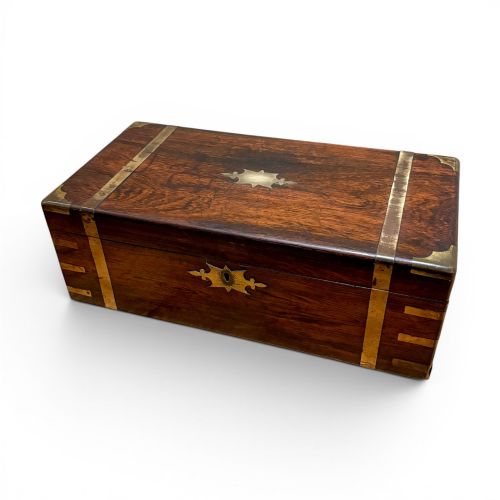
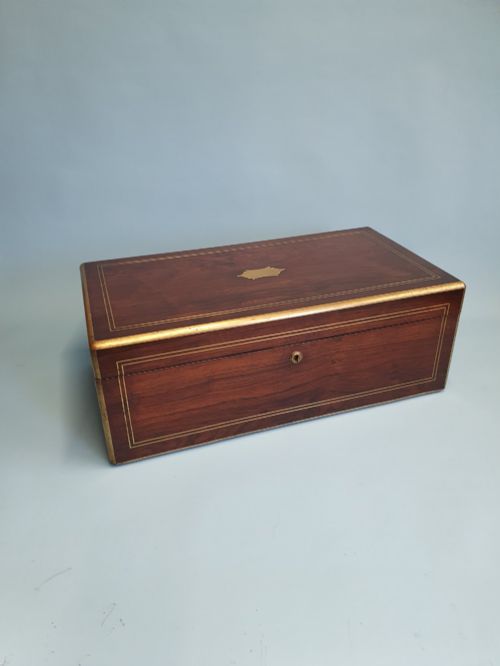


Fitted Rosewood Box
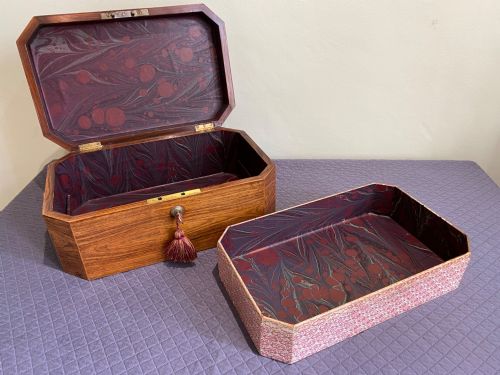
A fitted rosewood box brings together rich grain and clever internal engineering, housing everything from writing slopes to scent bottles.
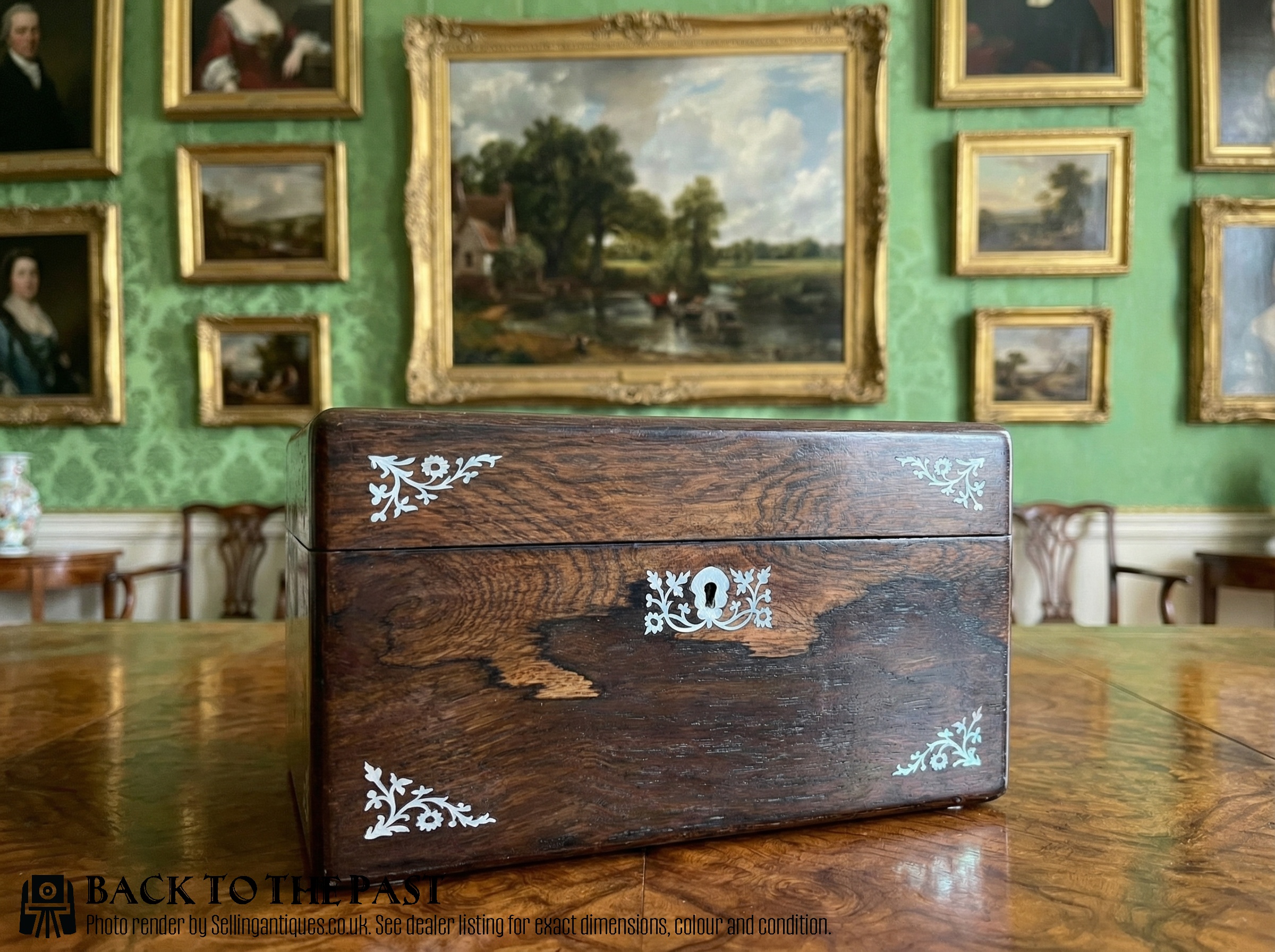
Fitted Rosewood Box
When you search for a fitted rosewood box, you encounter containers built to organise personal possessions during travel or domestic life. The examples meeting you on this page span the Georgian, Regency, and Victorian periods, taking forms such as writing slopes, jewellery cases, vanity boxes, and sewing chests.
Many items date from the nineteenth century, including specific decades like the eighteen-sixties and eighteen-eighties. You find variations ranging from English brass-bound writing boxes to Anglo-Indian colonial pieces and French campaign chests, alongside specialised pieces like apothecary boxes and games compendiums.
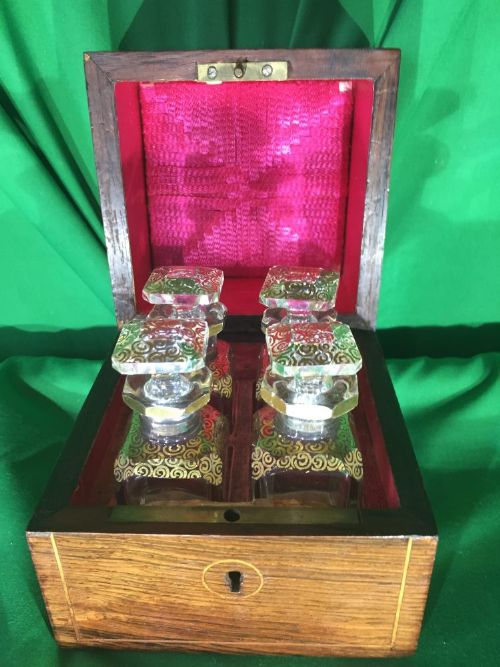
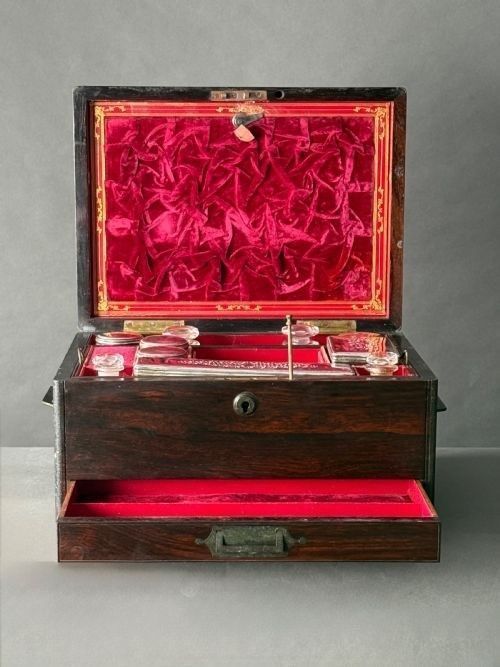
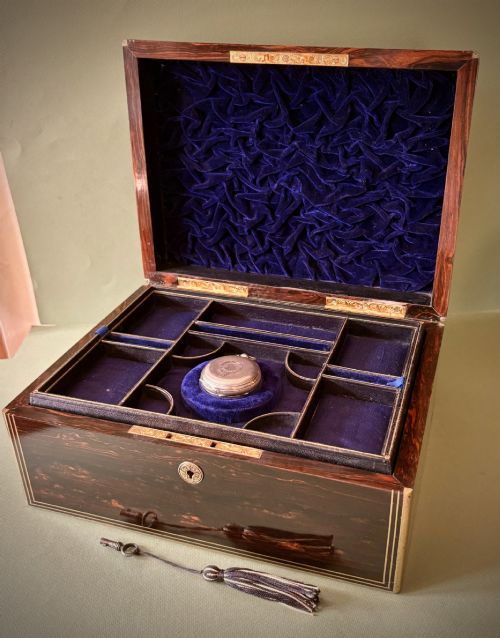
The interiors typically feature compartments lined with velvet or silk, housing glass bottles, bone implements, and silver accessories. These items reflect an era when portable luxury required structured organisation for letters, cosmetics, and valuables.
Materials and construction
The makers utilised dense rosewood timber for the exterior carcasses, often selecting pieces with pronounced grain patterns. Brass featured prominently as binding, corner reinforcement, and inlay work, providing structural resilience for travelling containers.
Interiors relied on textiles such as velvet and silk for lining, alongside glass for scent bottles and bone for small implements. Tunbridge ware and mother-of-pearl inlays further ornamented the surfaces through precise woodworking techniques.
A travelling gentleman or lady could rely on a fitted box to transport scent bottles, writing instruments, and games without losing a single piece.
Judging the work
Quality rests in the precision of the internal fittings and the complexity of the organisation. Superior examples maintain complete sets of original glass bottles, bone tools, and working keys, whereas lesser pieces show mismatched replacements or missing compartments.
The execution of brass inlay and the integrity of the rosewood timber distinguish standard production from exceptional craftsmanship. Well-preserved velvet and silk linings indicate careful ownership and superior initial manufacture.
The Fitted Rosewood Box Glossary
- Writing slope
- A portable desk featuring a hinged, slanted writing surface that folds down for correspondence. Inside compartments store stationery, inkwells, and pens.
- Tunbridge Ware
- A type of woodworking characterised by mosaic patterns made from tiny wood blocks of various natural colours. This technique created detailed geometric or pictorial scenes on box lids.
- Campaign box
- Furniture and containers made for military officers or travellers on the move. They typically incorporate flush brass handles and reinforced corners for transit.
- Apothecary box
- A specialised fitted container designed to hold medical phials, scales, and ingredients. These boxes kept medicines organised and secure during travel.
Fitted Rosewood Box: Frequently Asked Questions
What goes inside a fitted rosewood box?
These boxes contain tailored compartments, lift-out trays, and secret drawers designed for specific items like writing instruments, jewellery, or glass scent bottles.
Many retain their original velvet or silk linings, holding delicate tools made of bone or silver alongside stationery and cosmetics.
How do I date a rosewood box?
Dating relies on stylistic clues, construction methods, and materials seen across Georgian, Regency, and Victorian periods. Brass binding and specific inlay styles often point to particular decades within the nineteenth century.
Documented examples and locks with working keys provide additional chronological markers for identification.
Were these boxes meant for travel?
Many examples served travelling owners, particularly campaign pieces and dressing boxes equipped with sturdy brass bounds and flush handles.
Other variants remained stationary on dressing tables or writing desks, serving domestic rather than transit needs while maintaining internal organisation.
What is Anglo-Indian rosewood work?
Anglo-Indian pieces combine British furniture forms with traditional Indian carving and inlay techniques, often utilising local rosewood timbers.
These containers reflect the exchange of design ideas during the colonial period, resulting in distinctive decorative motifs on writing boxes and trunks.