


Rosewood Dressing Box
A rosewood dressing box is a fitted portable vanity case, offering compartments for bottles and trinkets that appeal to collectors of refined nineteenth-century desk furniture.
Identifying a rosewood dressing box
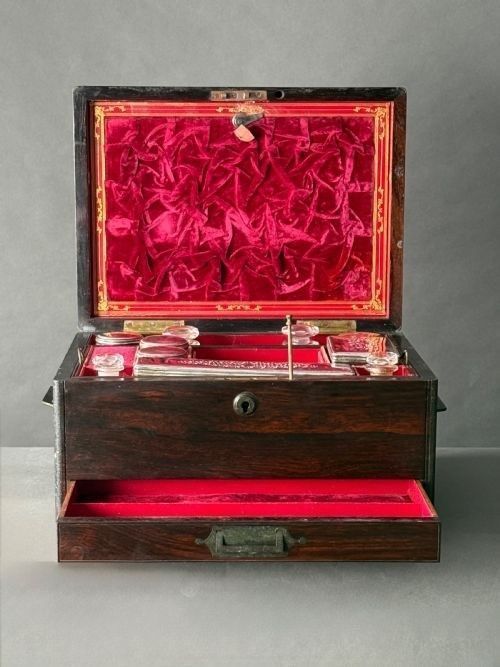
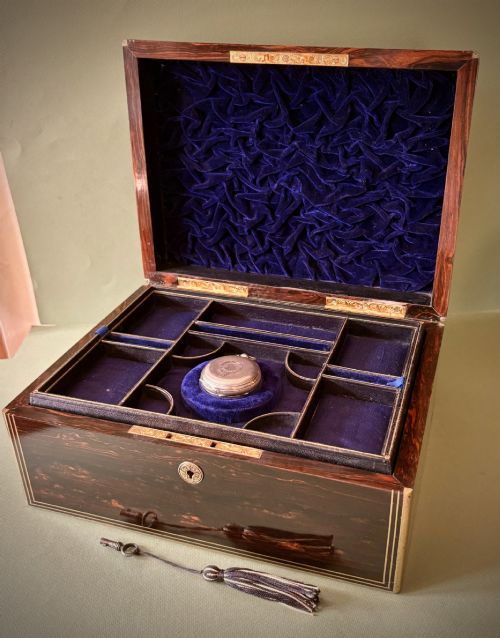
A rosewood dressing box is a portable nineteenth-century container designed to hold personal grooming items, jewellery and vanity accessories. These pieces span the Victorian era and the nineteenth-century French style, appearing primarily as fitted boxes, vanity cases, and jewellery boxes.
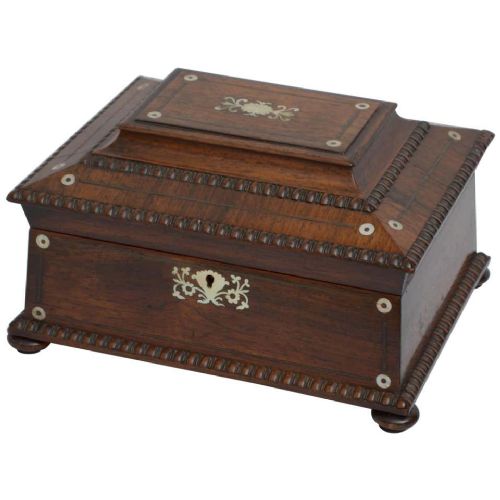
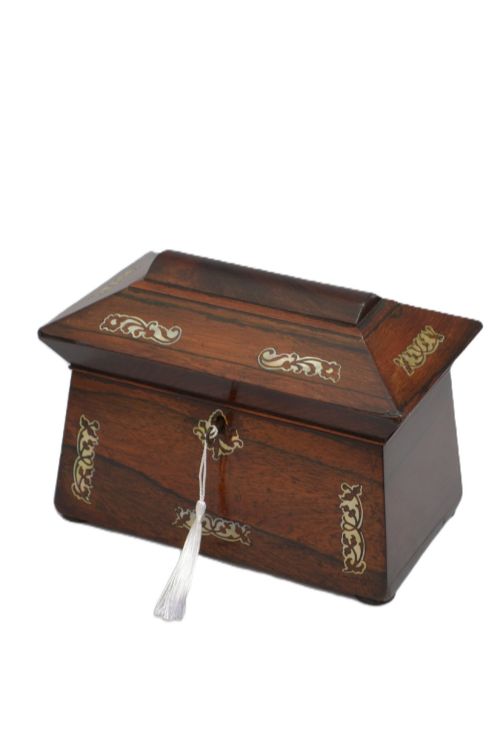
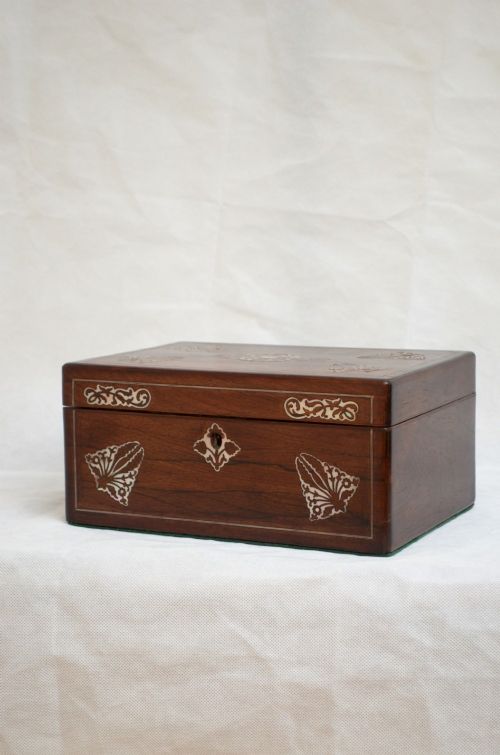
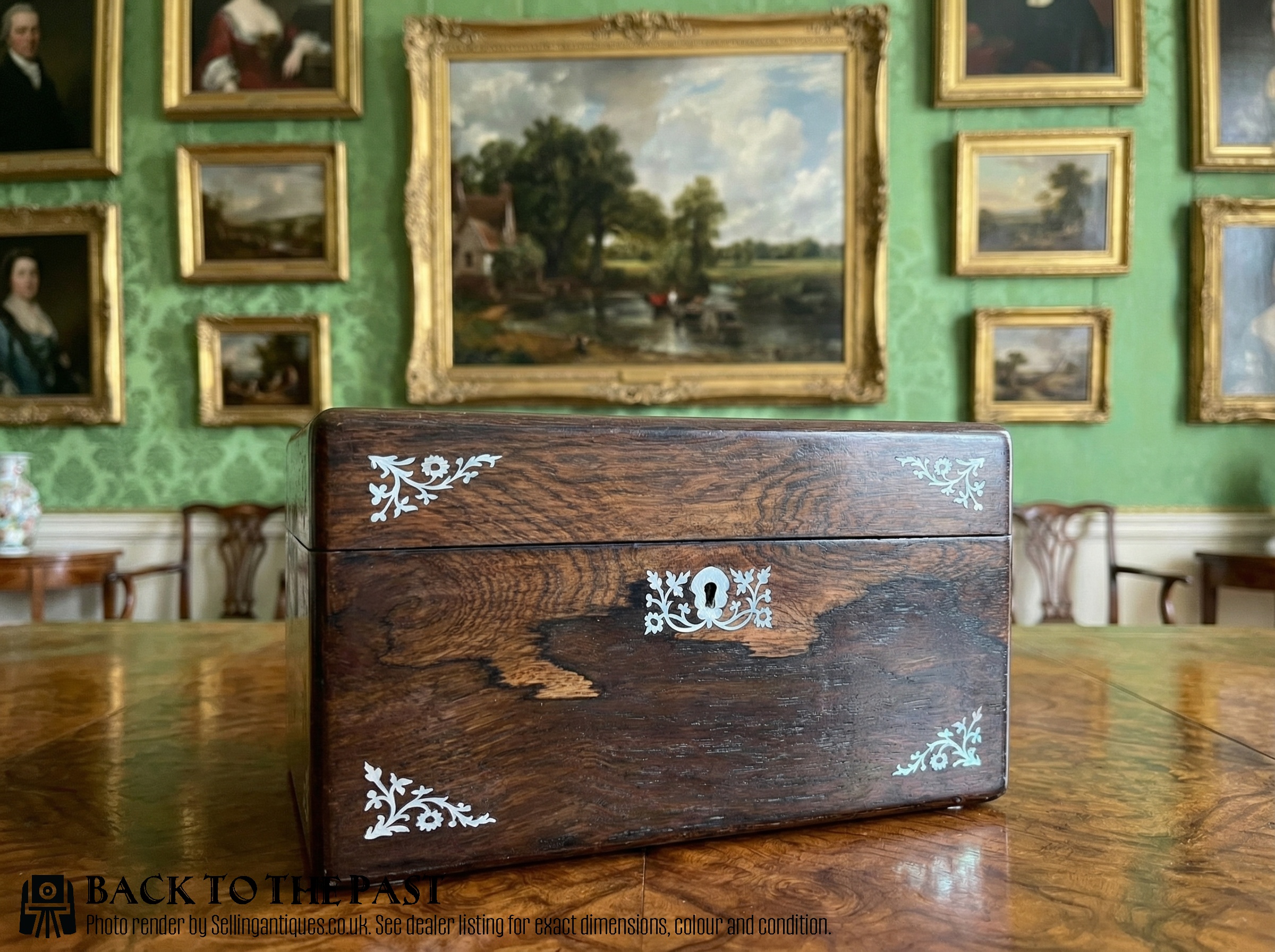
The versions most commonly met on this page include nineteenth-century French brass-inlaid examples and Victorian boxes featuring mother-of-pearl inlay. Buyers also encounter campaign-type vanity cases from the early nineteenth century and ladies dressing table boxes.
Makers utilised rich timbers and compartments lined with velvet to create objects that sat upon dressing tables or travelled with owners. The internal configuration often incorporates glass bottles and metal fittings alongside the central timber structure.
Construction and materials
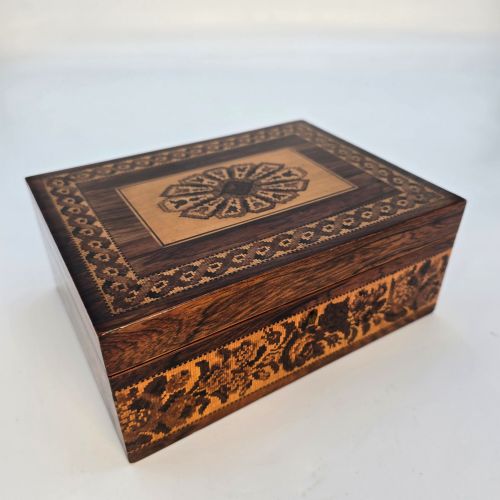
Cabinet makers constructed the primary carcass from rosewood, a dense and heavily grained timber prized for its deep colour and durability. This wood was selected for both dressing boxes and workboxes, providing a stable foundation for intricate external decoration.
Surfaces were frequently embellished with brass stringing, metal mounts, and mother-of-pearl inlay arranged in geometric or floral motifs. Interiors were lined with velvet to protect glass bottles, bone implements, and metal accessories housed within.
The listings on this site record rosewood dressing boxes from the nineteenth century, featuring materials such as velvet, glass, and mother-of-pearl.
Judging quality in rosewood
The refinement of the internal arrangement distinguishes finer examples from simpler containers. Superior boxes feature complete sets of matching glass bottles with fitted metal or bone lids, alongside integrated secret drawers and well-preserved velvet linings.
Precision in the exterior inlay work separates standard production from exceptional pieces. Crisp brass stringing and securely seated mother-of-pearl indicate skilled craftsmanship by the cabinet maker, whereas careless alignment diminishes the overall merit of the object.
The Rosewood Dressing Box Glossary
- Rosewood
- A heavy, dark timber with distinct grain patterns used extensively in nineteenth-century cabinet making. It takes a high polish and forms the primary material for these dressing boxes.
- Campaign box
- A portable container designed for travel, often featuring brass mounts and flush-fitting handles for durability on the move. These items date from the early nineteenth century.
- Mother-of-pearl
- An iridescent inner layer of mollusc shell utilised for inlay work on box lids and escutcheons. It provides a luminous contrast against the dark rosewood background.
- Workbox
- A container equipped for sewing and needlework, sharing similar internal compartment layouts with dressing boxes. They often feature inlaid mother-of-pearl decoration.
Frequently Asked Questions
What is a rosewood dressing box?
A rosewood dressing box is a portable nineteenth-century container designed to hold personal grooming items, cosmetics, and jewellery.
These pieces feature fitted interiors with compartments for glass bottles and small accessories, housed within a rich timber carcass.
How were these boxes used?
Owners utilised them for daily grooming routines on dressing tables or packed them for travel as part of personal luggage.
Inside, the compartments kept glass bottles, brushes, and jewellery organised and secure during transit or domestic use.
What materials are typical?
The primary material is rosewood, paired with velvet interior linings and glass bottles for vanity items.
Additional elements include brass mounts, metal hinges, mother-of-pearl inlay, and occasional bone fittings.
How do I identify a Victorian piece?
Victorian examples date from the nineteenth century and frequently incorporate mother-of-pearl inlay or fitted compartments for jewellery.
They reflect the domestic habits and decorative tastes of the period, often matching the style of contemporary dressing table furniture.