
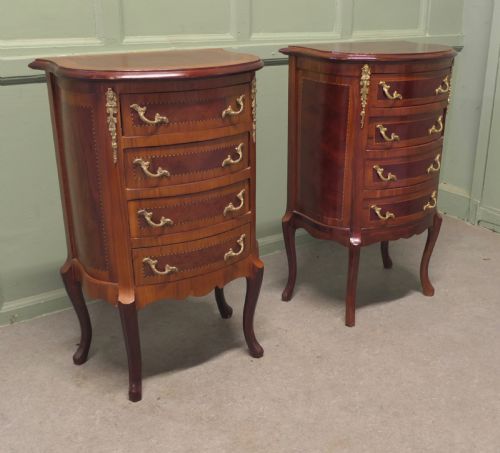
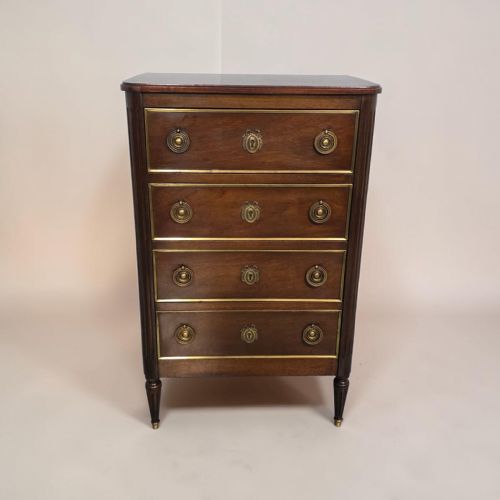


French Brass Inlaid Chest
A french brass inlaid chest brings rich Continental timber and gleaming metalwork into a room, offering both practical storage and striking decorative presence.
French Brass Inlaid Chest
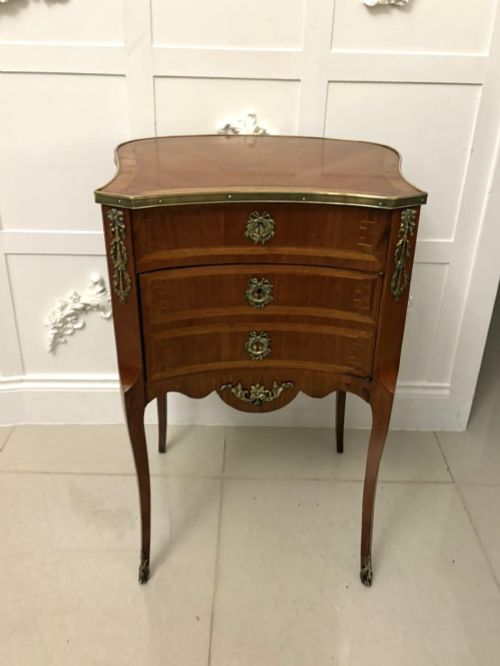
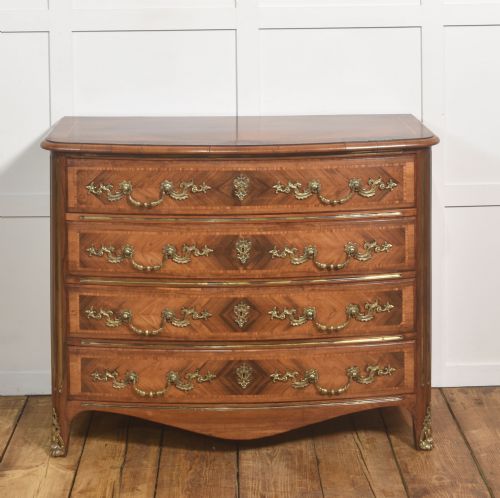
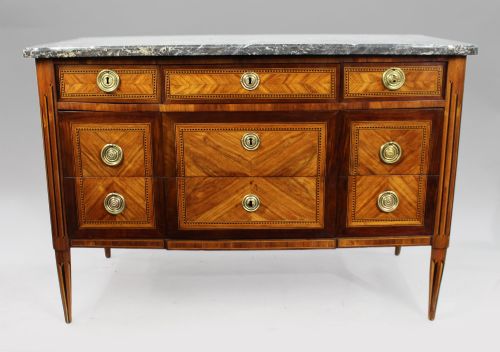
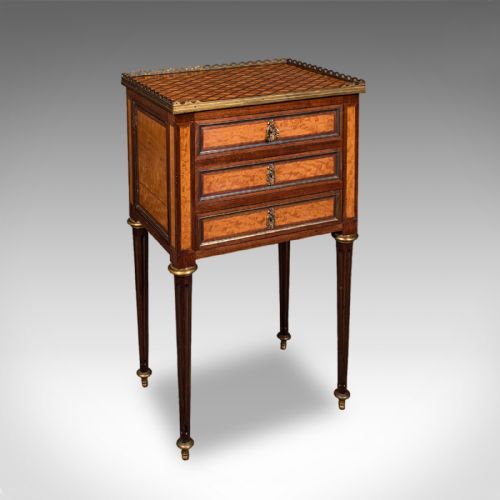
When you search for a french brass inlaid chest, you encounter a sophisticated variety of furniture forms spanning multiple centuries. The selection ranges from grand commodes and serpentine chests of drawers to smaller bedside cabinets and intricate tea caddies.
The pieces appearing on this page bridge several distinct eras, stretching from the eighteenth century through the Victorian period and into the early twentieth century. Alongside standard chests of drawers, you find specialised forms such as side cabinets, nightstands, and specialised boxes.
Stylistic influences heavily reflect traditional French design vocabulary, including Louis XV, Louis XVI, and Napoleon III aesthetics. Many items utilise revival styles that replicate earlier craftsmanship with considerable skill.
Materials and construction methods
Cabinetmakers constructed these pieces using dense hardwood carcasses of walnut, rosewood, kingwood, fruitwood, and mahogany. These timbers provided a stable foundation for intricate marquetry, parquetry, and boulle work.
Brass inlay andormolu mounts are integrated directly into the timber surfaces, often paired with contrasting materials like tortoiseshell and marble tops. Artisans meticulously fitted metal stringing and ornate plaques to accent the natural grain of the wood.
Several tea caddies incorporate hidden inner canisters and tiny sugar dishes designed for eighteenth-century hospitality.
Assessing craftsmanship and execution
The distinction between standard execution and exceptional quality lies in the precision of the brass inlay and the fluidity of the timber veneers. Superior examples display seamless integration of metal into wood without visible gaps or excessive adhesive.
Structural harmony also dictates value, particularly in serpentine and bombe forms where curved drawer fronts require advanced carpentry. Finer pieces retain original marble slabs, intact mounts, and well-executed floral or geometric marquetry patterns.
The French Brass Inlaid Chest Glossary
- Boulle
- A form of marquetry consisting of tortoiseshell and brass inlay, named after the famed French cabinetmaker André-Charles Boulle. This technique creates a striking contrast between dark shell and polished metal.
- Commode
- A low chest of drawers, typically decorative and standing on relatively tall legs. Eighteenth-century versions often feature curved fronts and elaborate mounts.
- Marquetry
- The art of applying pieces of veneer to a structure to form decorative patterns and pictures. Craftsmen utilise various tinted woods and metals to achieve pictorial depth.
- Ormolu
- Gilt bronze ornamentation applied to furniture, clocks, and lighting. The technique involves treating bronze with an acid-gold mixture to create a rich, durable golden finish.
- Parquetry
- Geometric mosaic woodwork used for floors and furniture surfaces. It relies on symmetrical patterns formed by small wooden tiles.
- Serpentine
- A furniture shape characterised by a line of movement that curves outward at the ends and inward in the centre. This profile demands high joinery skill to execute successfully.
French Brass Inlaid Chest: Frequently Asked Questions
What periods do these chests cover?
The pieces span from the early eighteenth century through the nineteenth century and into the early twentieth century. This timeline includes formal eighteenth-century designs alongside later Victorian and revival interpretations.
Craftsmanship naturally evolved across these eras, moving from hand-carved foundational pieces to twentieth-century revivals that honoured earlier French aesthetics.
How do I identify a Louis XV style piece?
Louis XV pieces typically exhibit pronounced curves, asymmetrical ornamentation, and cabriole legs. The overall aesthetic prioritizes fluidity over rigid symmetry.
Drawer fronts often feature serpentine shapes accompanied by delicate floral marquetry and restrained ormolu mounts rather than heavy geometric borders.
Are marble tops original to these chests?
Many commodes and bedside cabinets feature fitted marble tops that were specified during the initial construction. These slabs added weight, utility, and a contrasting texture to the timber bodies.
When examining a marble top, look for edge profiles and weathering that match the age of the wooden base beneath it.
How should I care for brass inlay?
Brass inlay requires gentle dusting with a soft, dry cloth to prevent abrasive particles from scratching the surrounding wood. Avoid harsh chemical polishes that might seep beneath the metal and stain the veneer.
Maintaining stable room humidity protects the wood substrate, preventing the timber from expanding or contracting and causing the delicate brass stringing to lift.