


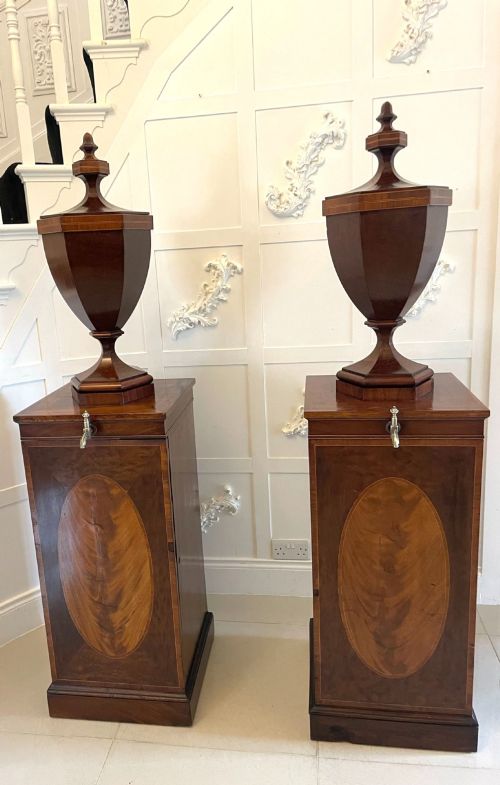

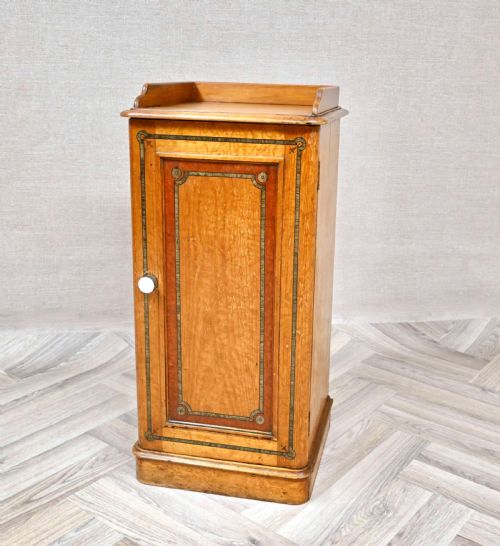
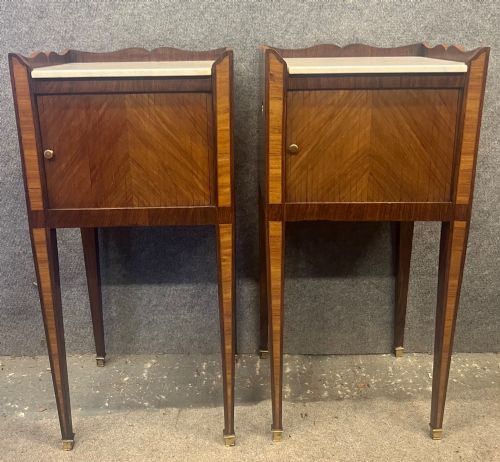
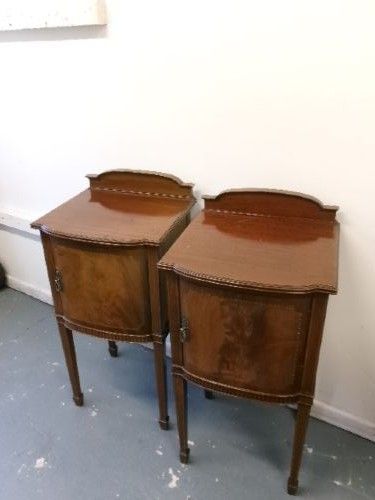
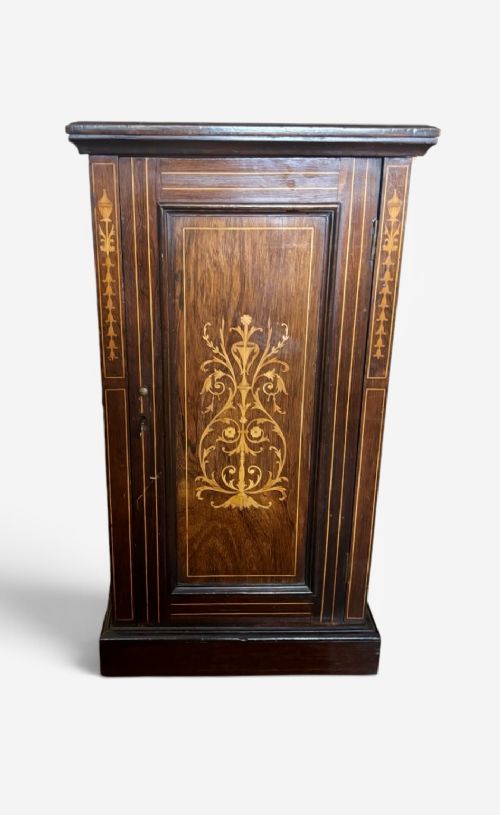
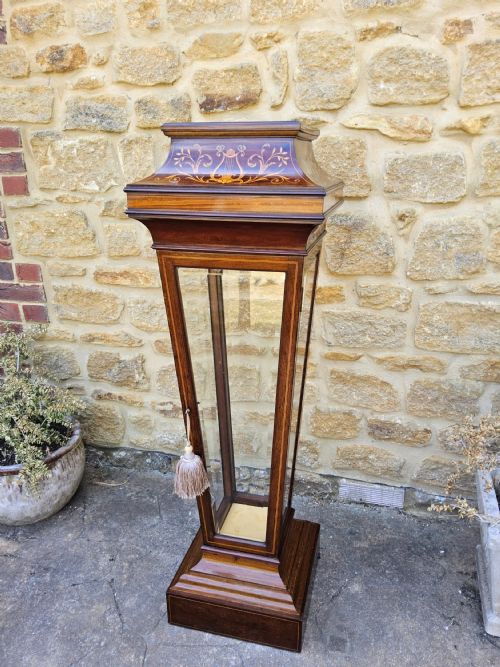
Inlaid Pedestal Cabinet
An inlaid pedestal cabinet brings together disciplined cabinet-making and precise marquetry, offering functional storage with decorative presence.
Inlaid Pedestal Cabinet
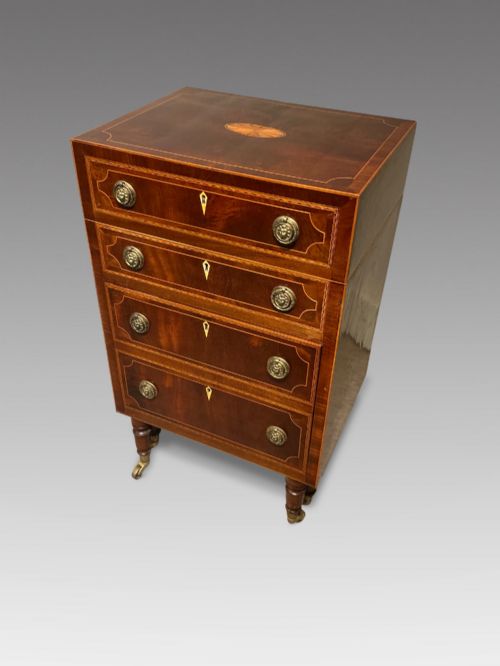
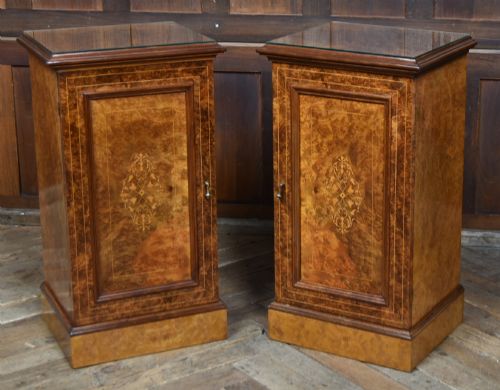
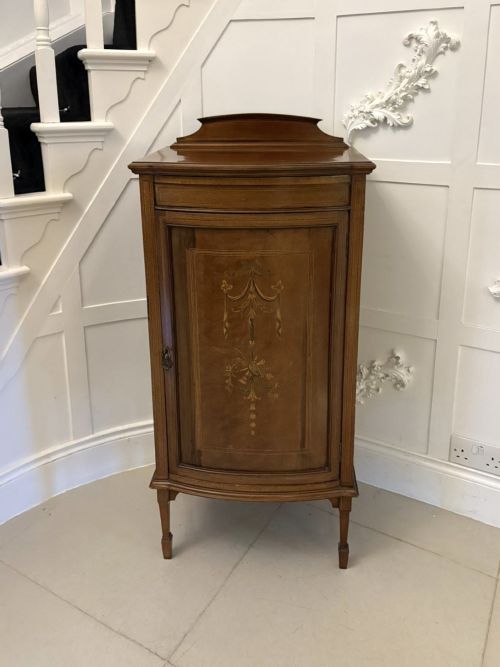
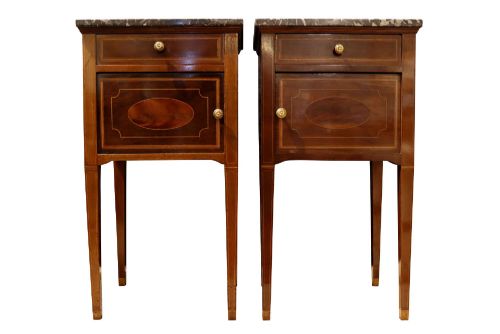
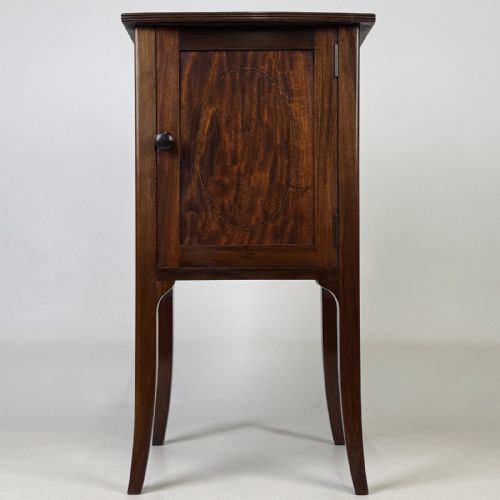
An inlaid pedestal cabinet appears primarily in Edwardian and Victorian forms, alongside examples from the nineteenth century, Georgian period, and 1930s. The listings frequently present these pieces as bedside cabinets, bedside cupboards, and display cabinets.
Makers and workshops construct these cabinets from primary timbers such as mahogany, rosewood, satinwood, walnut, and kingwood, integrating contrasting woods through marquetry.
The search phrase encompasses narrow bedside storage, display vitrines on pedestals, and compact cupboards designed for domestic interiors across multiple decades.
Materials and Technique
Cabinet-makers build the core structure using solid timbers and veneers of mahogany, walnut, rosewood, or satinwood, applying brass or boxwood details where required.
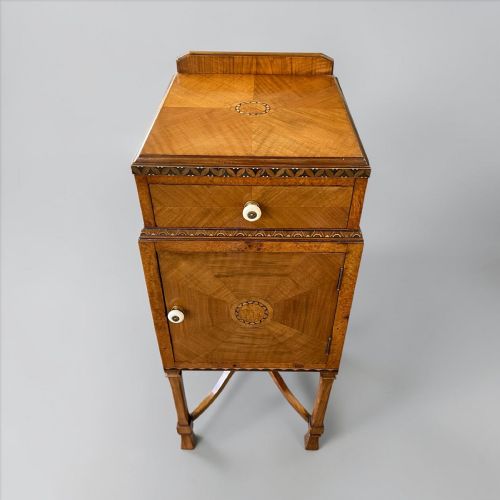
Marquetry and inlay techniques involve recessing contrasting elements like boxwood, satinwood, and mother of pearl directly into the primary timber surface to form geometric or floral motifs.
Construction relies on traditional joinery techniques, housing glass panels in doors for display pieces and fitting internal shelves or drawers within the cabinet carcase.
Inlaid Pedestal Cabinet Retail Price Guide 2026
Typical asking prices for inlaid pedestal cabinet among the pieces listed under this phrase on Sellingantiques today, from the lower quarter to the upper quarter. They describe what is for sale here now, not the wider market.
One unexpected piece pairs traditional mahogany with white-metal and copper-inlaid brass in a hexagonal occasional table form.
Craftsmanship and Material Selection
The standard of an inlaid pedestal cabinet depends on the precision of the timber matching and the exactness of the fitted marquetry.
Superior examples demonstrate seamless integration of contrasting woods like satinwood, boxwood, and kingwood into the primary mahogany or walnut carcase.
Refined pieces maintain structural integrity and balanced proportions across the upright pedestals, doors, and surface mouldings.
Hewetsons London·Morant And Co London·Walter Carter Harrods·Edwards And Roberts·Maple And Co
The Inlaid Pedestal Cabinet Glossary
- Marquetry
- Decorative patterns formed by the insertion of different veneers into a primary wood ground. This technique allows for complex pictorial or geometric designs across cabinet doors and tabletops.
- Satinwood
- A durable, lustrous timber native to India and Ceylon, prized for its golden yellow colour and gentle sheen. It serves extensively as a contrasting veneer in inlaid furniture.
- Pedestal
- An upright architectural support or column that elevates a cabinet, chest, or display vitrine. It provides both structural elevation and visual balance.
- Kingwood
- A dense, dark exotic timber featuring violet and brown tones, often utilised in small decorative panels and borders during the nineteenth and twentieth centuries.
- Vitrine
- A glass-panelled display cabinet designed to exhibit porcelain, small objects, or silver. These pieces utilise glazed doors and sides to maximise light penetration.
Inlaid Pedestal Cabinet: Frequently Asked Questions
Where do I place an inlaid pedestal cabinet?
These compact cabinets suit placement beside a bed or in a drawing room where floor space is limited. Their vertical proportions provide storage surface without dominating the room.
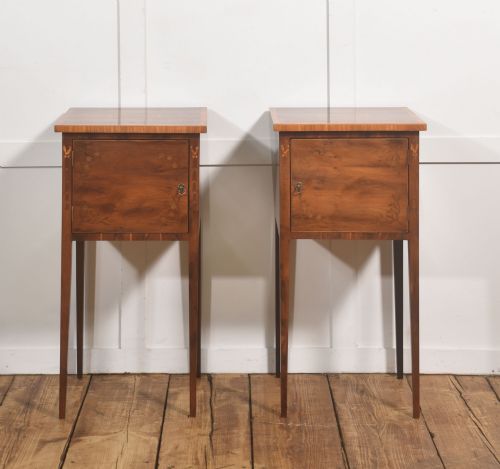
Pairs of these cabinets function effectively flanking a bed or positioned beneath windows, echoing symmetrical room layouts common in Edwardian and Victorian interiors.
How do I care for the wood surface?
Maintain the timber by keeping pieces away from direct heat sources and sudden humidity changes to prevent veneer lifting. Regular dusting with a dry, soft cloth preserves the original polish.
Apply high-grade beeswax sparingly when the timber appears dry, buffing gently along the grain to protect the marquetry work without building up heavy residues.
How do I distinguish Edwardian from Victorian cabinets?
Victorian pieces generally display heavier timbers, darker rosewood or walnut tones, and robust carvings or dense marquetry. Proportions tend to be solid and substantial.
Edwardian examples often favour lighter satinwood and mahogany grounds, refined stringing, and Sheraton Revival influences that produce a brighter, airier aesthetic.