
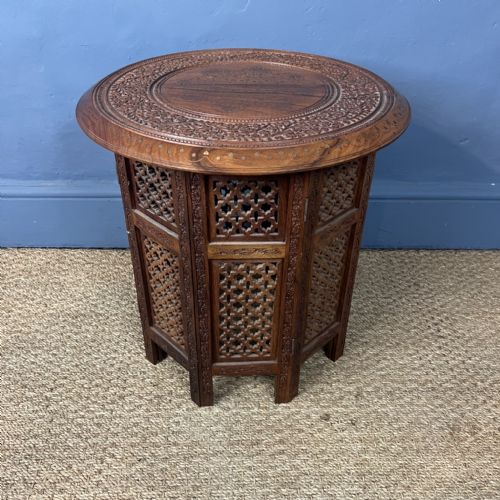
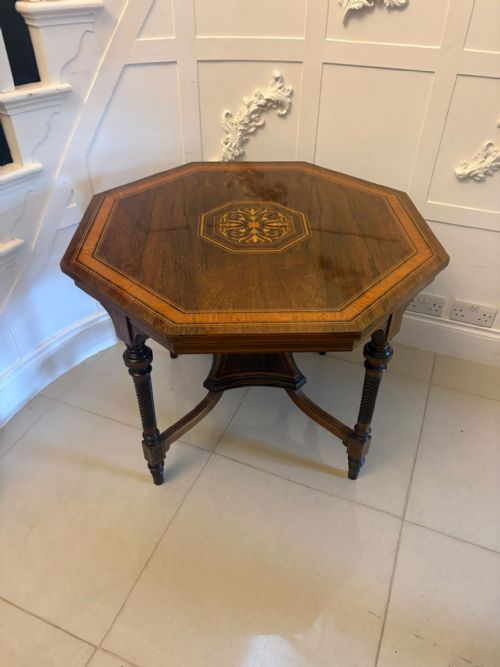
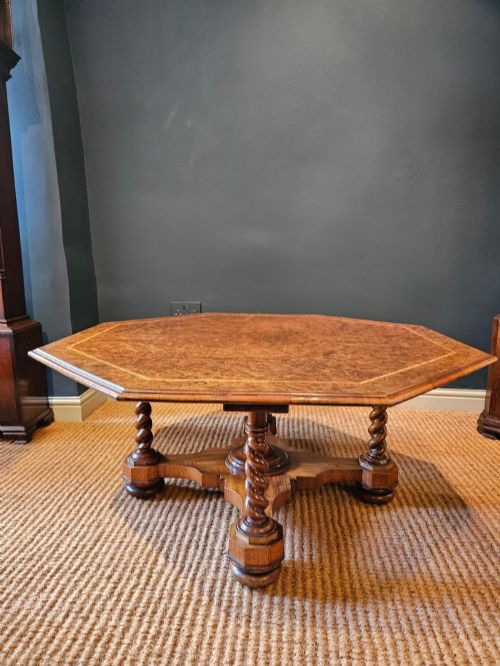
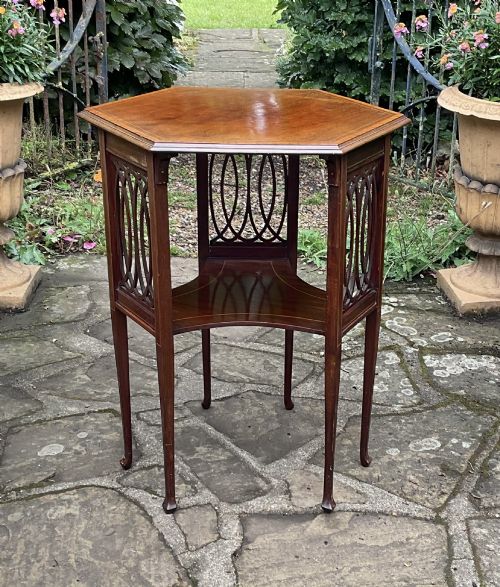

Inlaid Octagonal Tea Table
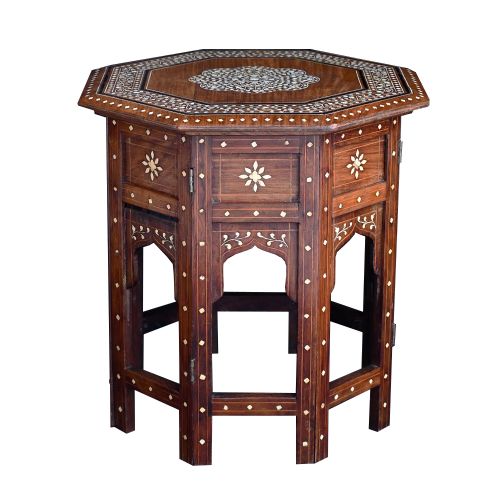
An inlaid octagonal tea table brings distinct geometric form and intricate surface detail into a room, often arriving from Anglo-Indian or Victorian workshops.
Inlaid Octagonal Tea Table
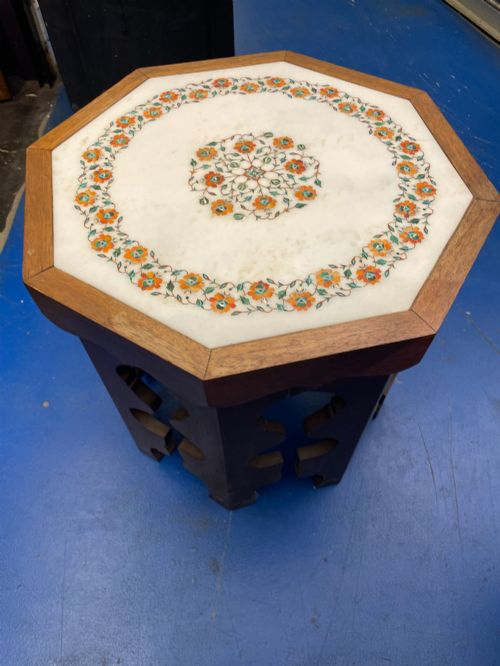
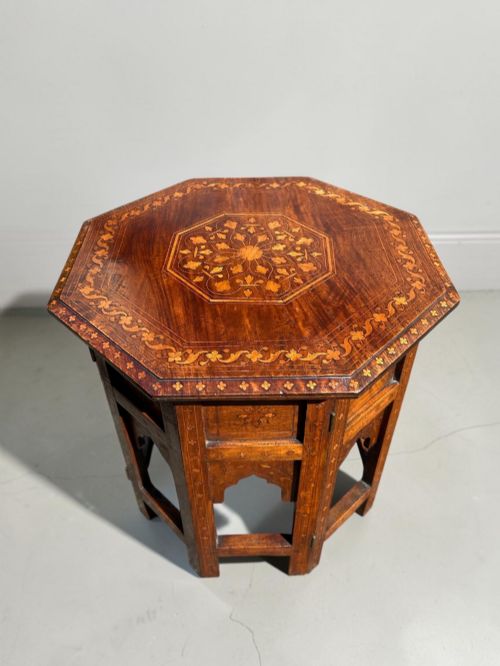
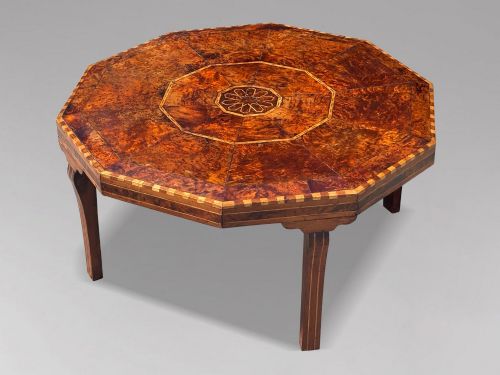
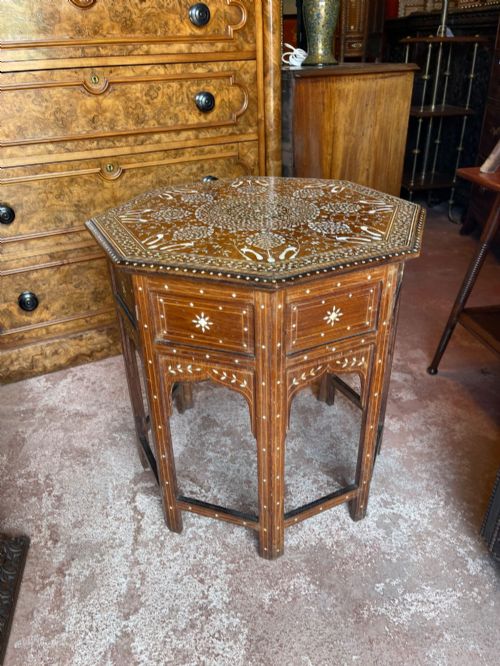
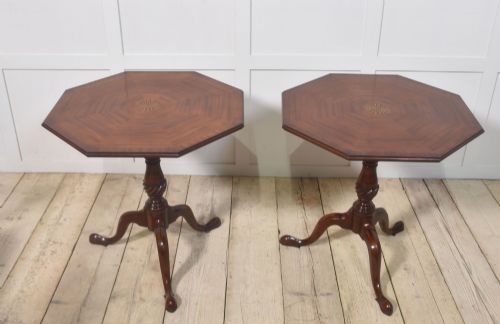
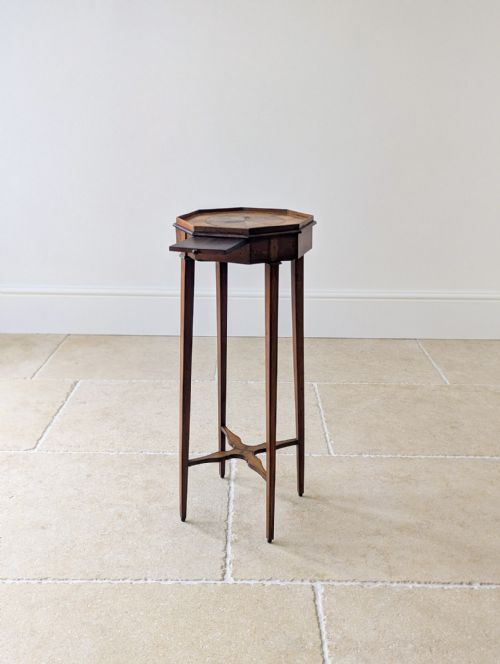
An inlaid octagonal tea table serves as a compact surface for serving or display, defined by its eight-sided top and patterned ornamentation. You will frequently encounter examples from the nineteenth and early twentieth centuries, spanning Victorian British cabinets to Anglo-Indian import pieces.
The form appears across various heights, functioning as a low coffee table, a side table, or a folding occasional table. Many feature collapsible bases that allow the top to be removed and stored flat when not in use.
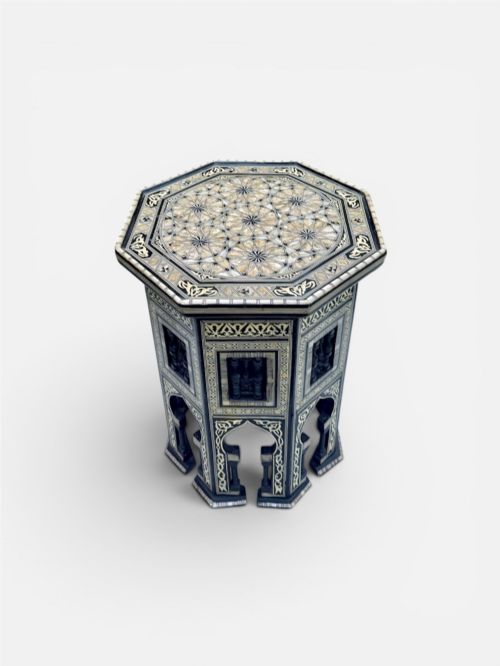
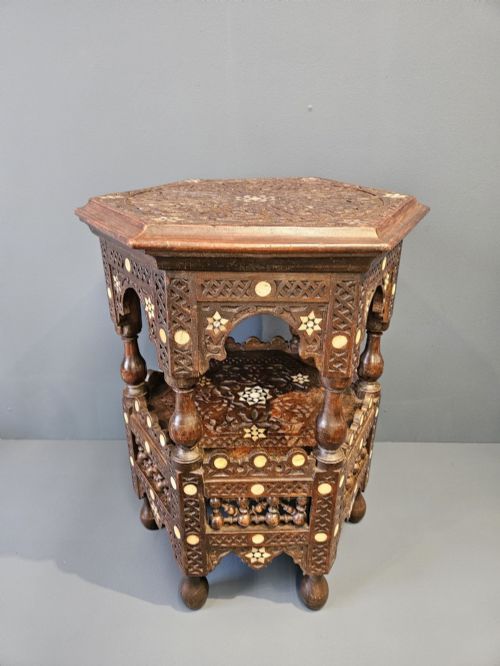
Origins range widely within the selection, encompassing British mahogany and rosewood domestic furniture alongside Syrian, Damascus, and Hoshiarpur productions. This variety means buyers choose between European cabinetmaking traditions and intricate eastern wood-carving practices.
How they were made
Carpenters constructed the carcasses using timbers such as teak, mahogany, rosewood, walnut, and sheesham wood. These dense hardwoods provided a stable foundation for complex surface decoration.
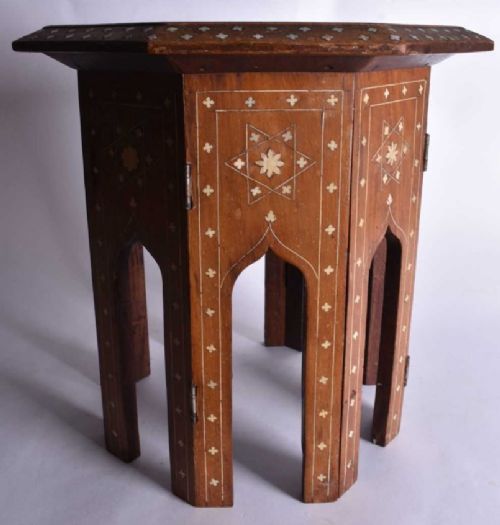
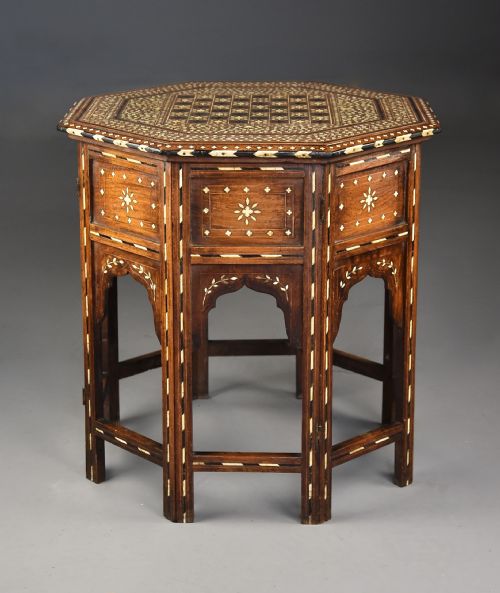
Craftspeople utilised contrasting materials to create elaborate patterns, pressing brass wire, bone, mother of pearl, copper, and lighter woods like boxwood into recessed channels. Folding versions relied on intricate pierced and carved wooden hinges that allowed the structural base to collapse neatly.
Marquetry and parquetry techniques required precise cutting of veneer segments to form geometric arrays or floral motifs across the octagonal surfaces. Surface finishes were then applied to highlight the natural grain alongside the metallic and organic inlays.
Several folding tables hide intricate lattice hinges that transform a rigid eight-sided platform into a flat parcel for a traveller's trunk.
What varies in quality
The precision and density of the inlay dictate the distinction between standard production items and masterworks. Finer examples display tight, seamless integration of bone, brass, or mother of pearl without excessive filler in the gaps.
Carved structural elements show varying levels of hand execution, where deeply pierced and undercut folding bases indicate superior craftsmanship compared to shallow, machine-routed alternatives. The choice of primary timber also elevates a piece, as dense burr woods and selected rosewoods carry higher natural status than plain hardwoods.
Structural integrity of the folding mechanism and the flatness of the octagonal top mark the difference in preservation and original build quality. Tables that retain all their original contrasting inlay segments without replacement pieces command greater appreciation.
Hoshiarpur workshops·Damascus workshops
The Inlaid Octagonal Tea Table Glossary
- Hoshiarpur
- A city in Punjab, India, renowned for producing intricately carved wooden furniture featuring dense brass, bone, and shisham inlay. Pieces from this region often employ folding octagonal bases.
- Marquetry
- The art of applying small pieces of veneer to a structure to form decorative patterns and pictorial designs. This technique appears frequently on Victorian and Edwardian tabletop surfaces.
- Parquetry
- A geometric mosaic of wood pieces used for decorative floors and tabletops. It differs from marquetry by strictly following repeating geometric tiling arrangements.
- Mother of pearl
- The iridescent internal layer of mollusc shells, harvested for use in decorative inlays. It provides luminous white highlights against dark tropical hardwoods.
- Occasional table
- A small, light table designed for intermittent use around a living space. These forms include tea tables, lamp tables, and folding stands.
Inlaid Octagonal Tea Table: Frequently Asked Questions
What is an inlaid octagonal tea table?
An inlaid octagonal tea table is a small decorative surface featuring an eight-sided top decorated with materials like brass, bone, or contrasting wood veneers. These tables were utilised for serving tea or displaying ornaments.
They appear in various styles, from British Victorian walnut designs to intricately carved Anglo-Indian folding examples.
How do you fold an octagonal table?
Many folding examples utilise a pierced wooden base that collapses into a flat frame once the top is lifted off its supports. The interlocking wooden sections hinge together without metal fasteners.
Care should be taken when dismantling these bases to ensure the carved joints disengage smoothly.
Where were these tables made?
The pieces originate from diverse locations, including British cabinet workshops and regional centres across India, Syria, and North Africa. Anglo-Indian examples were often produced specifically for export during the nineteenth century.
European makers also produced similar octagonal formats drawing on Sheraton and Victorian stylistic traditions.
How do I care for inlaid wood?
Inlaid surfaces require gentle dusting and protection from direct sunlight and extreme humidity changes. Moisture can cause the delicate wood veneers and organic elements like bone to lift.
Applying appropriate wax preserves the timber without damaging the brass or mother of pearl segments.
Are these tables sturdy enough for daily use?
While solid woods provide good strength, tables with folding bases or extensive delicate inlay require thoughtful placement to avoid undue stress. Standard occasional use for drinks or lamps suits their historical construction.
Heavier items or constant repositioning can strain older joints, particularly on folding models.