
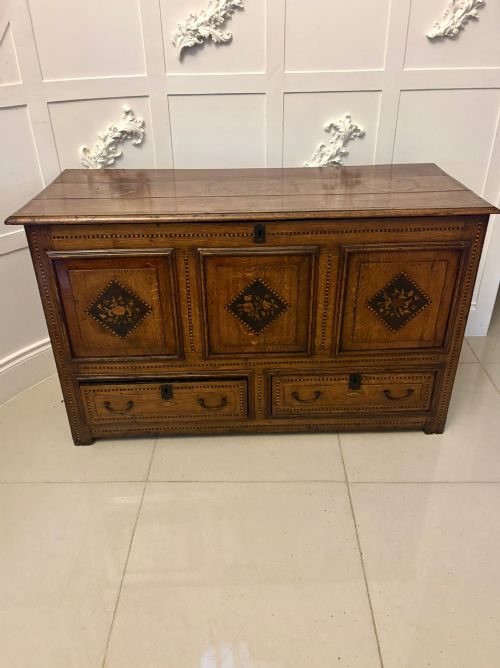
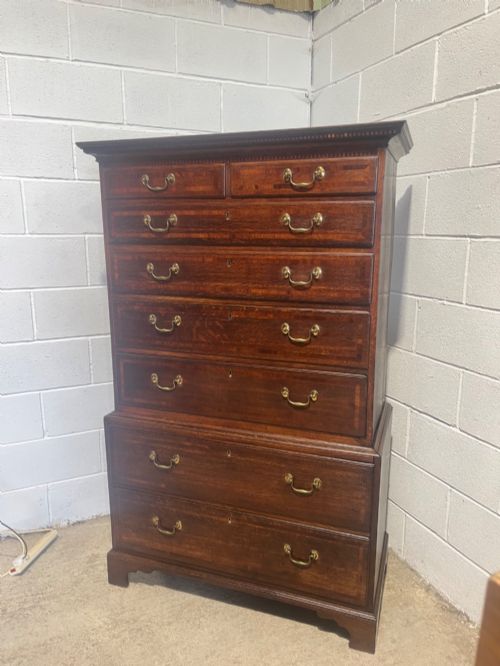
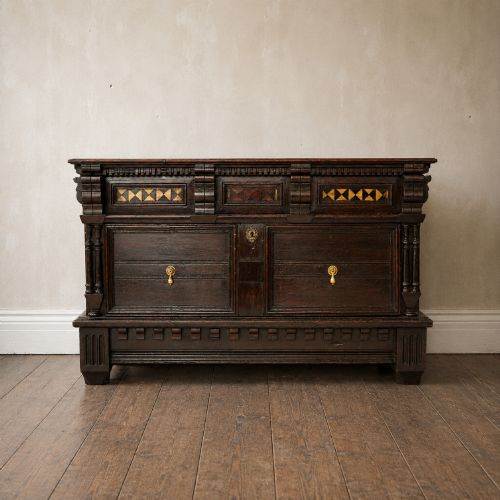
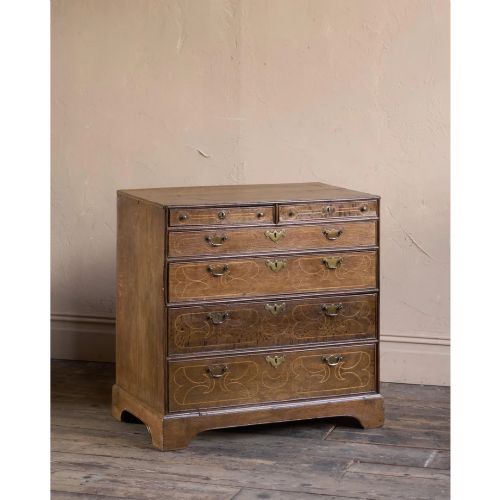
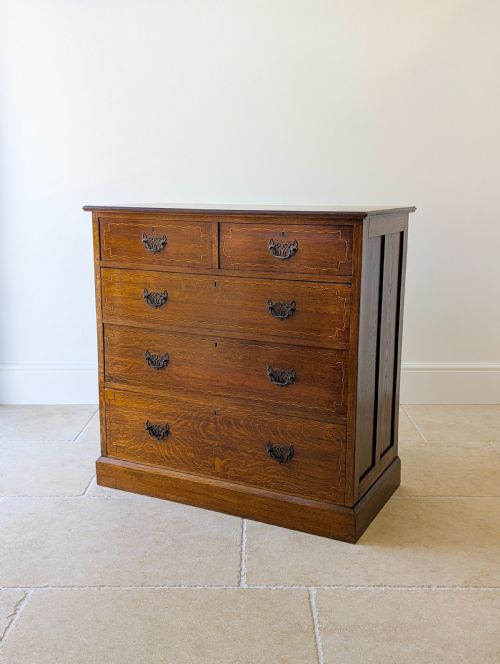


Inlaid Oak Chest Drawers
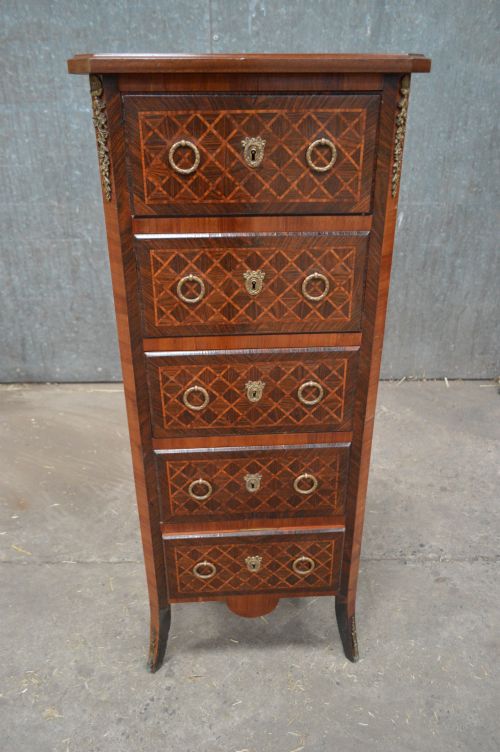
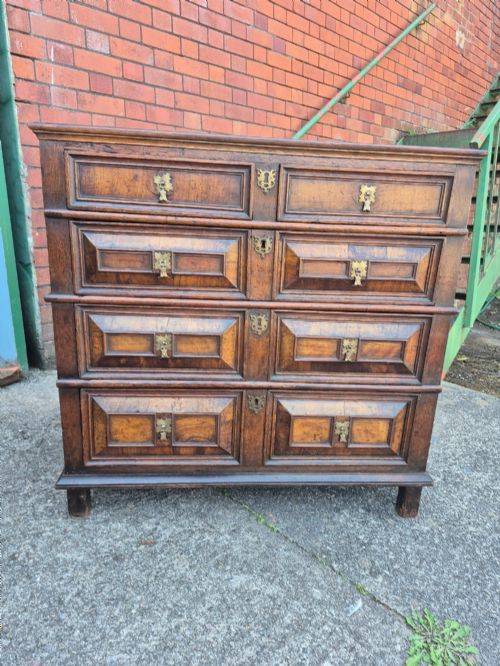
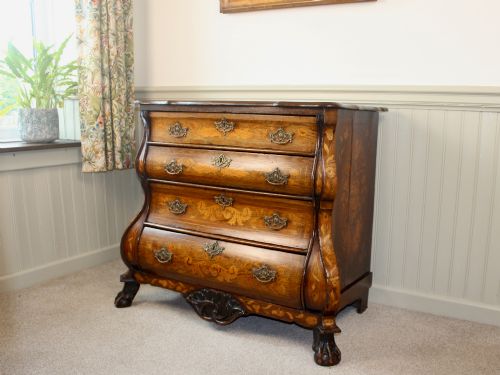
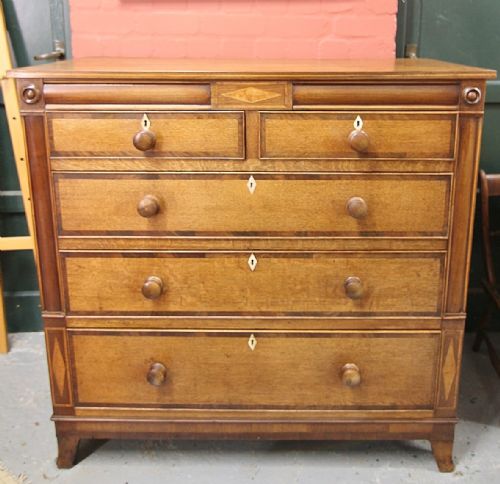
When you search for an inlaid oak chest drawers, you are looking at solid timber storage built to last centuries, enriched with contrasting woods and marquetry.
Inlaid Oak Chest Drawers
An inlaid oak chest drawers brings together robust regional construction and decorative surface work spanning the seventeenth century through to the Edwardian era and the nineteen-thirties. You meet pieces ranging from low mule chests and tall chest on chest designs to compact dressing tables and country coffer bachs.
Early examples date from the Jacobean, Charles II and William and Mary periods, often displaying geometric panelling, oyster veneers, and dark walnut contrasts. Later Georgian and Victorian pieces show lighter fruitwood, satinwood or mahogany bandings alongside traditional dovetailed oak drawer linings.
Proportions vary from small country workshop items to grand civic furniture, incorporating hidden secret drawers, brushing slides, or serpentine bombé fronts depending on origin and date.
Timber and Technique
Carpenters built the primary carcasses using native oak, frequently lining drawers in secondary oak and employing walnut or mahogany for structural contrast. Surfaces received decorative enrichment through marquetry inlay, fruitwood decoration, snakewood, and precise line inlays.
Early joinery relied on pegged frames and heavy mouldings, while later centuries introduced finely cut veneers, oyster patterns, and cross-banding. Brass swan neck handles and drop pulls completed the construction, fastened securely to hand-dovetailed drawer boxes.
Secret drawers tucked slyly behind dummy facades offered eighteenth-century householders a safe spot for secret letters and small gold coins.
Assessing Craftsmanship
Quality rests upon the crispness of the inlay work and the structural integrity of the timber, distinguishing provincial workshop items from high-style metropolitan cabinet work. Grain selection in oyster veneering and the precision of geometric mouldings reveal the skill of the original maker.
The preservation of original brass hardware, stable drawer runners, and untouched timber patination elevate certain examples above pieces suffering from extensive later alterations or replacement panels.
Wright & Hunter of Belfast·Gaylayde·B Cohen & Sons
The Inlaid Oak Chest Drawers Glossary
- Oyster Veneer
- Cross-sections of small branches sliced to create circular, repeating patterns resembling oyster shells. This technique appeared frequently on seventeenth and eighteenth-century drawer fronts.
- Mule Chest
- A storage chest fitted with one or more working drawers in the lower section. They bridge the functional gap between traditional coffers and modern chests of drawers.
- Marquetry Inlay
- Elaborate picture work formed by fitting pieces of various coloured woods into a prepared ground veneer. Dutch and English workshops utilised this method for floral and geometric designs.
- Coffer Bach
- A small Welsh chest, often elevated on short legs or a stand with a single drawer beneath. The name translates simply from Welsh as a little chest.
- Cross-Banding
- A border strip of veneer laid around the perimeter of a drawer front or top, positioned so the grain runs at right angles to the central panel.
Inlaid Oak Chest Drawers: Frequently Asked Questions
How do I date an oak chest?
Examine the construction methods of the drawer linings and the style of the hardware. Hand-cut dovetails and pegged frames usually point to earlier periods, whereas machine-sawn timber indicates nineteenth or twentieth-century manufacture.
Hardware holes left behind by previous handles also tell a story about alterations over the lifetime of the piece.
Where were these chests made?
They originate from English regional workshops, Welsh country joiners, Dutch maritime centres, and later Swedish or French cabinet makers. Provincial pieces often display local timber preferences like fruitwood alongside standard oak.
City workshops utilised imported walnut and exotic veneers for wealthy urban patrons.
What is a chest on chest?
A chest on chest, or tallboy, consists of a smaller upper chest stacked directly upon a deeper lower base section. This form maximises vertical storage space without requiring a larger floor footprint.
They emerged in the late seventeenth century and remained popular throughout the Georgian era.
How do I care for antique oak?
Keep the timber away from direct heat sources and sudden humidity changes to prevent splitting and veneer lifting. Natural beeswax applied sparingly helps nourish the grain and maintain the surface sheen.
Avoid modern silicone sprays which can damage the historic patinated finish.