
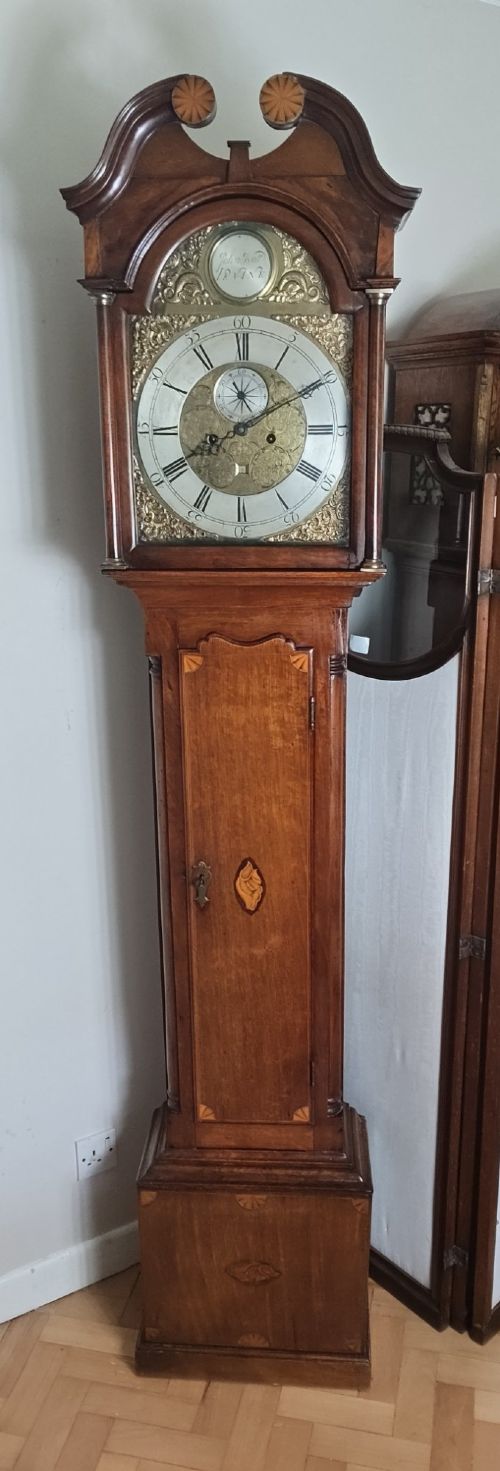
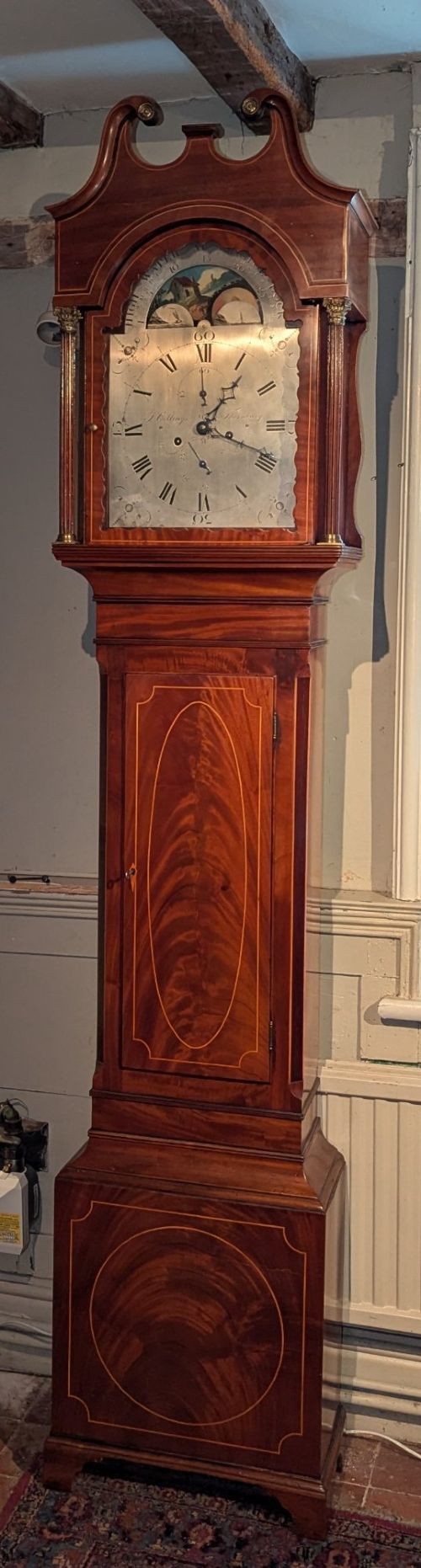
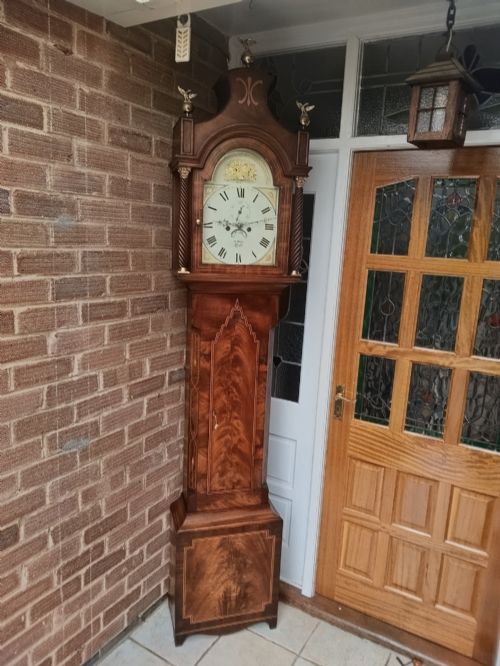


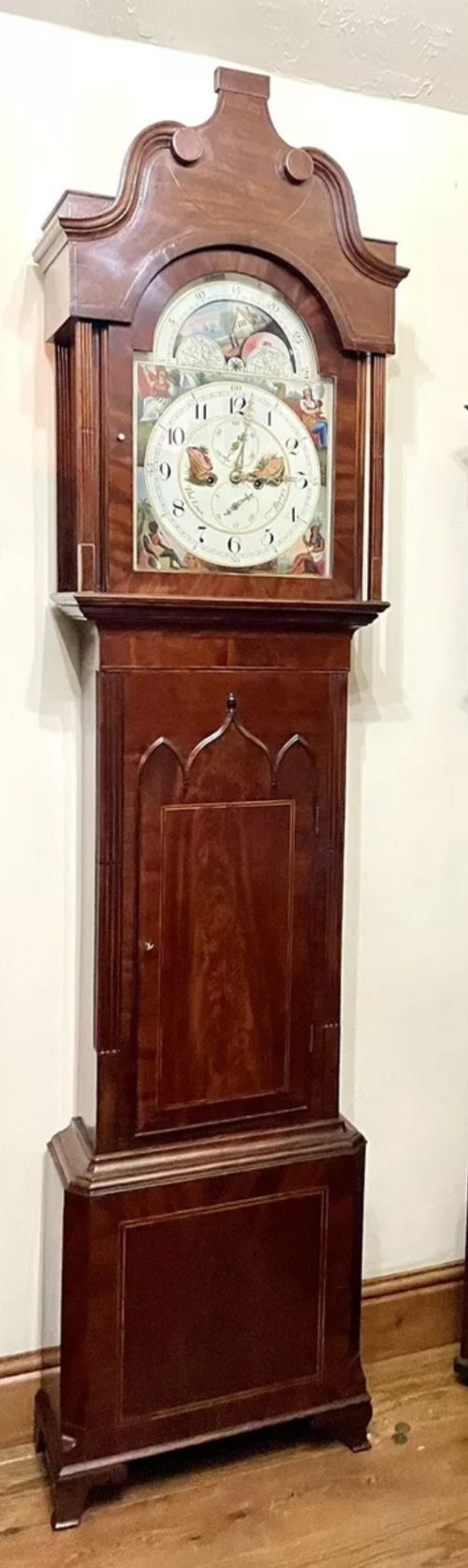


Inlaid Mahogany Tallcase Clock
An inlaid mahogany tallcase clock stands as a masterwork of timber and timekeeping, combining stately cabinet-making with intricate dial mechanics.

Inlaid Mahogany Tallcase Clock
An inlaid mahogany tallcase clock is a floor-standing timepiece housed in a tall wooden trunk, designed to regulate hours through precision pendulum mechanics and weight-driven movements. Buyers seeking an inlaid mahogany tallcase clock encounter floor-standing vertical cases that span several centuries of British cabinet-making traditions. These pieces combine functional horology with decorative woodwork, serving as architectural furniture in domestic halls and living spaces.
The specimens on this page emerge primarily from Georgian, Regency, and Edwardian periods, stretching from the eighteenth century into the early twentieth century. Most examples take the form of grandfather or longcase clocks, though grandmother clocks and smaller variations also appear within the collection. Makers across London, regional English towns, Scotland, and the Channel Islands signed these tall wooden housings, establishing regional stylistic traits.
Visually, an inlaid mahogany tallcase clock relies on the warmth of timber contrasted with lighter decorative details. Cases often feature flame mahogany veneers accented by satinwood inlay, brass dial fittings, and painted iron or steel faceplates. Architectural hoods, arched dials, and moon phase mechanisms further distinguish the variations available for purchase.
Distinctions in Quality
Superior examples of an inlaid mahogany tallcase clock demonstrate exceptional mastery in veneer selection, particularly the dramatic figuring found in flame mahogany and the precision of contrasting satinwood inlay. The cabinetry displays crisp mouldings, well-proportioned hoods, and integrated woodwork that remains stable over centuries of environmental change.
Horological complexity and dial artistry further separate standard items from superior pieces. Hand-painted moon phase dials, tidal indicators, subsidiary seconds rings, and multi-train musical or quarter-striking movements executed by named makers indicate elevated workshop production.
Several clocks preserve the specific geographic pride of regional makers working as far afield as Jersey, Auchtermuchty, and Chester.
William Moon London·David Morice of Auchtermuchty·Benjamin Peers Chester·Thomas Lees Bury·Thomas De Gruchy Jersey·Furnival Oldham·William Smith Keighley·Edward Glase of Bridgnorth·Edward Renouf Jersey·Iames Richards Liverpool
The Inlaid Mahogany Tallcase Clock Glossary
- Moon phase
- A rotating dial mechanism that tracks the lunar cycle behind a shaped aperture on the clock face. This feature required careful gear calculation to mirror the phases of the moon accurately.
- Satinwood inlay
- A decorative technique using contrasting pale timber insertions to create geometric borders, paterae, or floral motifs on the mahogany case. It provides visual brightness against dark tropical hardwoods.
- Eight-day movement
- A weight-driven mechanism requiring manual winding once a week via key-holes set into the dial. This represents the standard duration for better quality domestic longcase clocks.
- Paterae
- Small circular or oval decorative inlays punctuating the frieze or corners of the clock case. They reflect neoclassical design influences popular during the Georgian and Regency periods.
- Quarter-striking
- A movement complication that sounds the Westminster or other chime melodies at the quarter-hour intervals before tolling the full hour. This requires additional gear trains within the brass movement.
Inlaid Mahogany Tallcase Clock: Frequently Asked Questions
How do I wind a tallcase clock?
Wind the clock by inserting the key into the winding holes on the dial face and turning it slowly until the weights rise to their upper limit. Take care not to overwind the mechanism, as this can strain the internal springs or chains.
Ensure you support the weight or maintain gentle tension if required by your specific movement type. Regular weekly winding keeps the pendulum beat even and the timekeeping accurate.
Where should I place a longcase clock?
Position your clock against an interior wall away from direct sunlight, heating vents, and exterior doors where temperature swings might warp the mahogany timber. A stable, level floor is essential for the pendulum to swing evenly.
Make use of the case's adjustable feet or shims to level the tall trunk securely against the wall. Proper placement prevents structural leaning and ensures the escapement ticks in a steady, balanced beat.
How do I tell Georgian clocks from Edwardian ones?
Examine the timber finish, proportions, and decorative motifs to determine the period of manufacture. Georgian and Regency pieces typically show restrained mahogany veneers with subtle satinwood stringing and hand-painted iron dials.
Edwardian and revival pieces often incorporate heavier marquetry, chiming three-train movements, and occasionally darker patination applied during the early twentieth century. Construction techniques inside the hood and trunk also reveal the era of the cabinet-maker.
What is a moon phase dial?
A moon phase dial is a painted semicircular disc positioned above the main clock face that tracks the lunar cycle over a twenty-nine and a half day period. It rotates behind two arched cutouts to display the waxing and waning of the moon.
This complication served a practical purpose for tides and agriculture in rural communities. Today, it remains a highly collectible visual feature on antique longcase clocks.