




Marquetry Inlaid Longcase Clock
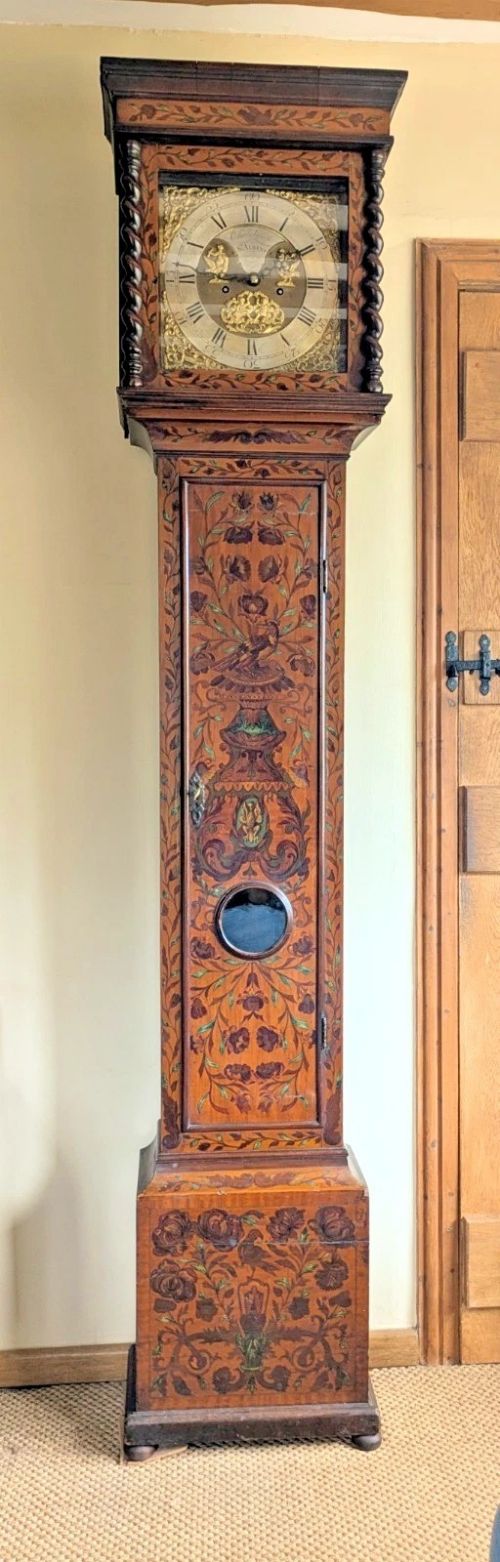
A marquetry inlaid longcase clock brings architectural presence and intricate floral wood patterns into a room.
Marquetry Inlaid Longcase Clock
A marquetry inlaid longcase clock combines timekeeping with decorative woodworking across periods spanning the seventeenth century to the Edwardian era. These tall floor-standing timepieces, often known as grandfather or grandmother clocks, appear in regional British styles as well as continental French designs.
The most common examples on this page date from the eighteenth and nineteenth centuries, alongside Edwardian revivals. They feature tall wooden cases decorated with floral or geometric wood patterns, enclosing brass or painted dials.
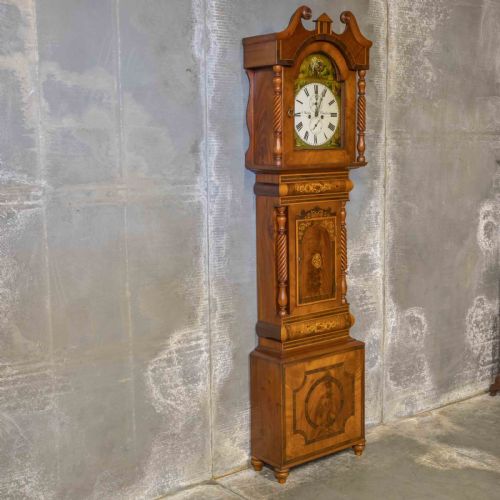
Makers ranged from provincial watchmakers to prominent London clockmakers, whose names occasionally appear on the dial face or movement. Buyers encounter everything from early walnut examples to later mahogany and satinwood pieces.
Materials and construction
Cabinetmakers built these tall cases using structural timbers such as mahogany, walnut, oak, and satinwood. They applied decorative veneers and marquetry inlay to the exterior surfaces, cutting contrasting wood types to form floral, scroll, or architectural motifs.
Glazed doors protected the brass or painted clock dials, while interior weights and pendulums drove the mechanical movements. Ormolu mounts and brass fittings occasionally augmented the timber cases on French and later nineteenth-century examples.
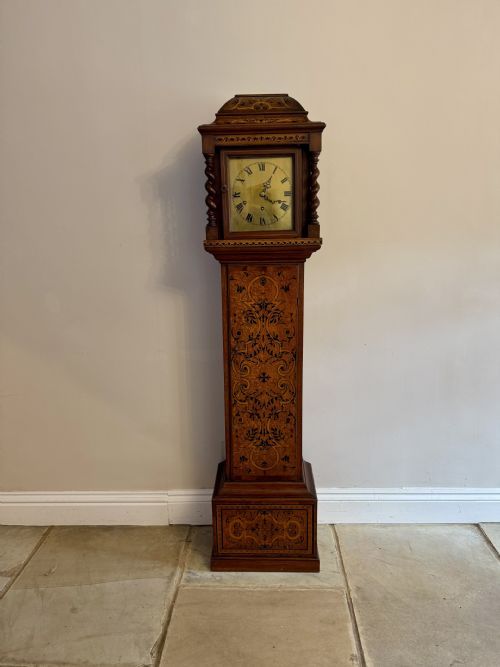
Some Edwardian grandmother clocks were built strictly for smaller urban hallways where a traditional grandfather clock simply refused to fit.
What separates the best from the rest
Quality in a marquetry inlaid longcase clock lies in the crispness of the cabinetwork and the artistic ambition of the wood inlay. Superior pieces display finely detailed botanical or geometric patterns executed in diverse timber species with minimal gaps.
The sophistication of the internal clock movement also dictates value, distinguishing standard eight-day striking mechanisms from complex musical or chiming versions. Original surfaces and untouched maker signatures on the dial elevate a piece far above heavily restored alternatives.
Charles Louch St Albans·Nathaniel Pyne·David Morice of Auchtermuchty·Edward Stanton·Peter Wise London·Henry Massy of London·Richard Baker London·Sam Robson·Rowntree York
The Marquetry Inlaid Longcase Clock Glossary
- Marquetry
- Decorative wood inlay where contrasting veneers are fitted together to form pictorial or geometric patterns on furniture surfaces.
- Grandmother clock
- A smaller, more slender version of the traditional longcase clock, typically produced during the Edwardian period.
- Ormolu
- Gilded bronze mounts and decorative details applied to furniture and clock cases, particularly common in French nineteenth-century pieces.
- Longcase clock
- A tall, floor-standing weight-driven pendulum clock enclosed in a wooden case, historically referred to as a grandfather clock.
Marquetry Inlaid Longcase Clock: Frequently Asked Questions
How do I wind a longcase clock?
Most eight-day movements require the heavy brass weights to be pulled up using a crank inserted into holes on the dial face. Care must be taken not to pull too quickly or damage the gut lines supporting the weights.
Running the clock regularly keeps the oil distributed properly within the brass gear train, ensuring accurate timekeeping between adjustments.
Where should I place a longcase clock?
These tall clocks need a stable, dry interior wall away from direct sunlight, heating vents, and exterior doors. Fluctuating humidity and temperature cause the wood case and internal wooden components to expand or contract.
Securing the tall waist of the case to the wall using discreet brackets prevents accidental tipping on uneven historic floors.
How do I tell an 18th-century clock from an Edwardian copy?
Early clocks exhibit hand-cut timber construction details, secondary wood types appropriate to the region, and dial signatures engraved by hand. Edwardian revivals often utilise machine-processed timbers and standardised internal components.
Examining the inside of the case and the backboards usually reveals tool marks and wear patterns consistent with genuine age.
What is the difference between a grandfather and grandmother clock?
A grandfather clock is the standard full-sized floor-standing timepiece, standing well over six feet tall with an impressive presence. A grandmother clock is a scaled-down version produced mainly in the early twentieth century.
Despite the smaller proportions of the grandmother clock, makers still incorporated chiming movements and marquetry inlay.