
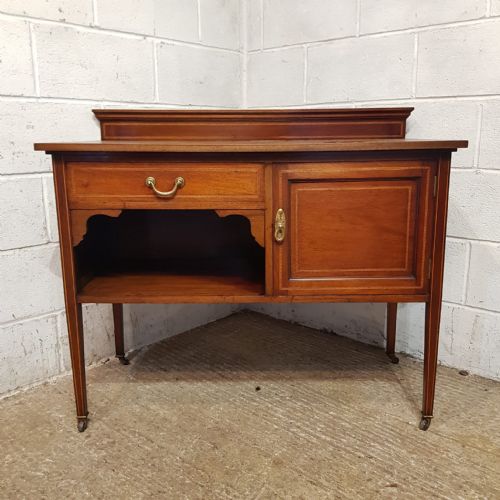
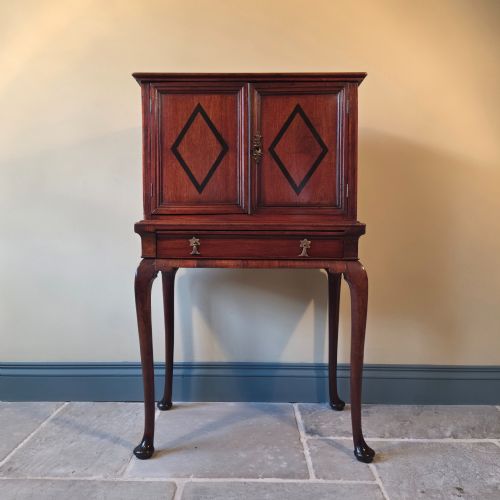
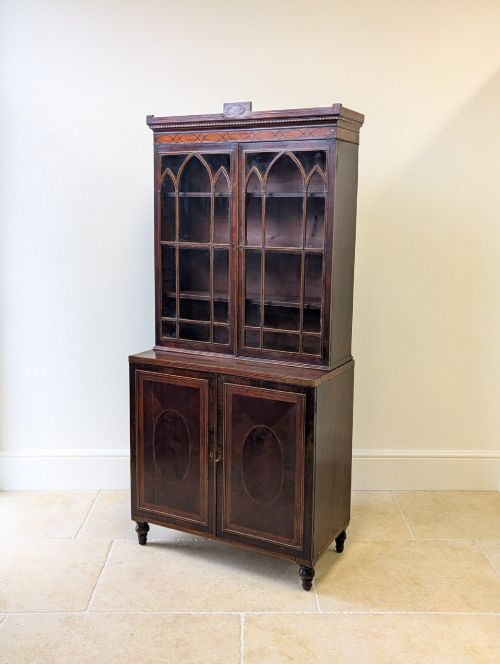
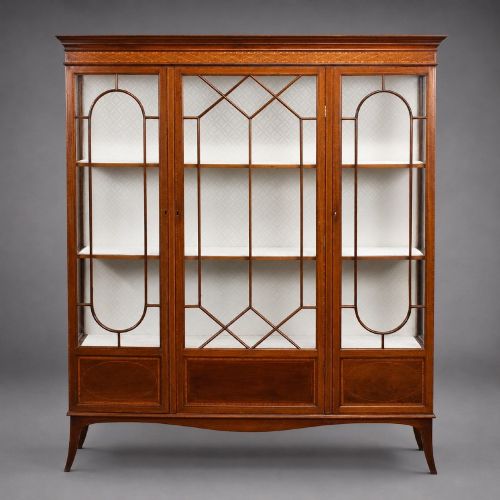
Inlaid Mahogany Standing Cupboard
An inlaid mahogany standing cupboard brings practical storage and refined display into a room, spanning the Georgian, Victorian and Edwardian periods.
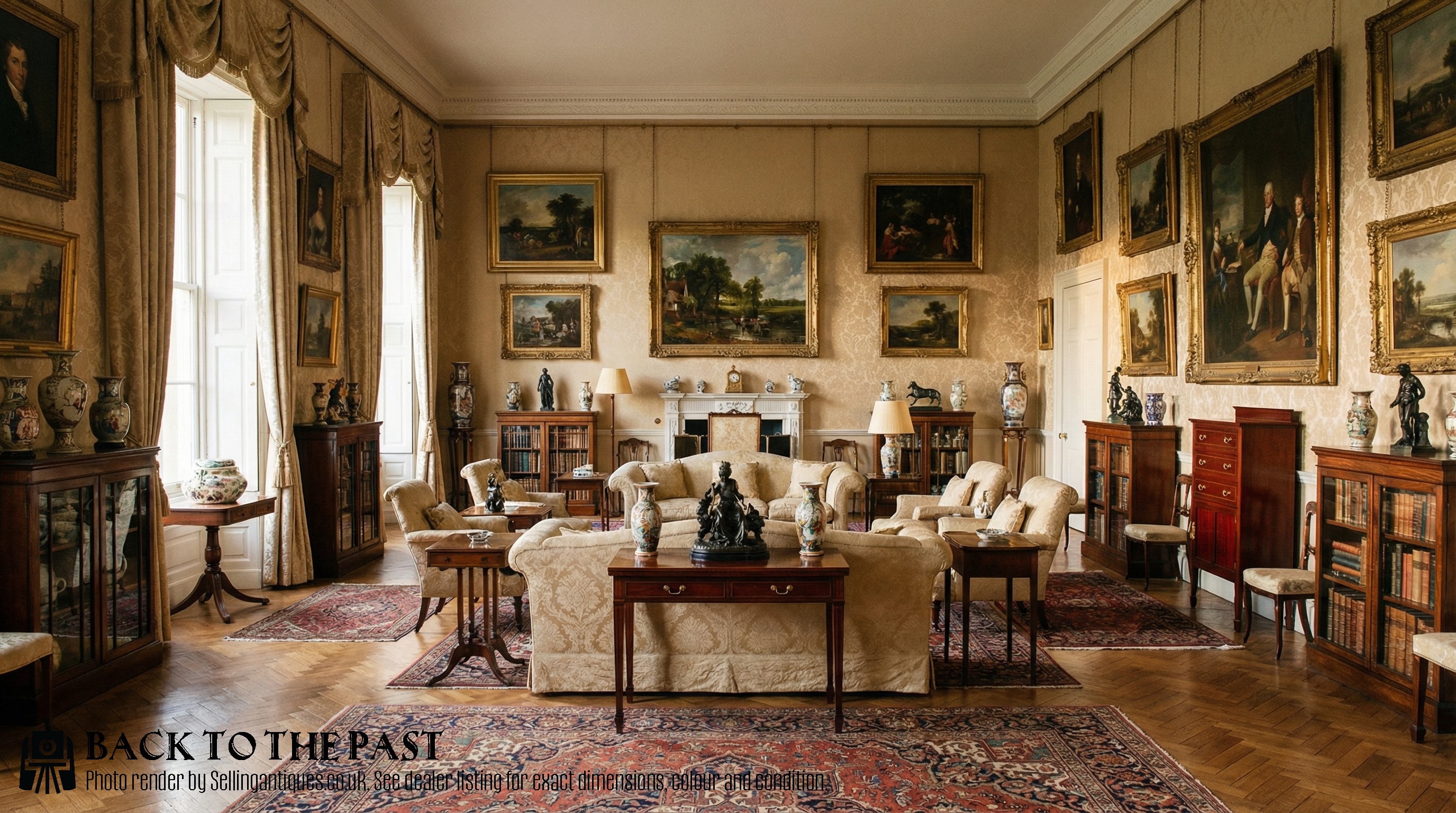
Inlaid Mahogany Standing Cupboard
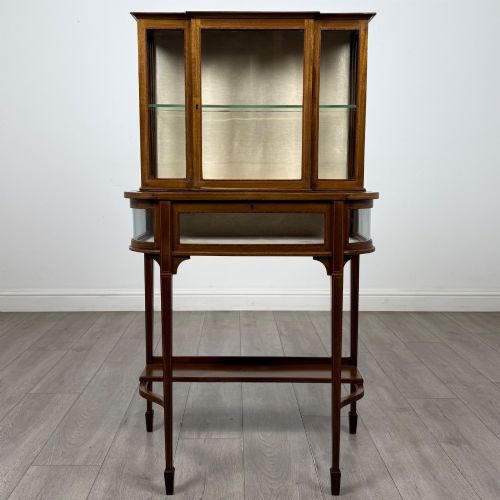
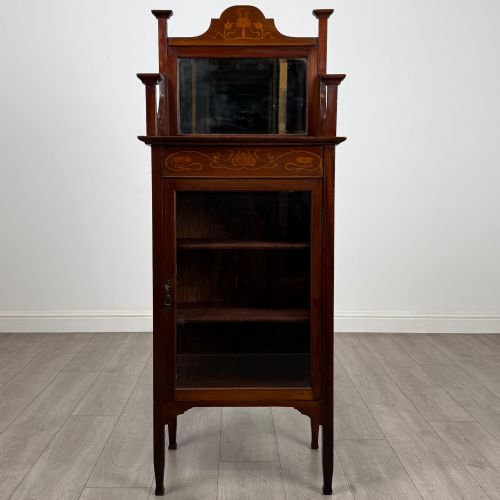
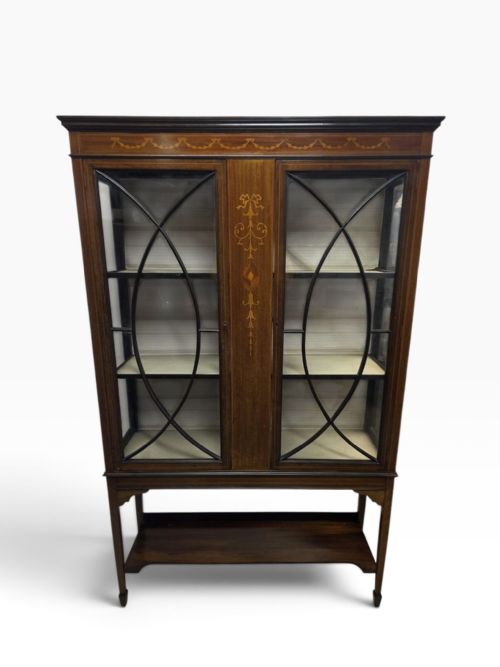
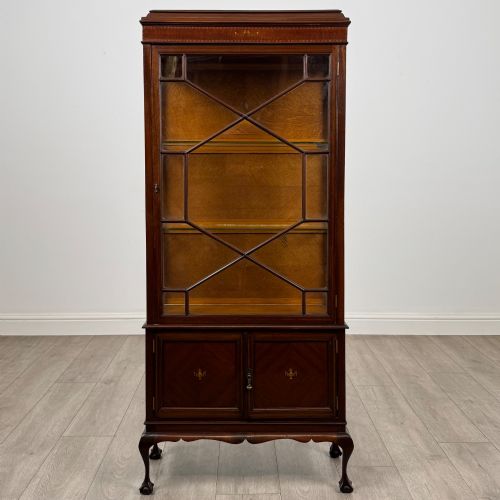
An inlaid mahogany standing cupboard encompasses floor-standing display cabinets, corner cupboards, bookcases and music cabinets originating from the eighteenth, nineteenth and twentieth centuries. These large vertical furniture items are designed to house books, china or collectibles while standing directly on the floor rather than hanging on a wall.
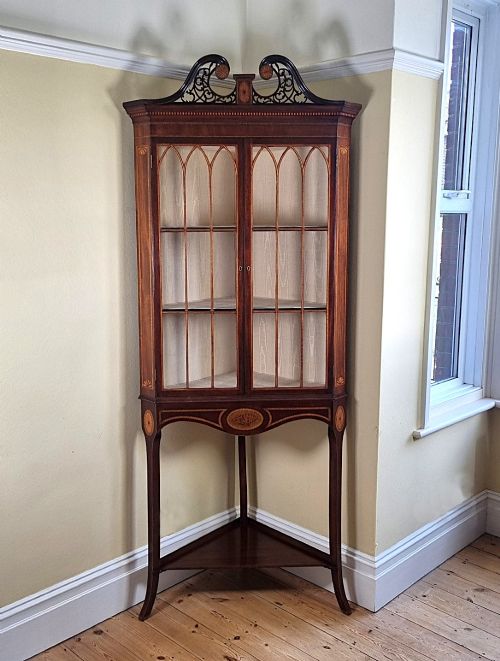
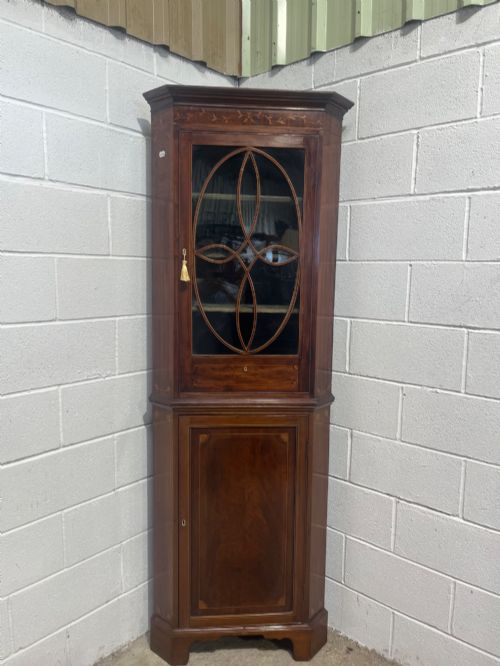
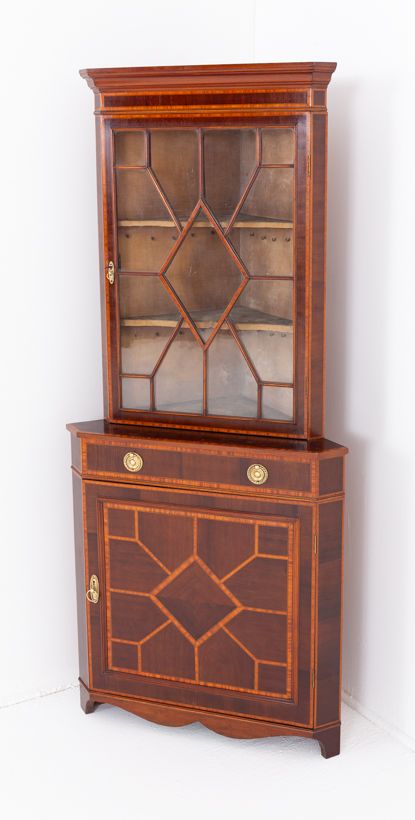
The most common versions met on this page date from the Edwardian era around nineteen hundred, alongside Georgian and late nineteenth-century examples. They frequently employ corner formats or glazed doors to showcase their contents, reflecting domestic storage needs across multiple design revivals.
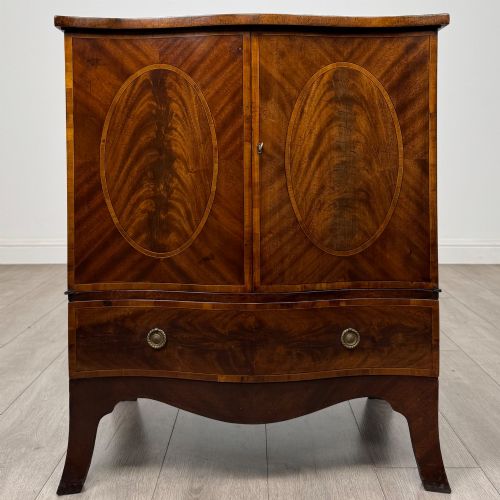
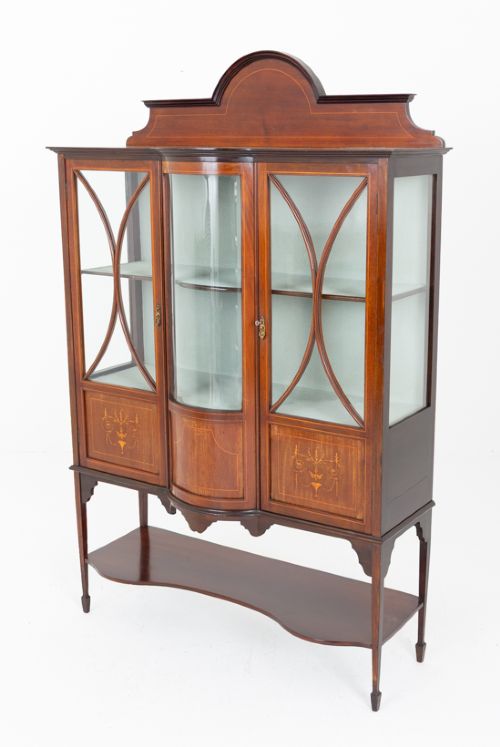
Makers and designers working in Sheraton Revival, Art Nouveau and Arts and Crafts styles shaped these standing forms, incorporating satinwood inlay, glass and brass hardware. Their architecture ranges from simple bow fronts to serpentine profiles and multi-part standing corner compositions.
How they were made
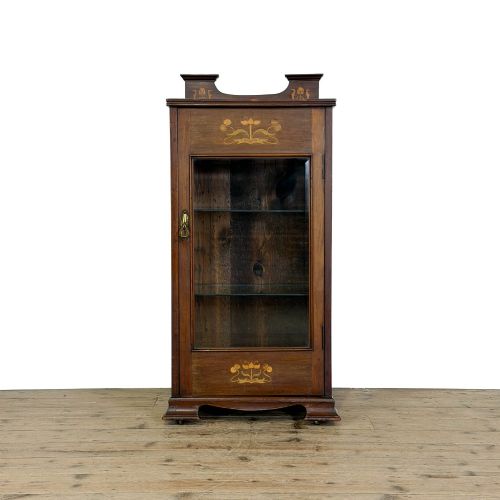
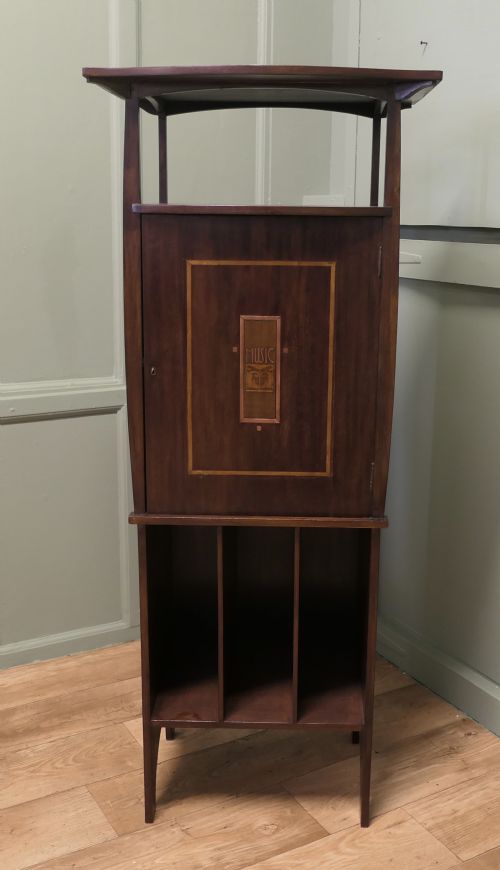
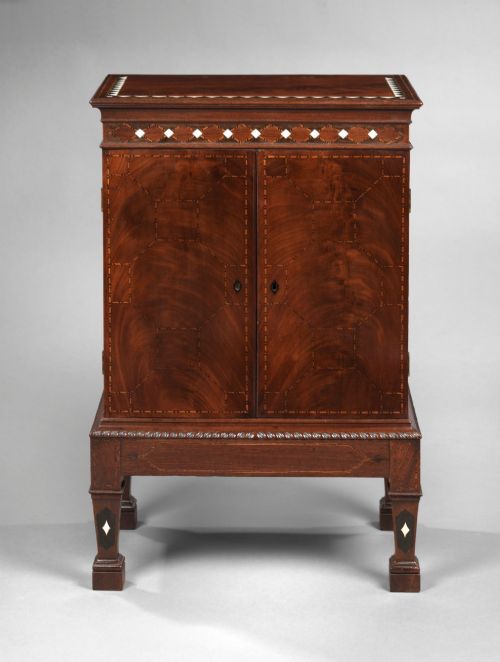
Makers constructed these standing cupboards primarily from mahogany, often applying satinwood inlay, wood inlay and bone inlay to create contrasting decorative motifs on the exterior surfaces. Glass panels were fitted into doors for display cabinets, while internal shelving accommodated the storage of books, sheet music and china.
Structural hardware included brass castors for mobility on larger bookcases and key-operated locks for doors and cupboards. Cabinet makers combined traditional joinery with decorative marquetry techniques, particularly during the Sheraton Revival and Edwardian periods.
Form variations on this page include corner cabinets, music cabinets, bookcases and serpentine display cupboards.
What varies in quality
The standard of timber selection and the precision of the satinwood or wood inlay distinguish the finer standing cupboards from standard production. Artisans who employed intricate marquetry and sophisticated serpentine or bow front shapes achieved a greater level of cabinet-making skill.
GM Elwood·JS Henry·Edwards and Roberts·Shapland and Petter·Collinson and Lock
The Inlaid Mahogany Standing Cupboard Glossary
- Inlay
- A technique where pieces of contrasting wood, such as satinwood, or bone are inserted into depressions in the mahogany surface to form decorative patterns.
- Serpentine
- A furniture front characterised by a curving line that is convex in the middle and concave at the sides, requiring advanced carpentry skill.
- Sheraton Revival
- A late nineteenth and early twentieth-century design movement inspired by the neoclassical furniture of Thomas Sheraton, featuring delicate inlay and classical proportions.
- Corner Cabinet
- A vertical storage piece specifically built with an angled footprint to fit neatly into the corner of a room, produced in both hanging and floor-standing variants.
- Marquetry
- Elaborate veneer work forming decorative pictures or designs using various tinted woods and natural materials laid onto the structural carcase.
Inlaid Mahogany Standing Cupboard: Frequently Asked Questions
What is an inlaid mahogany standing cupboard?
An inlaid mahogany standing cupboard is a tall floor-standing furniture piece designed for storage and display, featuring decorative wood or satinwood ornamentation.
These items include corner cupboards, display cabinets and bookcases made primarily during the Georgian, Victorian and Edwardian eras.
How do I date an antique cabinet?
Dating relies on stylistic clues such as Sheraton Revival motifs, Art Nouveau lines, or Georgian proportions, alongside construction methods and timber characteristics.
Makers' signatures, brass hardware types and historical revival periods also help narrow down the decade of production between the eighteenth and twentieth centuries.
Where were standing corner cupboards placed?
These cupboards were designed to utilise awkward corner spaces in domestic rooms, providing vertical storage without obstructing floor space.
They often featured glazed upper doors for displaying china or glass while keeping lower compartments closed for general storage.
What is the difference between a display cabinet and a bookcase?
Display cabinets typically incorporate glass doors and glass sides to showcase collectibles, china or decorative objects from multiple angles.
Bookcases are primarily built with open shelving or wooden doors designed specifically to hold bound volumes and reading material.