
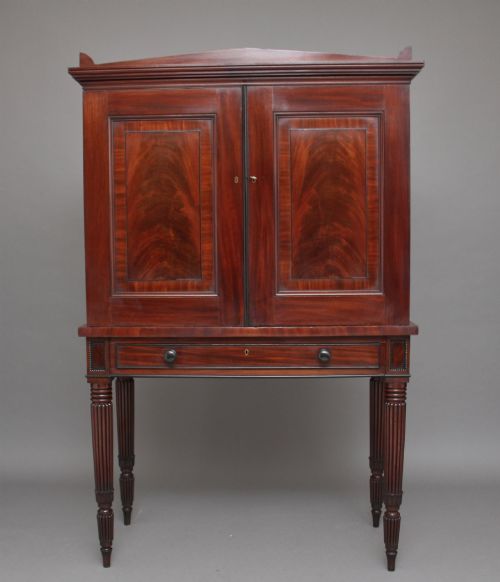
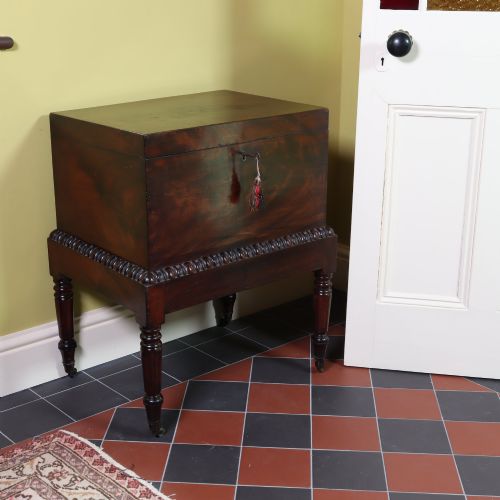


Flame Mahogany Standing Chest
A flame mahogany standing chest brings deep, swirling wood grain and substantial presence to a room, offering both character and storage.
Flame Mahogany Standing Chest
A flame mahogany standing chest represents a grand tradition of cabinet making, appearing in forms from tall library cupboards to compact bedside stands. When searching for a flame mahogany standing chest, buyers encounter pieces spanning the Georgian, Regency, and Victorian periods, alongside later revivals from the early twentieth century.
The selection here encompasses various utilitarian and display pieces sharing that distinctive figured timber, including cellarettes, teapoys, and chests on stands. Most examples lean towards classic English cabinet making traditions, utilising rich mahogany surfaces with characteristic figuring.
While traditional tall chests of drawers appear in the archive records, current listings emphasise diverse upright storage forms such as pedestal cabinets, secretaire bookcases, and folio cabinets. Each piece demonstrates the upright proportions and dignified stature that define this category.
Materials and construction
Cabinet makers constructed these pieces using solid mahogany and carefully selected mahogany veneer, often pairing them with contrasting details like satinwood inlay. The characteristic flame pattern derives from cutting across the branch junctions of the tree to reveal dramatic, fiery figuring.
Structural integrity relied on solid timber carcases faced with decorative veneers, while hardware typically included cast brass handles and escutcheons. Joinery techniques such as dovetailing secured the drawers, and turned legs or bracket feet supported the upright bodies.
Listings feature standing storage forms from the eighteenth century to the twentieth century, incorporating brass hardware and satinwood inlay.
Quality and execution
The distinction between ordinary and superior pieces rests largely on the intensity and book-matching of the flame mahogany veneer across the primary surfaces. Finer cabinets display continuous, symmetrical grain patterns that demand exceptional skill from the veneer cutter and cabinet maker.
Proportion, architectural detailing, and the crispness of carved elements or inlay set distinguished examples apart from simpler utilitarian items. The selection of secondary timbers inside drawers and the refinement of the brass hardware further indicate the workshop's standing.
Walker & Hall·Gillows
The Flame Mahogany Standing Chest Glossary
- Flame mahogany
- A distinct wood veneer harvested from the branch crotches of the mahogany tree, producing a rippling, flame-like visual effect. This timber was favoured by cabinet makers for principal drawer fronts and door panels.
- Secretaire
- A cabinet or chest incorporating a fitted writing drawer with a fold-down front and small interior compartments. These versatile pieces combined desk functions with enclosed storage.
- Cellarette
- A fitted container or cabinet designed for holding bottles of wine or spirits, often lined and partitioned. They appear in freestanding formats or integrated beneath larger chests.
- Teapoy
- A small stand or chest traditionally used to store tea caddies, featuring a lidded compartment atop a pedestal or legs. Wealthy households utilised them in reception rooms.
- Chest on stand
- An elevated storage chest raised on a separate frame with legs, lightening the visual weight of tall case furniture. This form became popular during the Georgian era.
Flame Mahogany Standing Chest: Frequently Asked Questions
How do I identify flame mahogany?
Flame mahogany is recognised by its distinctive, swirling grain patterns that resemble flickering flames or feathers. This effect is achieved by slicing the wood where branches join the main trunk.
Cabinet makers reserved these highly decorative veneers for the most prominent exterior surfaces, such as drawer fronts and cabinet doors.
What is a teapoy used for?
A teapoy served as a secure repository for loose tea leaves when tea was an expensive and treasured commodity. The lidded interior typically held removable caddies and sometimes a glass mixing bowl.
Over time, these pieces evolved into decorative occasional tables within period drawing rooms.
How do I date these cabinets?
Dating relies on examining construction methods, timber choices, hardware styles, and overall design characteristics. Georgian and Regency pieces often feature hand-cut dovetails and specific aesthetic proportions.
Later revival pieces from the early twentieth century mimic these earlier styles but display different interior construction details and wood preparation.
Where should I place a standing chest?
These upright pieces suit living rooms, studies, and bedrooms where vertical storage is required without occupying excessive floor space. Their rich timber tones pair well with both traditional and contemporary interiors.
Placing them away from direct sunlight and heat sources protects the fragile mahogany veneers from drying out.