
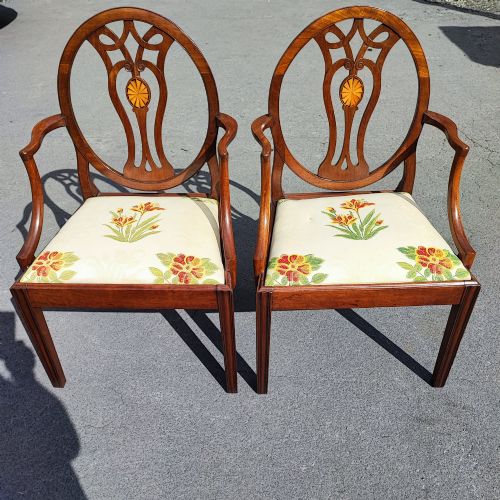
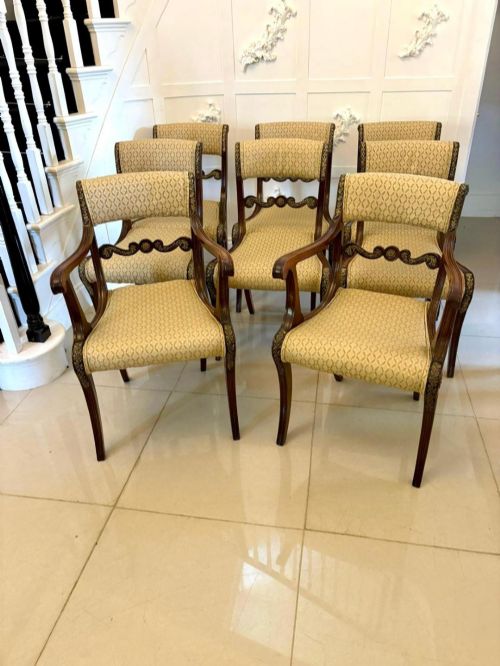

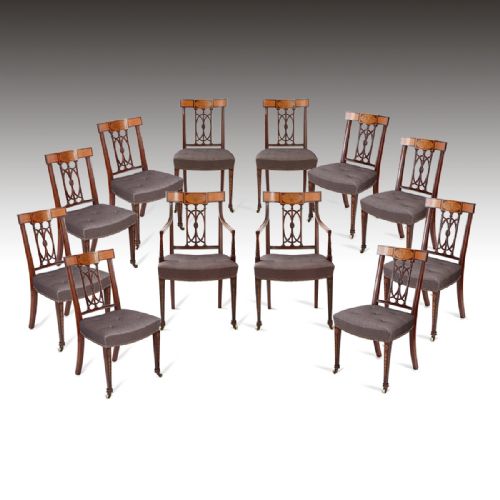
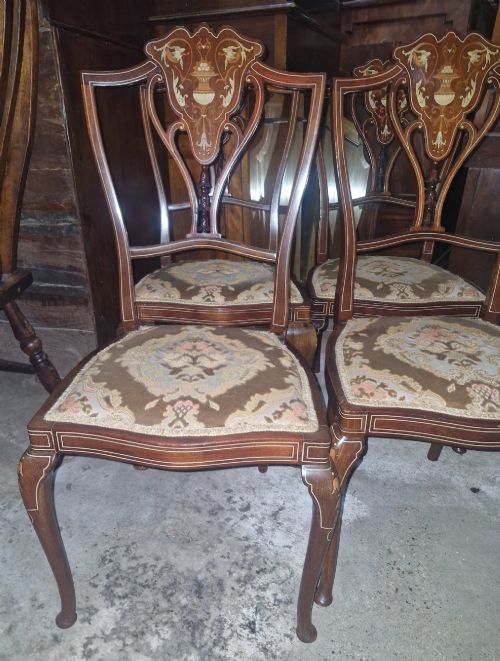



Inlaid Mahogany Side Chairs
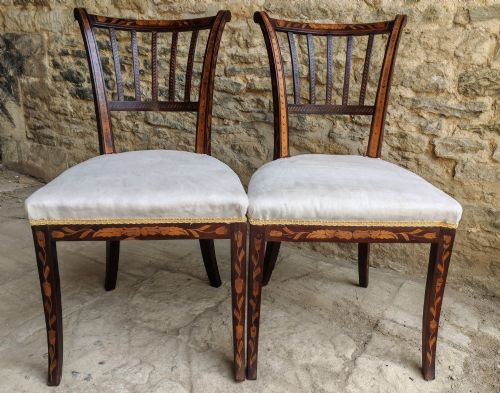
These inlaid mahogany side chairs combine timber framing with contrasting marquetry, offering practical seating alongside decorative cabinet-maker craft.
Inlaid Mahogany Side Chairs
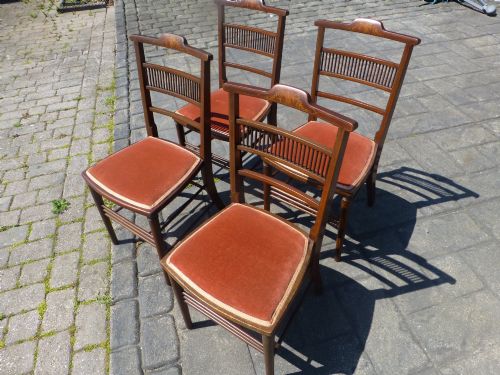
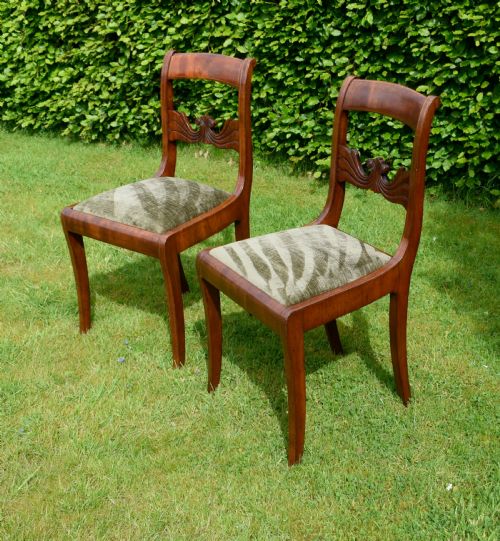
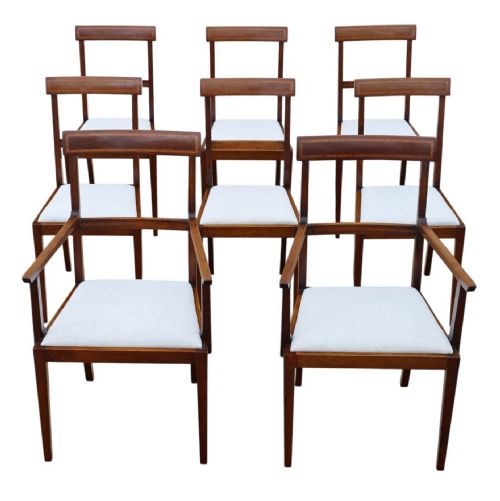
Inlaid mahogany side chairs appear primarily in Georgian, Regency, Victorian, and Edwardian designs, functioning as formal dining seats or decorative salon furnishings. When you search for inlaid mahogany side chairs, you encounter both single pieces and matched sets spanning the nineteenth and early twentieth centuries.
The Edwardian era contributes heavily to the selection, alongside Georgian and Victorian examples featuring Sheraton or Regency styling. These chairs typically lack arms and served diverse household roles, from bedroom seating to formal dining room arrangements.
Materials and Construction
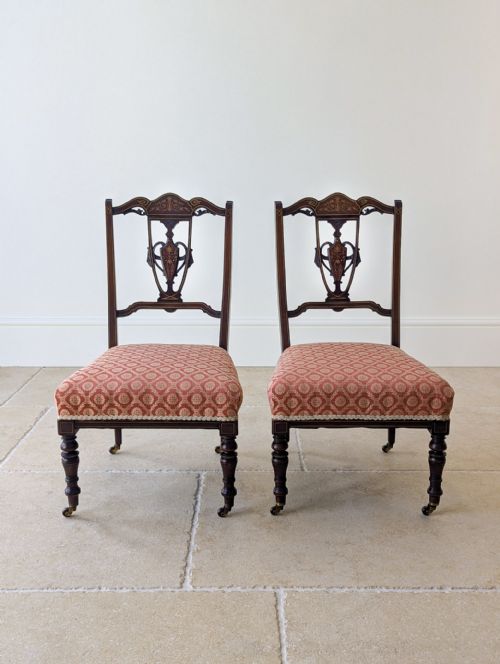
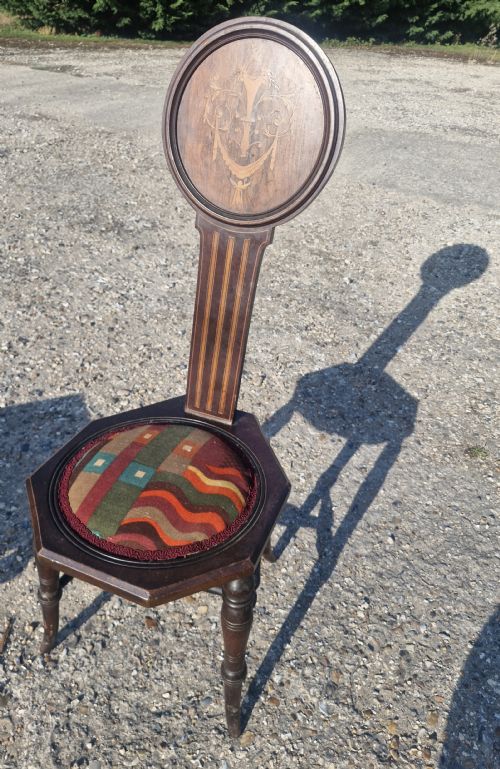
Makers built the structural frames from solid mahogany, integrating contrasting timbers such as satinwood and rosewood for decorative surface patterns. Wood inlay, stringing, and elaborate marquetry define the visual ornamentation on splats, crest rails, and back panels.
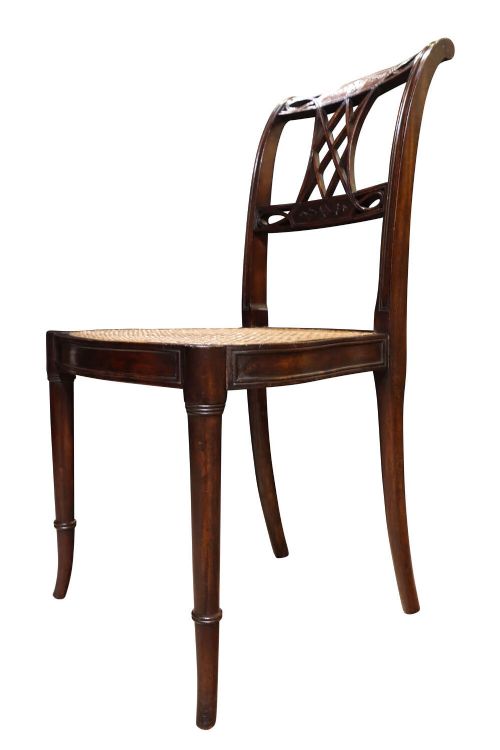
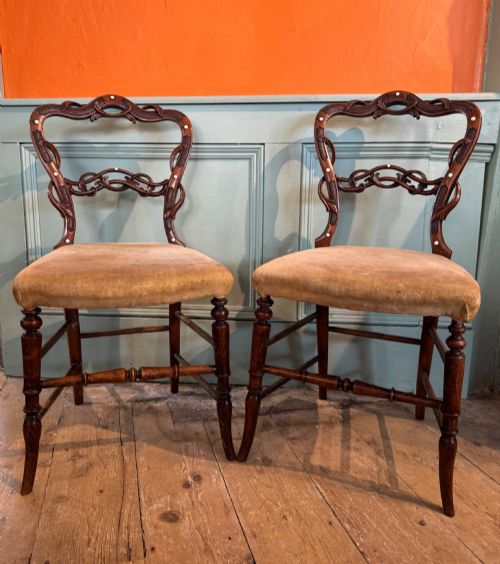
Upholstered elements incorporate fabric, leather, or velvet, while specialised variants utilise cane seating or brass inlay details. Cabinet-makers applied these techniques across varying regional workshops, producing both austere side chairs and ornate salon seating.
Inlaid Mahogany Side Chairs Retail Price Guide 2026
Typical asking prices for inlaid mahogany side chairs among the pieces listed under this phrase on Sellingantiques today, from the lower quarter to the upper quarter. They describe what is for sale here now, not the wider market.
Listings span the Georgian, Victorian, and Edwardian periods, utilising mahogany, satinwood inlay, fabric, and brass.
Evaluating Quality and Craft
Quality rests upon the precision of the joinery and the complexity of the wood inlay rather than mere age alone. Finer examples display meticulous marquetry and crisply carved details on the mahogany frame, whereas simpler items rely on basic stringing.
The integrity of the structural joints and the matching consistency within larger sets dictate the standing of individual chairs. Original upholstery foundations and well-preserved secondary woods distinguish high-grade workshop production from standard commercial output.
Lamb of Manchester·Shoolbred
The Inlaid Mahogany Side Chairs Glossary
- Mahogany
- A durable tropical hardwood valued for its rich reddish-brown tone and stable grain. It serves as the primary structural material for the majority of these chairs.
- Marquetry
- Elaborate decorative veneer work assembled into pictorial or geometric patterns. Craftsmen utilised contrasting woods to create intricate surface designs on the backrests.
- Stringing
- Thin inlaid lines of contrasting timber set flush into the mahogany surface. This linear detail frequently outlines the edges of chair backs and legs.
- Satinwood
- A pale, lustrous timber utilised for contrasting inlay work against darker mahogany grounds. It provides bright visual accents within Sheraton and Regency designs.
- Sheraton Revival
- A late nineteenth and early twentieth century style emulating the neoclassical furniture designs of the eighteenth century. Pieces from this movement often feature delicate mahogany frames and balanced marquetry.
Inlaid Mahogany Side Chairs: Frequently Asked Questions
How do I date an inlaid mahogany side chair?
Dating relies upon stylistic markers, construction methods, and the specific character of the wood inlay. Georgian pieces tend to exhibit heavier proportions, while Edwardian revivals employ lighter framing and delicate stringing.
Examining the secondary timbers and underside construction reveals workshop practices tied to specific decades. Comparing the joinery against documented historical periods confirms the approximate decade of manufacture.
Were these chairs used for dining?
Many side chairs served primarily around dining tables, particularly within matched sets originating from the Georgian and Victorian eras. Their armless profile allowed multiple chairs to fit compactly beneath table edges.
Other variants functioned as salon, bedroom, or occasional seating rather than dining room furniture. The presence of upholstered seats or delicate cane work often indicates a domestic role outside the formal dining space.
How should I care for mahogany and inlay?
Protect the timber and delicate wood inlay by maintaining stable indoor humidity away from direct heat sources. Sudden environmental shifts cause the mahogany frame and contrasting stringing to expand or contract at different rates.
Apply specialist furniture wax sparingly to nourish the polished mahogany surface without building up residue. Avoid harsh chemical cleaners that might lift fine marquetry or damage the historic finish.
What is the difference between side chairs and salon chairs?
Side chairs generally feature sturdy construction intended for functional tasks like dining or desk work. Their proportions prioritise practical utility around tables.
Salon chairs were designed for entertaining and decorative display within formal reception rooms. They often incorporate lighter frames, elaborate marquetry, and ornamental upholstery suited to parlour settings.