
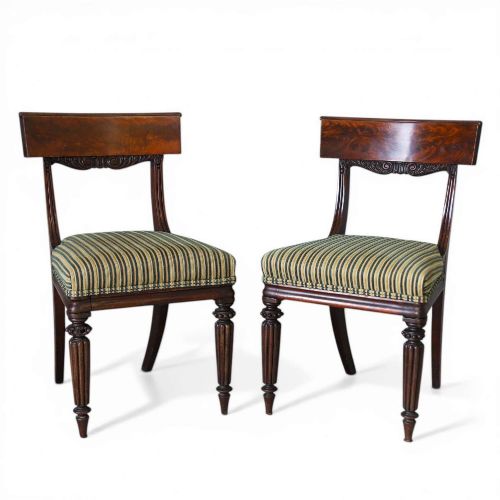
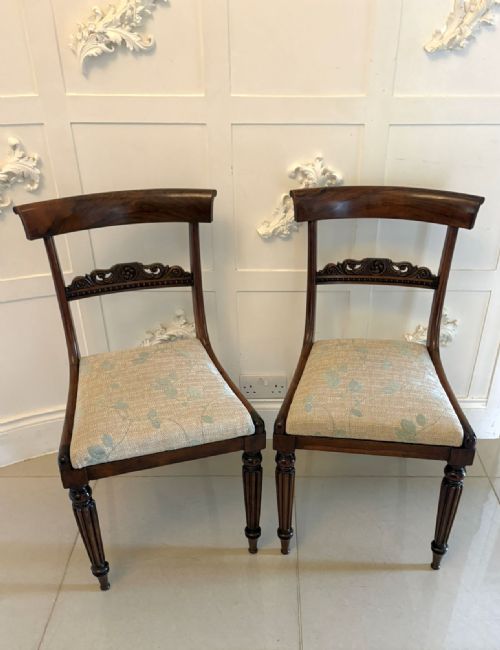
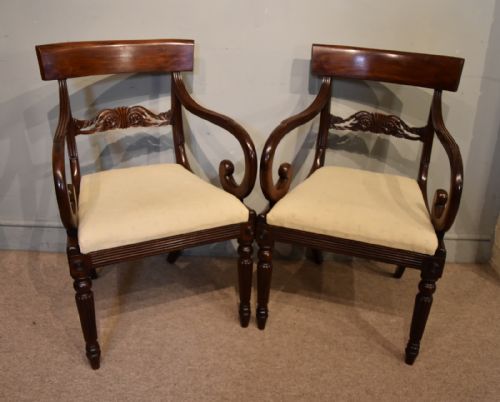
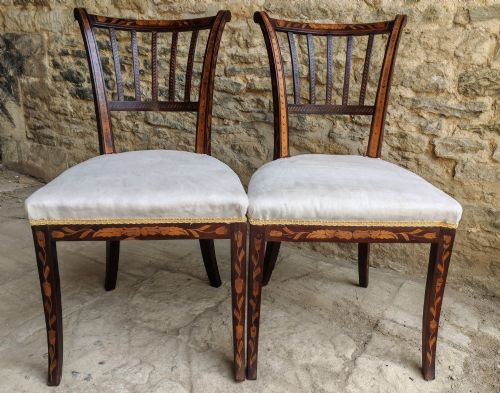

Pair Regency Dining Chairs
When you search for pair regency dining chairs, you are looking for matched seating that brings classical elegance and architectural form to a room.
Pair Regency Dining Chairs
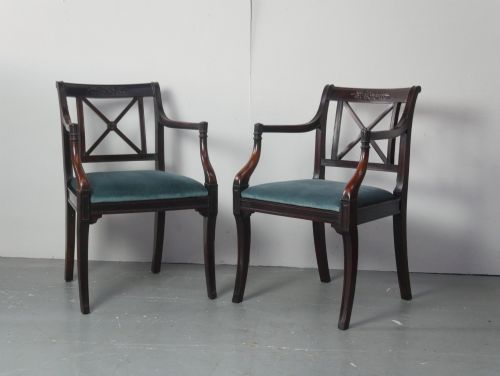
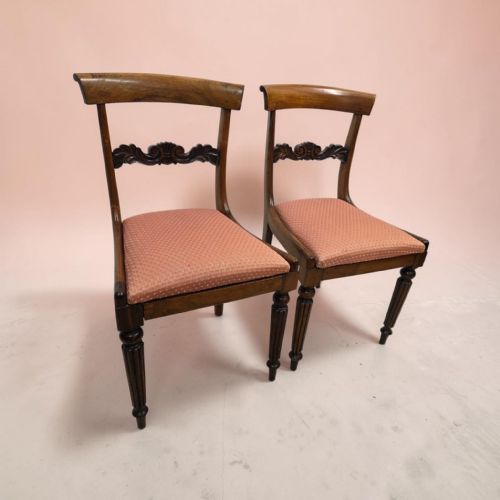
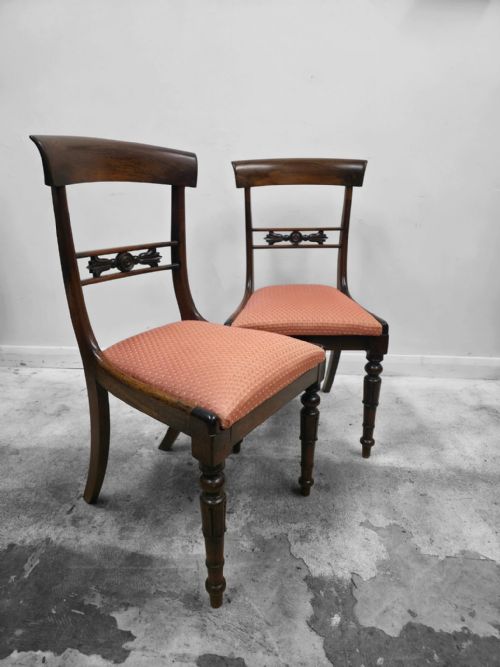
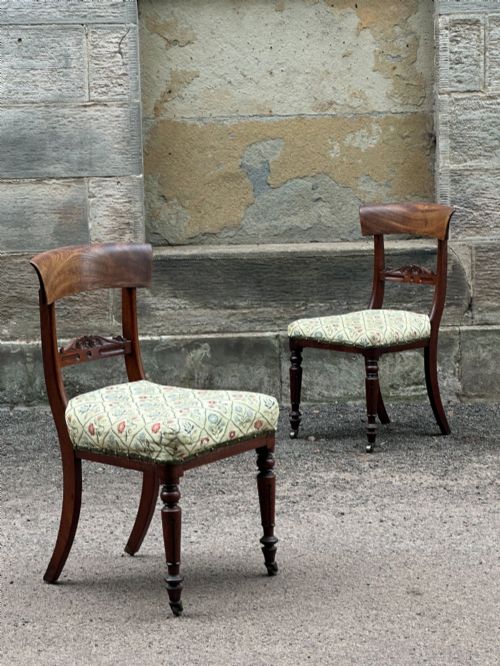
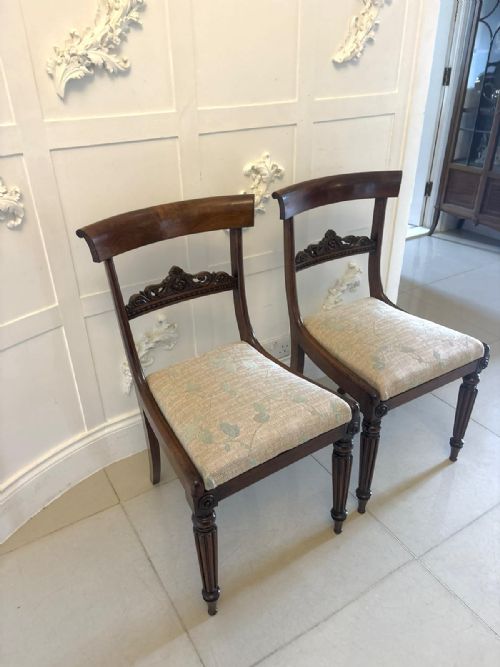
The selections span genuine Regency manufacture alongside later Victorian and twentieth-century interpretations. Makers drew inspiration from classical Greek and Roman models, creating silhouettes defined by curved top rails and sabre legs.
How they were made
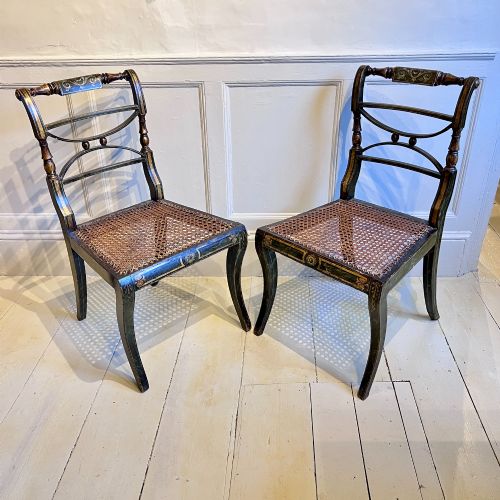
Cabinetmakers utilised dense timbers like mahogany and rosewood, often figuring the grain for visual depth on the back rails and seats. Brass inlay, ebony stringing, and elaborate painted finishes decorated the surfaces of finer examples.
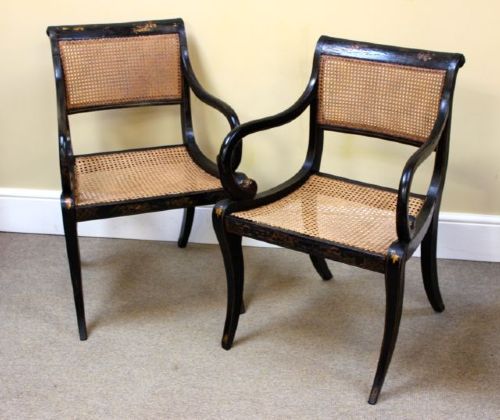
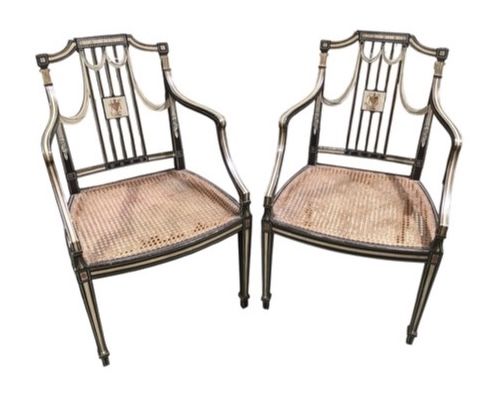
Joinery relied on traditional mortise and tenon construction to support slender frames and curved components. Caning, velvet, and leather upholstery provided seating surfaces, secured with studs or webbing.
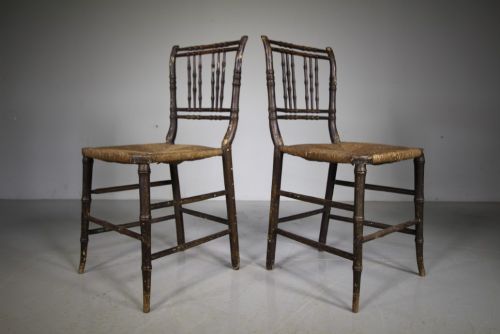
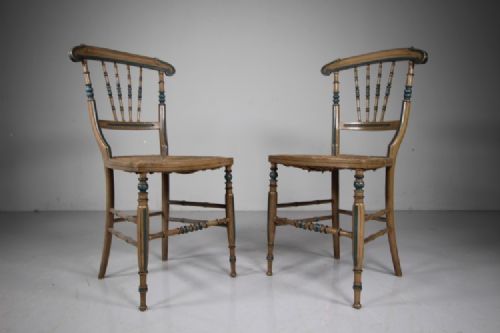
Some Regency chairs feature painted bamboo frames, proving that historical decorators loved a touch of exotic novelty just as much as we do.
What varies in quality
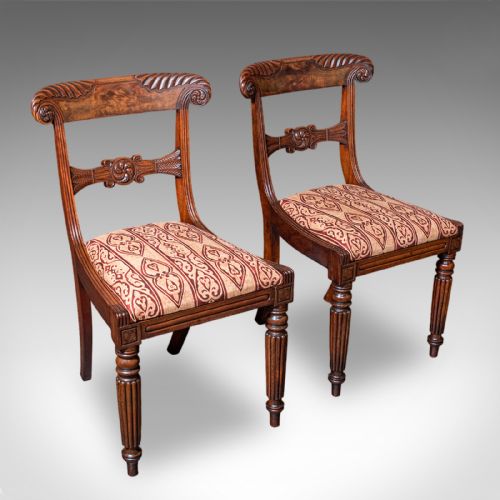
The grade of timber and the complexity of the carving dictate the standing of a piece within the range. Finely figured mahogany and crisp, hand-carved classical details elevate the work from standard utility seating.
Original painted and gilded surfaces command attention compared to later stripped finishes or simple replacements. The integrity of the original joinery and the retention of period upholstery materials influence the standing of the pair.
Gillows
The Pair Regency Dining Chairs Glossary
- Carver chair
- An armchair designed for dining tables, often featuring open arms attached to the seat rail or back support. These pieces provided comfortable seating at the head of the table.
- Klismos
- A classical Greek chair shape featuring concave curved legs and a sweeping backrest. Regency designers revived this silhouette for sophisticated dining rooms.
- Sabre leg
- A curving, outward-tapering leg that resembles a cavalry sword. This form replaced straight eighteenth-century legs on many dining chairs.
- Bar-back
- A horizontal splat across the chair back that resembles a flattened bar, frequently decorated with reeding or brass inlay. It is a hallmark of Regency seating design.
- Bergere
- An enclosed upholstered armchair with exposed wooden frames and woven cane panels. This method offered lighter visual weight while maintaining structural support.
Pair Regency Dining Chairs: Frequently Asked Questions
How do I spot genuine Regency chairs?
Authentic period pieces display traditional joinery methods, such as hand-cut tenons and subtle tool marks hidden beneath the frame. The timber should exhibit natural ageing and patination developed over two centuries of use.
Examine the proportions and decorative details against known classical motifs of the era. Makers during the Regency period favoured specific structural curves and weight distributions that later revival periods occasionally missed.
Can I use these chairs for daily dining?
These chairs function well for everyday dining provided the structural joints remain tight and secure. Solid mahogany and rosewood frames offer remarkable durability despite their slender appearance.
Consider having a professional conservator check the internal webbing and glue blocks before heavy daily use. Modern users should also verify that the seat height matches contemporary table dimensions comfortably.
What is the difference between side chairs and carvers?
Side chairs lack arms and were built to fit compactly along the sides of a dining table. Carvers include supportive armrests and were traditionally placed at the head and foot of the table for the host.
Matching pairs usually consist of two side chairs or two carvers designed to complement a larger dining set. The carved armrests on elbow chairs often showcase more elaborate woodworking than their armless counterparts.
How do I care for antique wood surfaces?
Maintain the finish by dusting regularly with a soft, dry cloth and avoiding modern silicone sprays. Period wood benefits from occasional applications of high-grade beeswax to nourish the grain and preserve the patination.
Keep the chairs away from direct heat sources and strong sunlight to prevent the timber from warping or splitting. Stable room humidity protects both the wooden frames and any integrated cane panels from drying out.