
Edwardian Carver Dining Chairs
Edwardian carver dining chairs are sturdy seated armchairs built for formal dining rooms, combining period elegance with comfortable wooden frames.
Edwardian Carver Dining Chairs
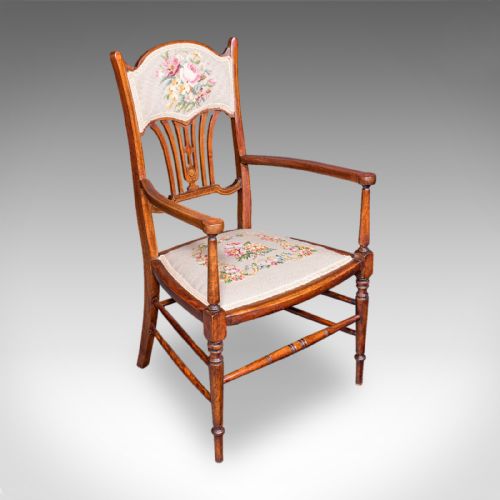
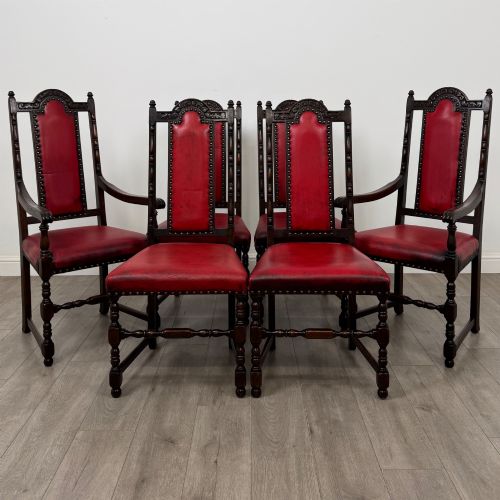
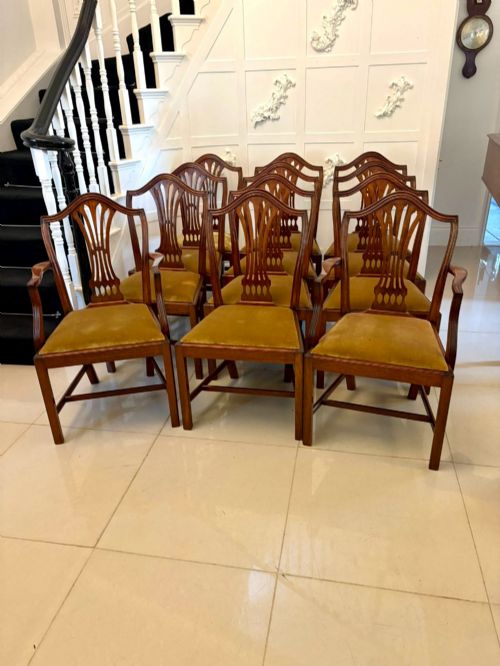
Edwardian carver dining chairs are principal seating pieces featuring supportive armrests, designed to sit at the head and foot of a dining table. The pieces found here span the Edwardian era alongside late Victorian and early twentieth-century examples.
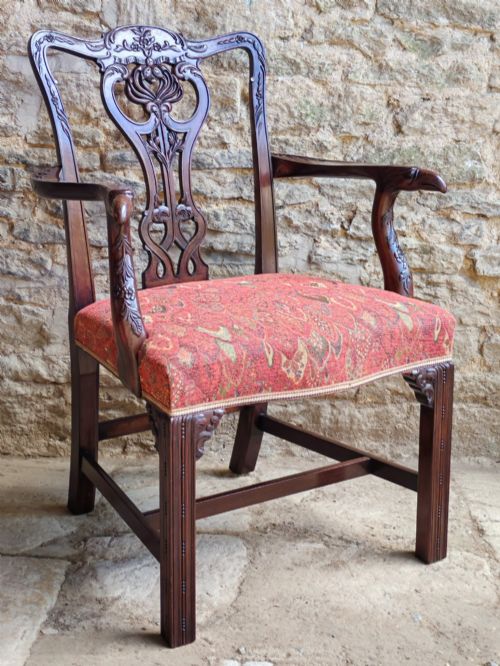
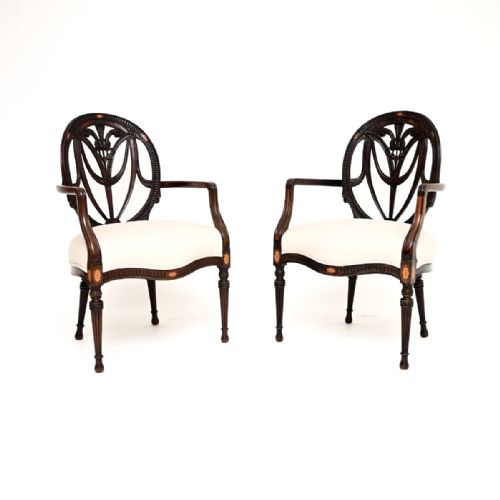
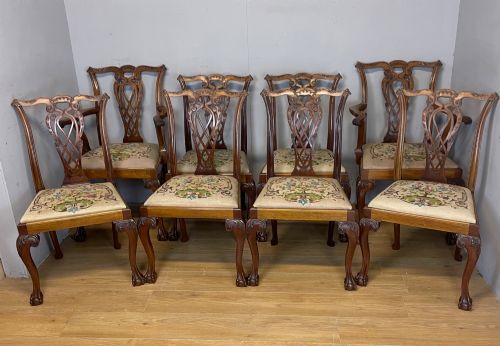
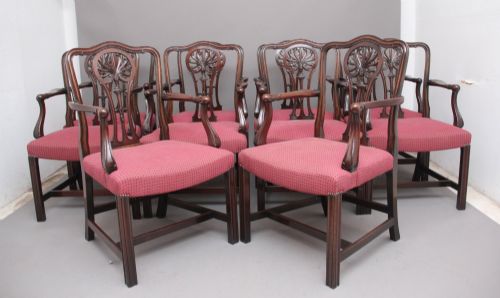
Most selections follow established historical revivals such as Chippendale, Hepplewhite, and Georgian styles. These forms utilise traditional proportions and sturdy timber construction to create functional seating.
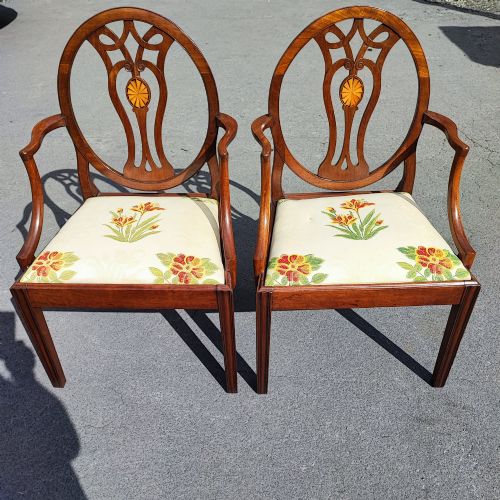
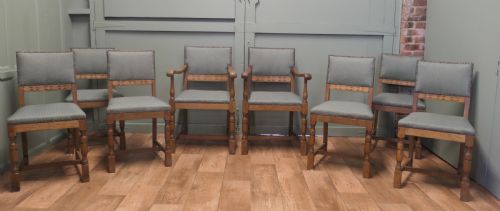
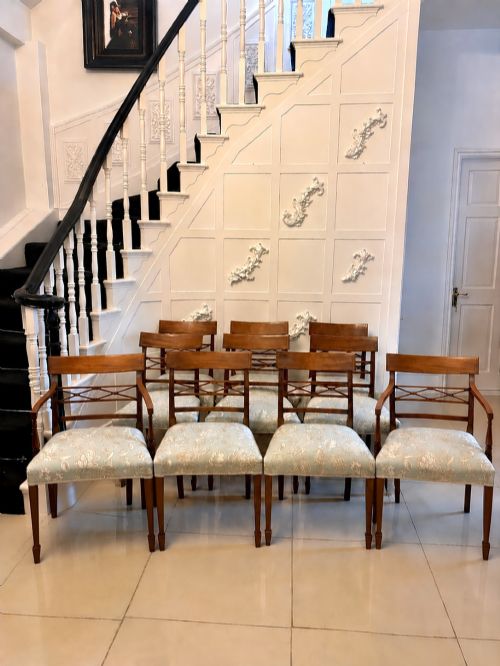
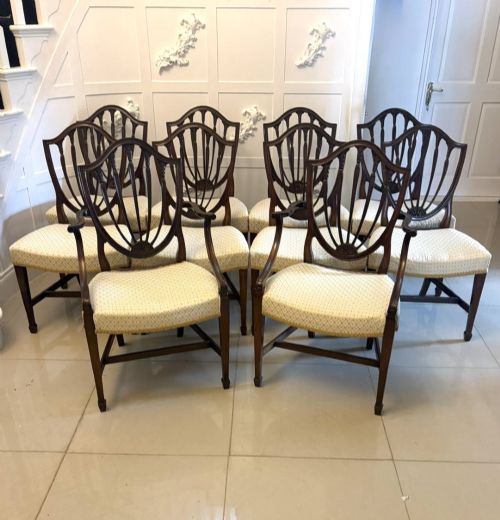
Makers utilised various regional woods, notably mahogany and oak, alongside stylistic details like inlaid satinwood and shield-shaped backs. Buyers encounter matched sets containing both side chairs and matching carver armchairs.
How They Were Made
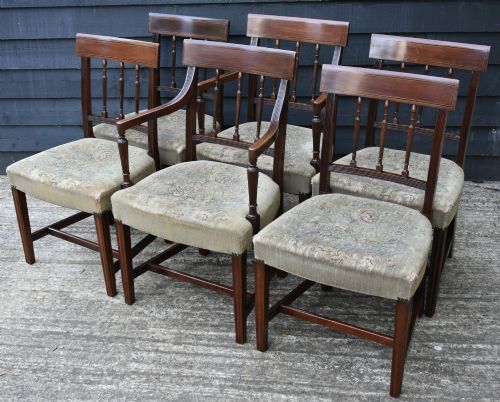
Joiners constructed these chairs primarily from solid mahogany and oak, employing traditional mortise and tenon joints to ensure frame stability under daily use. Selected pieces feature decorative elements such as brass detailing and fine inlay work.
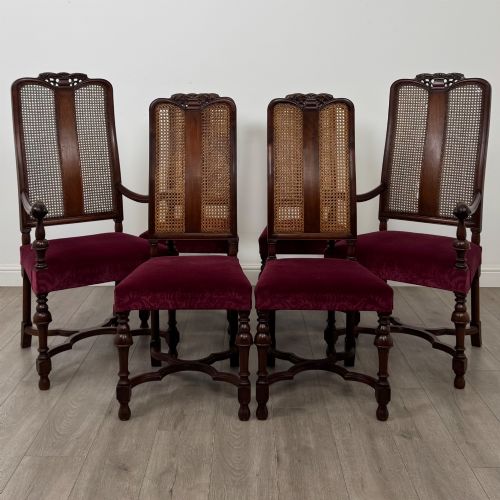
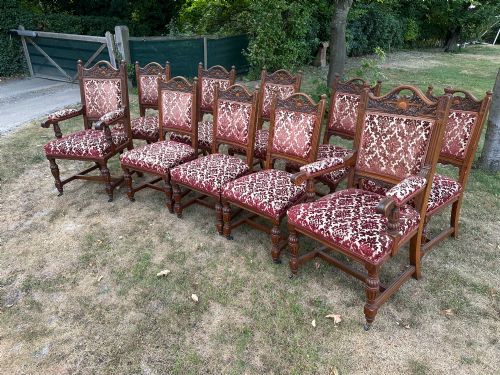
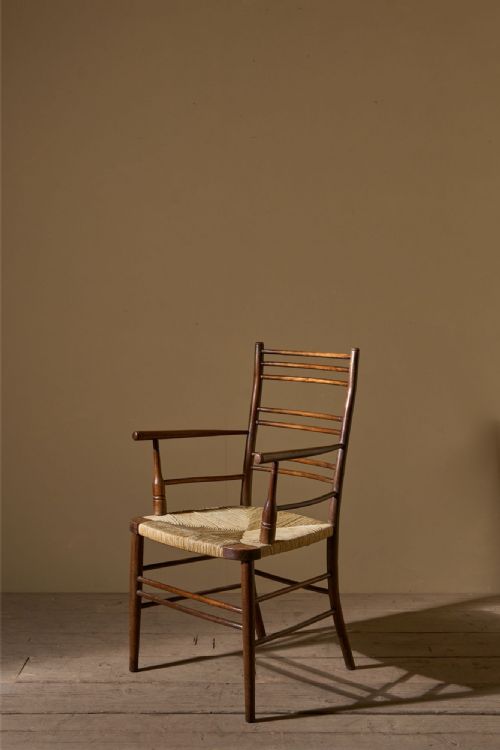
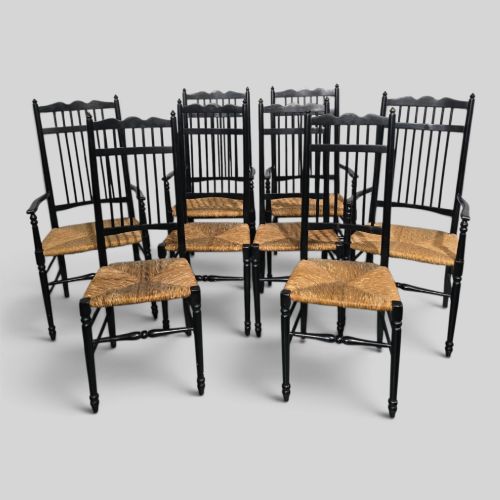
Upholstered versions incorporate padded seats covered in leather, velvet, or woven fabric, while simpler variants utilise rush seating or exposed wooden slats. Makers shaped timber backs using hand tools to achieve carved splats and curved armrests.
Listings feature woods including mahogany, oak, beech, and satinwood, alongside upholstered surfaces in leather, velvet, and woven fabric.
What Varies in Quality
Quality rests in the crispness of the timber carving and the structural integrity of the joints connecting the arms to the backrest. Heavier, denser woods and well-preserved original upholstery reflect superior original construction.
Minor variations appear in the precision of decorative inlay work and the symmetry of carved shield backs or ladder backs. Sets that retain uniform colour and matching timber grain across all armchairs command stronger interest.
Howard and Sons·Warings·Alfred Allen of Birmingham·Maple and Co·Cowtan and Sons·Waring and Gillow
The Edwardian Carver Dining Chairs Glossary
- Carver
- An armchair designed specifically to match a set of dining chairs, typically featuring open wooden arms. These sat at the ends of the dining table.
- Shield back
- A chair back shaped in the outline of a heraldic shield, popularised during the eighteenth century and revived later. It often incorporates carved splats and intricate detail.
- Splat
- The vertical central strip of wood in the back of a chair connecting the top rail to the seat. Carved splats define the stylistic period of the seating.
- Rush seat
- A seating surface woven from dried marsh grasses or rushes. This traditional technique appears frequently on Arts and Crafts and country dining chairs.
Edwardian Carver Dining Chairs: Frequently Asked Questions
What is a carver dining chair?
A carver dining chair is an armchair built with supportive side pieces, traditionally placed at the head and foot of a dining table.
These pieces match the surrounding side chairs in timber and style while providing added arm support for the host.
How do I identify Edwardian chairs?
Edwardian chairs typically display lighter proportions than their Victorian predecessors, often featuring revival styles like Chippendale or Hepplewhite.
Makers frequently utilised mahogany or oak alongside subtle inlay work and tapered legs characteristic of the early twentieth century.
Can I mix carvers with other chairs?
Carver chairs are commonly sold alongside matching dining chairs as part of large sets meant for formal tables.
Buyers also source individual carvers to use as standalone desk chairs or occasional seating in a morning room.
What woods were commonly used?
Makers relied heavily on mahogany and oak for the structural frames of these dining seats.
Selected pieces incorporate secondary woods like beech or feature decorative satinwood inlay across the backrests and legs.