








Pink Upholstered Dining Chairs
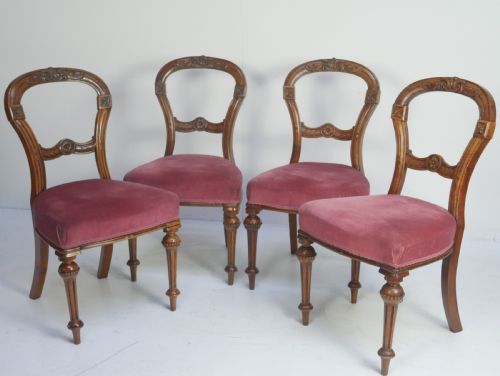
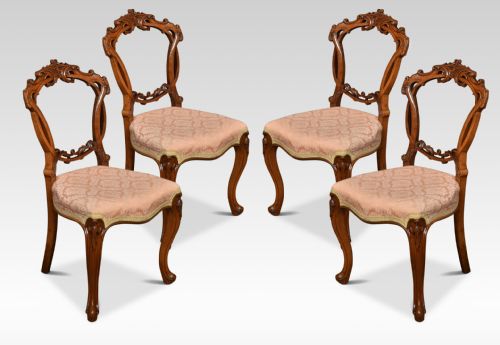
Pink upholstered dining chairs bring colour and texture to a room, offering seating across Regency, Victorian, and Edwardian periods.
Understanding Pink Upholstered Dining Chairs
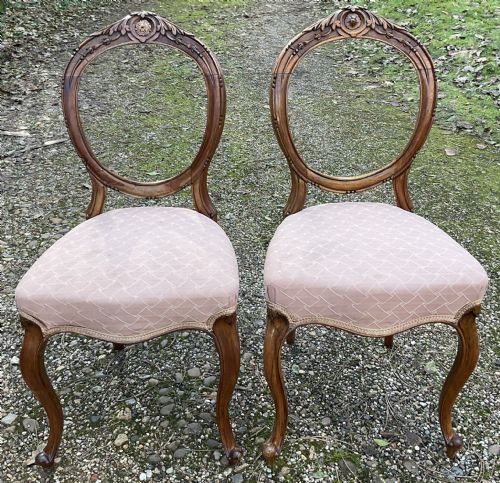
Pink upholstered dining chairs span several historical periods, including Regency, Victorian, William IV, and Edwardian eras. Buyers searching for pink upholstered dining chairs will encounter both full sets of dining chairs and smaller pairs of side chairs.
Makers utilised dark timbers such as mahogany, walnut, and rosewood for the frames. The upholstery fabrics vary, bringing soft textures and pink colour tones to traditional wooden frameworks.
Construction and Materials
Cabinet makers utilised solid timbers including mahogany, walnut, and rosewood to construct the structural frames of these dining chairs. Wood turning, carving, and occasional inlay work define the visible wooden elements across the Regency and Edwardian examples.
Upholstery fabric and velvet provide the soft surfaces seen on the seats and backs of these chairs. Traditional padding and textile application secure the fabric directly to the wooden frame structures.
Retail Price Guide 2026
Typical UK retail prices for pink upholstered dining chairs, calculated from the Sellingantiques database of over a million retail prices indexed since 2003. This retail price guide relies exclusively on Sellingantiques data; no external sources or auction records are used, so the figures do not describe the wider market.
Eight Edwardian chairs walk into a room and instantly outnumber the nineteenth-century pairs.
Assessing Quality
The choice of primary timber influences the character of each chair, with figured rosewood and richly grained mahogany sitting alongside walnut and inlaid edwardian frames. The precision of the woodwork and the execution of carved or turned details separate standard utilitarian seating from finer cabinet work.
Upholstery finish and textile choice determine the visual impact of the padding against the polished wood. The integration of the fabric with the frame structure reflects the standard of workshop execution.
The Pink Upholstered Dining Chairs Glossary
- Regency
- A style period dating to the early nineteenth century characterised by classical restraint and refined wood selection.
- William IV
- A transitional design period bridging late Regency and early Victorian aesthetics, known for robust proportions and scrolled details.
- Victorian
- A nineteenth-century period encompassing diverse revival styles and heavier timber utilisation in domestic seating.
- Edwardian
- A stylistic period of the early twentieth century often featuring lighter frames, inlaid decoration, and refined proportions.
- Side chair
- An upright chair without arms, designed primarily for dining tables or occasional placement around a room.
Frequently Asked Questions
What periods do these chairs represent?
The available selection includes pieces originating from the Regency period, the William IV era, mid nineteenth-century Victorian workshops, and Edwardian cabinet makers. Each era brings distinct proportions and timber choices to the design.
Buyers find both large sets intended for formal dining rooms and smaller pairs of side chairs suited to occasional use.
Which woods are used in the frames?
Makers constructed these chair frames using solid hardwoods including mahogany, walnut, and rosewood. These timbers provide structural stability while offering varied grain patterns and deep natural tones.
Some Edwardian examples additionally feature decorative wood inlay work embedded within the mahogany structure.
How do dining chairs differ from side chairs?
Dining chairs are typically produced in matched sets of four, six, or eight to seat guests around a table uniformly. Side chairs often appear as single pairs intended for placement against walls or in secondary rooms.
Both forms share an armless upright profile designed for domestic seating.
What fabrics cover the seats?
The listings record the use of general upholstery fabric and plush velvet to cover the padded seat areas. These textiles introduce pink colour shades that contrast with the dark polished timber frames.
Textile selection varies from plain weaves to more tactile plush piles depending on the period of the piece.