


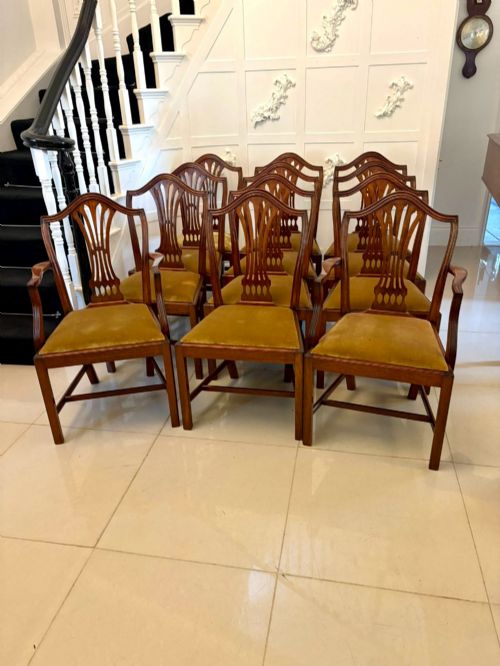
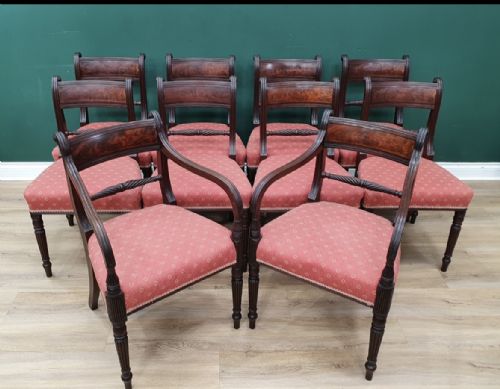
Period Mahogany Dining Seats
These period mahogany dining seats offer solid timber construction and classic styling for the dining room.
Period Mahogany Dining Seats
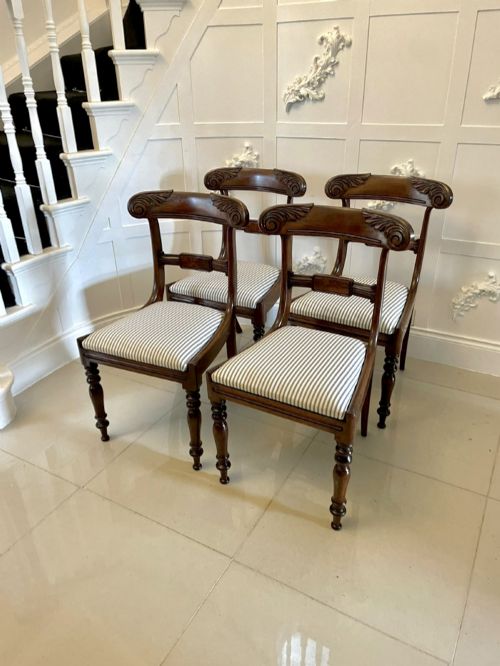
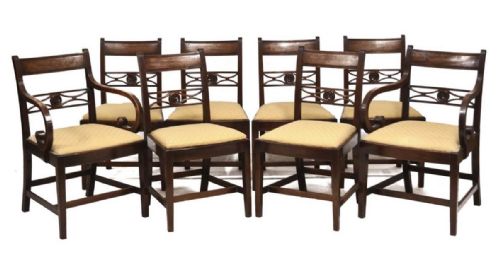
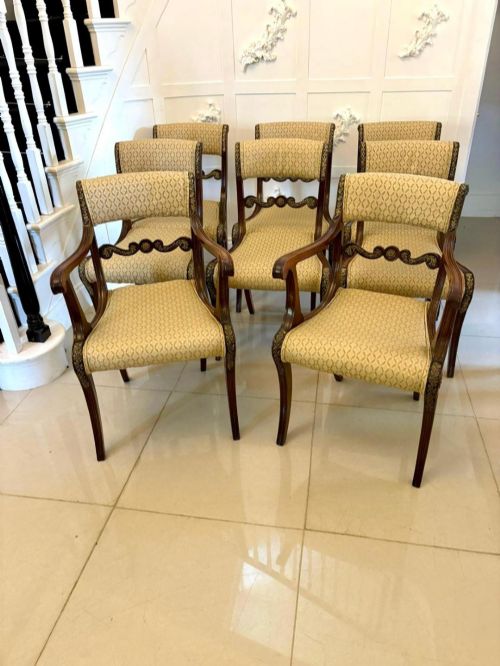
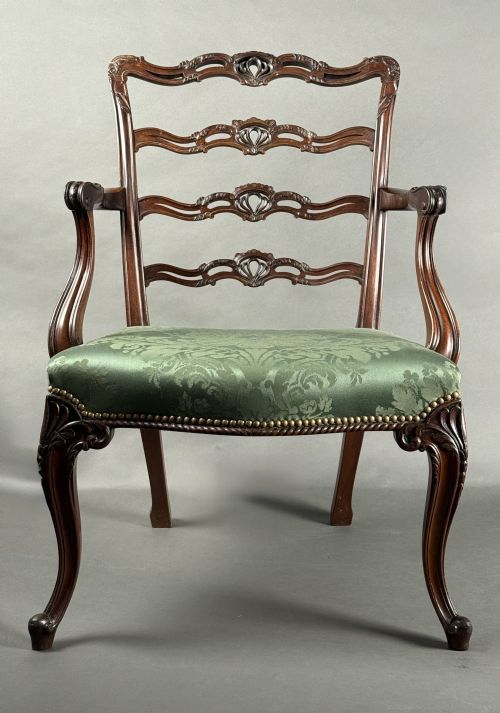
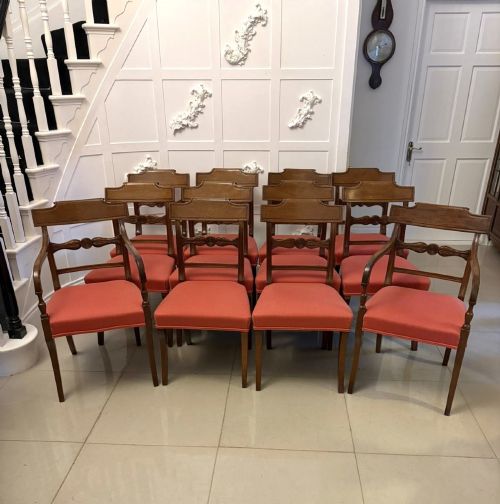
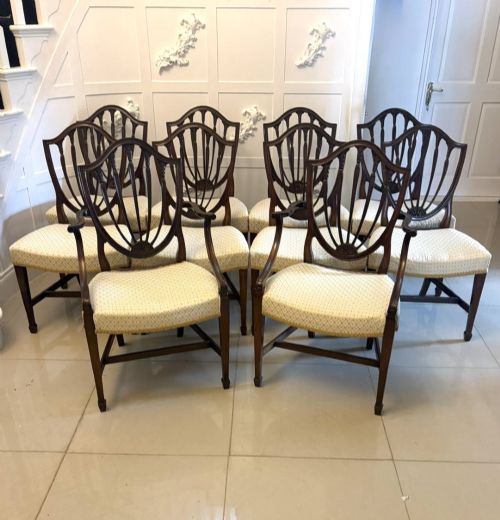
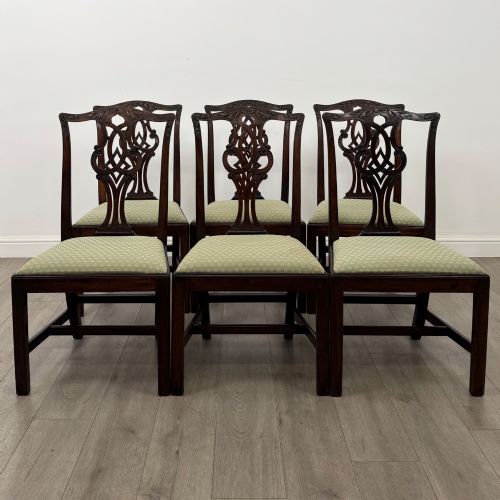
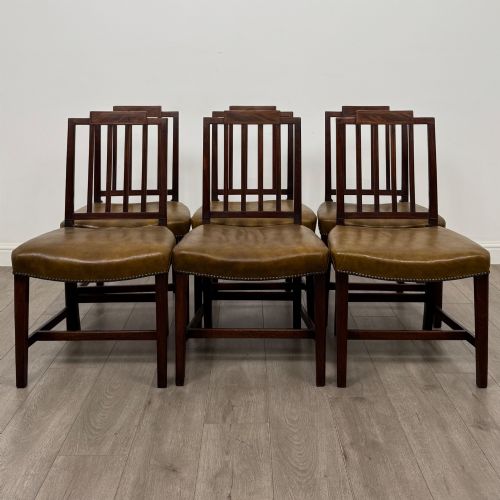
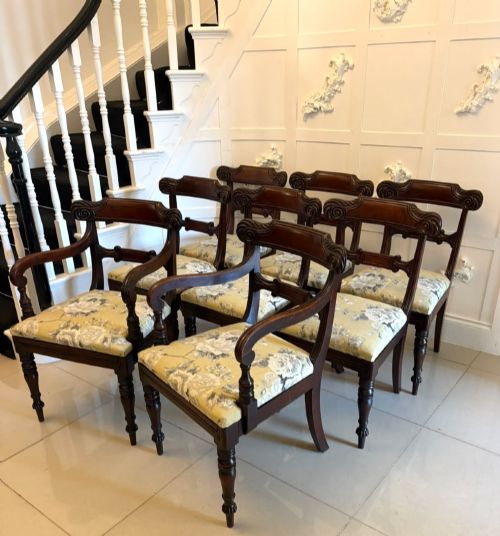
Period mahogany dining seats span the eighteenth and nineteenth centuries, taking the form of single chairs, carvers and armchairs. The listings show a strong presence of Georgian and Regency designs alongside later Victorian, Edwardian and twentieth century interpretations.
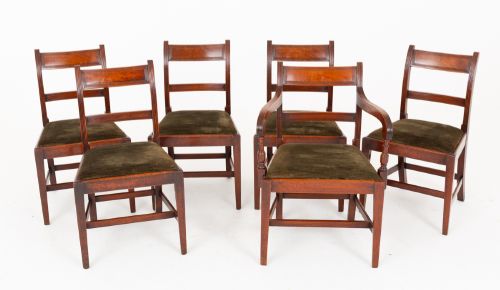
Buyers frequently encounter matching sets ranging from four up to twelve chairs, often combining standard side chairs with corresponding armchairs. These pieces emerge in styles including Sheraton, Hepplewhite and William IV, reflecting the shifting tastes of British cabinet makers.
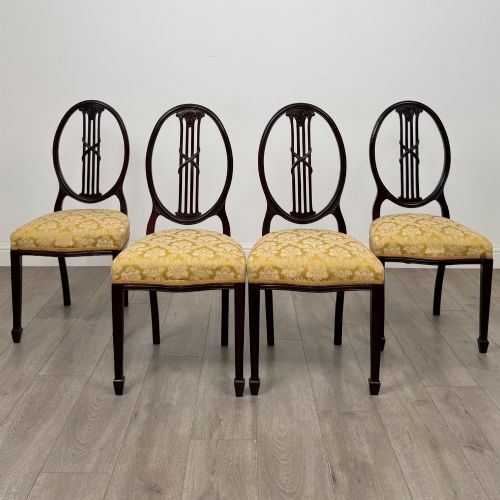
Origins stretch across English and Scottish workshops, utilising dense hardwoods shaped into shield backs, bar backs and ladder-back forms. These dining seats serve functional roles around the table while retaining the distinct character of their respective periods.
Materials and Construction
Cabinet makers utilised mahogany as the primary timber, valued for its rich grain, stability and deep colour. Secondary woods support internal frames, whilst details incorporate maple, brass and marquetry in select pieces.
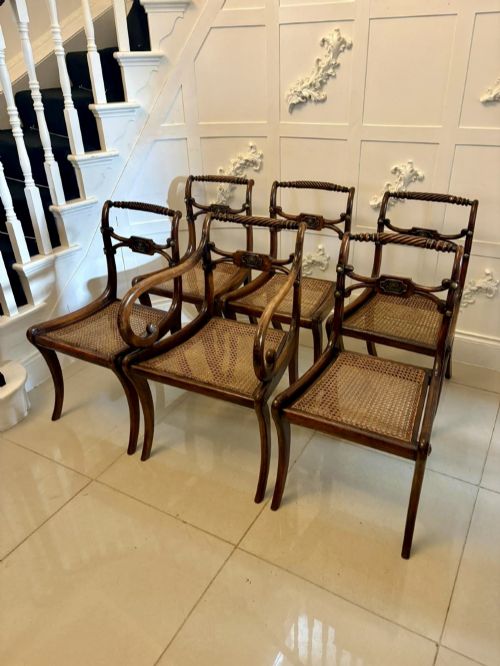
Seating areas rely on traditional upholstery methods, combining webbing, springs and stuffing beneath coverings of fabric, velvet, textile and cane. Joinery relies on tenon and mortise joints secured by hand, ensuring durability across centuries of use.
Listings feature mahogany dining seats spanning the 18th, 19th and early 20th centuries, including Georgian, Regency and Edwardian eras.
Assessing Quality
Quality rests upon the crispness of the carved detail and the integrity of the timber frame. Superior examples display refined proportions, sharp execution on shield backs or bar backs, and timber selection that exhibits a deep, natural grain.
The degree of original surface preservation and the uniformity across a large set distinguish finer suites from standard production. Cohesion within larger sets of eight or twelve chairs indicates careful original manufacture rather than later assembly.
Maple & Co
The Period Mahogany Dining Seats Glossary
- Carver
- An armchair designed to sit at the head of a dining table. These typically match the design of the smaller side chairs in a set.
- Shield Back
- A chair back shaped in the outline of a heraldic shield. This design became popular during the late eighteenth century under makers like Hepplewhite.
- Bar Back
- A horizontal wooden slat crossing the upper back of a chair. This form appears frequently on nineteenth century dining seats.
- Marquetry
- Decorative veneer work arranged in geometric or pictorial patterns. It adds surface ornamentation to wooden panels and frames.
- Cane
- Woven rattan material used for chair seats and backs. It provides a lightweight and flexible surface.
Period Mahogany Dining Seats: Frequently Asked Questions
How do I spot a matched set?
Examine the timber grain, minor variations in carving depth and the construction of the underframes. Subtle discrepancies often reveal whether chairs originated as a single group or were gathered together later.
Matching carvers to side chairs requires looking at the leg style, stretcher placement and back proportions. Consistent wear patterns across all pieces also point toward a unified history.
What is the difference between George III and Regency styles?
George III pieces tend to feature straight legs, pierced splats and classical carved motifs such as wheat ears or drapery. The proportions remain balanced and restrained.
Regency designs draw inspiration from classical antiquity, introducing sabre legs, brass inlay and bolder curves. The timber often shows a darker, more figured surface polish.
How should I care for antique mahogany chairs?
Keep wooden seats away from direct heat sources and strong sunlight to prevent the timber from drying out. Regular dusting with a soft, dry cloth preserves the polished surface.
Apply high quality beeswax sparingly when the wood appears dry. Avoid commercial silicone sprays, which can penetrate the finish and damage the patina.
Can I use these chairs every day?
Solid mahogany frames provide the structural strength needed for daily use around the dining table. Ensure that joints remain tight and stable before heavy seating.
Periodic checks by a professional restorer will secure loose tenons and preserve the integrity of older frames. Upholstered seats may require reupholstering to maintain proper support.