



Brass Inlaid Mahogany Chairs
Brass inlaid mahogany chairs bring the sharp contrast of bright metal and dark timber to dining rooms and libraries, mostly hailing from the Regency and Georgian periods.
Brass Inlaid Mahogany Chairs
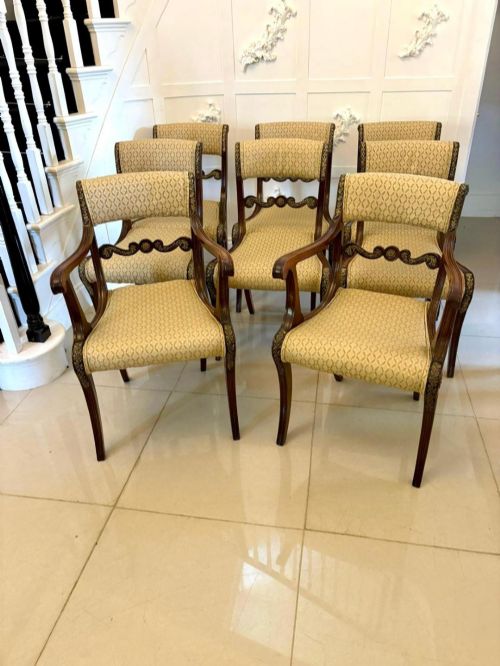
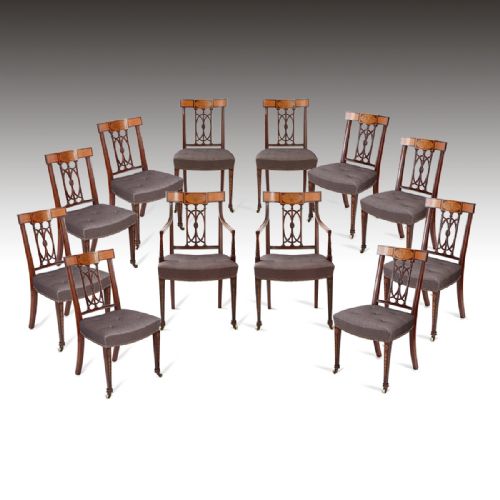
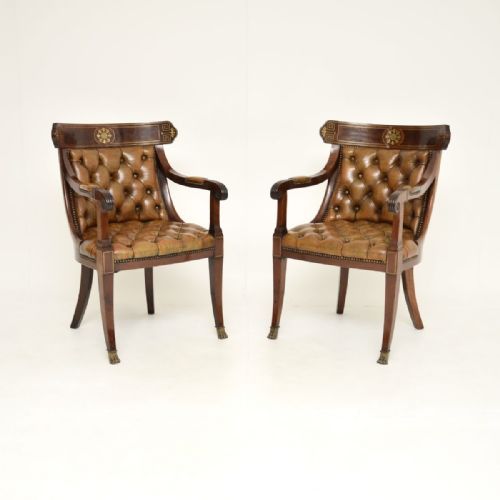
Brass inlaid mahogany chairs are primarily seating pieces made from rich timber and accented with metal lines, appearing most frequently in sets of dining chairs or pairs of armchairs. The forms span from formal dining chairs and elbow chairs to side chairs, hall chairs, and piano stools.
Most examples originate from the Regency and Georgian eras, alongside occasional later nineteenth century and Edwardian interpretations. Buyers meet these pieces in various configurations, from single hall chairs to large matched dining sets numbering eight or twelve.
The physical design incorporates distinct seating roles, including library armchairs, desk chairs, and occasional pieces. The timber foundation remains predominantly mahogany, occasionally joined by rosewood or satinwood.
How they were made
Craftsmen built these chairs using solid mahogany timbers, cutting precise channels into the wood grain to receive shaped brass wire and brass inlay. This metalwork typically traces the top rails, splats, and front cross rails of the frame.
Upholstery forms a significant part of the construction, utilising leather, fabric, and velvet fixed across drop-in or padded seats. Secondary woods and structural joints hold the heavy mahogany frames together under daily use.
Recorded periods span from Georgian and Regency through the nineteenth century, 1900, and Edwardian styles, encompassing both dining sets and piano stools.
What varies in quality
Quality rests on the crispness of the brass inlay work and how securely the metal sits flush within the timber channels. Finer examples display intricate, uninterrupted brass motifs, whereas lesser pieces show gaps or lifting metal.
The choice of timber grain and the overall heft of the mahogany structure dictate the standard of the piece. Sets that remain unified in timber tone and design integrity command higher standing than mixed or heavily altered suites.
The Brass Inlaid Mahogany Chairs Glossary
- Regency
- A British design period spanning the early nineteenth century, characterised by classical motifs and substantial use of brass inlay. This era produced the majority of the dining chairs and armchairs found in this category.
- Mahogany
- A dense, dark tropical hardwood valued for its stable grain and deep reddish-brown colour. It serves as the primary structural timber for these chairs.
- Elbow chair
- An armchair featuring short arms designed to fit under a dining table or desk. These frequently accompany larger sets of dining chairs.
- Satinwood
- A pale, lustrous timber utilised for contrasting inlay work alongside mahogany. It appears in select Georgian pieces.
- Hall chair
- A stiff-backed wooden seat intended for entrance halls rather than prolonged sitting. These often feature carved or inlaid crests.
Brass Inlaid Mahogany Chairs: Frequently Asked Questions
Are these chairs comfortable for daily dining?
Most of these antique chairs feature upright wooden backs and firm upholstered seats padded with leather or fabric. They suit formal dining rather than lounging.
Larger armchairs and library chairs offer more support through padded arms and broader proportions, though cushion firmness varies by individual piece.
How do I date a brass inlaid chair?
Dating relies on stylistic markers such as the Regency adherence to classical lines, tapered legs, and specific brass motif arrangements. Cabinetmakers of the early nineteenth century utilised particular construction methods for joining frames.
Secondary woods and the integration style of the brass inlay help distinguish genuine Regency and Georgian production from later nineteenth century revivals.
Can I mix these with modern tables?
The dark timber and bright metal lines of these chairs pair effectively with contemporary dining tables, providing a distinct historical contrast. Their classic silhouettes prevent them from looking out of place in modern interiors.
Armchairs work well as standalone accent pieces in studies or bedrooms alongside modern furnishings.
What is the difference between an armchair and an elbow chair?
An elbow chair specifically denotes a smaller armchair with short arms that tuck easily beneath a dining table. Traditional armchairs often feature wider, more substantial proportions meant for libraries or desks.
Both forms utilise mahogany frames and brass inlay, but elbow chairs were typically built as part of larger dining sets.