



Inlaid Mahogany Shelf Clock
An inlaid mahogany shelf clock brings domestic timekeeping into a room with rich cabinetwork and contrasting timber borders.
Inlaid Mahogany Shelf Clock
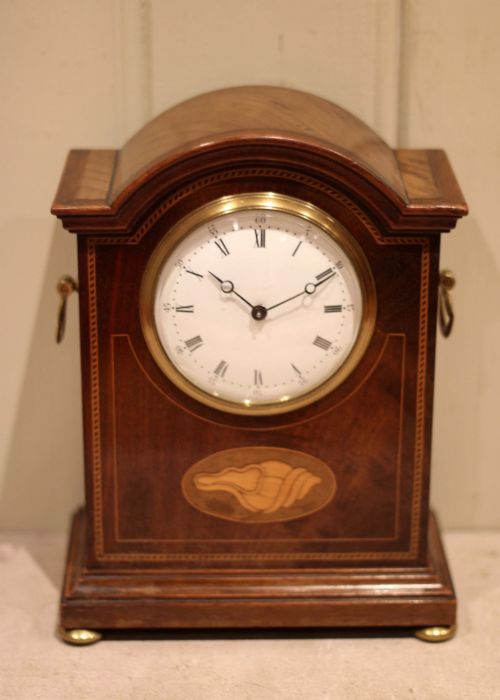
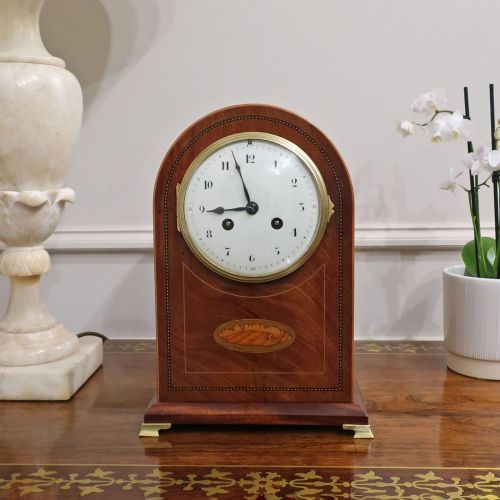
An inlaid mahogany shelf clock sits comfortably on a mantelpiece, bracket shelf, or table, taking the form of mantel, bracket, or table clocks. These objects function primarily as domestic timepieces while serving as decorative architectural elements in a room.
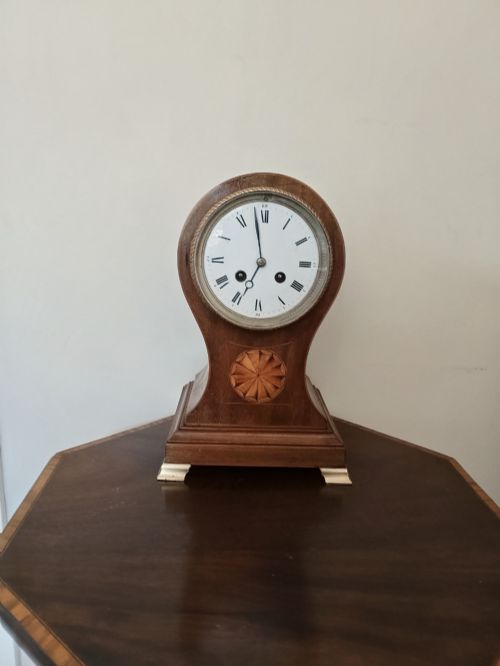
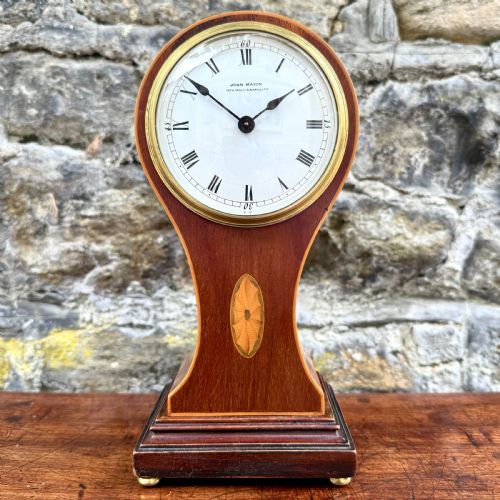
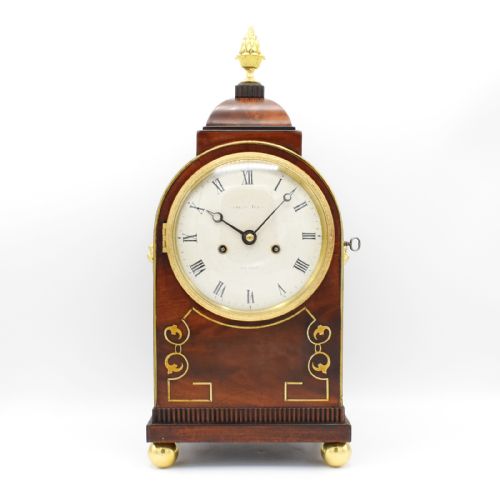
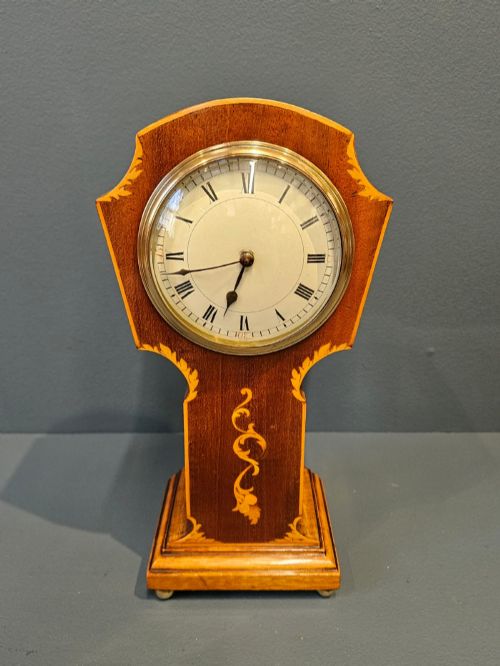
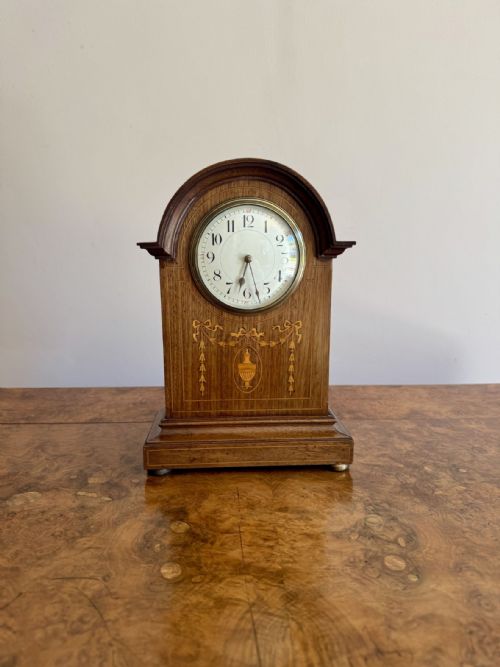
The pieces appearing most frequently in this selection date from the Edwardian period and the early twentieth century, alongside examples from the Regency, Victorian, and Georgian eras. Forms range from balloon and lancet shapes to break arch and pagoda top designs.
Origins span English makers, French workshops, and German production, creating a diverse group of timber cases decorated with contrasting woods. Buyers select these items to anchor a room's decorative scheme with period woodwork.
Judging the work
The distinction between standard and superior pieces rests upon the crispness of the cabinetwork and the precision of the timber inlay. Clean mitres, tightly fitted joints, and balanced proportions mark the work of skilled makers.
Finer examples display delicate and deliberate stringing rather than coarse or hastily applied veneer patches. The integration of brass mounts and the clarity of the enamel dial further separate basic production from exceptional pieces.
Among the timber and brass, one Edwardian clock arrives inlaid specifically with poppies.
Charles Pratt London·Barrett London·Junghans German·Seikosha Seiko
The Inlaid Mahogany Shelf Clock Glossary
- Bracket clock
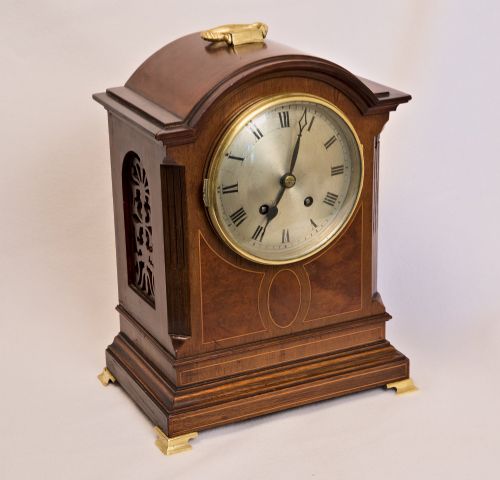
- A portable timekeeper originally designed to sit on a wall bracket to improve room acoustics and visibility. These wooden cases often feature brass carrying handles and elaborate top arches.
- Fusee
- A conical pulley inside a clock movement that equalises the declining power of the mainspring as it unwinds. This mechanism ensures consistent force reaches the escapement for accurate timekeeping.
- Marquetry inlay
- An ornamental technique of applying small pieces of veneer to form pictorial or geometric patterns on a wooden surface. Craftsmen use contrasting timbers like boxwood and satinwood to create these designs.
- Balloon clock
- A mantel clock housed in a case shaped like the profile of a hot air balloon, curving outward toward the base. This silhouette proved particularly popular during the Edwardian period.
- Lancet top
- A clock case design terminating in a pointed, Gothic-arch curve at the summit. The vertical lines draw the eye upward from the base.
Inlaid Mahogany Shelf Clock: Frequently Asked Questions
Where should I place a shelf clock?
These clocks sit well on mantelpieces, sturdy sideboards, or dedicated wall brackets where the timber case remains stable and level. Keeping the clock away from direct heat sources protects the mahogany veneer and internal oils.
Ensure the surface supports the full base of the case without rocking. A stable placement allows the pendulum or balance wheel to maintain an even beat.
How do I wind an 8 day clock?
An eight-day movement requires winding approximately once a week using a matching key inserted into the winding holes on the dial. Turn the key gently until you feel firm resistance, avoiding any sudden force against the stop.
Take care not to overwind the mainspring, as this can strain the internal teeth. Keeping a consistent weekly schedule maintains steady tension in the movement.
How do I identify an Edwardian clock?
Edwardian timepieces often display lighter mahogany timbers combined with delicate boxwood stringing and floral marquetry motifs. Cases from this era frequently adopt balloon, lancet, or break arch silhouettes influenced by earlier Georgian proportions.
Enamel dials with bold Arabic numerals and brass bezel doors appear regularly on these pieces. The overall aesthetic leans toward refined domestic ornament rather than heavy architectural mass.
What is the difference between a bracket and mantel clock?
Bracket clocks historically rested upon wall brackets to project sound and light into a room, featuring sturdy carrying handles on top. Mantel clocks developed later to stand directly on furniture shelves without requiring wall support.
Over time, makers applied both terms to portable wooden timepieces of similar size and function. Construction materials such as mahogany and brass remain common to both categories.