
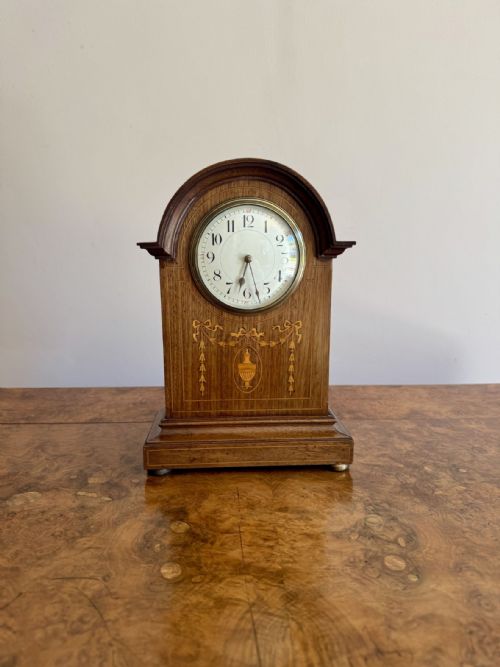
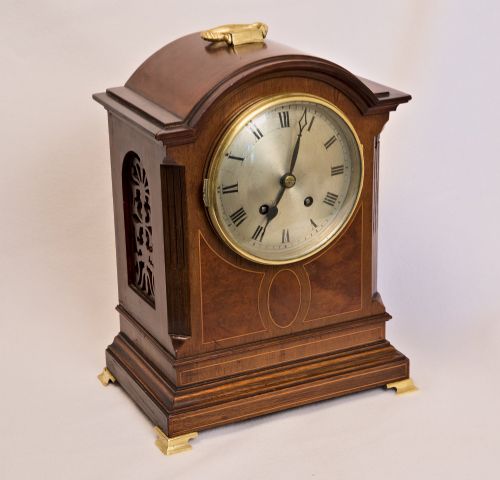


Inlaid Wooden Shelf Clock
An inlaid wooden shelf clock brings domestic timekeeping together with fine cabinetwork, offering warmth and structure to a mantelpiece or desk.
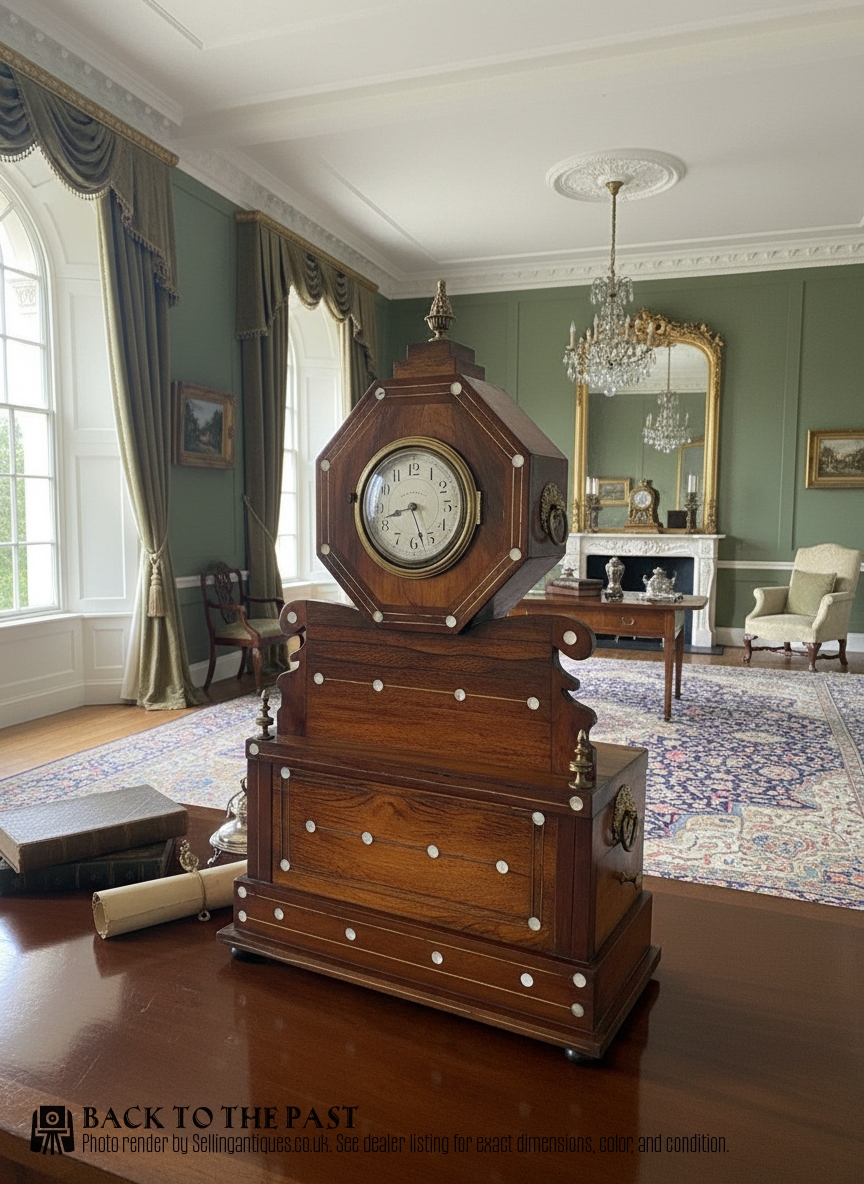
Inlaid Wooden Shelf Clock
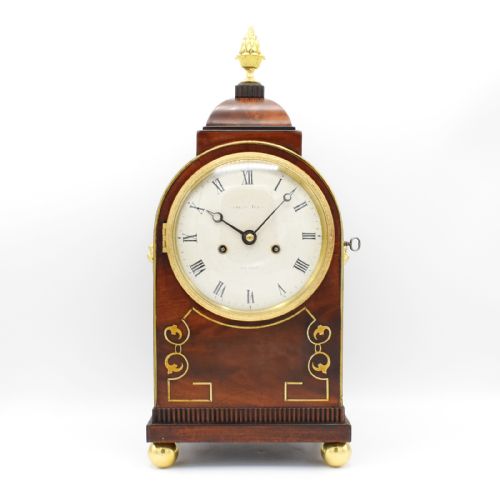
When you search for an inlaid wooden shelf clock, you encounter timepieces designed primarily for domestic interiors, ranging from compact mantel clocks to larger bracket styles. The selection spans the nineteenth century through the Edwardian period, capturing changing tastes in furniture design and cabinetmaking.
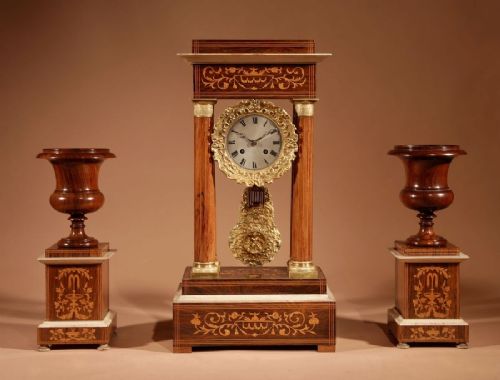
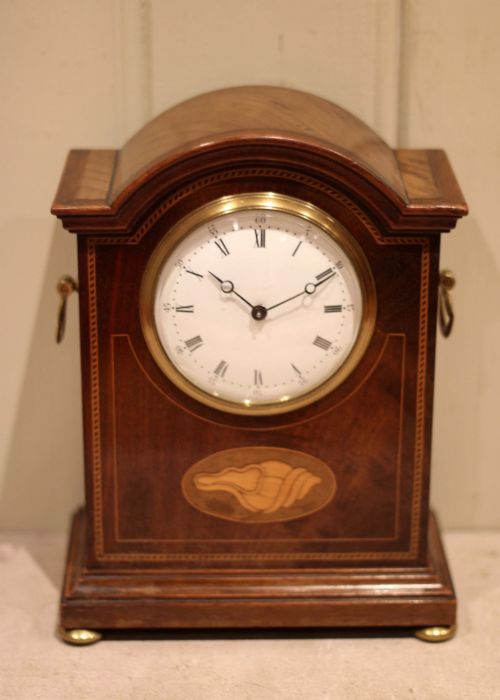
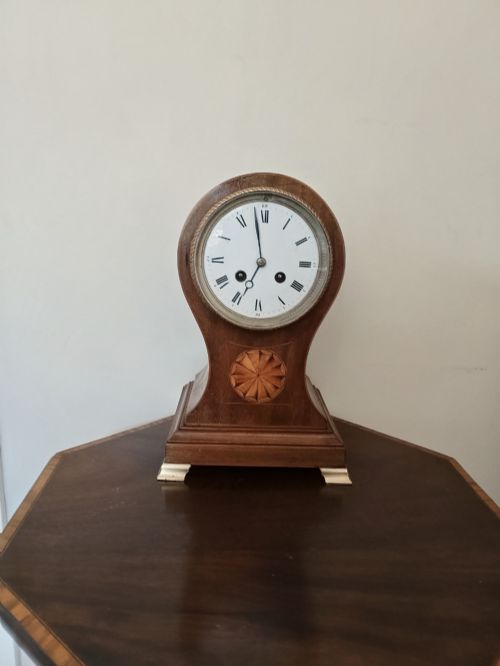
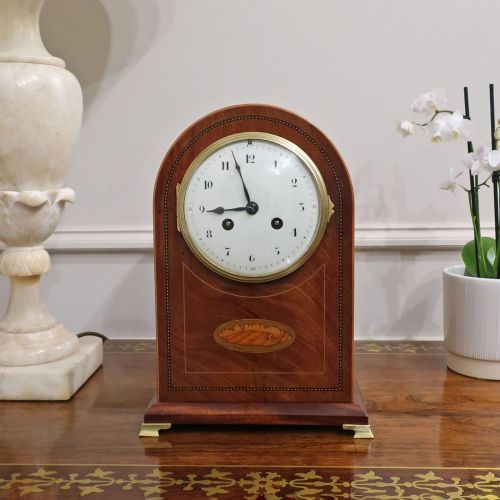
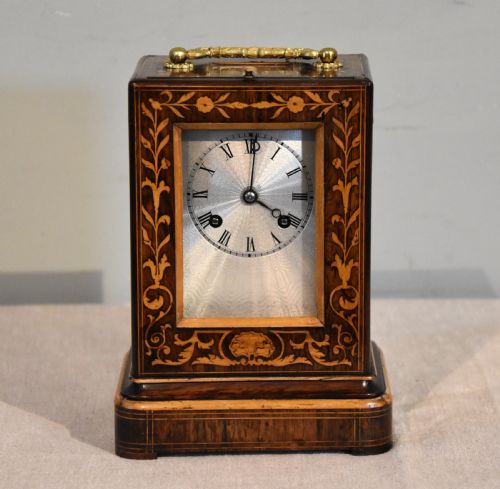
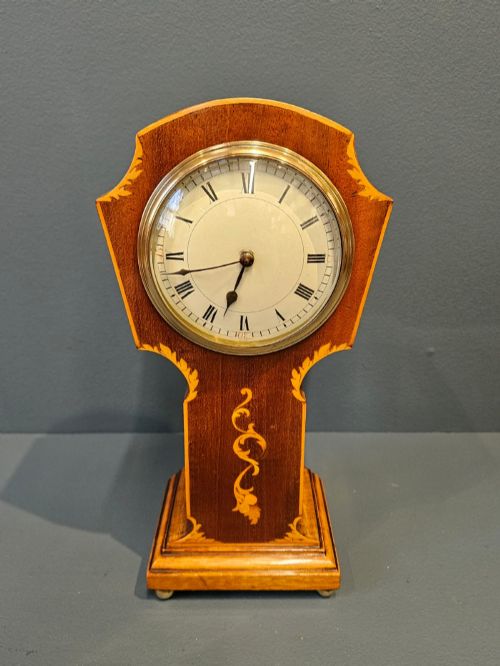
The most common examples on this page are Edwardian mahogany mantel clocks featuring delicate stringing or marquetry motifs. These frequently appear alongside nineteenth-century French and English variations housed in rosewood, walnut, or oak casings.
The forms vary from simple lancet and balloon shapes to architectural portico and break arch designs. They sit comfortably on shelves, ledges, and bracket supports, functioning as both practical timekeepers and decorative objects.
Materials and construction
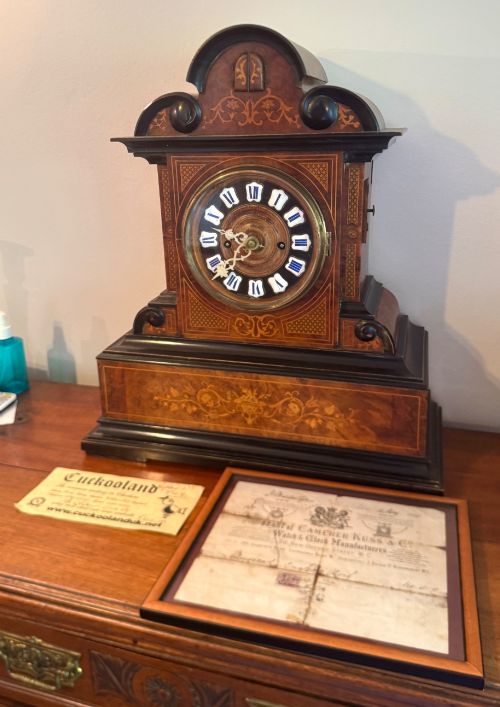
Cabinetmakers constructed the bodies of these clocks from dense hardwoods like mahogany, rosewood, and walnut, frequently applying contrasting veneers of satinwood, boxwood, and ebonised timber. These contrasting woods formed geometric borders, herringbone patterns, and pictorial marquetry designs.
Metal components such as brass dials, bezels, and cast ormolu mounts provide structural accents and functional framing for the clock face. Glass protects the enamel or metal dials, while interior movements rely on brass gears and escapements.
Materials documented across the listings include mahogany, rosewood, walnut, and oak, paired with brass fittings and enamel dials.
Distinctions in craftsmanship
The standard of a clock rests heavily on the precision of its cabinetwork and the crispness of its wood inlay. Finely executed stringing, well-matched veneer grains, and balanced marquetry compositions separate superior examples from plainer production pieces.
The mechanical movement housed within the wooden case further defines the grade of the piece. High-quality examples feature robust mechanisms, often with eight-day duration, housed securely behind well-fitted bezels and doors.
Charles Pratt London·henry Marc·Walker and Hall·Seikosha Seiko
The Inlaid Wooden Shelf Clock Glossary
- Marquetry
- A decorative technique where small pieces of veneer are assembled into pictorial or geometric patterns on the wooden surface. This method creates detailed floral or figural panels on the clock case.
- Bracket clock
- A portable timekeeper originally designed to sit on a wall bracket or shelf. These pieces often feature sturdy wooden cases and carrying handles.
- Portico clock
- A monumental clock style structured around architectural columns resembling a classical portico. These French designs often incorporate ormolu mounts and striking garnitures.
- Fusee
- A conical pulley used in mechanical clocks to maintain even power from the mainspring as it unwinds. This mechanism improves timekeeping accuracy.
- Stringing
- Thin lines of contrasting wood inlay used to outline the edges and panels of furniture and clock cases. It provides a neat linear border to mahogany and rosewood surfaces.
Inlaid Wooden Shelf Clock: Frequently Asked Questions
Where should I place an inlaid wooden shelf clock?
These clocks suit stable, flat surfaces away from direct heat sources and strong sunlight, which can dry out timber and damage delicate veneers. A mantelpiece, side table, or dedicated shelf provides an ideal setting.
Ensure the surface is level so the pendulum or mechanical escapement beats evenly. Placing the clock at or slightly below eye level also makes it easy to read the dial and wind the movement.
How do I wind an eight-day shelf clock?
Use the designated winding key to turn the arbors located on the dial face until you feel firm resistance. Do not overwind the movement, as this can strain the internal spring.
If the clock strikes on the hour or half-hour, keep the striking train synchronised with the time shown on the hands. Regular, gentle winding keeps the mechanical gears operating smoothly.
How do I identify an Edwardian inlaid clock?
Edwardian timepieces, produced around the start of the twentieth century, frequently utilise mahogany cases decorated with light wood stringing or floral marquetry. The designs often draw inspiration from earlier Georgian aesthetics.
Look for refined proportions, enamel dials behind hinged brass bezels, and softer satinwood or boxwood contrasts. Many examples from this era house reliable eight-day movements.
What is the difference between a mantel clock and a bracket clock?
Bracket clocks historically derived their name from the wall brackets designed to support them, featuring sturdy wooden construction and carrying handles for portability. Mantel clocks generally sit directly on a shelf or fireplace ledge.
Over time, the terms became largely interchangeable in trade descriptions, though bracket clocks often retain a more traditional architectural silhouette.