


Inlaid Mahogany Grandfather Clock
An inlaid mahogany grandfather clock brings steady purpose and rich timber tones into a room, standing as a masterwork of both cabinetmaking and mechanical precision.
Inlaid Mahogany Grandfather Clock
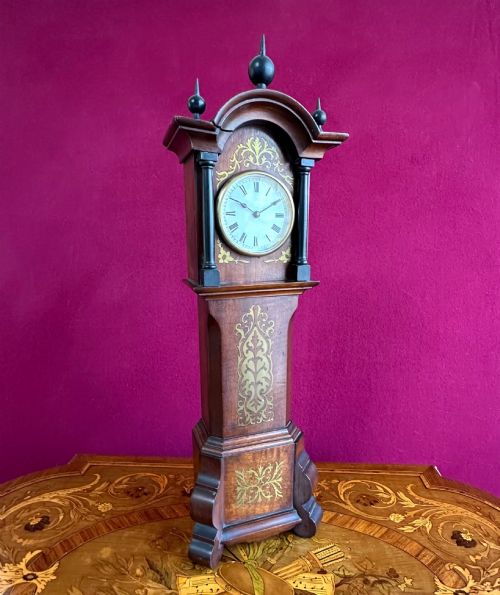
When searching for an inlaid mahogany grandfather clock, collectors encounter tall case timepieces spanning the Georgian, Regency, and Edwardian periods, alongside later 19th-century interpretations and compact miniature versions.
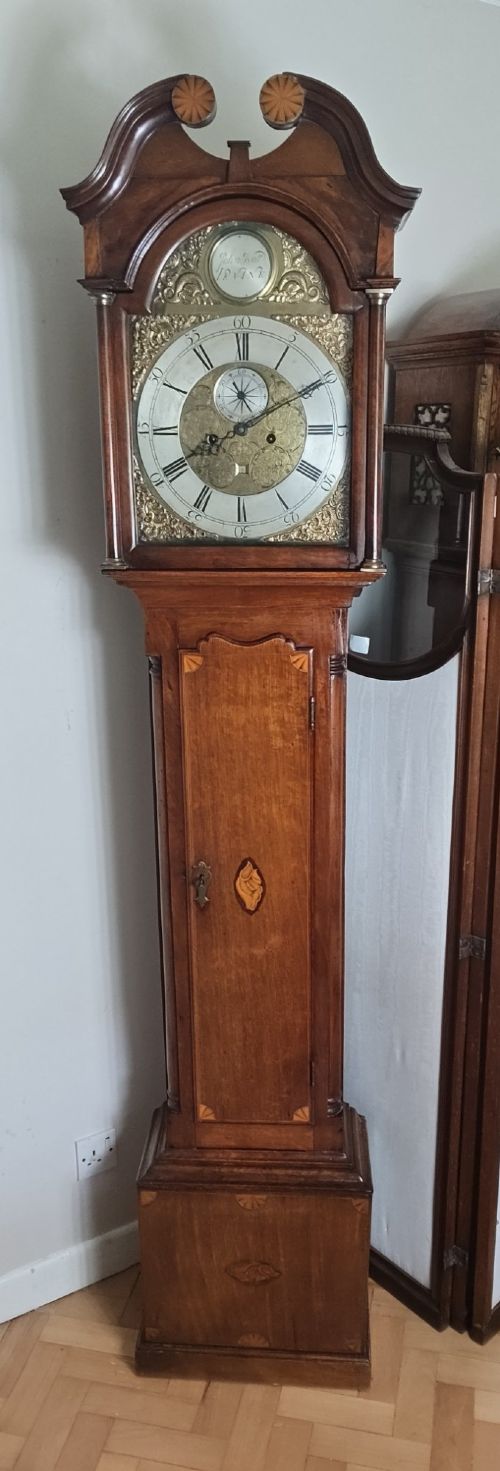
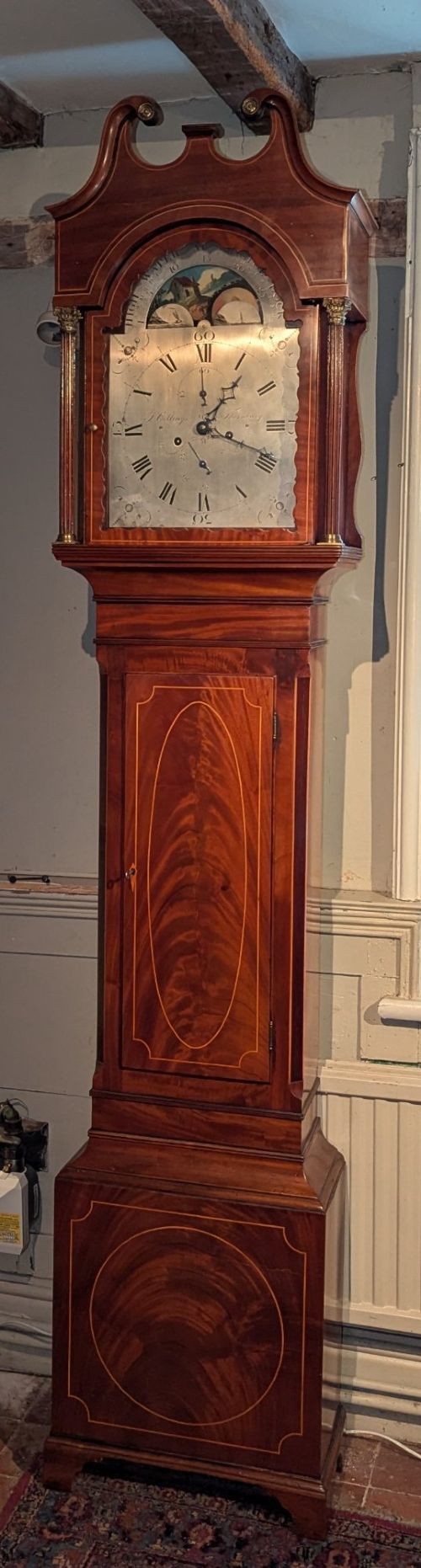
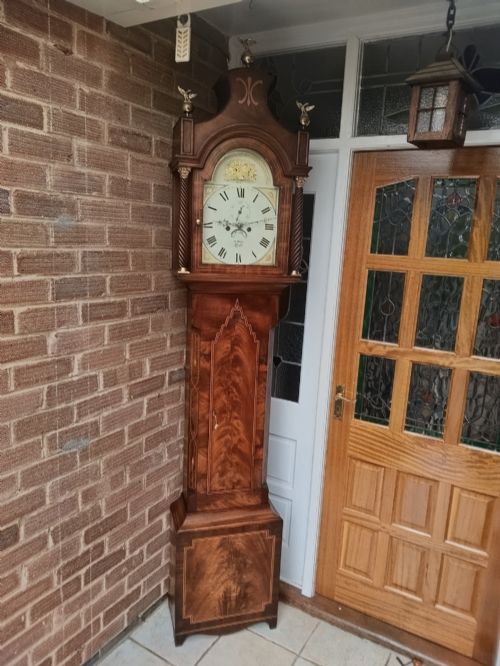
The prevailing format on this page is the full-height longcase clock constructed from rich mahogany timber and accented with contrasting satinwood inlay or delicate marquetry details.
These architectural standing clocks often feature painted iron or brass dials, frequently incorporating moon phases and subsidiary seconds hands driven by eight-day weight-driven movements.
Materials and Construction
Cabinetmakers utilised dense mahogany and striking flame mahogany veneers for the main body, applying satinwood inlay to create crisp geometric stringing and decorative paterae motifs.
Movement faces combine engraved brass or hand-painted iron dials protected behind flat or arched glass doors set within a sturdy hood.
Internal workings rely on brass gear trains and steel arbors powered by suspended iron or lead weights, often regulated by a pendulum housed securely within the trunk.
Listings feature longcase clocks spanning the 18th, 19th, and early 20th centuries, rendered in mahogany, oak, and flame mahogany.
Markers of Distinction
Quality rests heavily on the depth and figure of the mahogany veneer, where rich flame patterns and precise, crisp satinwood inlay elevate the visual impact of the case.
The sophistication of the movement dictates the upper tier of pieces, with eight-day durations, quarter-striking abilities, or intricate musical chime mechanisms separating standard timekeepers from exceptional regional masterworks.
John Denbigh Merton Park·William Moon London·David Morice Auchtermuchty·Benjamin Peers Chester·Thomas Lees Bury·Thomas De Gruchy Jersey·Furnival Oldham·William Smith Keighley·R Lawson Leigh·Edward Glase Bridgnorth·Edward Renouf Jersey·Joseph Lum·G Brown Edinburgh·Sam Robson·John Douglas Galston·Gustav Becker Germany
The Inlaid Mahogany Grandfather Clock Glossary
- Longcase clock
- A tall freestanding pendulum clock enclosed in a wooden case designed to protect the weights and pendulum. This is the formal term often interchanged with grandfather clock.
- Moon dial
- A specialised painted or brass dial mechanism that tracks the lunar cycle through a rotating disc showing the phases of the moon. It adds significant visual complexity to the clock face.
- Paterae
- Small round or oval decorative inlay motifs resembling classical saucers or rosettes. They are frequently utilised on the corners of trunk doors or within the pediment.
- Quarter striking
- A movement complication enabling the clock to chime the quarters of the hour on bells or gongs. This feature demands advanced gear trains within the mechanical works.
Inlaid Mahogany Grandfather Clock: Frequently Asked Questions
How do I wind an eight day clock?
Use the winding key to gently raise the weights via the winding holes on the dial face until they reach the upper limit.
Take care not to overwind the mechanism, stopping immediately as resistance increases to protect the internal gut lines or chains.
What is the difference between a grandfather and a grandmother clock?
Grandfather clocks generally measure over six feet in height, possessing grand architectural presence and full-sized weight drops.
Grandmother clocks are scaled-down miniature versions produced primarily during the Edwardian era, standing noticeably shorter while retaining full mechanical complexity.
How do I level my longcase clock?
Position the case against a stable interior wall and adjust the feet or use packing beneath the base until the pendulum swings with an even, regular beat.
An unlevel case causes the escapement to bind, leading to inaccurate timekeeping or stopping the movement entirely.
How do I identify a regional maker?
Examine the painted or engraved signature on the dial face, which frequently records both the clockmaker name and their operating town or city.
Regional makers across Scotland, Cheshire, and the Channel Islands often inscribed their working locations with immense pride.