

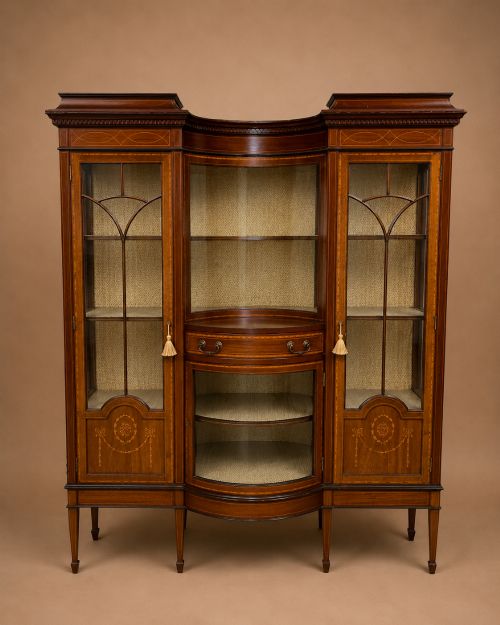
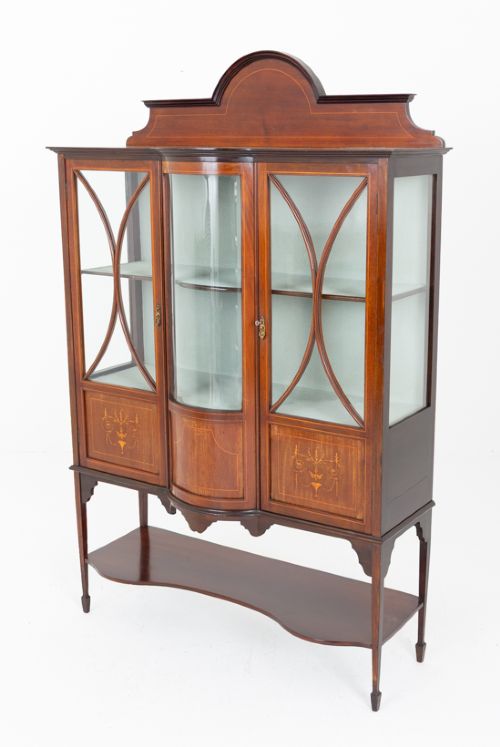
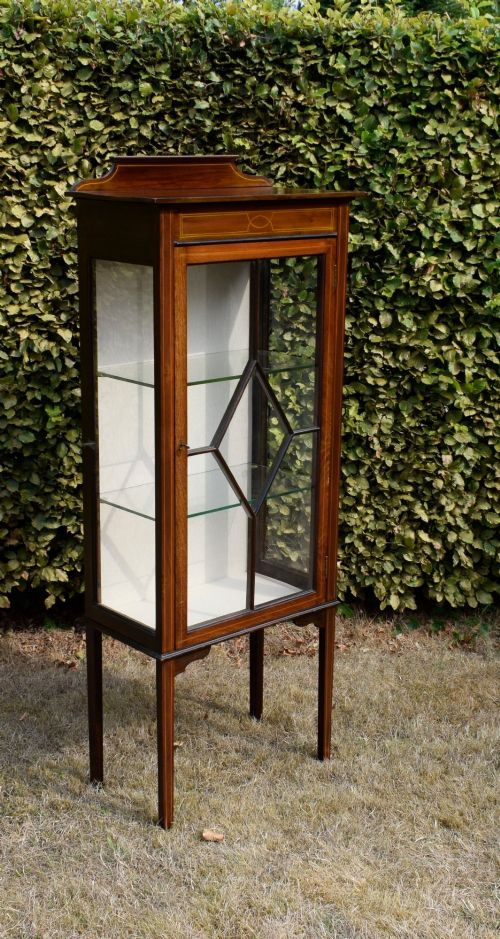
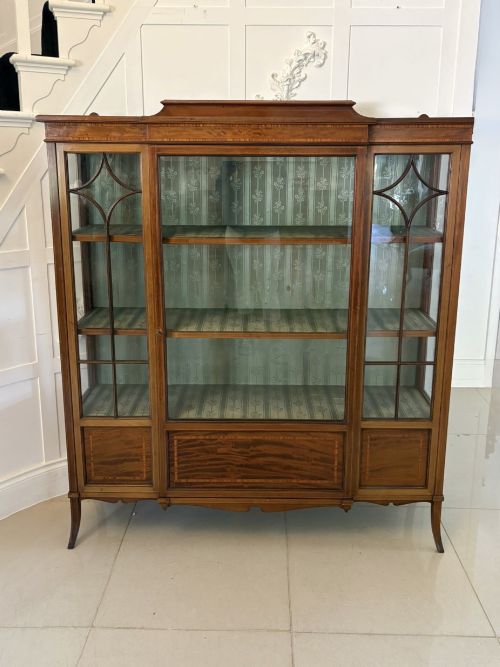
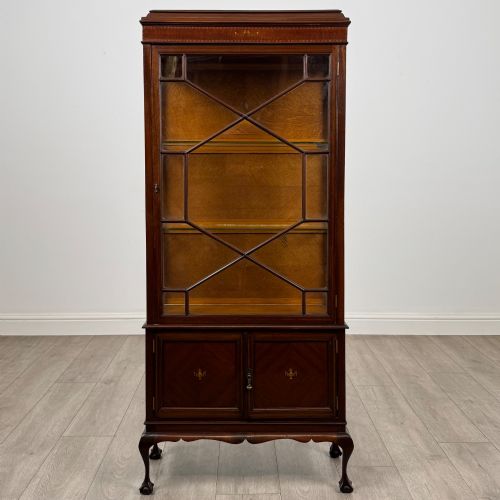
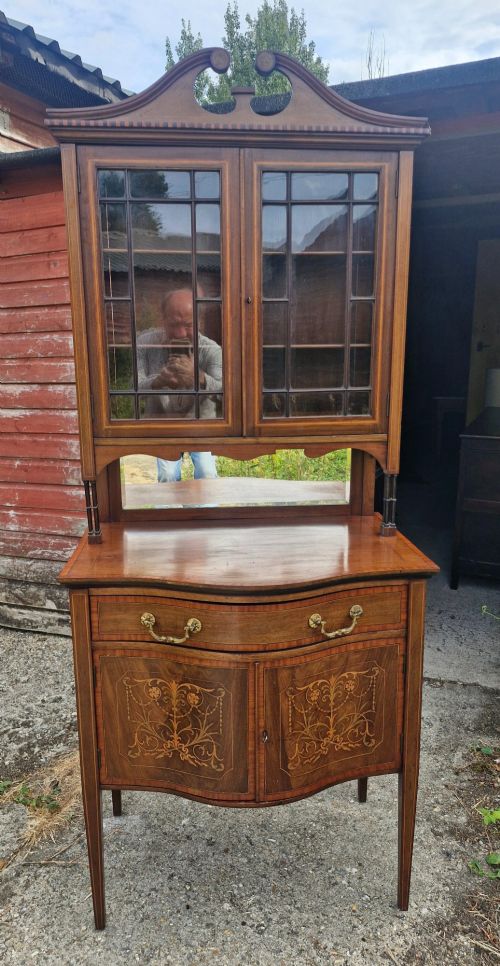
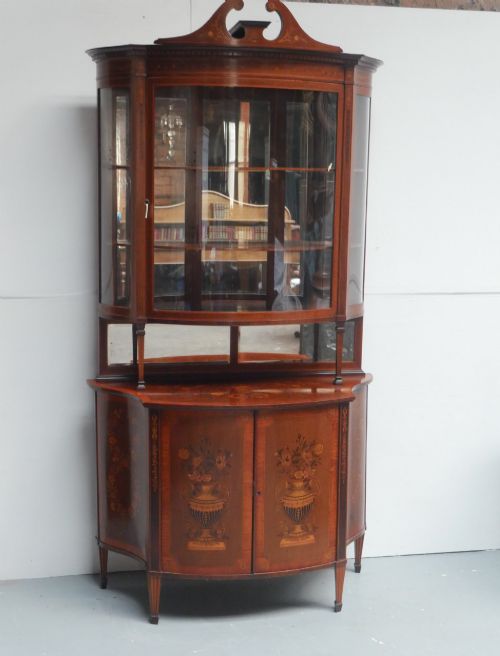
Inlaid Mahogany China Cabinet
When you search for an inlaid mahogany china cabinet, you enter a world of finely glazed display pieces shaped by Edwardian and Victorian cabinetmakers.
Inlaid Mahogany China Cabinet
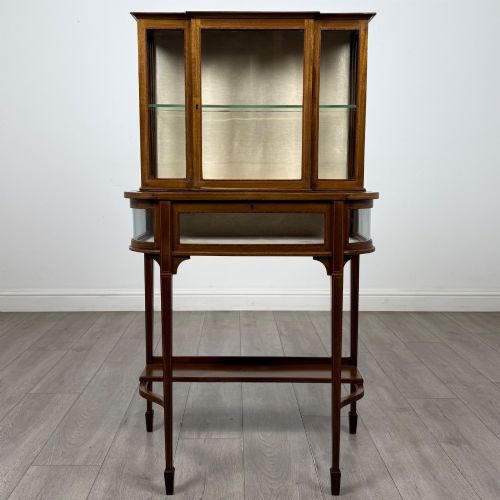
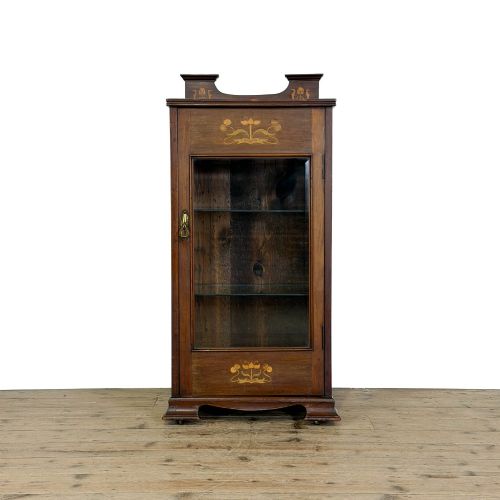
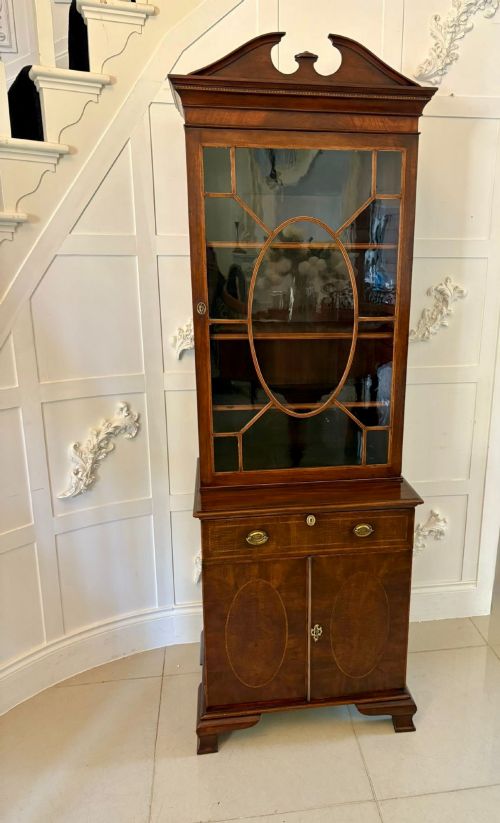
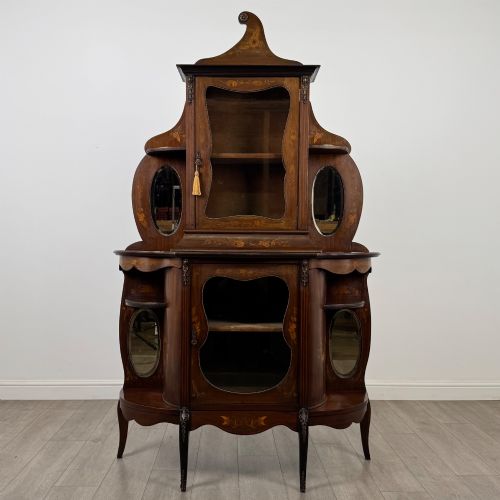
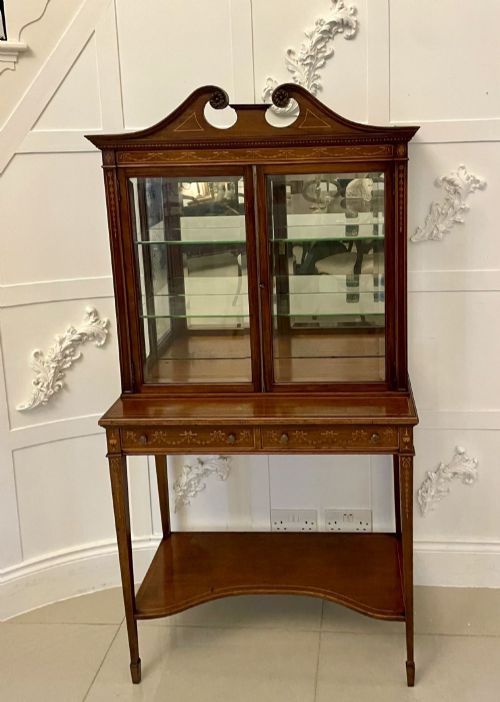
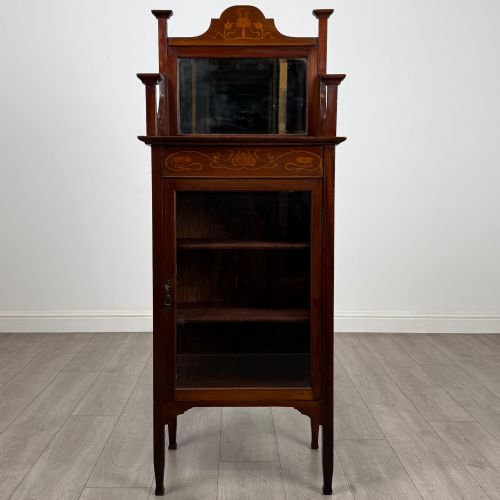
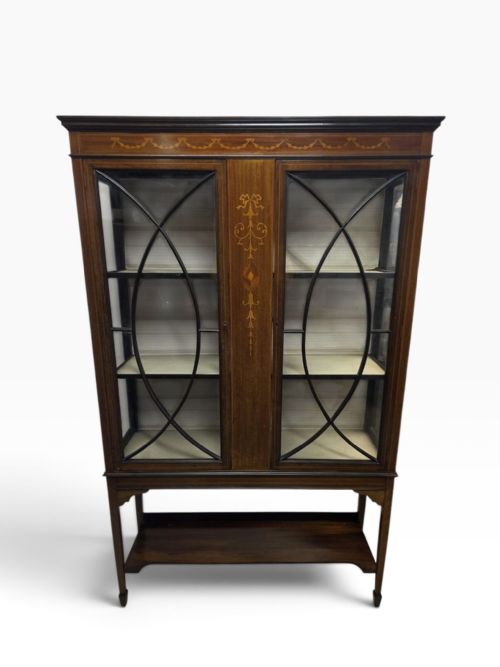
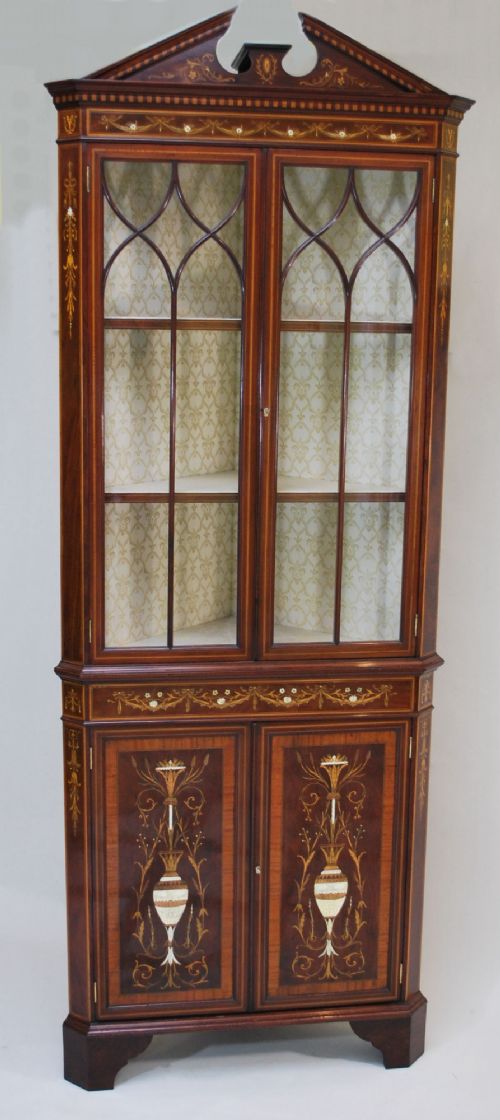
An inlaid mahogany china cabinet brings together timber framing and glass panels designed to showcase porcelain and decorative objects within a home. These pieces appear most frequently from the Edwardian era and the late nineteenth century, taking forms such as freestanding display cabinets, corner cupboards, and two-part bookcase combinations.
Makers shaped these items into bow fronts, serpentine outlines, and breakfront profiles to suit varying interior spaces. Surviving examples reflect the aesthetic shifts of their periods, moving from heavy Victorian proportions toward lighter Sheraton Revival and Art Nouveau designs.
How they were made
Cabinetmakers constructed the primary carcasses from solid mahogany and mahogany veneers, often incorporating contrasting satinwood inlay and detailed marquetry motifs. Glazing bars held the glass in place around display doors, while internal fabric linings and mirror backs provided a reflective background for displayed porcelain.
Makers utilised brass hardware for locks and handles, complementing the inlaid woodwork. Structural elements included multi-part configurations and specialised glazing styles like astragal bars to divide the cabinet windows.
Inlaid Mahogany China Cabinet Retail Price Guide 2026
Typical asking prices for inlaid mahogany china cabinet among the pieces listed under this phrase on Sellingantiques today, from the lower quarter to the upper quarter. They describe what is for sale here now, not the wider market.
What varies in quality
Quality rests in the precision of the woodwork, particularly the sharpness of the satinwood inlay and the intricacy of the marquetry patterns. Finer examples show superior timber selection, such as fiddleback mahogany grains, alongside balanced proportions and delicate glazing.
The reputation of the workshop also shifts the standing of a piece, with documented makers commanding greater attention. Construction methods, from the joining of two-part display units to the finish of the timber, dictate the overall standard of each cabinet.
Edwards and Roberts·Shapland and Petter·Maple and Co
The Inlaid Mahogany China Cabinet Glossary
- Marquetry
- Decorative veneer work arranged in pictorial or geometric patterns using various woods. This technique adorns the doors and friezes of finer cabinets.
- Sheraton Revival
- A late nineteenth and early Edwardian design movement inspired by the neoclassical furniture of Thomas Sheraton. It relies on graceful lines and delicate satinwood inlay.
- Vitrine
- A glass-fronted cabinet designed specifically for displaying fine porcelain or curiosities. These pieces often feature glass sides to maximise light penetration.
- Astragal glazing
- Wooden bars dividing a window or cabinet door into smaller panes of glass. This method creates a refined grid pattern across the display front.
- Bow front
- A convex, curved cabinet front that projects outward in a smooth arc. This shape softens the corners of the furniture and enhances the visual depth.
Inlaid Mahogany China Cabinet: Frequently Asked Questions
What is an inlaid mahogany china cabinet?
It is a glazed display piece constructed primarily from mahogany timber and decorated with contrasting wood inlay, designed specifically to showcase ceramics and decorative objects.
These cabinets date largely from the Victorian and Edwardian periods, evolving from heavier architectural bookcases into lighter freestanding or corner display furniture.
How do I identify a Sheraton Revival cabinet?
Sheraton Revival pieces display neoclassical motifs, lighter proportions, and precise satinwood inlay work inspired by eighteenth-century designs. They emerge frequently among Edwardian listings.
Look for symmetrical lines, tapering legs, and delicate floral or ribbon marquetry rather than the heavier carvings typical of earlier Victorian production.
Where were these cabinets placed in a home?
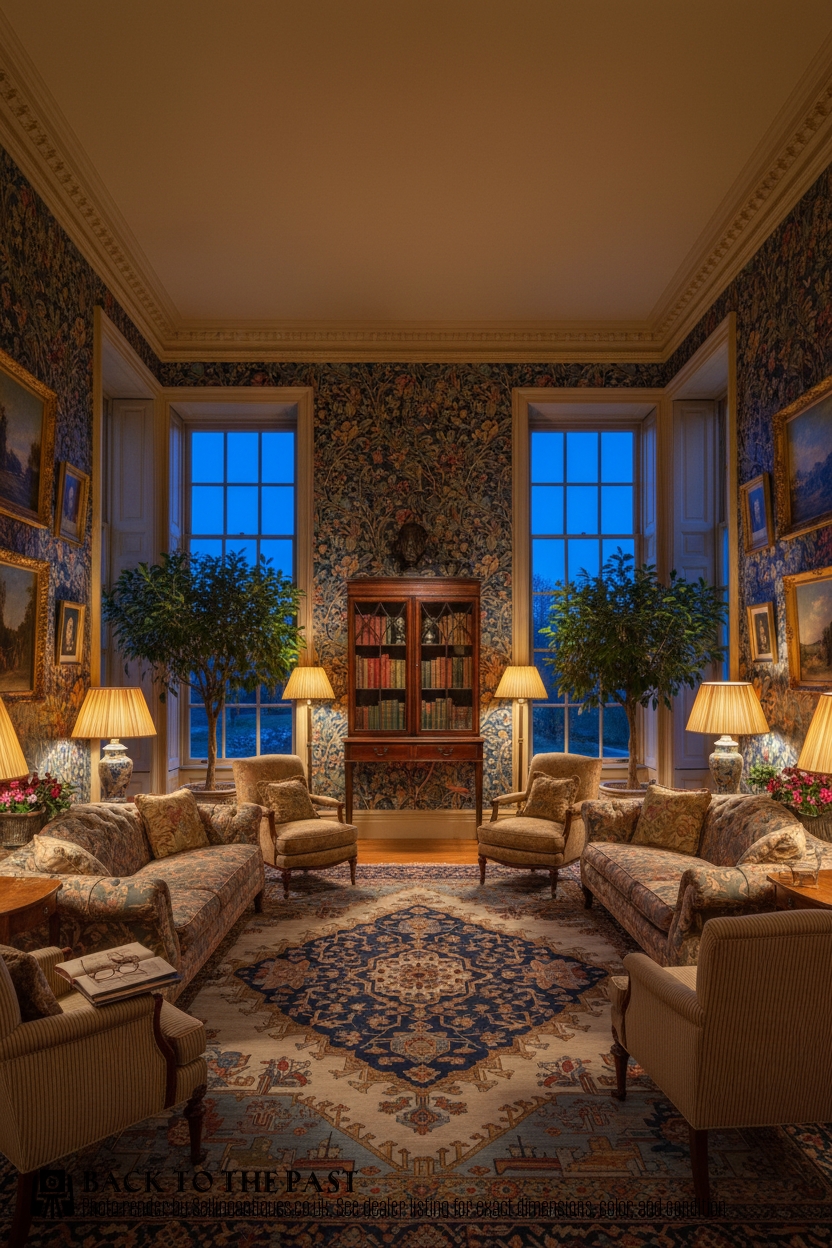
Owners positioned them in drawing rooms and reception spaces to exhibit prized porcelain collections and decorative tableware to visiting guests.
Corner cupboards and wall-hugging designs were utilised to maximise floor space in smaller rooms while keeping display areas visible.
What distinguishes an Edwardian cabinet from a Victorian one?
Edwardian cabinets generally exhibit lighter frames, brighter satinwood contrast, and slender supports influenced by revivalist aesthetics. Victorian versions tend to carry deeper tones and more robust proportions.
Makers working around the turn of the twentieth century favoured refined marquetry and streamlined display doors over heavy ornamentation.